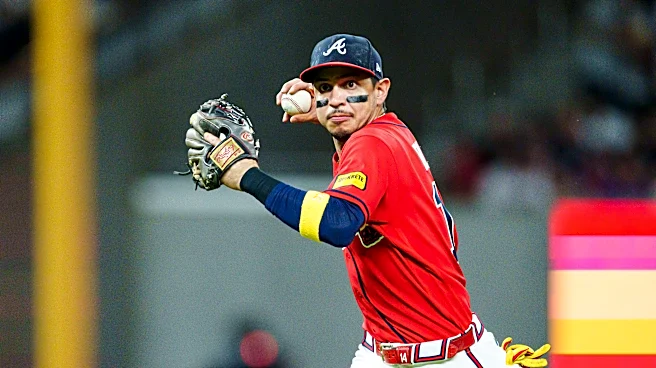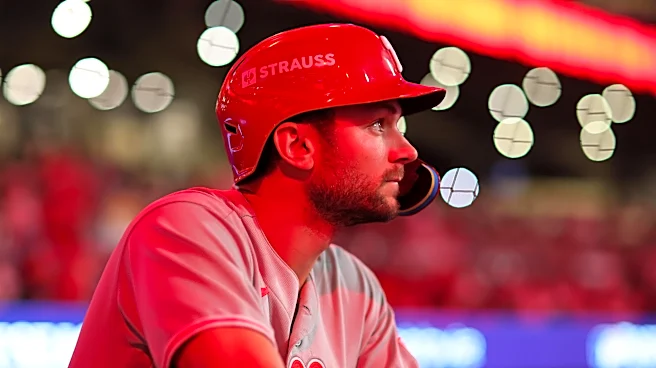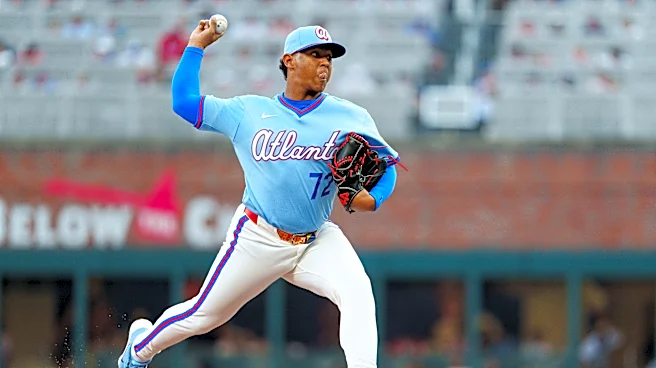

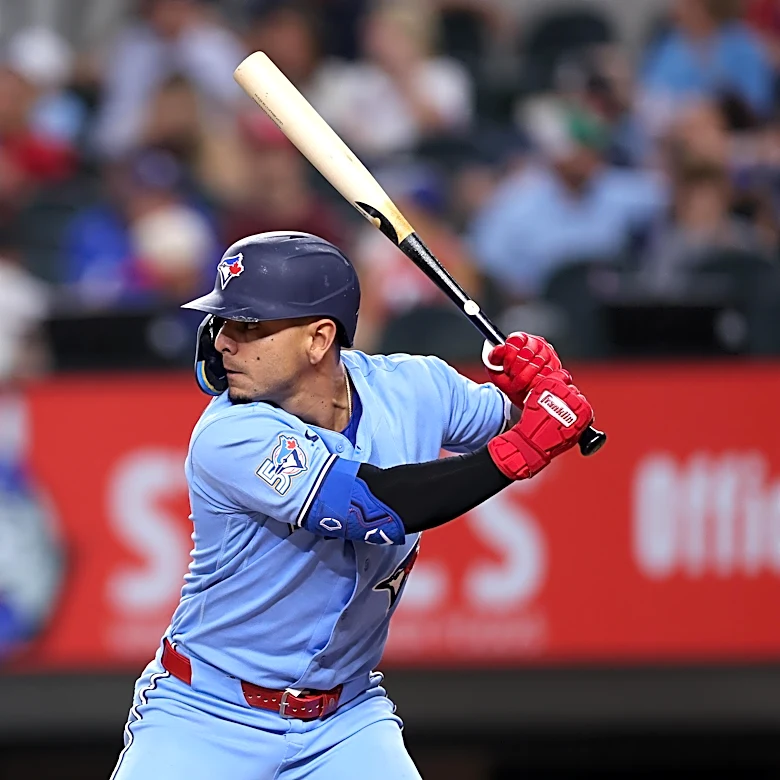

This is a follow-up to Monday’s piece, where we discussed what the core of he starting rotation for the Atlanta Braves might look like heading into the 2027 season. Now, it’s time to assess what may be in store for the pitchers who are outside of that core, such as the free agents, the young arms, and how badly the Braves need to add to their rotation going forward.
The Free Agents: Tyler Mahle, Martin Perez
This pair of veteran arms stabilized the Atlanta rotation in 2026, though neither qualified as needle-movers when they were acquired.
The Braves saw upside in both left-hander Martin Perez, who signed over the winter, and trade deadline acquisition Tyler Mahle, the right-hander who was simply incredible across nine regular season starts and two more in October.
To say both men outperformed reasonable expectations is an understatement.
Perez, 35, broke camp with Atlanta but was quickly designated for assignment after just three appearances. He ended up rejoining the Braves and enjoying a bounce-back season. He finished the year 9-9 with a 3.04 ERA in 142 innings and played a pivotal role in keeping the rotation on track throughout the dog days of summer.
The dictionary definition of a crafty left-hander, Perez eclipsed 20 starts for the ninth time in his 15-year career. Atlanta went 7-3 in his final 10 starts as Perez out-pitched his peripherals to the tune of a 2.26 ERA. During that same stretch, he owned a 4.09 FIP and a 25/33 K/BB ratio across 51.2 IP. Nevertheless, Perez routinely found a way to get the job done until a late-season back issue shelved him during the final week of the regular season.
Perez was praised not only for his work on the mound but his leadership and willingness to work with many of the younger pitchers on the staff. While on-field production is the primary selling point for free agents, the Braves also value the way a savvy veteran like Perez can help elevate a clubhouse. At the very least, Perez should be in line for another one-year, $3.5 million deal like the one he signed last winter. Whether or not Atlanta is the team to give it to him this time around remains to be seen.
Meanwhile, Mahle ended up being the most productive pitcher dealt at a trade deadline that had no shortage of starters changing teams. While the Braves were hoping to land former Cy Young Award winner Jacob deGrom in a deal with the Texas Rangers that may have involved Strider heading the other direction, it was Mahle who came over from the San Francisco Giants and upgraded the Atlanta starting five.
Mahle, who turned 32 in September, went 4-1 with a 1.99 ERA in nine regular season starts – with five of the 12 earned runs he allowed coming in his final outing. He saved some of his best outings for the playoffs, where he fired seven innings of one-run ball against the Philadelphia Phillies in the Wild Card round and held the Los Angeles Dodgers to two runs across 6.1 IP in the Division Series.
Simply put, Tyler Mahle ended up being a masterstroke for Anthopoulos and there is a strong case to bring him back. Mahle made $10 million on the one-year pact he signed with the Giants and could very well double that AAV on a multi-year deal on this trip to free agency, where he figures to have no shortage of suitors.
The Upside Plays: Didier Fuentes, AJ Smith-Shawver
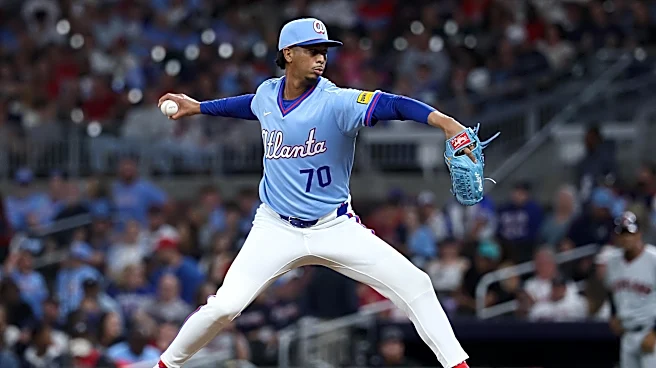
Among the in-house candidates with immense talent and capable of earning a spot in rotation this spring, two stand out – Didier Fuentes and AJ Smith-Shawver.
Fuentes, the seemingly unflappable 21-year-old, will come to camp with considerable buzz after pitching his way into a high-leverage role in the Braves bullpen last season. He started just one game in 2026 before settling into life as a major-league reliever. Fuentes allowed four runs in three innings during that one starting assignment but posted a 2.05 ERA across 70.1 IP in relief. His fastball, which touched triple digits, is complemented by a nasty slider and changeup (which plays like a split-finger) and helped him rack up 11.3 K/9 in his rookie season.
That outstanding work made his ill-fated 2025 debut a distant memory. Atlanta rushed him to the majors at just 20 years of age after all five members of the Braves’ starting rotation landed on the IL by mid-summer. Fuentes was knocked around for 20 earned runs in just 13 innings. All that adversity did was light a fire under the young hurler to come to camp having made adjustments and ready to prove himself.
While the Braves benefited from Fuentes’ incredible work as a reliever, they still plan to explore his future as a part of their rotation. Perhaps the biggest factor to consider is how he will respond to the increased workload. Signed out of Colombia as an international free agent in 2022, Fuentes never pitched more than 75.2 IP in the minors and the 80.1 IP he just logged between the regular and postseason represents his career-high.
“We view him as a starter long-term,” Anthopoulos said. “We’ve been consistent with that. We know he can be a great reliever. We just saw it. On the one hand, you have a bird in the hand that you know you’ve got a really impactful bullpen arm that we believe it’s real and that he can continue to do this, health-permitting, of course.”
Fuentes proved he can get outs in the majors last season. The fact that Atlanta can and will try him as a starter again may impact their winter pitching search, but it shouldn’t. If there is anything that the past few years and trips to the postseason have proven, it’s that a team can never have too many starting pitchers.
“Those are things we have to weigh,” Anthopoulos said. “We think there’s tremendous upside… The development of both the changeup and the slider are pretty encouraging. What we don’t know is the workload. Can he handle 25-plus starts, 150 innings? All those things, we’ll have to have those conversations. And then, can you do that in 2027? Are you going to go from 70-plus innings and jump to (a larger workload)? Those are all things that we’ll have to talk about.”
AJ Smith-Shawver is the other young arm who could immediately factor into the rotation in 2027.
If it feels like Smith-Shawver has been around forever, it’s probably because he’s already pitched in parts of four seasons in the big leagues prior to his 24th birthday later this month.
The stuff is electric and appears to be back to pre-surgery form. Smith-Shawver underwent Tommy John surgery in June of 2025 but made it back to the Braves roughly 13 months later. While his results may not look encouraging – 6.61 ERA with a 6.00 FIP, seven homers allowed and a 16/27 BB/K ratio in 31.2 IP – his four-seamer averaged 96.1 mph. That was up slightly from 95.5 mph prior to elbow surgery last season.
It typically takes a pitcher another year to really feel fully recovered from the ligament transplant surgery. If Smith-Shawver can turn his considerable arm talent into results, the Braves could feel confident enough in his abilities to break camp with him in their rotation.
The Field: JR Ritchie, Owen Murphy, Joey Wentz, Ray Kerr, Cam Caminiti and others
Atlanta has a host of other arms who could end up starting games, but none are locks to do so. To be fair, outside of JR Ritchie, it seems a longer shot for the rest of the candidates to log considerable innings if all goes according to plan this season.
Ritchie, 23, was impressive in flashes but finished the season with a 1-5 record and a 4.91 ERA in 17 appearances – 11 of those starts. A groundball pitcher who works with a deep repertoire of pitches, Ritchie struggled to miss bats consistently and his command would disappear at times. He was forced to pitch with a lot of traffic on the bases as a result of a 13.2 BB% and was punished by hard contact when he made mistakes in the zone.
All of that is to be expected from a young pitcher getting his first taste of the majors. What he does with that experience will be key. A high-aptitude hurler who has shown the ability to put everything together at the minor league level, Ritchie could be the first line of defense if an Atlanta starter is forced to miss time this season.
Among the rest of the arms who will come to camp with something to prove or a chance to contribute are veteran left-handers Joey Wentz and Ray Kerr. Atlanta originally drafted Wentz and traded him away only to re-acquire him in 2025. He lost last season to a torn ACL suffered in Spring Training but could help in either the bullpen or as a starter – again, if need be.
Kerr became an October hero with his exceptional playoff performances as an opener against both the Phillies and Dodgers. He missed the better part of two seasons while recovering from Tommy John but showed up and showed out for Atlanta upon returning in the second half. The opener assignment is likely the height of his starting duties in an ideal world, but the Braves know they can call on Kerr if needed.
There are also a handful of prospects who could eventually work their way up the ladder this year. Owen Murphy debuted in 2026 and figures to begin next season at Triple-A and remain on the ready. Atlanta’s top pitching prospect is lefty Cam Caminiti, the 2024 first-rounder who advanced to Double-A last season. Caminiti turned 20 in August, so it would likely take the stars aligning or a rash of injuries before the Braves call him up.
One other young arm to keep an eye on is Briggs McKenzie. Yet another left-handed prospect, he made just seven starts this season due to a nerve issue in his elbow. Atlanta sent him to the Arizona Fall League where he is racking up strikeouts but also testing his mettle against many older and more polished prospects. McKenzie, who turned 20 last month, seems earmarked for a return to High-A Rome and a promotion to Double-A Columbus next season. Since crazier things have happened, he seemed a worthy inclusion to this list.
Final Assessment: More is needed
Atlanta’s current starting rotation options are many. However, there is a clear need for more proven commodities in order to assemble a rotation capable of not only navigating the challenges of the regular season but also being equipped for its biggest test – surviving and even thriving in October.
With Sale fronting this group, it is already set up with one of the game’s greatest competitors and a pitcher who seems to be turning back time. Perhaps most impressive about Sale’s 2026 campaign was the fact he was throwing harder than ever at age 37. Whether or not he can do it again will be a major factor in Atlanta’s success next season.
Even though deGrom was unwilling to waive his no-trade clause and come to Atlanta at the deadline, it’s fair to wonder if the Braves and Rangers might revisit that deal. Texas’ reported interest in Strider could help the money line up, but there’s risk for both clubs as each pitcher has an extensive injury history. For Atlanta, it may be as simple as which rotation horse they’re willing to bet on and invest in staying healthy. That would make it a calculated risk.
The free-agent market behind Skubal will boast a lot of veterans, but many who come with performance and durability questions of their own. If the Braves are going to move the needle and elevate their rotation, the trade market may be the clearest route. Atlanta has restocked its farm system in recent years and should have the means to acquire a controllable starter if they’re willing to pay the prospect price one will likely command.
While there are plenty of clubs that would gladly trade places with Atlanta when it comes to pitching depth, the Braves don’t want to get caught in the familiar position of running out of pitching when it matters most. What they do this winter could go a long way toward solving that problem before it even presents itself.