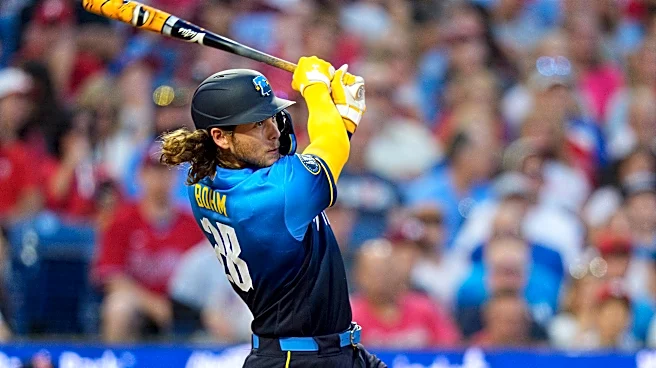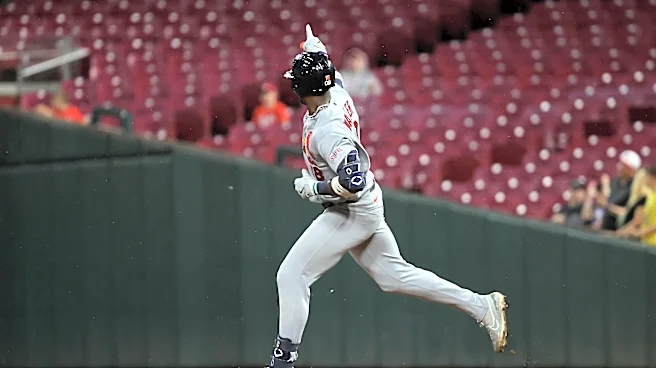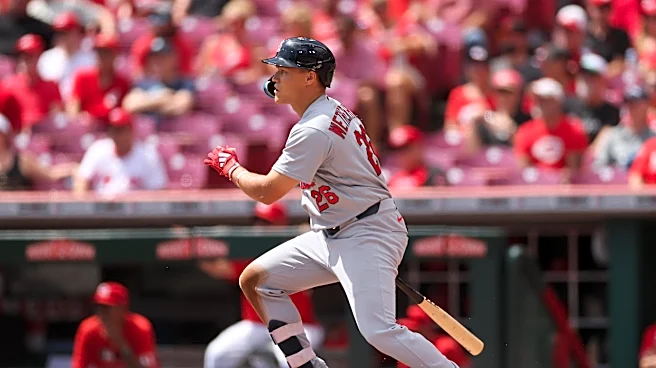



What a season it has been for Jordan Walker. Regardless of how he finishes the 2026 campaign, it will go down as an unqualified success. I will admit, every time Walker has gone through a slump I have found myself wondering if the party is over. That is more of a me problem though. As we sit here on August 22nd, Walker has put together one of the best twenty or so offensive seasons in baseball. Like every player, there have been ups and downs to his season. Today, I am going to look at some of those
distinct up and down stretches to paint a clearer picture of how we got here.
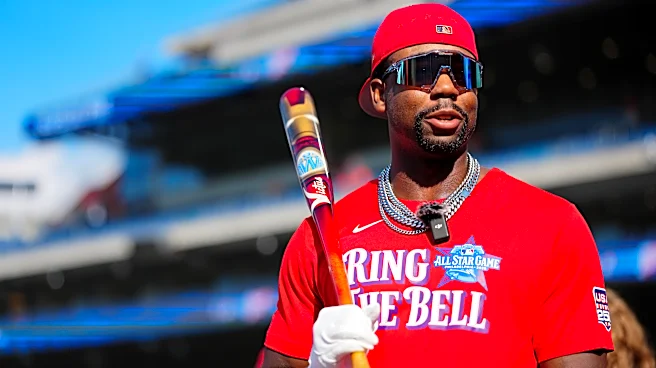
Walker’s unbelievable April and May propelled him to the All-Star Game and his unforgettable Home Run Derby performance. His longest prolonged slump in June was legitimately concerning as his line looked remarkably similar to the player we had seen struggle the last two years. Walker has rebounded since the calendar flipped to July and has put his breakout season back on the right track.
To kick things off, here are the statistics that propelled Walker to the majors’ 12th-highest WAR through about two months of play.
March 26 to May 23 – 215 PA
wRC+: 165
AVG/OBP/SLG: .302/.372/.594
BB%: 9.3%
K%: 25.6%
ISO: .292
Contact and Plate Discipline
Walker’s contact rate of 71% was up 4.5% year-over-year. To go along with the increased contact, he was also doing a much better job of attacking pitches in the zone, increasing his swing rate from 67% to 73% on strikes. Interestingly, his overall chase rate was actually up slightly from prior year. This really didn’t match the eye test as Walker looked much more in control of his at-bats, particularly when it came to laying off breaking pitches away. Looking a bit deeper at his discipline data showed that he was swinging at almost a third fewer pitches in the waste zone, so when he did expand the zone, it was less often on unhittable pitches.
Damage on Contact
Of course, the big story was Walker finally unlocking the ability to put the ball in the air with consistency.
His Launch-Angle Sweet Spot, measuring the percentage of balls hit at the optimal angles between 8 and 32 degrees, increased from one of the worst marks in baseball (30%) to a closer-to-average 35%. This same improvement was mirrored in Walker’s rate of balls pulled in the air. His 2025 mark of 12% was near the bottom of the league. Through May 23, his rate of 17.2% was essentially league-average.
One of the reasons Walker was having more success lifting the ball was that he had increased his attack angle from 6 degrees to 9 degrees. Attack angle measures the direction the bat is traveling vertically as it impacts the ball. Generally speaking, the higher the attack angle, the more of an uppercut swing the batter has. While attack angle is certainly partially dictated by swing mechanics, there is also an element of timing. All else equal, if a hitter is behind on a pitch and hitting it too deep in the zone, the attack angle will be lower. This is because even the flattest swingers in baseball still have a slight uppercut, so the further out front the ball is hit, the higher the attack angle. This is probably easier to visualize by looking at thisBaseball Savant page.
An ideal attack angle is considered to be between 5 and 20 degrees. Walker had increased his percentage of swings in this ideal range from 47.7% in 2025 to 56.3% through May 23. To give a sense of how important getting to these angles can be, Walker has had a .469 wOBA over the last two seasons combined when he makes contact between 5 and 20 degrees. On all non-ideal angles, his wOBA drops to .356.
There are, of course, good hitters with flatter swings, but Walker’s sudden power binge seemed to be directly tied to his loftier swing path.
After the torrid start, Walker had his first extended adversity starting in late May.
May 24 to July 1 – 130 PA
wRC+: 83
AVG/OBP/SLG: .266/.292/.379
BB%: 3.8%
K%: 26.9%
ISO: .113
Even the best hitters go through poor stretches, but this month-and-change stretch for Walker was quite concerning. His surface-level stats would have looked even worse had he not managed a .345 BABIP.
Contact and Plate Discipline
During this stretch, Walker’s chase rate crept up a point to 36%. He was also much more passive with his zone swing rate dropping to 2025 levels at 67%. Despite the slightly degraded swing decision-making, Walker was still holding onto his improved contact rates at 71%.
He was also back to swinging at over 10% of waste pitches. While not a huge sample size, all of these metrics point to a less disciplined approach than his first two months.
Damage on Contact
The real issues were showing up in his batted-ball metrics. His average exit velocity was down from a scorching 94.5 mph to 92.3 mph and his ground-ball rate was back up above his career average at 47%. He was still managing to find the sweet spot at about the same clip, but his ideal attack angle rate fell four points to 51.9%.
One of the culprits (or symptoms) of Walker’s struggles was that he was getting beat more consistently with velocity. His wOBA was down 50 points to .329 against fastballs. Normally, you would chalk this up to random variance over a small sample size, but there were additional concerning aspects in his underlying data. His average attack direction, which measures the horizontal direction the bat is moving at contact, dropped from 6 degrees pull side to 2 degrees pull side. The change was even more pronounced on fastballs as his attack direction was 8 degrees opposite field on heaters. During his hot start to the season, his average contact point was 32.4 inches in front of his center of mass, which was just over two inches more out front than he had averaged in 2025. During his cold stretch, he was letting the ball get deeper at 29.6 inches out front on average. Not surprisingly, his percentage of balls in the air and pull rate dropped about seven percentage points each.
At this point, I can convince myself of a pretty clear picture. Walker was back to chasing too frequently and had lost the improved timing from earlier in the season that was allowing him to drive the ball in the air more frequently. So, what has changed since the calendar flipped to July?
July 2 to August 21 – 195 PA
wRC+: 145
AVG/OBP/SLG: .297/.364/.520
BB%: 8.7%
K%: 20.5%
ISO: .223
Contact and Plate Discipline
During Walker’s recent stretch of excellent play, his discipline metrics have bounced back closer to his early-season numbers. He is back to swinging at 73% of pitches in the zone. His contact rate has continued to inch up to 72%. This combination of slightly better contact and more aggression in the zone can explain some of his improved strikeout rate, but I do not think it supports the near-20% rate that he has been running.
Damage on Contact
This is where I would like to tell you that Walker’s underlying metrics had returned to his early-season numbers and at least give a nice cohesive narrative. Unfortunately, that is not exactly what has happened.
Even with a month-long home run drought included in this time frame, Walker has still popped his ISO back over .200 for this stretch. His average exit velocity has continued to slip, down to 91 mph. This does not appear to be because he is tiring out as his average bat speed has actually gone up from 78.8 mph to 79.7 mph (both in the 100th percentile). Both his average and ideal attack angles have continued to fall to four degrees and 40.6%, respectively.
How is it possible that with these seemingly degrading attack angles and exit velocity numbers, Walker is seeing a power resurgence?
One potential answer I can find is that he seems to be getting to his very best swings more frequently. His Barrel% during this recent stretch is back up to 14.7% after dipping to below 8% during his cold June. He also seems to be getting his A swing off to the pull side more frequently. On his ideal attack angle swings, his attack direction is 8 degrees more to the pull side on average than at any point this season. Overall, he is hitting the ball out front and to the pull side at a similar rate to his early-season numbers, which has helped him run a season-high rate of balls pulled in the air at 22%.
Conclusion
My conclusion after this exercise is perhaps a bit obvious. Walker is still evolving and developing. I do think that the early-season version of Walker, with a few more strikeouts but more loft in his swing, is probably closer to what he and the Cardinals’ development staff would like to see. Still, his recent stretch looking more like Vlad Guerrero Jr. than Aaron Judge has provided plenty of production as well. Both the consistent attack angle version of Walker and the recent pull-side power monster we have seen can produce at star levels. Still just 24 years old, Walker has plenty of development runway ahead. Could he combine the best versions of himself and take yet another step forward? One thing I know for sure is that I won’t bet against this guy again.