



Not many programs can walk into Louisiana, go head-to-head with LSU for an elite defensive back, and come away with a commitment. That is exactly why landing Blaine Bradford was such a significant recruiting victory.
For years, Baton Rouge has been one of the most difficult places in the country for outside programs to win major recruiting battles. Louisiana consistently produces elite defensive back talent, and more often than not, those players end up staying home and playing for LSU. When the Tigers
make a prospect a priority, especially an in-state blue-chip defender, they rarely lose.
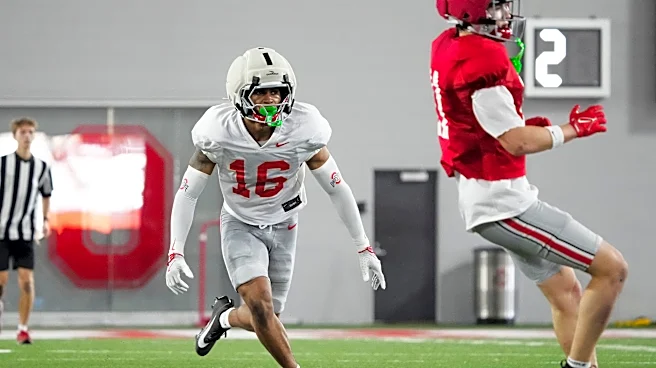
Yet, Ohio State not only entered the race for Bradford, but they won it. Bradford arrived in Columbus as one of the highest-rated defensive backs in his recruiting class. Recruiting services viewed him as one of the top safeties in America, with some rankings placing him as the No. 1 safety prospect nationally. At roughly 6-foot-1 and 209 pounds, Bradford already possesses the frame that NFL teams covet at the position. He combines size, physicality, range, and football intelligence in a package that projects exceptionally well to the modern game.
The reality is that Buckeye fans probably will not see much of him this season, and that is perfectly fine. In fact, that may be exactly how Ohio State wants it.
Learning behind one of the deepest safety rooms in the country
The biggest obstacle standing between Bradford and immediate playing time is not talent. It is an opportunity. Ohio State enters 2026 with one of the deepest and most experienced defensive back rooms in the country. Veterans such as Terry Moore, Earl Little Jr, Jaylen McLain, and even Leroy Roker give Matt Patricia and Matt Guerrieri plenty of proven options in the secondary.
For a freshman safety, that is actually an ideal situation. Safety is one of the most difficult positions in college football to learn and succeed at a young age. Young corners can sometimes survive by simply relying on elite athleticism. Safeties cannot. They must understand the entire defense, communicate adjustments, recognize route concepts, fit the run correctly, and eliminate explosive plays. The fastest way for talented freshmen to struggle is to play before they fully understand those responsibilities.
Ohio State has learned this lesson repeatedly throughout its history. Many of the Buckeyes’ best defensive backs spent their first seasons learning behind veterans before eventually emerging as stars, and Bradford appears positioned to follow a similar developmental path. That does not mean he will disappear entirely this season. Special teams snaps, rotational opportunities, and late-game reps could still arrive throughout the year. But his biggest job in 2026 may simply be absorbing everything possible from one of the nation’s better defensive coaching staffs.
Why 2027 could be the real beginning
The more interesting conversation begins next offseason. By 2027, much of Ohio State’s current safety depth chart will be gone or significantly altered, and that is where Bradford’s path becomes much clearer. Physically, he already looks like a player who could compete for meaningful snaps in the Big Ten, and what separates him from many young defensive backs is how complete his skill set appears entering college.
At Catholic High School in Baton Rouge, Bradford built a reputation as a versatile defender capable of impacting games in multiple ways. He was productive against the run, comfortable playing deep coverage, and athletic enough to handle man-to-man responsibilities. Ohio State’s coaching staff has repeatedly prioritized safeties who can wear multiple hats, and Bradford fits that profile perfectly. His ability to function as a deep safety, box defender, or matchup piece against tight ends could make him one of the more versatile players in the secondary.
The coaching staff has increasingly valued positional flexibility in recent years, especially with Patricia at the helm. Defenses are becoming more matchup-based, and players who can seamlessly move between roles create significant advantages. Bradford’s game naturally lends itself to that style.
When evaluating future starters, the question is not simply whether a player can execute one responsibility. It is whether he can stay on the field regardless of personnel grouping or offensive formation, and Bradford appears to possess that exact type of versatility. As a result, 2027 feels less like a developmental year and more like a legitimate opportunity to compete for a major role in Columbus.
The long-term ceiling is extremely high
The reason Ohio State fans should be excited is not that Bradford will immediately become a star. It is because his developmental timeline aligns almost perfectly with the way elite defensive backs often emerge in Columbus. Year one is about learning. Year two is about competing. Year three is often when future NFL players fully arrive.
Bradford possesses many of the traits that have defined successful Buckeye safeties over the past decade. He has the size to withstand Big Ten physicality. He has the athleticism to hold up against modern passing offenses. He has the recruiting pedigree that suggests high-level natural talent and athleticism. And perhaps most importantly, he enters a program that has consistently developed elite high school defensive backs into NFL talent.
Nothing is guaranteed. Development is rarely linear, and every prospect faces challenges transitioning from high school football to one of the nation’s premier programs. But when projecting forward, it is easy to see why Ohio State fought so hard to land him. The likely outcome for 2026 is patience. The likely outcome for 2027 is competition. And then by 2028, there is a very real chance Buckeye fans are discussing Bradford as one of the leaders of the defense and one of the next defensive backs preparing for an NFL future.
That may feel far away today. For Ohio State, however, that future is exactly why Blaine Bradford was such a massive recruiting win in the first place.