




Nobody likes the Boy Who Cried Wolf.
The age-old fable is, after all, a cautionary tale… and one that feels pertinent to the Portland Trail Blazers these days. Amid the persistent thunderstorms of critical headlines engulfing new owner Tom Dundon, choosing what news carries significance has become a daily exercise in discernment.
As a writer covering this team in recent months, I’ve been careful not to overreact to developments or cry Wolf! just yet. That’s partly because readers could tune it out
when a wolf of the Big Bad variety really came knocking.
With that in mind, I’ll make it clear I couldn’t care less about free T-shirts at home playoff games. As far as the other controversies swirling around Dundon’s short tenure in Rip City, they appear unideal, but not overtly consequential without more time and details. Nobody wants to see the sweeping layoffs that took place within the organization in May, but it seems to be an unfortunate reality around the league during ownership changes, not a Dundon-specific thing. The Blazers being the only NBA team to not travel their two-way players for road playoff games was disrespectful to Caleb Love, Chris Youngblood and Jayson Kent. Yet, after backlash, Portland amended the mistake and put them on the plane for Game 5 in San Antonio.
In the grand scheme of things, T-shirts, hotel checkouts and even the two-game travel mistake probably amount closer to peanuts than an elephant on the significance scale. At the very least, these developments are unlikely to impact the Blazers’ ability to build a winner on the court or the fan experience in a visible way.
I present all of that to say that the Blazers’ unconventional handling of new head coach Micah Nori’s contract is a decision that crosses into a danger zone and warrants sharp criticism. I didn’t weigh into the debate immediately, but something about this contract situation has stuck with me. Beyond creating possible downsides from a basketball perspective, it starts to jeopardize something deeper: the culture of respect the organization fosters for employees, and with that, its character and reputation.
The structure of Nori’s contract is already infamous: The deal has a below-market base salary and features incentives based on team success, ESPN reported. More notably, according to details first reported by The Athletic, the contract includes just one guaranteed year, with team options for the second and third seasons.
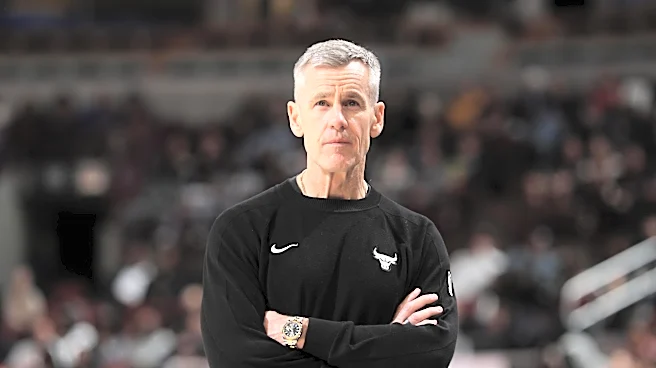
Tiago Splitter got three guaranteed years, plus a fourth-year team option, to take over the head job in Chicago. Sean Sweeney, another first-time head coaching hire this offseason, got four guaranteed years in Orlando, plus a team option on the end. Not only does Nori’s deal make him the only recent head coaching hire to be appointed under a single guaranteed year, but the setup is practically unheard of in NBA history.
Regardless of how you feel about NBA coaches’ contracts, there’s a standard for how business is conducted. The Blazers bucking that etiquette to sign their new coach to a deal that 29 other teams wouldn’t think to offer isn’t providing optimal support. They’re denying some of Nori’s security in an already-volatile profession where oftentimes, fairly or unfairly, the head coach takes the fall for team failure.
At Nori’s introductory press conference last week, general manager Joe Cronin tried to justify the terms with a corporate-stamped spiel about shared risk. “Micah and I and Tom, we agreed to take a chance on each other,” said Cronin, adding that the contract is just a technicality.
The problem with that sentiment is Nori isn’t some behind-the-bench assistant who skipped steps to get this job. At 52, he arrives with 28 years of NBA experience working under 11 different head coaches. He spent the past five seasons as the lead assistant and offensive coordinator of the Minnesota Timberwolves, helping them reach the Western Conference Finals in 2024 and 2025. These are the bona fides that warrant a standard deal.
That’s why the situation has drawn the ire of the National Basketball Coaches Association and coaches around the league. NBCA President J.B. Bickerstaff lambasted the contract structure as a “slap in the face” to the value of coaches and accused the Blazers of “taking advantage of” Nori’s dream. In an article in The Athletic, Bickerstaff and fellow coaches said perceptions of an insecure tenure could make it harder for Nori to command accountability in the locker room, among other hurdles presented by the contract.
Even with the concerns, I expect Nori and his widely praised relationship-building skills to clear those obstacles. It still doesn’t seem like good business for the Blazers to create that risk and disgruntle the Coaches Association for the sole benefit of a few extra million, especially when coaches’ salaries aren’t factored into cap space.
With this contract and the two-way player travel mistake, the Blazers are prioritizing penny-pinching over the baseline of respect the NBA has established for its workers. That’s unacceptable, and it shouldn’t be controversial to say it.
They also tossed aside etiquette when they approached coaching candidates while Splitter was still leading the team in the playoffs, another example of disrespect that ruffled feathers. The examples are enough to make one wonder how pervasive this approach is becoming in the Blazers’ less public-facing decisions and wider culture, or if it will bring what should’ve been unnecessary karmic consequences down the road.
This column isn’t intended to fault Nori for accepting the deal. As Nori said, if he’s successful, the contract situation will take care of itself. He knows what he’s doing. He’s betting on himself.
Believe me, I know all about taking a job for opportunity over money to chase a dream; almost every writer does nowadays. Forgive me if I expect the head coach of the Portland Trail Blazers to not have to make a similar trade-off, albeit with a few more zeroes involved. This is less about crying for Nori and more about saying the Blazers should lead better.
Everything could still work out for both sides. With Nori’s pedigree and Portland’s progressing roster, I expect a good season ahead in Rip City. That doesn’t change the fact that the precedent this contract sets is concerning. If decisions like this continue to be part of a larger trend within the organization, repercussions are more likely to be felt gradually.
Dundon and the organization seem to be playing a risky game. More than that, it’s not an admirable one.