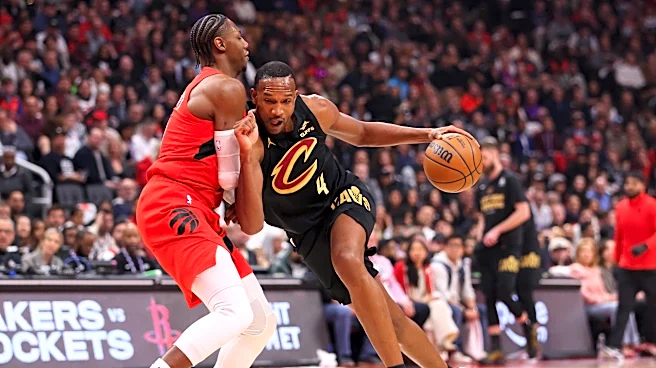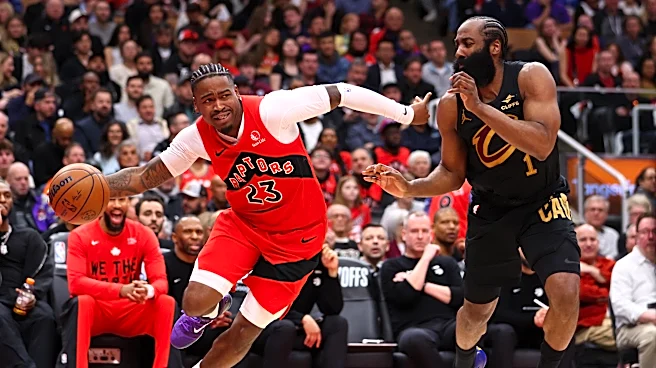




The Toronto Raptors aren’t supposed to be here.
But they are anyway, and it’s the best-case scenario for a team surviving mostly off their instincts. They’ve learned to live with injuries to key players and miraculously adapted to the harsh environment of playoff basketball.
They have one last mountain to climb in their Game 7 matchup with the Cleveland Cavaliers, but that’s mandatory for any team playing with house money.
With a monumental upset now potentially in play, here are six things the Raptors
must overcome ahead of the 7:00 p.m. EST tip-off:
History
The Raptors are 3-3 in Game 7:
- Lost 88-87 to the Philadelphia 76ers (2001)
- Lost 104-103 to the Brooklyn Nets (2014)
- Won 89-84 against the Indiana Pacers (2016)
- Won 116-89 against the Miami Heat (2016)
- Won 92-90 against the Philadelphia 76ers (2019)
- Lost 92-87 to the Boston Celtics (2020)
That’s not a bad winning percentage compared to the rest of the league. Legacy organizations like the Boston Celtics (0.729) and Los Angeles Lakers (0.666) rank the best, especially amongst those with the most experience. Modern-day contenders like the Oklahoma City Thunder (8/13) and the New York Knicks (7/16) offer a more realistic spectrum of results.
The real concern lies with the fact that home teams have won 74 per cent of the time throughout the history of the NBA. For all of the discourse surrounding the length of the regular-season, there’s still tremendous value in putting in the work during the marathon of a grind.
Troubles in the fourth
After averaging 35.3 points in the fourth quarter throughout the first four games of the series, the Raptors have mightily struggled in the final frame during the last two contests. Cleveland has figured something out or is playing with more urgency. They’ve limited Toronto to an average of 14.5 points in Games 5 and 6. The Raptors are also a combined -19 during this stretch. A part of their issue can be attributed to the loss of Brandon Ingram.
Assuming Ingram won’t be available despite his status being upgraded to questionable, this won’t cut it in Game 7. Even if the Raptors get off to a great start and figure out how to maintain it, it’ll all come down to whether they can produce in the final 12 minutes.
Can the Canadian do it again?
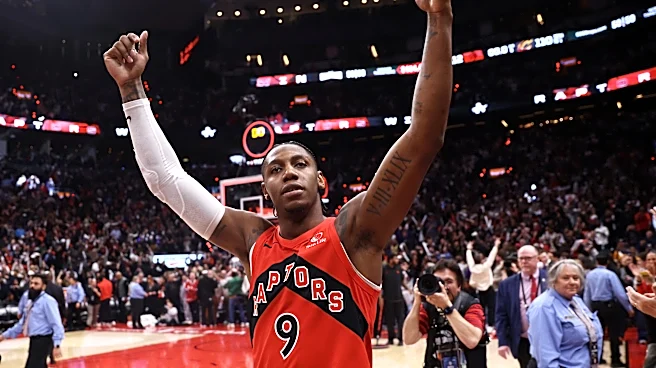
A part of the problem with the team’s late-game offence stems from RJ Barrett. The Canadian knocked down one of the greatest shots in Raptors history, but the road to that legendary moment was a bumpy one. In the fourth quarter, the Cavaliers fully lean into their strategic decision to put length (either Evan Mobley or Jarrett Allen) on Barrett to negate his drive. While Barrett found success earlier in the season, credit Mobley and Allen for doing a better job of absorbing contact, and subsequently making it difficult for any over-the-top finishes.
Even with his wrecking-ball style limited, what’s further complicating things is that Barrett’s outside shooting has abandoned him late in games. Cleveland is daring Barrett to beat them from the perimeter late in games. It worked out in the Raptors’ favour to win Game 6, but will it carry over to Game 7?
Need more from Shead
Another symptom of the Raptors’ offensive struggles is due to Jamal Shead. The point guard is the most obvious Raptors bulldog. It’s easy to spot the Kyle Lowry mannerism. Unfortunately, like Lowry, Shead has battled with his outside jumper during his young career. While he was never the sub-30 per cent shooter that Lowry was during his first four seasons, Raptors fans understand that anything Shead provides from beyond-the-arc is a breath of fresh air.
The Cavaliers have hedged their bets on the law of averages, often leading to wide-open shots for Shead in the fourth quarter. He frustratingly missed multiple attempts from the corner in Game 5 and went 2-for-7 in Game 6.
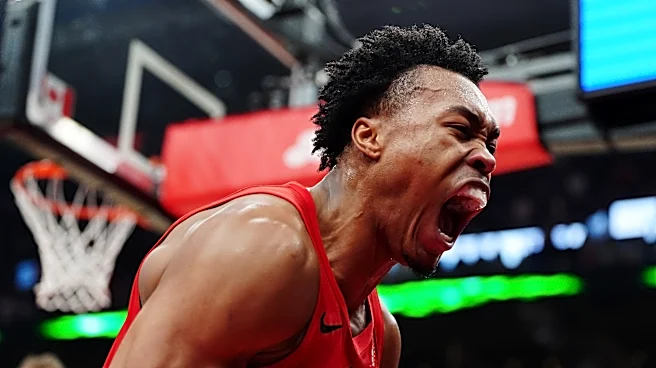
Toronto has done a few things to counter this, like putting the ball in Shead’s hands more, which leverages his strengths as a ball-handler and set-up man. But there will be pivotal moments when the ball is in the hands of Barrett or Scottie Barnes, and chances are Shead will be called on to hit a series-clinching type of shot.
Mobley is a problem
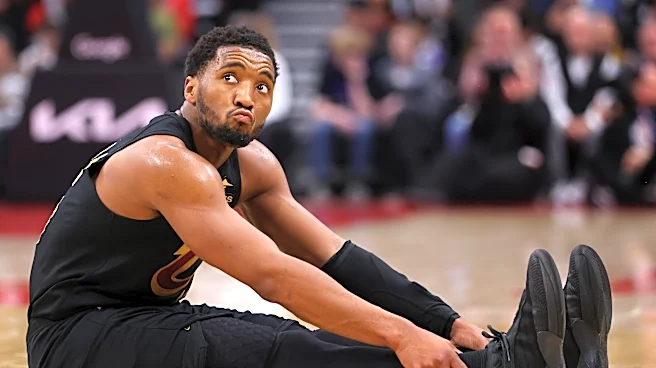
After being labelled as the primary reason for Cleveland dropping the first two games in Toronto, Evan Mobley has quieted the doubters. Mobley averaged 11.5 points and 7.5 rebounds while shooting 0-for-7 from deep during Games 3 and 4. Since then, the big man has been averaging 24.5 points and 11.5 rebounds. He’s also knocked down six of his 10 three-point attempts.
He confidently attacked Collin Murray-Boyles to send the game into overtime on Friday and nearly knocked down the game-winner in overtime.
Mobley is getting strong as the series progresses and another stellar performance could mean trouble for the Raptors.
Pride matters
Mobley’s running-mate in Jarrett Allen has also answered the call in the last two games. Allen drew criticism for how he handled the Raptors’ decision to guard him with a smaller player. While Toronto survived hiding players like Barrett, Shead of Ja’Kobe Walter on Allen earlier in the series, the Cavaliers centre has done a better job of exploiting that coaching decision.
The Raptors’ most physical bigs (Barnes and Murray-Boyles) also happen to be their two best perimeter defenders. Toronto has declared Donovan Mitchell and James Harden as the more dangerous threat, which means getting creative with Allen and Mobley.
In Game 6, Raptors head coach Darko Rajakovic had no choice but to deploy Jakob Poeltl. The Austrian centre played a series-high 21 minutes. This isn’t necessarily a sustainable option. Extended minutes for Poeltl mean other schematic issues could materialize.
Unfortunately, the Raptors may not have a choice after being out-rebounded 65-48 (19-10 on the offensive boards) in Game 6.