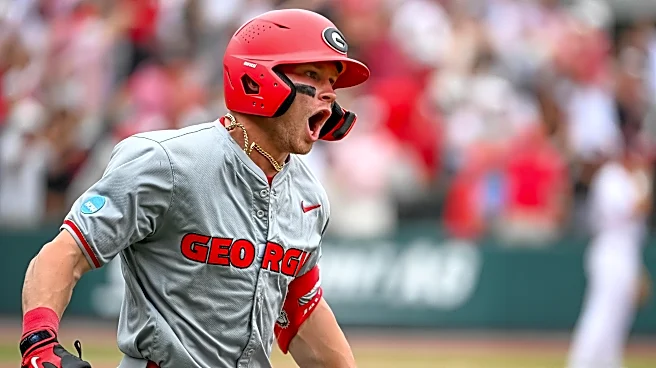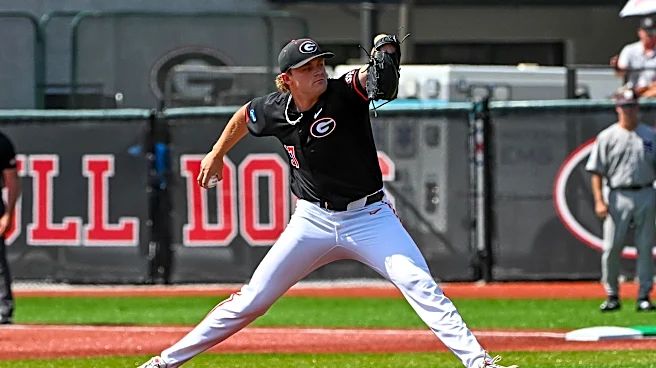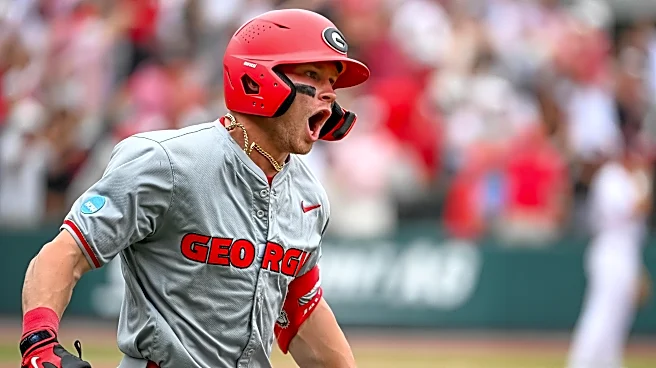





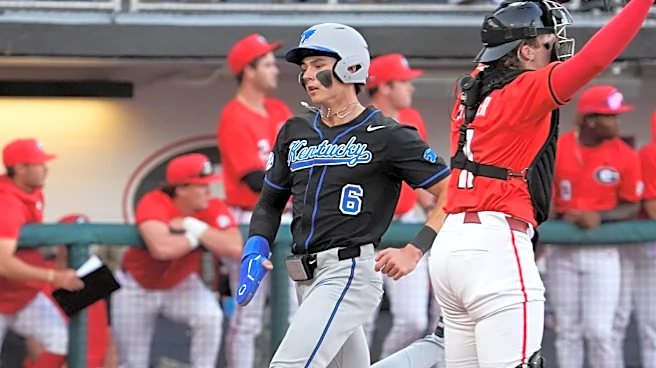


With the 37th pick in today’s MLB Draft the Colorado Rockies made Daniel Jackson the first Bulldog off the board. Colorado is getting one of the most productive players college baseball has seen in years, along with a genuine personality who made himself a fan favorite in Athens.
A Record-Setting Season
Jackson’s numbers from his 2026 season in Athens are staggering. In 67 games, he slashed .379/.473/.803 with 32 home runs, 87 RBI, 88 runs scored, and 26 stolen bases in 28 attempts. He led the nation in total bases and runs scored, finished
second in hits, home runs, and RBI, and became just the third player in Southeastern Conference history to win the batting triple crown.
Perhaps most remarkable, Jackson became the first catcher, and just the sixth player in Division I history, to record a 25 home run, 25 stolen base season while playing the sport’s most physically taxing position. He posted a .997 fielding percentage behind the plate with only two errors in 593 total chances, throwing out roughly a third of opposing base runners. production earned Jackson a full sweep of college baseball’s top individual honors: the Golden Spikes Award, the Dick Howser Trophy, the Buster Posey Award as the nation’s top catcher, the Bobby Bragan Collegiate Slugger Award, SEC Player of the Year, and consensus first team All-America recognition. And of course he led Georgia to its first College World Series appearance since 2008.
Strengths and Weaknesses
Jackson’s calling card is a blend of power and speed that’s rare for a catcher. He flashes raw power to all fields, and his athleticism behind the plate and on the bases sets him apart from nearly every other catching prospect in this draft class. His arm strength should also allow him to handle a corner outfield spot if a team wants to move him out from behind the plate down the road.
The concern scouts raise most often seem to cite with Jackson is consistency making contact. Jackson has shown real swing and miss throughout his college career, striking out 64 times in 319 plate appearances during his otherwise stellar junior year. His path has also been unusual. He started at Wofford, where he won Southern Conference Freshman of the Year, then struggled through a difficult sophomore transition after transferring to Georgia before breaking out as a junior. That inconsistency gives some evaluators pause about how his bat will translate against professional pitching, even though his improved strikeout rate this past season suggests real growth.
Why The Rhino?
Jackson’s teammates and coaches will tell you his personality is as memorable as his statistics. A self-described nature documentary enthusiast, Jackson has taken to narrating batting practice in his best Nat Geo voice and handing out animal nicknames to teammates, calling “the Orca” for Kolby Branch because of his tendency to play with his food at the plate, and “Talons” for pitcher Paul Farley. When he tried to nickname a teammate the Rhino, the name boomeranged right back at him, and it stuck. Given that rhinos are big and powerful, but surprisingly fast, and tough as a three dollar steak, the name fits Jackson to a tee.
Head coach Wes Johnson has been direct about what Jackson meant to the program’s turnaround season, saying unequivocally that the Bulldogs would not have reached Omaha without him.
For the Rockies, Jackson represents a high ceiling bet at a premium position. If the hit tool continues to develop the way it did in 2026, his new organization could be getting a middle of the order bat who also happens to catch.
Go ‘Dawgs!!!