
We’re still in the table-setting portion of our NFL draft coverage, so here I wanted to take a look at the entire draft landscape in one shot. A question I get often from Green Bay Packers fans is about
which positions are strong or weak in this upcoming class. So I want to answer that today.
Obviously, the Packers are out their first-round picks until 2028 because of the Micah Parsons trade, so I wanted to look at where the value is in this class — relative to where Green Bay will actually be picking. The Packers’ first selection will be 52nd overall, their only top-80 selection in 2026. Based on recent drafts and players’ rankings on the consensus draft board, it’s almost always the case that top-40 talents aren’t available by the 52nd pick, unless players have some injury or off-field red flags.
Historically, Green Bay doesn’t take players with those qualities — the last major injury risk I can remember the Packers drafting is Wisconsin pass-rusher Vince Biegel (some teams didn’t have him on their board at all because of his injury baggage), who wound up suffering a foot injury two weeks after he was selected in the 2017 draft and only ended up ever playing nine games for the team after being taken in the fourth round. For the most part, any injury issues that happen to Packers players are homegrown problems, not issues they came into the league with.
So, with that being said, let’s look at how this draft class stacks up, at least currently on the consensus draft board, outside of the top-40 to the 200th-ranked player in the class. After about the 200 range, the projection power of whether a player will or won’t be a draft pick really falls off a cliff.
Where is the draft strong and weak in the ranges that the Packers will actually be making selections? Here’s your answer.
2026 draft class value vs 5-year average
- Quarterback: 198%
- Safety: 129%
- Receiver: 124%
- Cornerback: 109%
- Edge Defender: 103%
- Tight End: 94%
- Offensive Line: 87%
- Running Back: 80%
- Linebacker: 77%
- Interior Defensive Line: 71%
Basically, I slotted each prospect (ranked 41st to 200th) on the consensus board over the last five draft classes relative to draft picks’ value on the Jimmy Johnson trade value chart. So, if a quarterback prospect was ranked the 50th overall prospect in a class, he would be worth 400 points to the quarterback position in his class.
The numbers listed above are how the 2026 class stacks up compared to the five-year average of the 2021 to 2025 classes. Quarterback is by far the strongest position in 2026 outside of the top 40, relative to the last five years, with nearly double the projected value (on the Johnson chart) compared to an average class.
I think Packers fans would say that the team’s biggest needs going into this offseason are the offensive line, defensive tackle, linebacker and cornerback in some order. Unfortunately for them, the only one of those positions that is expected to be deeper than average in this class is cornerback, which is only 9% better than average.
What helps the cornerback position in this class is the volume of Day 2-Day 3 selections, not a bunch of second-round caliber players. Earlier this week, we wrote about what Green Bay looks for at the position and why nine top-150 cornerbacks have the potential to be future Packers, out of a total group of 20. There’s some meat on the bone at cornerback, but it’s a lot better in the Round 3 or 4 area of the draft than in Round 2.
High: Quarterbacks
- #47 Trinidad Chambliss, Mississippi
- #66 Garrett Nussmeier, LSU
- #87 Carson Beck, Miami
- #125 Drew Allar, Penn State
- #150 Sawyer Robertson, Baylor
- #161 Taylen Green, Arkansas
- #192 Cole Payton, North Dakota State
- #195 Cade Klubnik, Clemson
Here’s a breakdown of the top-200 players, outside of the top-40, at the strong position in this class (on a relative scale): quarterback.
Green Bay could potentially draft a backup to sit behind Jordan Love, since Malik Willis is expected to hit free agency, but it is worth noting that the team brought in former draft picks Desmond Ridder and Kyle McCord to the team over the last month. Both are under contract for the 2026 season.
The big x-factor, as far as draft value at this position goes, is whether Trinidad Chambliss will win his lawsuit against Mississippi for his extra year of eligibility. He wants to return to college football and is willing to go to court over it. Any of these three possibilities is on the table for Chambliss in 2026: entering the traditional NFL draft, entering the supplemental draft or returning to the Rebels. Even though he’s considered a senior by the NCAA, he hasn’t participated in an all-star game this draft cycle.
Besides Chambliss, Garrett Nussmeier, Carson Beck and Drew Allar will all have their believers this cycle, but each of them has faults, too. Nussmeier is a smaller, smart quarterback who battled through injury all season and was eventually benched at the end of 2025. Allar looks the part of an NFL quarterback and has the arm talent of a starter, but he never took that next step in college. His season ended in October when he broke his ankle. Beck is another guy who didn’t improve at the college level, and there are questions about his long-term arm strength following his 2025 UCL surgery.
Low: Interior Defensive Linemen
- #44 Lee Hunter, Texas Tech
- #65 Domonique Orange, Iowa State
- #82 Dontay Corleone, Cincinnati
- #83 Darrell Jackson Jr., Florida State
- #110 Tim Keenan III, Alabama
- #131 Zane Durant, Penn State
- #139 Zxavian Harris, Mississippi
- #142 Skyler Gill-Howard, Texas Tech
- #143 Gracen Halton, Oklahoma
- #147 DeMonte Capehart, Clemson
- #154 Albert Regis, Texas A&M
- #165 Chris McClellan, Missouri
- #187 Cameron Ball, Arkansas
- #189 Nick Barrett, South Carolina
- #199 Tyler Onyedim, Texas A&M
On the lower end of the value scale is the interior defensive line, where there’s only one projected second-round pick at the position. There’s plenty of volume at the position on Day 3, but not many Day 2 players.
I believe that Green Bay will be in the market for a starting nose tackle this offseason, as they played all of 2025 without a starting-caliber player at the position once they traded Kenny Clark away to the Dallas Cowboys. Devonte Wyatt, Colby Wooden, Karl Brooks, Warren Brinson, Jordon Riley and Nazir Stackhouse are all 2025 contributors who are still under contract with the team in 2026. It’s sort of a swing big or don’t swing at all position for the Packers this draft class.
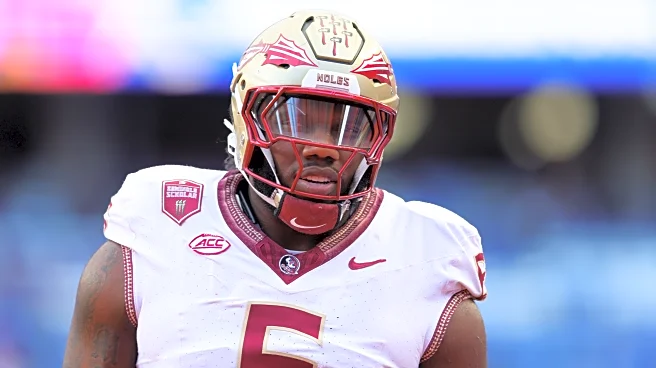
After Lee Hunter, the interior defensive linemen who have a shot at being a Week 1 starter this year are Domonique Orange (a highly athletic player who played in a funky defense), Dontay Corleone (who has been a known prospect for years but remained in college as he battled through a blood clot issue) and Darrell Jackson Jr. (who measured in as the largest overall player at the East-West Shrine Bowl this week).
Some of the prospects available later on in the draft, like Penn State’s Zane Durant and Texas Tech’s Skyler Gill-Howard, are far too small to play nose tackle at the next level. They’ll need to be three-technique under tackles in the NFL. Zxavian Harris has been arrested twice, once for domestic violence and obstructing justice and once for DUI, MIP, reckless driving, running a stop sign and not using his headlights. I’m going to go out on a limb and assume Harris won’t be a Packer.
–
Green Bay often uses the draft to collect talent for future needs, rather than to address the team’s immediate needs. It’s why their rookie first-round picks have only averaged six starts per year (even as injury replacements) over the last decade-plus under Ted Thompson and Brian Gutekunst. They’ll take a Jordan Morgan, Lukas Van Ness or Matthew Golden with the intent to not have to start them in a full-time role for multiple seasons. So, without a first-round pick, I really don’t expect them to force a need early on.
With that said, it’s not a great draft at the positions where they could use immediate upgrades, outside of the cornerback position (and even that is more in the mid-rounds than in the second round). It’ll be interesting to see how Gutekunst navigates this space in April. Maybe he trades up for falling value at a position of need early on. Maybe he just sits back and takes a best player available approach and says to heck with positional need. It really could go either way.