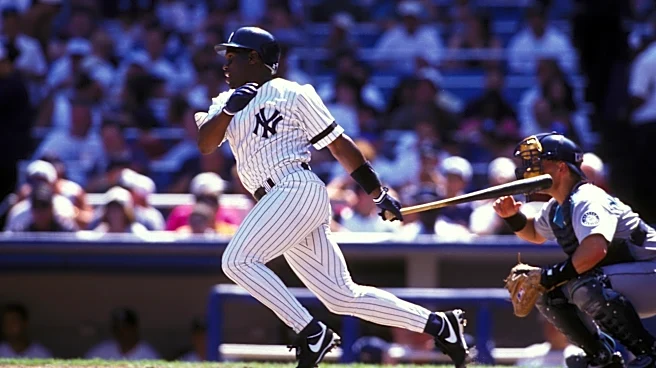




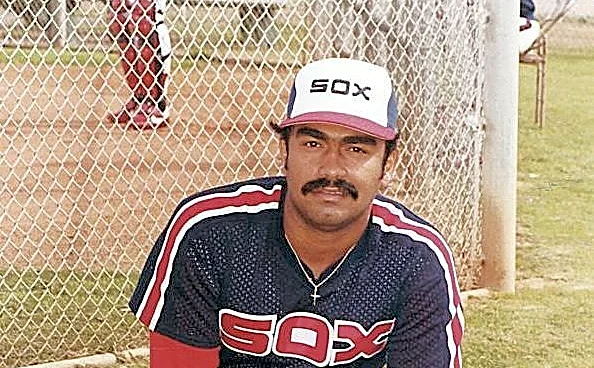
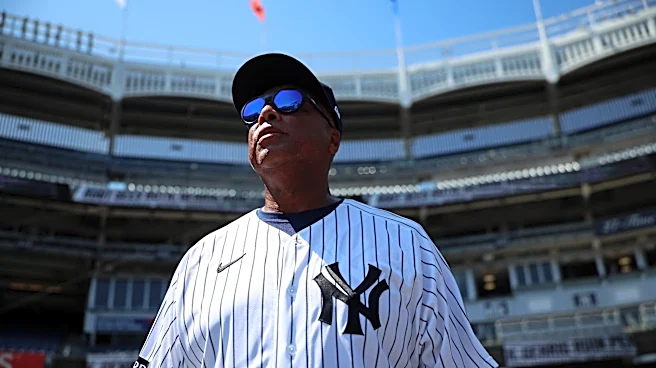
Hall-of-Fame outfielder Tim Raines was one of the faces of Canadian baseball in the 1980s—an adroit hitter and fast-twitch baserunner whose 808 career steals ranks fifth all time. By the mid-90s, he had won a batting title, accumulated 2,295 hits, reached 50 steals in eight seasons, and been named an All-Star seven times in his prime with Montreal, before a strong yet less spectacular five-year stint in the South Side. But a taste of World Series glory had always eluded Raines until he came to the Bronx
in 1996.
With his prime years behind him, Raines donned the pinstripes and brought his wealth of experience to a club on the rise; while the Yankees, for minimal cost, brought an additional marquee name into the fold alongside elder statesman Wade Boggs. Despite injuries which limited his playing time in New York, Raines won two World Series rings with the Yankees in 1996 and 1998.
Born: September 16, 1959 (Sanford, FL)
Yankees Tenure: 1996-98
Raines was, commensurate to his preternatural athleticism and agility, a three-sport athlete who played baseball and football in addition to running track for Seminole High School in Florida. He was selected by the Montreal Expos in the fifth round of the 1977 Draft, behind pitchers Bill Gullickson and Scott Sanderson. Raines, though, was the prize. The young switch-hitter broke out as a rookie in 1981, securing his first of seven straight All-Star selections in the National League and establishing himself as one of the most feared (and consistently successful) base stealers in the league.
In that strike-shortened season, the Expos defeated the Phillies in the expanded playoffs before falling in a five-game NLCS to the Dodgers. Raines, who went 5-for-21 in the series with no steals, would never make the playoffs with Montreal again. He would be 33 the next time he suited up in October—with the White Sox, who fell to the defending champion Blue Jays in the ALCS. His performance in that series was far more Raines-esque: 12 hits in 29 at-bats.
Raines took a step back offensively in his final two years with Chicago as he reached the end of his prime. Now in his mid-30s, his teammates and coaches wanted him stealing fewer bases, though Raines maintained he was still as quick as ever. The White Sox, unconvinced, dealt him away a few days after Christmas 1995. Minor league pitcher Blaise Kozeniewski was the lone player the Yankees parted with for Rock.
With a fresh start in a new organization, Raines relished the opportunity to play with an organization which had gone out of its way to bring him in for a championship quest. Yankees GM Bob Watson gave him a contract extension right after trading for him. He arrived right on time to bolster a roster poised to begin a dynastic run.
While Raines fractured his thumb and missed time from May to August in 1996, he proved a useful contributor for the Bombers when healthy, with a characteristically high .383 on-base percentage and 20 doubles bolstering his slugging percentage to .468. In a postseason timeshare at left field with slugger Darryl Strawberry, he contributed 11 hits in 13 appearances.
While he never plated a run himself, he scored seven times as the Yankees ran the table in the American League playoff. He started Games 2, 3, and 4 of the World Series, scoring the go-ahead run of Game 4 on Steve Avery’s bases-loaded walk of Wade Boggs in the 10th inning. Raines had himself walked to catalyze the two-run rally which wiped away the 2-0 series deficit into which the Yankees had fallen. Raines, who memorably made the final catch of that game while slipping and falling on the warning track, did not take the field again in the Fall Classic, but New York finished the reversal in six games, giving the veteran his long-awaited World Series ring in his 16th full season.
Raines returned for 1997, continuing to produce when he saw the field. His 74 games played constituted only a modest uptick from the year before, but he remained highly productive with a .321/.403/.454 slash line. However, despite hitting a three-run home run in Game 1 of the ALCS against Cleveland, the Yankees were denied their title defense, losing in six.
Raines re-upped with the Yankees ahead of 1998, a year in which he served as the top reserve player for one of the greatest teams in baseball history. Despite being more of a backup, Raines appeared in more games than he did in the previous two seasons, eclipsing the 100-game threshold for the only time in pinstripes. The reliable veteran continued to be an absolute pain for pitchers to get out, as his on-base percentage once again hovered close to .400 for the whole season. On June 10th, he picked up his 800th career stolen base in where else but Montreal’s Stade Olympique, where his star was born in the 1980s. He became just the fifth player in MLB history to reach that milestone.
Now 38, Raines was increasingly stashed at DH, then struggled in the 1998 playoffs and largely rode the bench, with Chili Davis getting the majority of the plate appearances there. Still, when he wasn’t on the field, he had a front-row seat to the finest incarnation of this Yankee dynasty—including all four games of their decisive World Series sweep in San Diego.
With two World Series rings in hand, Rock could easily have walked off into the sunset as a man with nothing more to prove—but like many a baseball lifer, he couldn’t give the sport up. Not even after he was diagnosed with lupus in the middle of the 1999 season did he hang up his spikes. The treatment he had to undergo for the autoimmune disease cut short his one-year cameo with the Oakland A’s—and while he attempted to rejoin the Yankees in 2000, he didn’t make the roster.
Still, he continued playing. In 2001, Raines, already inducted into the Expos’ Hall of Fame, returned to the club and played 47 games in his old colors before taking the field with his son, Tim Jr., with the Orioles at the tail-end of the season. Even after that, he snuck in one last season with the Marlins before finally retiring at age 43.
Raines’ late retirement meant a rather delayed start to his Hall of Fame eligibility, which began in 2007. Initially, he received little serious interest from voters, but as the 2010s wore on and he neared the end of his decade on the ballot, the sabermetric community—as well as his contemporaries—rallied for his induction, as they would later do for Edgar Martinez and Larry Walker in those players’ final year of eligibility. At last, in 2017, Raines got his plaque in Cooperstown.

While the man they called “Rock” finished his career as the most efficient base stealer of all time among those who even approached his body of work, Tim Raines was not that dynamic force at the top of the lineup once he came to the Bronx. But his other skills—his outstanding contact ability, discerning plate discipline, and the ability to plug gaps and pick up doubles—hadn’t gone anywhere. Those skills allowed him to assist the Yankees as they made the leap from franchise in limbo into an era-defining dynasty.
See more of the “Yankees Birthday of the Day” series here.