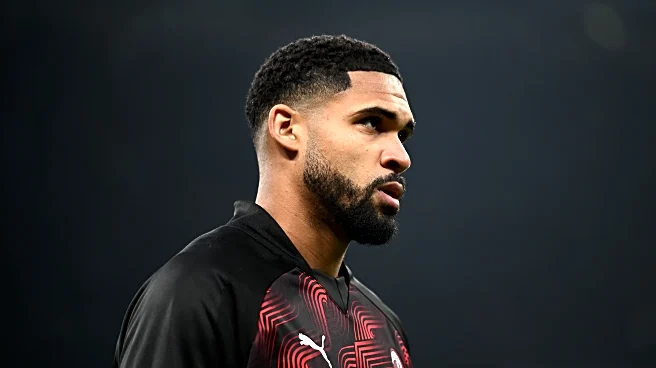



In January, there were increasing doubts about the future of Ruben Lotus-Cheek at Milan. Aston Villa attempted to bring him back to England and at a point, it seemed like his exit could go through.
Fortunately for Max Allegri’s side, it did not. With a new contract on the way, the Englishman showed his value to the Rossoneri in the win over Pisa
It is fair to suggest that the midfielder didn’t have an excellent game and neither was was he the worst player on the pitch by any means. But a lot of times,
players like him add functionality through their versatility and this was key in the tie.
Milan’s 3-5-2 isn’t the most orthodox formation, especially since Adrien Rabiot plays as a withdrawn striker. This requires someone from midfield to find himself in advanced areas and Loftus-Cheek is that player for Allegri.
As he did against Lecce and Bologna, the ex-Chelsea player found himself in the right area in the final third for the goal.
His shooting map – via Understat, provides a fair reflection of how he likes to operate and his strengths lie in the final third.

Numbers wise, he has underperformed on xG but Loftus-Cheek is fairly economical with how he shoots. Besides, he shows constantly that he protects the ball very well. This was especially evident against Pisa, as he used his body to keep the ball with the Rossoneri, allowing them to keep moves flowing.
Ideally, the midfielder would present a conundrum under any other manager. Positional managers usually focus on their systems, shoehorning players into their strict ideas. Loftus-Cheek isn’t the player to be operating in rigid systems.
Besides, injuries have made sure that he is a different player than what he was. He thrives more often when played to his strengths which lie inside the box.
Allegri always tailors his system to the strengths of his players – as evident from how he uses Adrien Rabiot. The Frenchman was constantly played further forward even at Juventus. That was very different to how Maurizio Sarri or Andrea Pirlo used him, as their positional systems dragged him deeper into midfield and he struggled.
Loftus-Cheek is similar. He might not be someone who progresses the ball in a spectacular way and numbers show that. Using him deeper would be a waste of resource, especially since a new deal is on the way.
Allegri recognises that and it does seem like he trusts the Englishman quite a bit. That is probably going to be key in the contract, with Loftus-Cheek’s versatility also likely to be quite important. He can, after all, play as a withdrawn striker when Rabiot is not fit or suspended – as he will be in the next game.
A player like that who always gets on with the job has a value which means a lot to a manager. It will not be a surprise if Loftus-Cheek scores more key goals in the next few weeks.