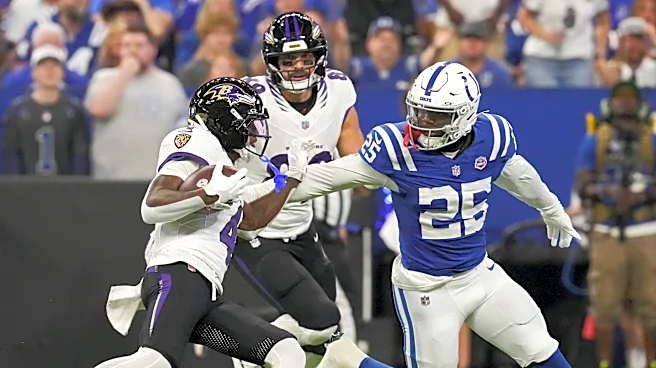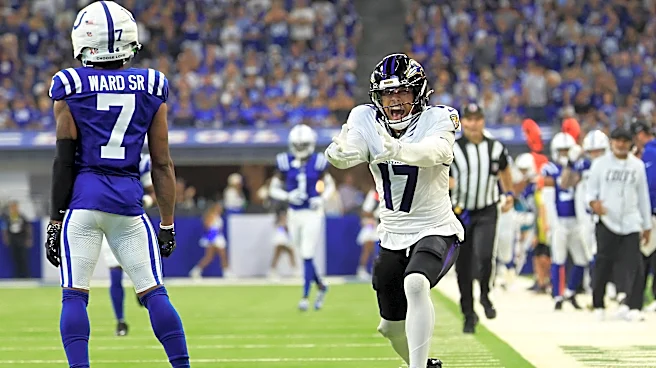




The Colts spent the offseason talking about urgency, change and a defense that was supposed to look better under Lou Anarumo in Year 2.
Then they opened the season by giving up 41 points and 506 yards at home.
There is some obvious context here as Baltimore is a difficult offense to defend. Lamar Jackson is a two-time MVP, Derrick Henry is still one of the hardest backs in football to bring down and Zay Flowers is a tough cover for any cornerback, especially one making his first start after missing
all of last season.
That can all be true, and Sunday can still be unacceptable.
The Ravens did not need a perfect game to move the ball. They had eight explosive plays in the first half alone, according to Ben Solak. Josh Wilson noted that 506 yards allowed were the most the Colts have ever given up in a season opener in the Indianapolis era. He also noted that this was the first time since 2015 that Indianapolis allowed 40-plus points and 500-plus yards in any game.
That is not the kind of performance a team can explain away by pointing to the opponent. The pass rush was fine overall. It was not dominant, but it was not the main reason the defense fell apart. The bigger problems were behind it. The Colts struggled in man coverage, lost too often against Baltimore’s heavier run looks, got almost nothing from their linebackers and looked disorganized far too often for a unit that entered the year with this much pressure on it.
Justin Walley and man coverage
Justin Walley’s first start could not have gone much worse.
That does not mean the Colts should give up on him. It does not mean he cannot become a good player. It does not even mean the team was wrong to trust him going into the season. It does mean that Sunday was a bad introduction to the NFL.
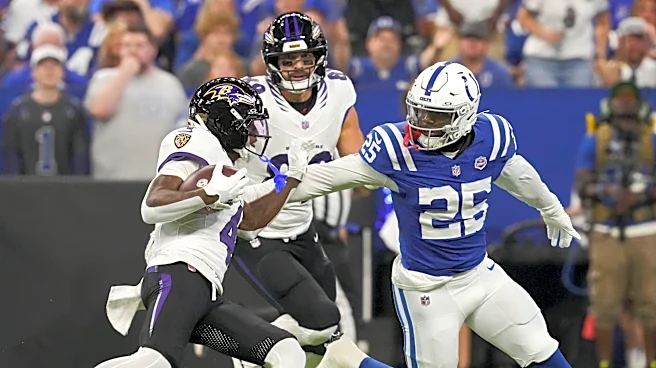
Walley was picked on early, and the Ravens kept going back to him. Flowers beat him on the Ravens’ first play of the game for a 49-yard gain, and that set the tone for the rest of the afternoon. Walley looked late reacting to cuts, struggled to stay attached across the field and had a difficult time dealing with the type of movement Baltimore used to attack man coverage.
Flowers was a brutal first assignment. He is quick, sudden and extremely difficult to cover when an offense is using motion, crossing routes and condensed formations to create traffic. The Ravens knew what they were doing. They put Walley in conflict and forced him to chase one of the league’s shiftier receivers through space.
Still, that is the job. If the Colts are going to play this much man coverage, the corners have to hold up better than they did Sunday.
Brett Kollmann posted that Indianapolis played man coverage between the 20s at a 61.5 percent rate, per Next Gen Stats. The Colts allowed 13.4 yards per pass on those plays. That is a defensive plan getting punished.
Walley was the main target, but he was not the only problem. A.J. Haulcy was at fault on one of the Flowers plays. The Colts also failed to properly recognize Flowers when he was aligned in the backfield, which should not happen against a player who is clearly one of Baltimore’s most dangerous weapons. Charvarius Ward had a rough rep on a deep ball where his feet looked stuck in the ground, and instead of reacting cleanly, he ended up grabbing late after getting beaten.
The linebackers did not help much underneath either. Baltimore hit crossing routes and man-beaters, and the Colts too often looked late sorting through it. That is the danger of playing man coverage against a team that knows how to manipulate matchups. If one defender is late, the ball comes out. If the linebackers are unsure underneath, the middle of the field opens up. If the safety help is late or the corner loses leverage, a modest gain can turn into a field-flipping play.
The Colts wanted to be more aggressive defensively this season, which is fine but Anarumo’s defense was always going to ask more of the secondary. What Sunday showed is that playing man at that rate comes with a price if the corners are not winning and the rest of the defense is not connected.
Run defense
The run defense was not much better.
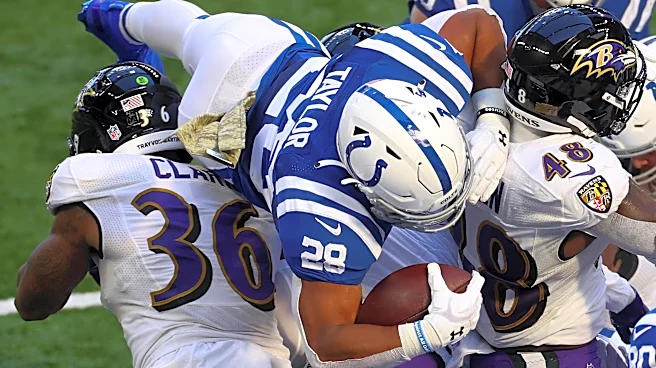
Baltimore leaned into bigger personnel and jumbo looks, forcing the Colts to answer with heavier fronts. That brought Jerry Tillery onto the field more often, and he had a rough game. When teams go big-on-big, there is nowhere to hide up front. Every defensive lineman has to hold his gap, especially when the Colts are using five-man fronts with three interior defenders.
Tillery did not do that well enough. Baltimore moved him too easily, and once the Ravens started creating movement inside, the linebackers had to clean up the mess… and they didn’t.
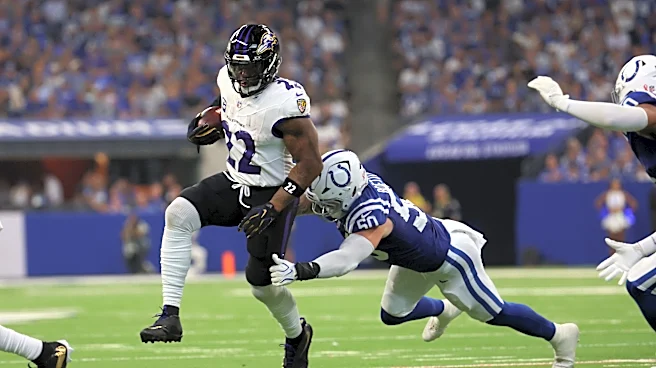
Derrick Henry finished with 104 rushing yards after contact, according to PFF. Some of that is Henry being Henry. He is going to break tackles, fall forward and turn ordinary runs into bruising gains; that is part of playing Baltimore. The problem is that the Colts were not just losing to a great back as they were failing to finish plays they had chances to stop.
The linebacker play was especially concerning. Jaylon Carlies played 42 snaps and did not record a single stat, according to PFF. That’s horrible… A linebacker can do some things that do not show up in the box score, but when the defense is giving up 41 points and getting pushed around in the run game, 42 snaps with no recorded production is a major problem.
Akeem Davis-Gaither did not look comfortable either. He looked late diagnosing plays and just looking lost in space. There was a play where he completely followed his man all the way down the field without realizing Lamar Jackson was right behind him running the whole time. Baltimore makes linebackers think, and that is part of what makes the Ravens so hard to defend. They use Lamar, Henry, motion, tight ends and misdirection to stretch every rule. Still, the Colts needed their linebackers to settle things down, and instead they looked like part of the problem.
The CJ Allen usage also deserves scrutiny. Chris Ballard called Allen a green dot guy after drafting him, yet he did not play on defense in a game where the linebacker group was struggling badly. Maybe the staff did not want his first defensive snaps to come against Baltimore. Maybe they had a specific plan and did not want to abandon it in Week 1. Whatever the explanation is, it is hard to watch that linebacker performance and not wonder why Allen never got a chance.
The Colts did not lose the run game because of one player. Tillery struggled mightily, but the issue went beyond him. The interior depth did not hold up, the linebackers did not finish, and Henry kept turning contact into extra yards.
Against Baltimore, that’s how you get slaughtered.
Is Cam Bynum the right player for the green dot?
Cam Bynum is a very good player. Nothing about Sunday changes that.
The question is whether he should be the player calling the defense.
This is not about putting the entire performance on Bynum. A defense does not give up 41 points and 506 yards because of one player wearing the green dot.
The defense looked disorganized enough that the communication setup has to be part of the review.
There is a reason linebackers have historically been the players who call the defense. They are in the middle of the formation. They are close to the line of scrimmage. They can communicate with the defensive line, turn around to the safeties and still get themselves set before the snap.
Safeties can do it, and Bynum is smart enough to handle a lot of responsibility. The challenge is that safeties can end up far away from the play. They might end up 20 yards deeper than where they started so getting the call in, relaying it, making checks and then getting lined up can be tougher from that spot than it is for a linebacker standing in the middle of the defense and likely not getting too far away from his original spot.
Maybe that had nothing to do with what happened Sunday, but I think the question is fair.
The Colts failed to recognize Flowers in the backfield on this play below… there were just so many different plays that screamed disorganization which is why the question needs to be raised.
Bynum may end up being fine with the green dot. He may settle in and make this look like a one-week overreaction. He took responsibility after the game, which is what a veteran leader should do. Still, if the defense continues to look scattered, the Colts will have to ask whether the current setup gives them the best chance to play fast and organized.
One game does not decide a season, but it can reveal problems.
The Colts have plenty to clean up after Sunday, and none of it is minor. Walley was not ready for the Flowers matchup. The man coverage got punished. The run defense was pushed around by Baltimore’s heavy looks. Tillery struggled badly. The linebackers did not make enough plays. Bynum wearing the green dot is at least worth monitoring after how disjointed the defense looked.
The worst part is that this happened with a healthy defense at home in Week 1. This was not a late-season game with backups trying to survive. This was the opener, after an offseason built around urgency and defensive improvement.
The Ravens are good, but the Colts made it far too easy.
There is time to fix it, and some of it should improve naturally. Walley will not face Flowers every week. The linebackers should get more settled. Anarumo should have a better feel for what this group can and cannot handle after seeing it against one of the league’s tougher offenses.
That does not make Sunday any less alarming.
A team that believes it can compete in the AFC South cannot give up 41 points and 506 yards at home and treat it like a normal Week 1 loss. The Colts defense did not just have a bad day. It gave the team a long list of problems that need answers quickly.