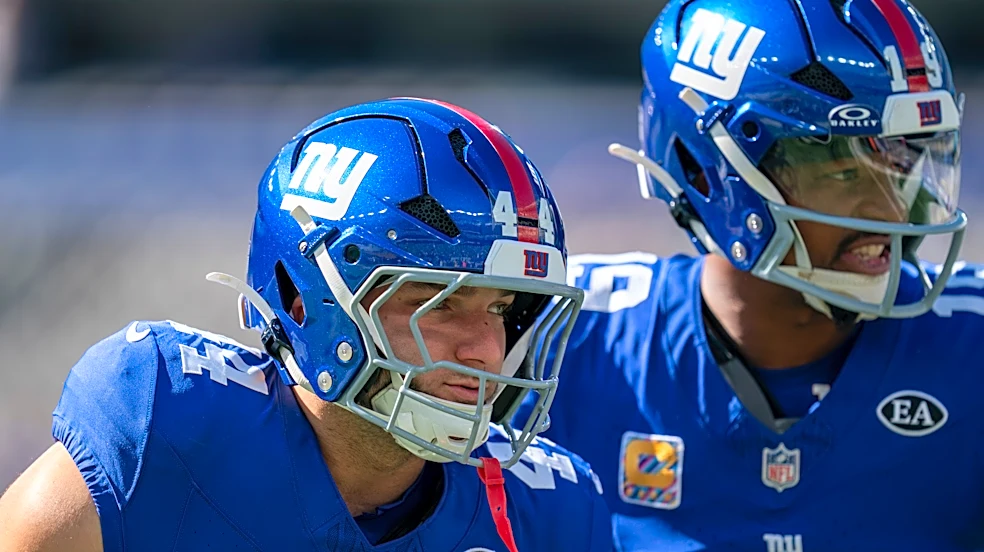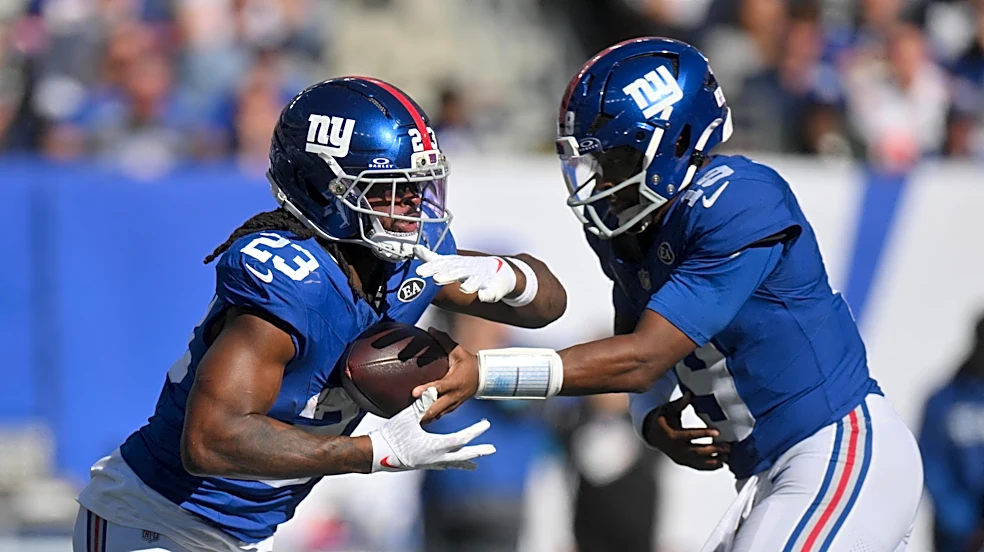



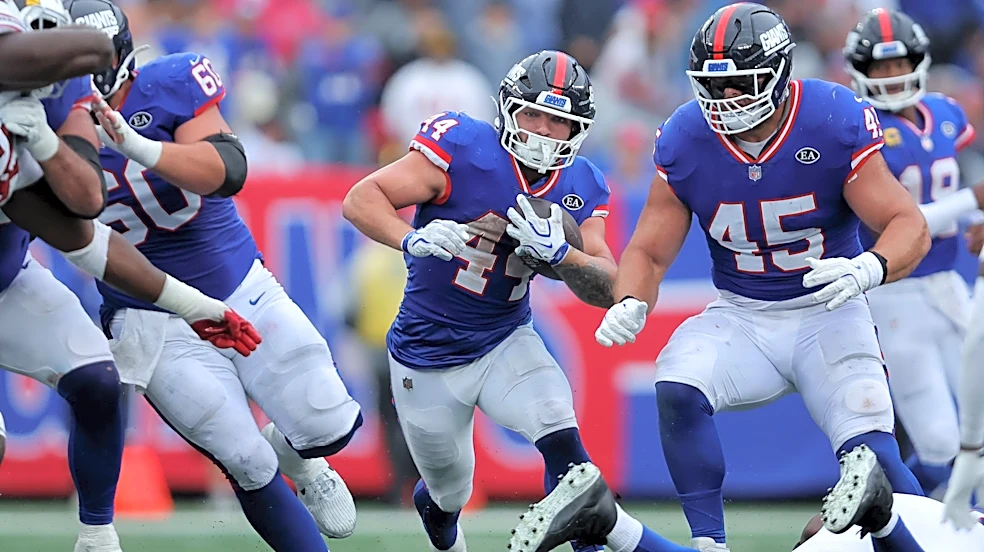

The New York Giants run game could best be described, in a word, as “bad”.
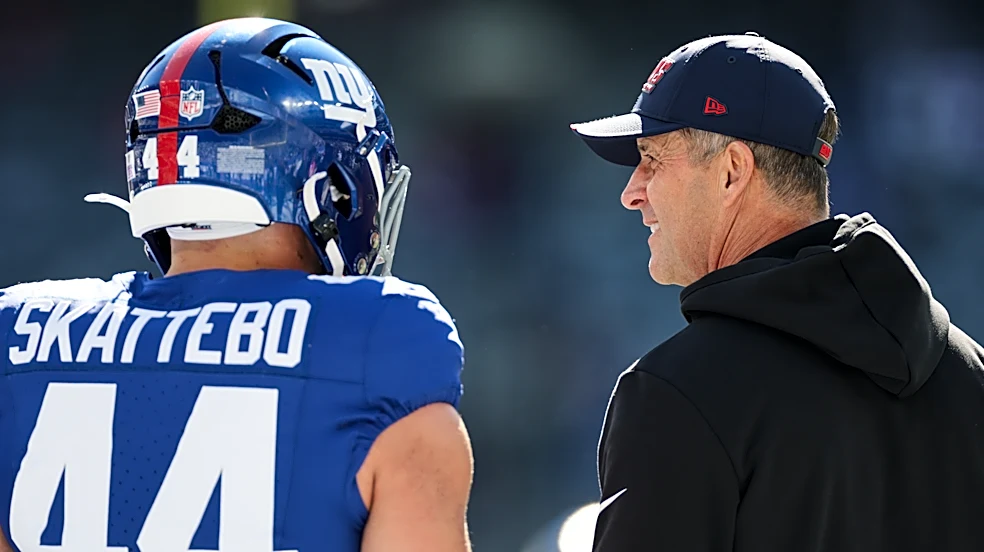
A desire to run the ball has been woven into the very DNA of the Giants’ offense. A strong running game has been John Harbaugh’s signature for as long as he’s been a head coach, and he brought in long-time run game guru Greg Roman to design the Giants’ rushing attack.
Harbaugh also brought fullback Patrick Ricard over from Baltimore in free agency and the Giants made a point of drafting the powerful offensive lineman Sisi Mauigoa.
The Giants also drafted Malachi Fields, a big-bodied wide receiver with significant blocking upside.
The Giants’ final roster roster is a departure from NFL norms and featured four running backs, four tight ends, a fullback, and just four wide receivers, one of whom has primarily been a returner.
Despite wanting to be a smash-mouth, run-heavy offense with an emphasis on the power run game, the Giants’ run game has degraded with each passing week. They’ve been plagued by turnovers and largely been ineffective on the ground.
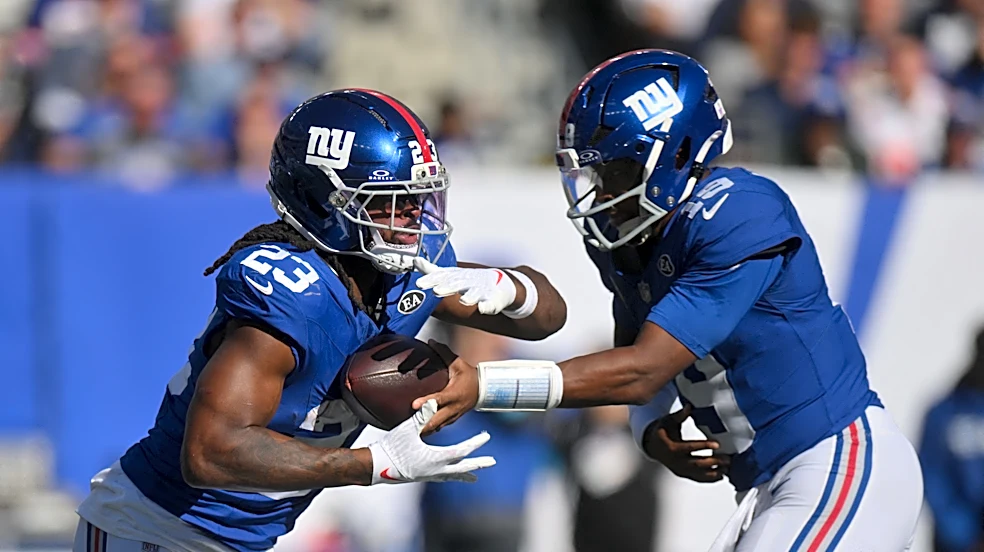
In Week 4, the Giants’ backs carried the ball 28 times (Cam Skattebo: 18, Najee Harris 9, Tyrone Tracy 1), and averaged a combined 3.1 yards per carry with a fumble. In Week 5, the three backs carried the ball 21 times (Skattebo: 13, Harris: 5, Tracy: 3) and averaged 3.5 yards per carry. That, however drops down to just 2.55 yards per carry if we subtract Skattebo’s 19-yard carry at the end of the game as an outlier.
The Giants’ running game reached a new low in the loss to the New Orleans Saints. Harris got the start while Skattebo was (effectively) benched after he fumbled away the game against the Cardinals, getting just six offensive snaps and zero touches.
“I didn’t expect to have zero, but I mean, I was expecting to not play as much just like I did,” Skattebo said after the game. “And the message is keep your head down and keep going, you know. They understand the type of player I am and I just got to continue to do my job and do it to the best of my ability.”
“It sucks, but I can’t put the blame on anybody else but myself,” he added. “I did it to myself. So their consequences leave me on the sidelines, keep me there, and I understand why, like I said. And, I’m going to continue to go out there and give it everything I have for the New York Giants and continue to work hard.”
The Giants running backs carried the ball just 14 times (Tracy: 6, Singletary: 4, Harris: 4) and picked up a total of 34 yards on the ground, for an average of 2.4 yards per carry. Tracy, though, did score the Giants’ first rushing touchdown since Week 1.
After the game, Harbaugh blamed the flow of the game both for the lack of touches as well as Skattebo’s absence. And it is true that the Giants were forced away from the run game once the wheels fell off the offense and defense in the third quarter. However, that also doesn’t explain why the run game was so ineffective when the game was still close or after the Giants had closed the gap.
The problem is multifaceted, with problems in the blocking, the runners, and in the structure of the offense.
Blocking woes
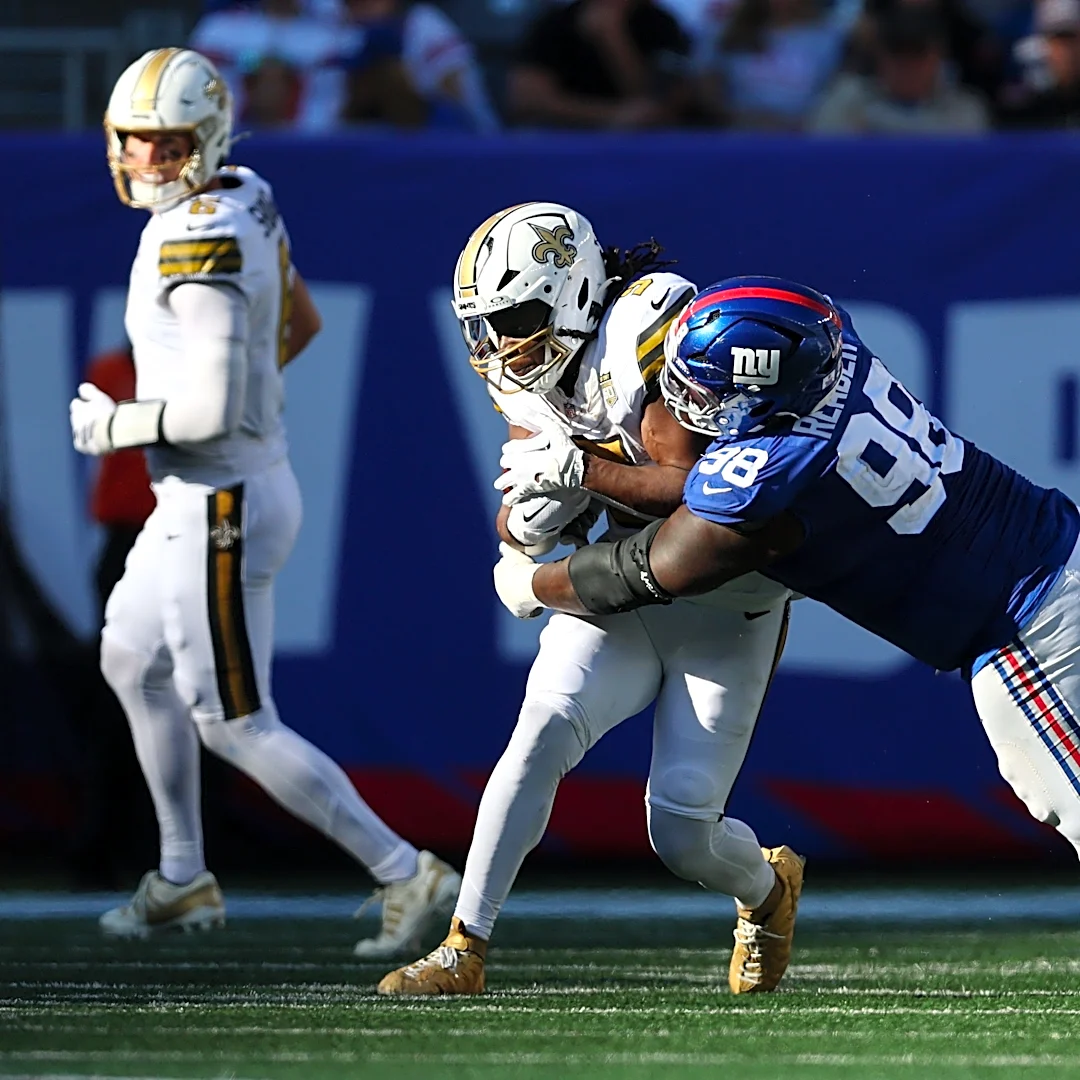
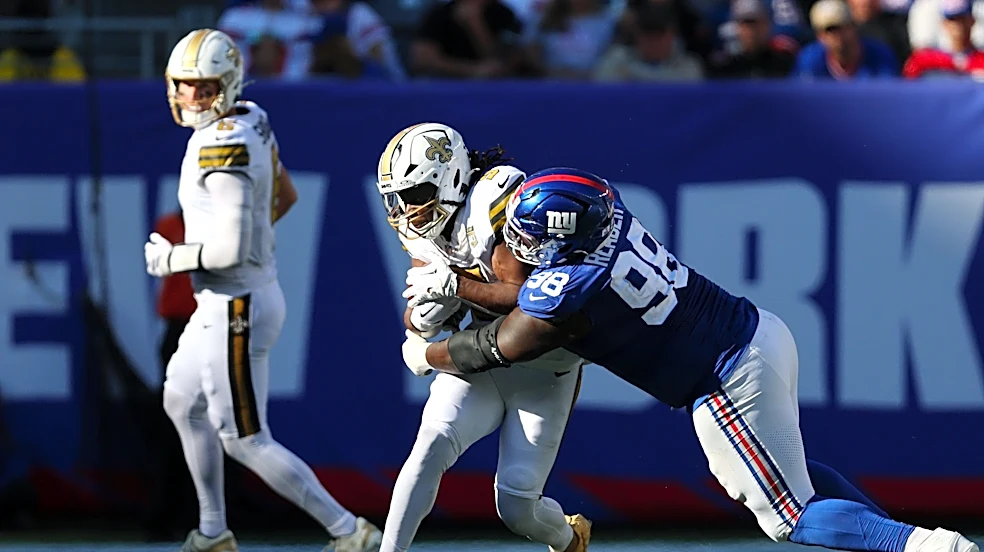
The Giants have struggled to block their run plays. There have been both poor blocks allowing penetration into the backfield as well as free runners that might have been missed blocks or oversights in the blocking scheme.
Harris’ first run of the afternoon might be one such play.

The Giants run a counter play outside zone to the offensive right, while having Darnell Mooney pull to the play-side as a misdirection along with Isaiah Likely from an H-back alignment. The offensive line does a pretty good job of washing most of the Saints’ front to the side and creating an initial lane for Harris. However, Andrew Thomas doesn’t get to the second level, leaving a linebacker to tackle Harris. At the same time, while Chase Young is frozen by Mooney and Likely’s motion, he’s completely unblocked on the back side of the play.
If the Giants intended the motion to freeze the back-side defender long enough for the runner to get to the second level, that would be an issue with the play design. However, if one of Likely and Mooney was supposed to chip Young (which should be Likely), that would be a missed assignment.
On the second play, the Giants call an off-tackle run to the right using outside-zone blocking. Again, it’s initially blocked up well, however the key block falls to tight end Thomas Fidone II, who’s asked to pull from the left edge all the way around to the right side. Fidone does a good job of getting in position, but misses the block.

Harris does a better job than anticipated of getting to the edge, and the Giants had blockers in place at the second level. Both right tackle Marcus Mbow and right guard Sisi Mauigoa did a good job of getting into space and staying ahead of the play. They were in position to block Harris up for a nice run along the right sideline. However, the player Fidone missed was able to torpedo Harris and trip him up for a gain of just 2 yards.
The first play of the very next drive featured an even worse non-block (again from Runyan Jr.).

The Giants once again seek to start the drive with a run, showing a heavy look with both Patrick Rickard at H-back and Isaiah Likely at fullback. Harris takes the handoff, however Runyan is beaten badly by the defensive tackle and driven deep into the backfield and into Harris. The defensive tackle not only takes half-man leverage, but Runyan pops upright out of his stance and never manages to establish any kind of leverage himself. So instead of being able to redirect or re-anchor, he is put on skates.
The running backs
In addition to the blocking issues, the Giants’ backs were also inefficient, and both Harris and Tracy potentially left significant yardage on the field.
“Nobody has really taken the bull by the horns,” Harbaugh said after the game. “Motor (RB Devin Singletary) really hasn’t had a chance to take the bull by the horns. So, we thought we’d get him in the mix, too. So, we put four guys up and see if we can get something going with the running game. That was the idea.
“You can say, well, I don’t like that. I don’t like you divvying up the snaps between four backs. And I can tell you, I don’t like it either,” he added. “One of those guys needs to step up. Somebody needs to step up and be the back. And none of those guys have done that yet. And when one of those guys steps up to be the back, then they’ll be the back. That’s your answer. And that’s as honest as I can be about it. And they know that, too. And believe me, they’re all hungry. They want to step up. One of those guys wants to step up. Somebody’s going to step up and take that job. We’re going to see who it is.”
That was born out in NextGenStats GPS tracking tacking data after the game.
Part of the issue goes back to blocking and their teammates not sustaining their blocks after the handoff. However, the Giants’ backs also showed some lack of patience behind the line of scrimmage.
None of the Giants’ backs had enough carries to qualify for NextGenStats rushing leaders stats. However, we do know that Skattebo was sixth in the NFL in “efficiency” last week, and second in time behind the line of scrimmage. Based on those numbers, it seems likely that the Giants’ primary backs have been trying to hit the holes as hard and fast as possible. However, a modicum of patience could help the Giants realize their missing yardage.
Patience and vision are two of the most important traits among running backs, perhaps even more important than raw speed and explosiveness.
While none of the Giants’ backs are true home run hitters, each has the agility and short-area quickness to exploit running lanes. However, both Skattebo and Harris have struggled with patience at times. One of the knocks on Harris coming out of Alabama was that he can play “in a hurry” and not give blocks a chance to be established. Skattebo, meanwhile, has a tendency to seek contact first, which has led to him missing opportunities for yards after contact in favor of the contact itself. His style can be a spark for the offense when it works, but fumbles and leaving yards on the field are both risks.
Tracy and Singletary both show better tempo as runners, and the Giants also have a tendency to use them from more varied formations than with Harris and Skattebo.
Having multiple skill sets and being able to establish a physical tone as well as having more dynamic threats out of the backfield are both important. That said, the Giants should do more to make their rushing offense look the same no matter who is in the game. That means using varied formations with Harris and Skattebo, as well as coaching them to be a bit more patient behind the line of scrimmage, while also allowing Tracy and Singletary to be more physical.
As mentioned above, it appeared as though the Saints had the Giants’ playbook for much of the game, and their personnel usage could have been part of the tells that allowed the Saints to play so quickly.
Tendencies
A week ago we suggested that the Giants may need to adjust the way they think about offense, and that being too strong in their tendencies has been part of the problem since the loss of Jaxson Dart.
To their credit, the Giants did break out of their schematic mold in this game. They used more screens and outside zone plays, as well as throwing out of heavy sets. However, there may have been personnel and alignment tells that are allowing their opponents to play fast.
In that, the Giants’ fourth quarter could be instructive.
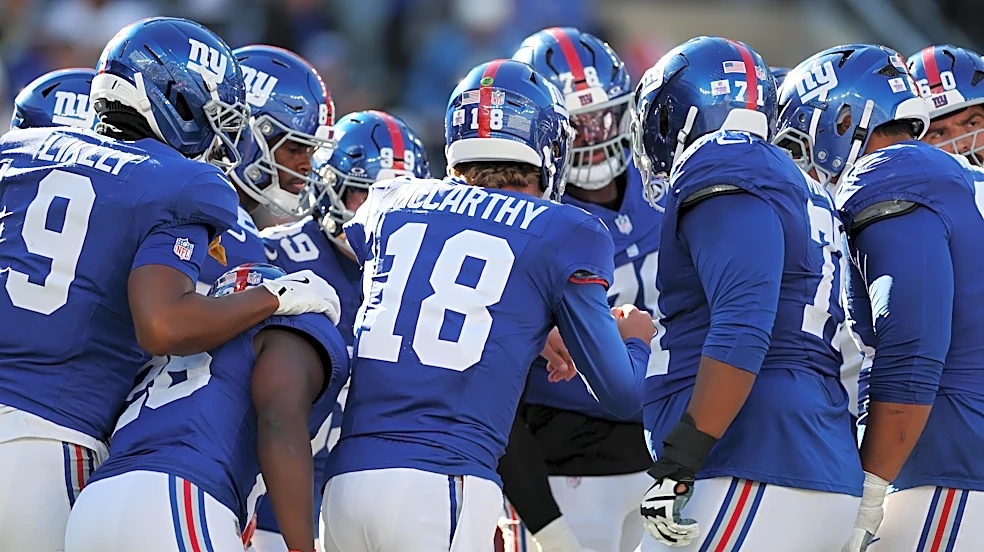
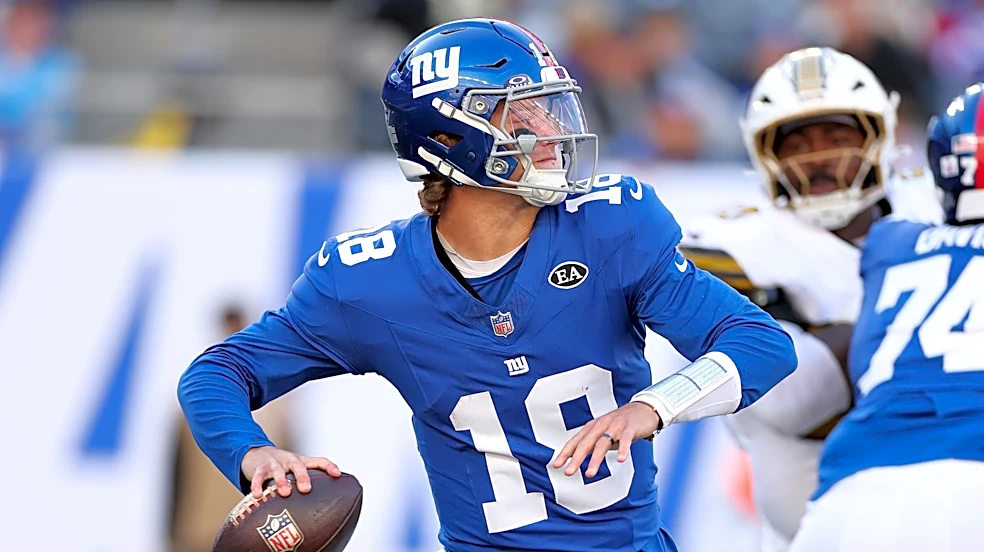
J.J. McCarthy’s fourth quarter near-comeback was impressive, and the Giants’ offense was explosive and dynamic with him on the field. And while the Giants couldn’t afford to run the ball much there was a notable difference with McCarthy in the backfield than with Winston.
The biggest difference was the hesitancy with which the Saints’ second level defenders played. Where the Saints’ second level defenders began moving to the point of attack almost immediately with Winston in the game, they were playing much more slowly with McCarthy at quarterback.
It was most notable on Devin Singletary’s 9-yard run early in the fourth quarter.

There is a very noticeable hesitation among the Saints’ linebackers and safeties, with the safeties backpedaling at the start of the play only to have to stick and drive on the ball. Likewise, their linebackers don’t crash downward and instead stay at the second level after the snap, allowing the Giants’ blockers to establish and lock in their blocks.
The threat of the quarterback run game likely affected the Saints’ defense, forcing them to slow down and make sure McCarthy didn’t keep the ball. But the running back alignment is part of this as well.
Note above how Singletary is even with McCarthy.
With Winston on the field in the shotgun formation, the Giants’ backs tend to line up just behind the quarterback on running plays and even (or in front) on passing plays. Even on the toss play to Harris above (the second gif), he lines up just behind Winston. That isn’t uncommon and certainly isn’t unique to the Giants. Runners lining up behind the quarterback gives them an extra step to time the handoff and accelerate toward the line, while lining up even or in front of the quarterback gives them better vision and positioning for pass protection.
Here, the Saints can’t be sure if McCarthy is going to throw the ball, pull it and run, or hand off to Singletary. And that instant of indecision is all the difference.
It’s a subtle change and could make execution a bit more difficult for the quarterback and running back at first, but playing run and pass from the same alignment in shotgun could go a long way toward slowing the defense.
On the flip side, the Giants tend to either call a run or play-action out of the I-formation. And while being under center makes play-action more effective, losing the threat of a drop-back pass can make runs less effective.
Final thoughts
There is a lot wrong with the Giants running game. But perhaps the most frustrating aspect of their dysfunction is that they’re often very close to hitting on all cylinders.
The Giants absolutely need to tighten up their blocking, both in making the blocks in the first place and sustaining them. Likewise, the backs themselves need to be more patient in letting the blocks develop as well as willing to hit holes as well as defenders.
And finally, the coaches need to continue to refine their play design and calling. The Giants’ runs are typically well schemed and give the players the chance to be effective. But as mentioned above, being able to run more plays from similar looks will help the Giants’ offense be less predictable.
Regardless of whether Winston or McCarthy start going forward, being less obvious in running back alignment out of the shotgun — as well as more multiple in using the run and pass out of the I formation — will go a long way in helping to unlock the Giants’ rushing offense. The Giants want to be a smashmouth football team, and they have the pieces to get there, but it’s on everyone to make that happen.