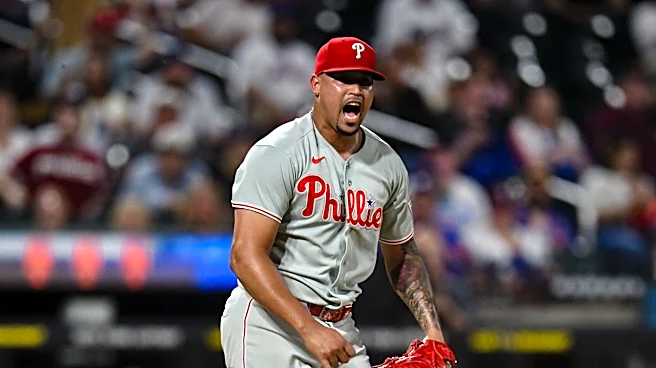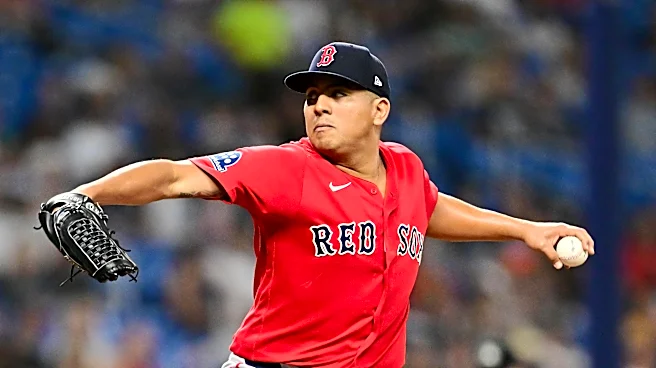


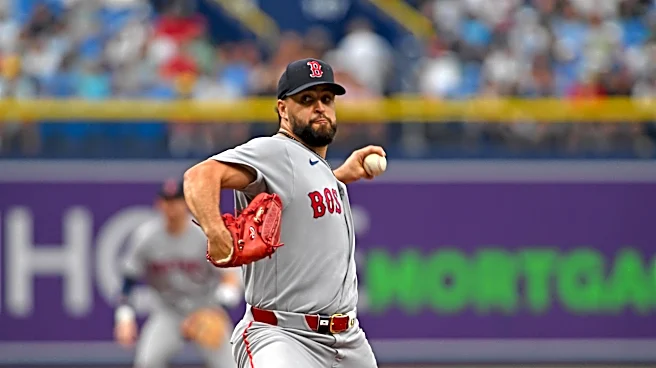
If you sign a pitcher to a $130 million contract, you’re an MLB decision-maker (Hello! Hire me! I have good ideas and work fairly hard!) If you’re not an MLB decision-maker and have the capacity to read my first sentence without taking it literally, you’ll want that $130 million pitcher to pitch in big games. The Boston Red Sox signed Ranger Suarez to a 5-year, $130 million contract shortly after losing Alex Bregman to the Chicago Cubs this offseason.
Suarez wasn’t making top dollar over the first
eight years of his career, but he was pitching in big games. He threw in 11 postseason games for the Philadelphia Phillies, posting a 1.48 ERA on his way to four wins and one save. With one week remaining in the regular season, Suarez is lined up to start game three of the Wild Card series, although Chad Tracy said not to read into that yet. Despite Tracy’s guidance, I’m choosing to read into it.
Suarez has been streaky this season. He posted a 2.10 ERA over five starts in June. In August, he registered a 5.70 ERA. If you believe in pitcher streakiness, you’ll be pleased to know the lefty has allowed just two earned runs over his last three starts (19.2 innings). Is this the start of a hot streak, or just some fortunate outcomes over a short sample? To quote the owl from the Tootsie Pop commercial, let’s find out!
Suarez is typically effective against lefties, although he hit some blips during the middle of the season. He sees mostly right-handed hitters, though the Yankees are likely to keep both Ben Rice and Cody Bellinger in the lineup, as well as potentially Austin Wells and Jazz Chisholm. When Suarez got into trouble against lefties this season, it was primarily by missing the edge of the zone too often, falling behind in counts, and walking hitters. In August, he walked 15% of the lefties he faced. In September, he’s only seen 28 lefties, but he’s dialed it in.
Suarez has simplified his approach, increasing his sinker and slider usage. He’s thrown the sinker on the arm side where it can jam hitters, rather than trying to back door it.

His slider was also located low and on the glove side, which translated to a 50% chase rate. Suarez also increased his first-pitch strike percentage from 55% in August to 68% in September. When Suarez is ahead, hitters are forced to swing at more pitches on the edges, and it translates to easy outs. Bellinger and Rice both hit pitches on the inside part of the plate well. In a few meetings this season, Suarez has opted to pitch primarily away from them. If Suarez does pitch against the Yankees, it will be interesting to see if he tries to jam them or continues to pitch away. Either way, his sinker/slider combination has been very effective over the past few weeks.
Righties are the bigger question for Suarez. Fortunately, the Yankees’ right-handed hitters without Aaron Judge in the lineup aren’t as daunting. Paul Goldschmidt and Heliot Ramos are the two biggest names, while George Lombard has also hit lefties well in his debut season. Ramos and Lombard each have plenty of strikeouts in their game, as does Jose Caballero. Amed Rosario is also often in the lineup against lefties, but he’s posted a wRC+ of just 6 — yes, you read that correctly — 6 against lefties over the past two months.
Back to Suarez. Over his last three starts, he’s held righties to a .190 batting average while striking out 24.5% of them. He made some notable changes to his approach as well. He’s made changes to both his usage rates and how he’s deployed them.
For most of the season, he’s led with his cutter against righties. It’s been effective, as he’s thrown it high and inside where it can jam hitters. In September, he’s backed off the usage and thrown it more on the arm side. The strike rate has fallen, but the different approach might be helping his other pitches be more effective.
He’s made up for the lower cutter usage by increasing his sinkers to righties. Here’s a look at the heat map for most of the season and September.

Early in the season, he almost exclusively kept his sinker away from righties. More recently, he’s used the whole plate, throwing it down and away as well as inside. The strike rate is up, while the contact against it is weak. With the cutter more on the arm side, it might be more difficult for hitters to pull the trigger on the sinker, leading to an increase in called strikes.
The other notable change Suarez has made is slashing his changeup usage. For much of his career, his changeup has been his best pitch against righties. The swinging strike rate has been between 15 and 20%, with weak contact against it. This season, the zone rate and chase rate are below his usual marks, leading to a strike rate below 50%. From the beginning of the season through the end of August, the pitch accounted for 17% of his offerings to righties. Over his last three starts, he’s used the pitch just 8% of the time. He’s thrown it in just four two-strike counts in September, despite it being his second most used pitch against righties for most of the season. While it’s a good pitch when it’s working, it hasn’t been a weapon for most of this season.
Suarez’s deep arsenal means it can look very different for him on a given day. After returning from injury in July, he used five pitches over 14% of the time. As the Red Sox inched closer to securing a playoff spot, he cut the changeup and covered that portion of the plate with a sinker. It’s an approach that’s worked, but could be exposed as hitters are more ready for it. While most of the games this week are largely meaningless, how Suarez approaches righties in his final start of the season is something to watch, and could be a tell for how he performs in the playoffs.