

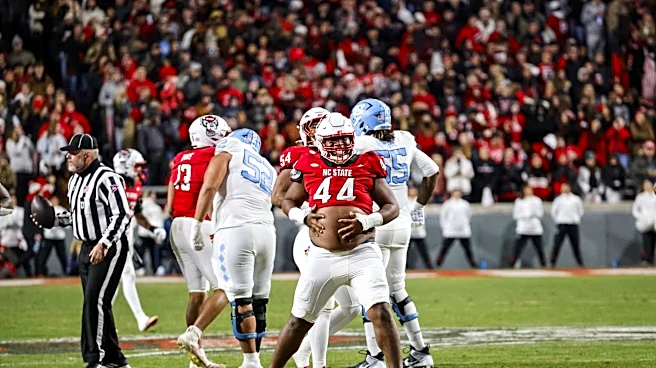
Before the college football season began, it was widely expected that cornerback Thaddeus Dixon, brought to Chapel Hill by Steve Belichick from Washington, was going to be UNC’s best player on defense if not the Tar Heels’ best overall player. For about three weeks, that looked to be the case, as he recorded 3 PBUs while allowing 5 catches on 11 targets for negligible yardage, usually shadowing the opposition’s best receivers. Unfortunately, his season was more or less cut short by injury soon after
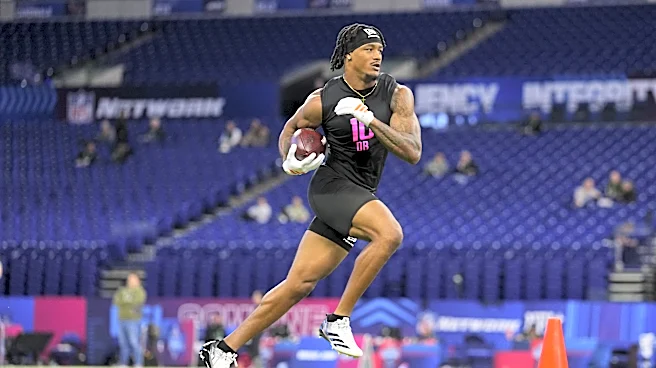
that, and while he returned to action late in the season, he clearly wasn’t the same player — and his inability to do any workouts at the NFL Combine confirmed that he was still feeling the effects of that injury. He showed enough to prove that he is an NFL prospect, though, and is the most likely Tar Heel to hear his name called this weekend. Here’s a look at how he profiles.
Strengths
- Measurables: At the Combine, Dixon measured in at 6 feet, 5/8 inches and 195 pounds, which are great numbers for the position. With that size and a 39-inch vertical jump, receivers are not easily able to climb over top of him to catch jump balls. His arms are somewhat short for his size, checking in at just the 39th percentile compared to his 79th-percentile height, but because of his vertical explosiveness, his catch radius isn’t harmed by that arm length as much as it could be.
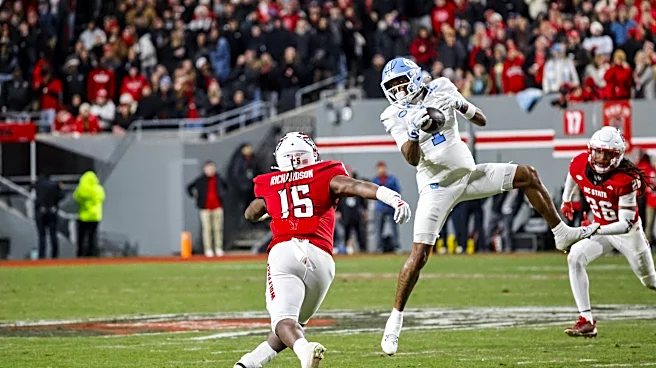
- Catch Point: Dixon is a PBU machine thanks to his big, strong hands and the way he tracks the receiver’s eyes to the catch point. He had 17 breakups in 20 games played in his last two seasons, and he turns the difficulty on contested catches all the way up on opposing receivers. As mentioned before, his strong frame and big-time vertical make him especially effective on jump balls and in the red zone, where he refuses to get bodied out of the way — he allowed just two touchdowns in his last two years of football.
- Zone Coverage: Dixon shadowed #1 receivers often during his time as a Tar Heel, but where he thrives is in zone. When he plays underneath zones, he can use his physicality to press and throw off the offense’s timing without worrying about recovering downfield. When he plays deep zones, he has fantastic awareness and timing to transition from matching a man to attacking the ball; UNC even played him at safety for a few snaps to take advantage of his range as a deep zone defender.
- Short Area Quickness: I don’t think I’ve ever seen a healthy Dixon get straight-up shaken off by a wide receiver’s route. He has great transitions and balance to stay with receivers when they make their breaks, and he made multiple plays on what should have been safe comeback routes.
Neutrals
- Run Support: Dixon is an enthusiastic tackler in run support, which you love, but he might be a little too much so. He stands up to running backs in the alley; I don’t think I’ve ever seen him do the dreaded turtle-dive at the feet. He doesn’t always finish the plays he’s in position for, however, and sometimes he’ll be bounced because he looked for a thump rather than wrapping up. He’s not small, but he’s not quite big and strong enough to be the thumper he might think he is. It’s the kind of thing you’d think could be coached out of a younger college player, but at 24 years old, it’s fair to wonder if the habit and self-sense is a little too ingrained.
- Technique: Dixon was going to have to clean up his craft a little coming into 2025 after being called for 6 penalties in 2024. In 7 games, he was called for 2 infractions in 2025, which is an improvement, but it’s a bit too small of a sample size to conclusively say that he actually got better at avoiding whistles.
Weaknesses
- Deep Speed: Dixon isn’t slow, but he can be burned. He’s better backpedaling than he is trying to trail a deep threat, especially if he’s pressing — the extra step it takes to recover from that first punch to sprinting downfield can be enough for a fast receiver to stack him. You might think the solution is to just not put him in press coverage, but that also neutralizes his physical gifts, which puts him in a bit of an awkward spot when he’s put in pure man coverage against a legit deep threat.
- Tackling: The issues Dixon has finishing in run support show up elsewhere in his tape as well. He doesn’t limit yards after the catch as well as he should; over half the yards he allowed in 2025 were after the catch and he missed 4 tackles compared to the 21 he made or assisted on according to PFF — a concerningly high proportion. I find that he either goes for a thump or gets excessively handsy, not finding the right combination often enough to ensure that his opponent goes down.
- Ball Skills: Because Dixon prefers to play the receiver to playing the ball, even in zone coverage, he isn’t going to be somebody who gets you interceptions. He didn’t come down with any in Chapel Hill, nor in his last 10 games as a Husky. It’s way more likely that he extends one arm through the catch point than that he finds the ball and plays it with two hands, which means he’s never really in a position to dictate the terms of the engagement or create a turnover for his team. A few years ago, this would have been a bigger problem, with offenses appearing to be on an inexorable climb and turnovers appearing to be the only way to stop them, but the trend is reversing, so you can live with a player who merely forces incompletions.
Conclusion
Dixon is an NFL-sized cornerback who can play the ball in front of him and compete at the catch point with the best of them, and he’s got an attitude and physicality that DB coaches will love. He might have been the only player on last year’s UNC defense who was really worth watching play after play — the difference in quality from him to everybody else was obvious, and it was clear that he should have a future at the next level. He’s not as much of a finished product as you’d like to see with 2 years in a Belichick defense. And at 24 years old, and he doesn’t profile as a superstar thanks to his deep speed and production issues, but especially in a zone-heavy defense, I think he can definitely fit on an NFL roster and help a team right away. Even as an older prospect coming off injury, I think he’s firmly worth a 5th round pick or so.