



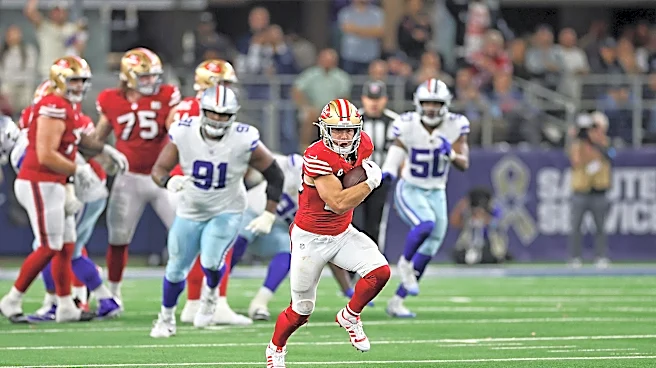
The Dallas Cowboys entered Sunday knowing there was very little margin left for error in their season.
Against the Tennessee Titans, the offense responded in emphatic fashion. Dallas moved the football almost at will and built a commanding advantage, although some familiar discipline and defensive problems prevented the performance from being completely clean.
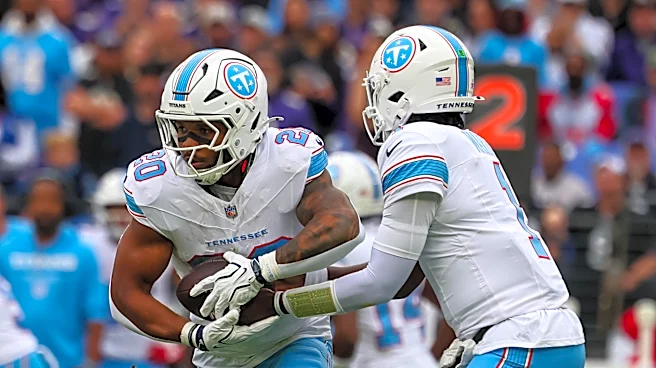
Either way, the Cowboys get the home victory winning 51-30. Here are today’s winners and losers from the win at home.
Winner: Dak Prescott
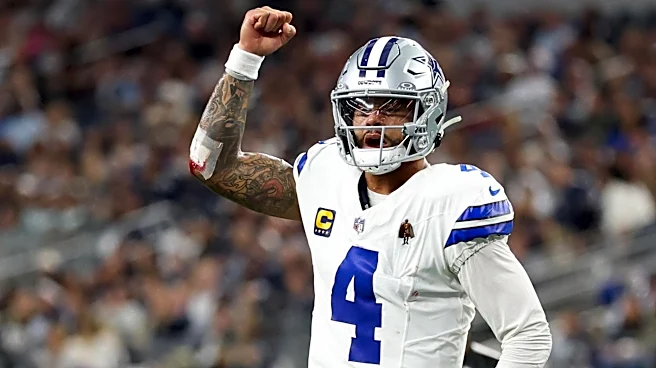
Dak Prescott completely
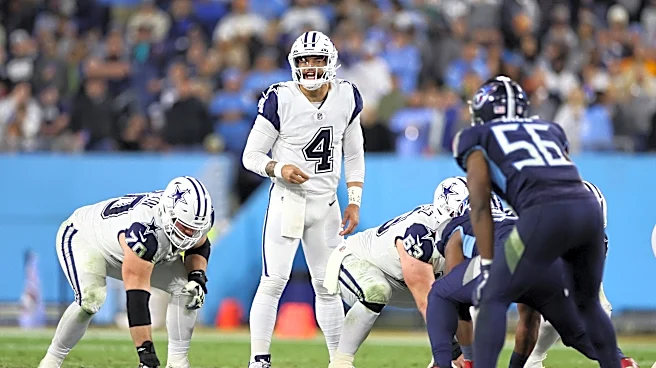
controlled this game. Prescott went 28-of-33 for 302 yards and four touchdown passes, while also adding a rushing touchdown himself. He also connected on a franchise-record 19 consecutive passes. He has found answers at every level of the field and, most importantly, hasn’t given Tennessee anything through turnovers.
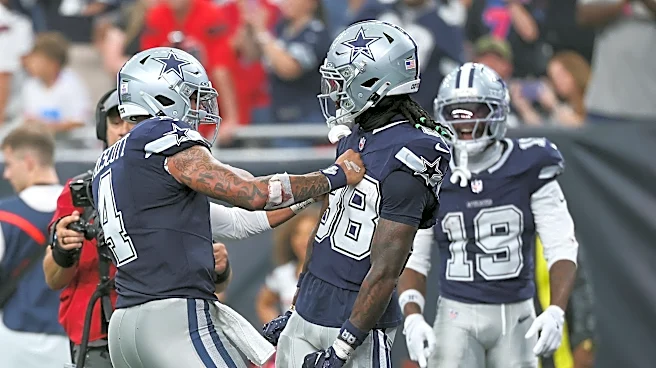
The efficiency was absolutely outstanding. Prescott connected with CeeDee Lamb, George Pickens and Javonte Williams for touchdowns and repeatedly punished Tennessee when it tried to bring pressure or crowd the line. A testament to his control in this game, Prescott hit eight different receivers in this game and rushed three times for 10 yards.
Winner: Javonte Williams
Javonte Williams hasn’t produced a massive rushing total, but he keeps finding the end zone. Williams scored Dallas’ opening touchdown from one yard before later catching an 11-yard touchdown pass from Prescott in the third quarter.
That gives Dallas another example of why Williams has become such an important part of this offense. He’s capable of doing the dirty work around the goal line while also contributing as a receiver when defenses focus too heavily on Lamb and Pickens. Plus he still provides quality pass protection.
Winner: Cowboys wide receiver corps
This was a great example of just how difficult the Cowboys receiver room can be to defend when everybody contributes.
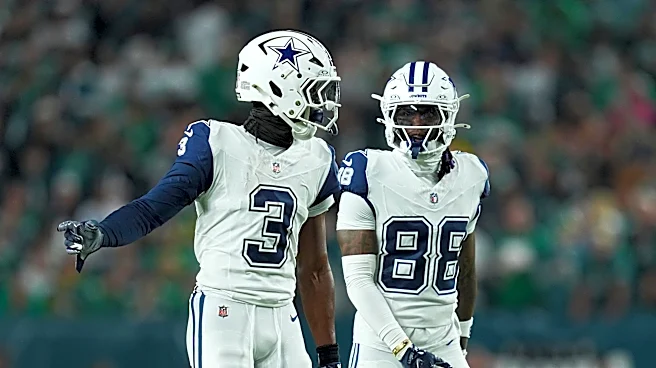
It starts with CeeDee Lamb, who produced another monster afternoon with 11 catches for 132 yards and a touchdown. Tennessee knew where the football was going and still couldn’t stop him. Lamb consistently moved the chains, produced yards after the catch and scored from eight yards out in the second quarter.
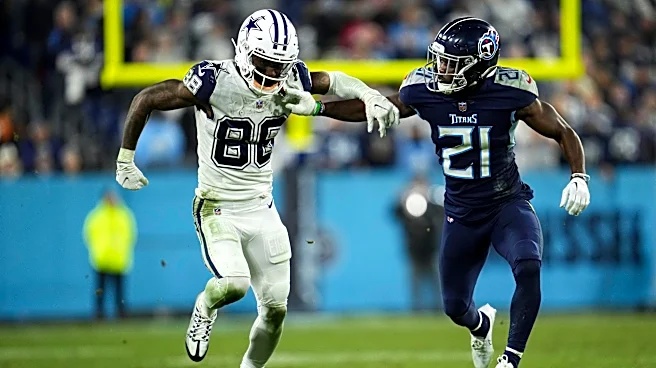
Then there was George Pickens, who gave Dallas the complementary threat it needs opposite Lamb. Pickens reached seven receptions for 102 yards and a touchdown, averaging 14.6 yards per catch. His 10-yard touchdown in the second quarter helped Dallas build a 27-6 advantage. He also added a six-yard rushing attempt, showing how Dallas continues finding different ways to get the football into his hands.
And then there’s KaVontae Turpin. His contribution didn’t come through the traditional passing game, but he’s still part of what makes this receiver room so difficult to defend. Dallas gave Turpin two designed rushing attempts and he turned them into 41 yards and a touchdown, including a 22-yard score around the left side.
Winner: James Houston
James Houston made the most of his opportunities. His biggest play came late in the first quarter when he exploded off the edge and dropped Cam Ward for an eight-yard sack on third down, immediately ending Tennessee’s possession. Houston had already created pressure on the previous snap and consistently looked disruptive when Dallas allowed him to attack.
He actually got to Ward again during the second quarter for what would have been a 13-yard sack, only for a Joey Porter Jr. facemask penalty to wipe the play away. The sack didn’t count statistically, but the rep still showed Houston beating his blocker and finishing at the quarterback. He finally got that sack back later in the game.
Houston keeps making the argument that he deserves more opportunities to provide it, and a day with two sacks that could have been three is a good starting point for that argument.
Winner: Quinnen Williams
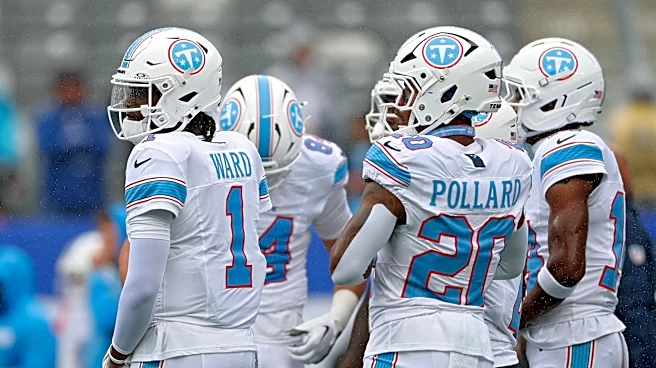
Quinnen Williams continues to look like the centerpiece Dallas hoped it was acquiring. Williams recorded a sack of Cam Ward in the second quarter, getting through the interior to drop him for a loss. He also produced one of his best run-defense snaps of the afternoon by exploding into the backfield and dropping former Cowboy Tony Pollard for a two-yard loss.
Williams also affected the passing game without always appearing in the sack column, including forcing an incompletion on third down later in the second quarter. He also tipped to balls at the line of scrimmage.
The high point of what he did today, however, was the great strip-sack late in the game. Other than an interception, Williams marked off every major defensive statistical category today, and no one does that by accident.
Loser: Explosive pass defense
Mike Pettine’s first game calling the defense has produced some encouraging moments. The explosive-play problem hasn’t disappeared.
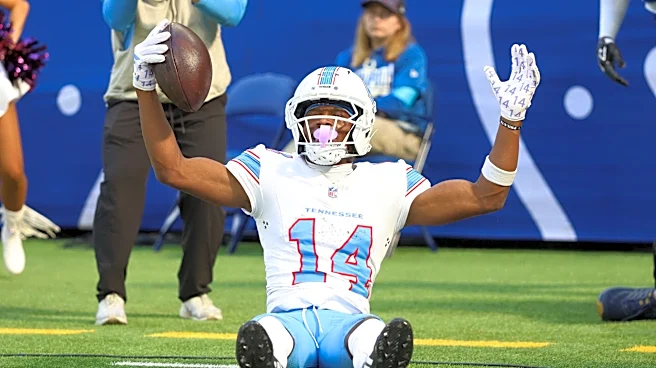
The clearest example came in the third quarter when rookie Carnell Tate got loose for a 59-yard touchdown, immediately answering a Dallas score and allowing Tennessee to remain within striking distance.
The Cowboys can produce several excellent defensive snaps, generate pressure and force an opponent behind schedule, only for a lapse in concentration to wipe all of it away. That has been the story of this defense throughout the season.
Loser: Cowboys penalties
This is the part of Dallas’ performance that Brian Schottenheimer will hate when he watches the film. The Cowboys committed 11 penalties for 128 yards, that’s far too much free yardage against anyone, never mind for a team that has spent most of the season fighting its own discipline problems.
George Pickens’ third-quarter taunting penalty was particularly unnecessary. Prescott had just scored to extend Dallas’ advantage, yet Pickens immediately gave away 15 yards after the play.
Dallas has been good enough offensively to overcome the penalties today, but a different team on a different day this is bad.
Loser: Christian Parker
The Cowboys defense wasn’t suddenly dominant against Tennessee, but it looked different this week, and that isn’t a particularly good look for Christian Parker.
Tennessee still created explosive plays and scored points, but their touchdowns during the meat of the game came from a long pass interference penalty, and the failure to touch Tate down on what should have been a medium gain.
What stood out, though, was how much more unified the unit appeared. Communication looked cleaner, players seemed more certain of their assignments and there appeared to be less confusion before the snap.
Dallas also generated pressure at important moments and generally looked more organized despite Pettine only recently joining the staff. If the defense immediately looks calmer and more connected in the very first game after somebody else takes over the play-calling, questions are naturally going to be asked about what was happening before.
Pettine hasn’t fixed the Cowboys defense in one afternoon, but even a noticeable step toward looking like a coherent unit is a huge jump from what was happening.