

There’s a well-worn business cliche that “hope is not a strategy.” Unfortunately for the 2026 Mariners, there was too much hoping, and not enough strategizing.
In speaking with players and front office members over the last few weeks as the 2026 Mariners season limped to its agonizing, inevitable conclusion, one common theme jumped out: the Mariners were banking on hope for too much of the season: hope that things would turn around, hope that certain players would turn it on, hope that the team as a whole
would catch fire.
This theme was first crystallized during a postgame interview with Logan Gilbert back in mid-September, speaking after the Mariners officially clinched a losing season after a particularly lifeless 1-2 loss against the bottom-dwelling Angels.
“We were just waiting for it to turn around, and it never quite did,” said Gilbert.
Waiting and hoping, rather than doing and achieving. It’s a surprisingly passive mindset for a team that made such a deep postseason run last year. In retrospect, though, that might have been part of the problem. Everyone in the clubhouse knew what kind of talent they had on the team – looking at some of the postseason rosters it’s shocking to think a Mariners team composed of multiple All-Stars and award winners couldn’t make it across the finish line, especially in a violently mediocre AL West – but the talent never showed up to the field consistently. By the time they realized no one was coming to save them but themselves, it was too late, the hole dug too deep. Instead of pushing them forward, that talent bred a complacency that things would turn around without the dynamism to make it happen.
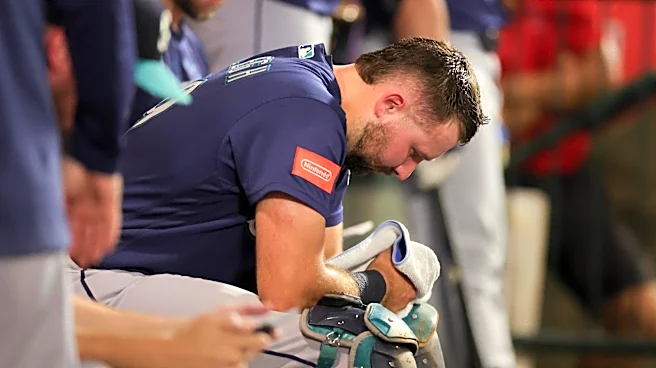
“Obviously we were riding high off last year, and somewhere along the way things just didn’t click, didn’t come together, and we were never able to right the ship, and that’s the frustrating part,” said Cal Raleigh. “I thought we would be able to get there, and we just never did. We never got better. We never turned it around, and that’s frustrating.”
In the Mariners’ defense, waiting and then getting hot at the right time had served them well in the past. The drought-breaking 2022 team was ten games under .500 on June 19th before going on a run – beating up on some of the same AL West opponents they couldn’t handle this year – ending July eight games over .500. The 2025 team made up for a sub-.500 May and June by catching fire the rest of the way, playing at a .680 clip over September. By contrast, the 2026 team played just under .500 ball in the first half and was significantly worse in the second half, never catching fire the way they did in previous years. It’s understandable that this team of young Mariners thought their ship would eventually come in.
“It’s tough when you go through those times in the past,” said Bryan Woo. “We’ve always found a way to get high at the right time and find our way in it. So you learn from experiences, and up until that point, that was our experience: stay in it and wait until we play the baseball that we know how to play, get on it at the right time, and find a way in it. Obviously, this year didn’t go that way.”
It didn’t help that this team wasn’t equipped personnel-wise for the second-half push to get them over their traditional slow start. Julio Rodríguez, who has a track record of coming on strong in the second half, never got to that point after going on the concussion IL in July. They lost Emerson Hancock, their second-best pitcher in the rotation by WAR, in September. There was no Jorge Polanco to electrify the lineup as Cole Young, the workhorse of the infield, labored down the stretch, more than doubling his plate appearances from last year.
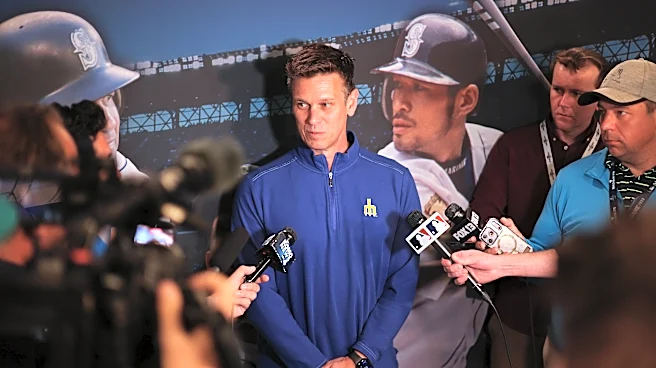
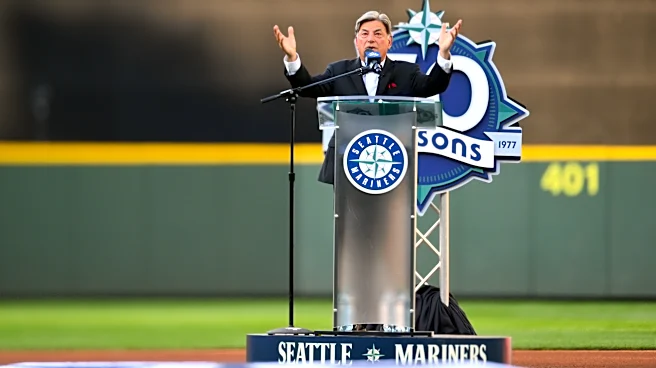
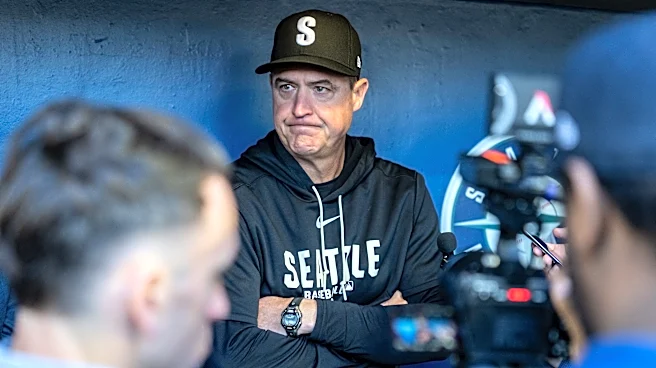
Speaking to the media on Monday, Jerry Dipoto was both blunt and succinct in addressing the team’s failure.
“What we saw in mid-season was a team playing with limited urgency and and waiting for the water to turn on, and it just didn’t come on. Instead of turning it on ourselves.”
Like Raleigh, Dipoto echoed the frustration of watching it happen, like a slow-motion car crash, while failing to reverse course.
“We saw it unfolding. Our players saw it unfolding. We we talked about it a lot as the season went along. And again, it’s where I would count myself most at fault. You can talk about it or you can just go out and do it. You can lament the fact that there was an injury here or there—we had fewer injuries to deal with than many teams that wound up finishing in a really good spot and are still playing today. So we had a tendency this year to just shrug it off to, ‘we’re more talented than the teams around us. Don’t worry, it’ll happen.’ Instead of going out and making our own thing happen.”
Where the key failure was, according to both Dipoto and Raleigh, was in a lack of accountability once the passivity problem had been identified – not just turning the water on for yourself, but making sure the water got turned on everywhere, even if that results in some momentarily-bruised feelings.
“That’s that’s what accountability looks like,” said Dipoto. “It’s calling that out in the moment. It’s stopping it before it gets rolling any further. It’s being truthful in our discussion with one another. For years our program has always been built on truth. We tell the truth with love, and and sometimes you might get your nose out of joint for a moment, but you wake up the next day and you realize that you’re loved, and you’re just trying to help one another.”
Raleigh, echoing the tone of Dipoto’s comments, suggested the passivity piece might go beyond the play on the field and reach into the clubhouse, the training room, the front office, everywhere.
“The waiting on it part is…maybe that was the wrong thing to do. You shouldn’t wait on something, or you shouldn’t hold back on something that may need to be said or may need to be done. It’s doing it there and now, and and making sure that you’re not holding back. And like I said, I look at myself and could I’ve done more? Yes, I should have done more. But I think again, it’s not just me. I think it’s a lot of guys. I think it’s I think it’s staff. I think it’s front office. I think it’s players. I think it’s from top to bottom. I think we could have been a little more aggressive, a little more—you know, we’re grown men here, and we’re trying to get to the same goal. And you know, if it hurts somebody’s feelings, then it hurts somebody’s feelings for a day. But at least it got taken care of, whatever the situation may be. But that’s something that’s that will get addressed and be better next year for sure.”
There’s a quote often attributed to baseball player Vernon Wells that experience is a cruel teacher because it gives the test first and the lessons later. The 2026 Mariners had the experience; now they’re learning the lessons.
“It’s a learning point that we’re all going to have to take accountability for and understand,” said Raleigh, before slipping into coach-speak. “If it happens once, that’s one too many times, and if it happens again, it becomes a habit, so it’s about changing that and turning things around.”
“You learn that it’s not just going to change on its own,” said Woo. “You have to do something about it, better sooner rather than later. It’s a really, really tough lesson that you can only really learn by going through it.”
Another lesson the 2026 Mariners have learned: don’t let a focus on the bigger picture take away from the immediacy of the game in front of you. Julio Rodríguez spoke about the team’s inability to string together consistent wins, suggesting that maybe that expectation of catching fire caused a lack of focus on the day-to-day, and says he’s looking forward to bringing a “fresher mentality” into 2027.
“You have to focus on one day at a time,” said Julio. “A streak is just a combination of single games. So I think that was a situation where in the past we would always get hot. But I do believe that that approach needs to be just one day at a time and just let everything take care of itself. If we play our game clean, we do what we need to do to win that day without expectation, I think I think we’re gonna be in a good spot.”
Josh Naylor is also matter-of-fact about the team’s struggles, but optimistic that they can turn things around.
“Yeah, we waited for that for that moment, I think, and it didn’t come. But that doesn’t say it won’t come next year. This season – it is what it is. We didn’t perform, and kind of have to leave it at that. You could beat yourself up all day, but at what point is enough?…Some years are awesome, some years aren’t. That’s just the name of the game. I didn’t think I did as well as I could have, and it sucks. I have to wear that. I have to sit with that for the off-season. Then it’s time to grow, time to re-evaluate, go back to the drawing board, think about what I did right, what I did wrong, and how I can fix it. And then just try to evolve my game like I try to do with every obstacle I face.”
The 2026 Mariners failed the test. They were too passive, too complacent, and unwilling to have the hard conversations they needed to have to turn the season around, hoping someone would switch it on for them. Now they have learned some hard lessons – about failure, yes, but also hopefully about being brave enough to dole out tough love, about not resting on talent alone, and about making things happen rather than having them happen to you. Hopefully most of all, they have learned hope is not a strategy, and will come into 2027 with some more concrete ones to ensure this miserable year doesn’t repeat itself.