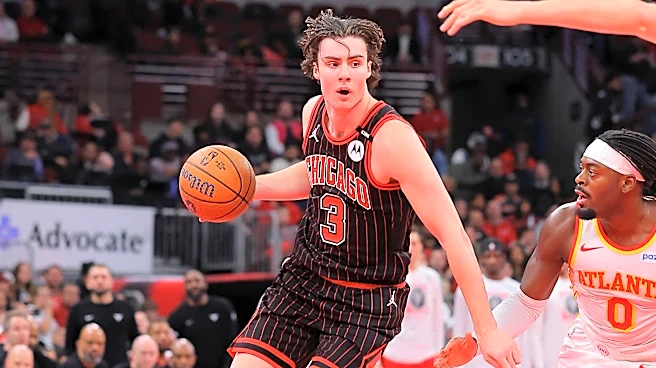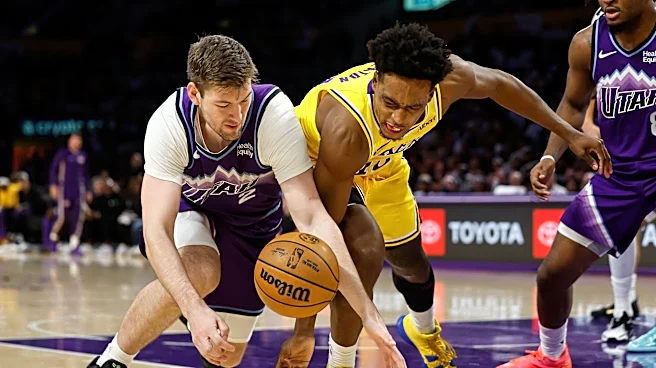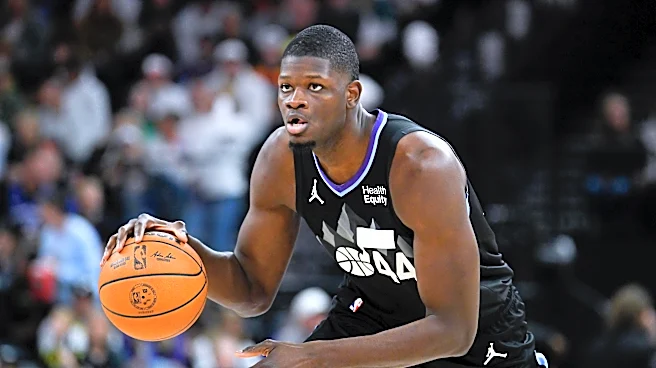



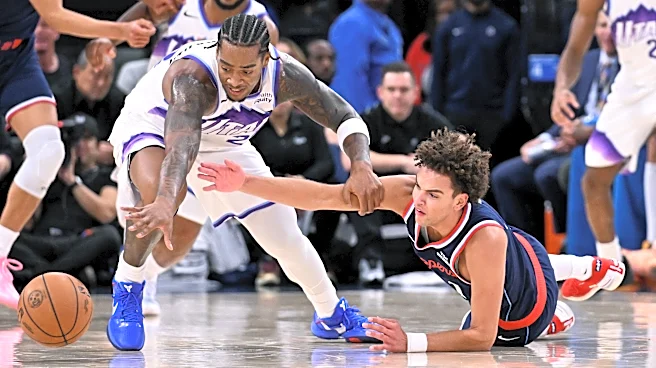
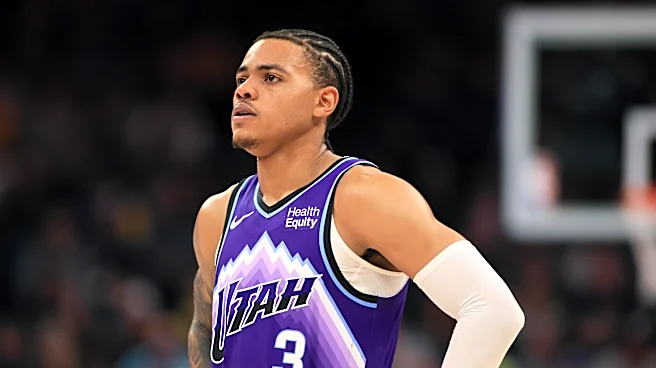
For the Utah Jazz, winning two games in a row might as well feel like 2o. With an outstanding A+ road trip in Los Angeles, things could not be brighter despite a 3-13 record. The young core is finally showing its fruition. Keyonte is evolving as a facilitator; Darryn Peterson is a do-it-all guard; Brice Sensabaugh can apparently score from anywhere.
Back at the Delta Center, fans will have their first look this year at the inaugural Jazz NBA Cup court, in all of its purple glory. I don’t think the bright
painted floors will ever grow on me, but you have to admit its better than most.
They’ll be taking on the Phoenix Suns, equally trapped in the whirlwind of the Western Conference with a 7-7 record. The Jazz have likely already been eliminated from the NBA Cup — taking two hits in both of the Cup Road games. Phoenix, on the other hand, still has a chance to claim a wildcard spot since they’ve only played one Group A match thus far.
I’ll give the Suns their kudos; compared to the Jazz, they recovered from an abysmal 1-5 start to the season and have climbed all the way back to .500. There are still questions related to team chemistry and players’ roles, but Phoenix still goes out there and shows effort every single night.
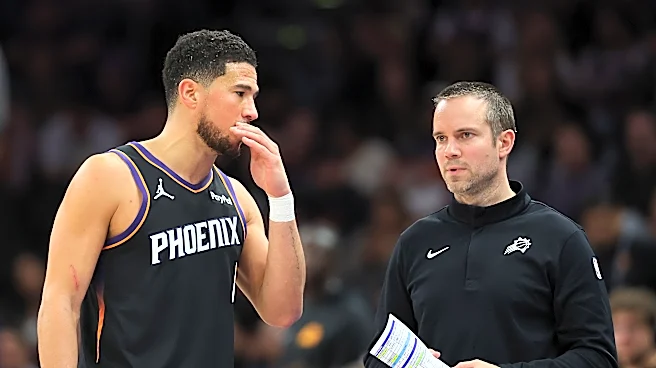
Spearheaded by Devin Booker in his 12th season, the Suns’ biggest strength is their high-efficiency shooting. Their team shoots 47.5% from the field, placing them inside the top 10 in overall shooting efficiency. Young big men Khaman Maluach (60.9% FG) and Oso Ighodaro (58.0% FG) anchor most of the finishing, alongside Booker (48.0% FG). The Jazz likely won’t have much of a footing against their bench unit either — Phoenix boasts one of the league’s top benches, with players like Jordan Goodwin (9.8 PPG), Luke Kennard (9.4 PPG) and Collin Gillespie (9.3 PPG) regularly putting up double-digit nights. A victory over the red-hot Suns (victors of 6 of their last 8) would give Utah solid footing to build on, hopefully towards the NBA Playoff picture.
Injury Report
Cleanin’ up the mistakes
It should come as a given, knowing our Jazz, but Utah’s two-game winning streak could have easily been a 14-game losing skid with a couple of swing possessions. The stat sheet may show a double-digit victory in the Jazz’s triumph over the Lakers, but these teams were neck and neck all night. Utah could have easily blown the game open earlier, had it not been for their 20 turnovers through the first three quarters. That was shown in Inglewood too, where the same Jazz team coughed up 14 turnovers in three quarters against the Clippers.
Phoenix rarely beats itself — 5th lowest turnover rate in the NBA — and thrives off unforced errors led by Gillespie and Goodwin. With Lauri, JJJ and Nurkic still sidelined, the game will continue to be run exclusively by Utah’s young backcourt. Keyonte George averaged 3.5 turnovers a game, while backup Isaiah Collier (2.0 turnovers) and Darryn Peterson (1.9 turnovers) also carry heavy ball-handling roles.
Utah can’t count on miracle fourth quarters forever. Soon enough, they’ll have to learn how to push through full-court coverage and slow down the pace on the scoring end. If Keyonte and DP can’t take care of the rock, Phoenix’s transition game will bury them early on.

Defense on DBook
Wednesday night, wings Josh Green and Josh Okogie hounded Luka Dončić into 10-of-28 shooting and nine turnovers. Green set the tone, staying glued to Luka while only committing one turnover in 28 minutes of action. Former Sun Josh Okogie stepped in whenever Josh #1 needed a breather, stepping in and giving Utah 43 combined minutes of relentless perimeter defense.
While Dončić dominates through size and slow-paced pick-and-roll manipulation, Devin Booker (24.8 PPG, 5.4 APG, 48.0% FG) attacks defenses with constant off-ball movement and a lethal mid-range game. The Joshs will have to fight through pin-downs and flare screens all night to prevent Booker from settling into his sweet spots. Booker enters Friday shooting a lethal 94.5% from the charity stripe on 6.1 attempts per game. If Green and Okogie get too aggressive, Booker will turn those whistles into free points.
Because Utah is missing its top frontcourt defenders, the Jazz saviour Mo Bamba plays a critical role behind Green and Okogie. With Bamba on the floor, Utah’s defense improves by 3.8 points per 100 possessions thanks to his 4.5% block rate, giving Utah’s wings confidence to crowd Booker’s jumper without worrying about giving up uncontested layups if he drives past them.
The X Factor: Mo’ Mo Bamba
Coming into this season as a third-string emergency big, Bamba has transformed into a starting-caliber NBA player. Bamba had his breakout game against the Spurs, exploding for 26 points (10-of-13 FG, 6-of-6 from three), 5 rebounds, 4 assists, 2 steals, and 1 block in 36 minutes—after not making a single three-pointer all season prior to that night. He followed that up with back-to-back double-doubles against his former LA teams and a combined 26 rebounds.
Phoenix ranks near the bottom of the league in controlling the glass and is missing starting center Mark Williams. Bamba averages 2.4 offensive boards per game in just 20.7 minutes—using his 7-foot-10 wingspan to tower over Phoenix’s younger, lighter bigs, Maluach and Ighodaro, and create second-chance oppurtunities.
Bamba’s biggest hurdle is staying on the floor. He fouled out in 20 minutes against Houston earlier this month and picked up four fouls against San Antonio. Against a savvy foul-drawer like Devin Booker, Bamba must contest vertically without biting on fakes so Utah doesn’t have to lean too heavily on small-ball lineups, nor the Tony Bradley minutes.