
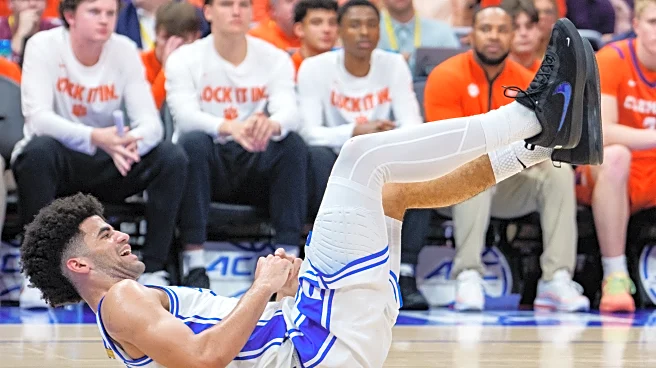
The NCAA Tournament is on the horizon, and for the third time in four years, Mizzou will be a part of the madness.
Below is a one-stop resource for everything one could want to know about the Tigers as we enter many people’s favorite time of year. It’s loaded with statistics, fun facts, player bios and other information to help you become the smartest person in the room. Or, if you want to be humble and keep all of this info to yourself, that’s alright as well.
Season summary
What a long, strange trip it’s been.
Mizzou’s NCAA Tournament resume has seemingly everything. There are elite wins and confusing losses. There were stretches of the season where the Tigers looked capable of making a deep run in the NCAA Tournament, while there were also stretches where they looked undeserving of an invitation to the Big Dance. Luckily for Mizzou, those elite wins and stretches of quality basketball were enough for the Tigers to squeak into the tournament.
Most important games of the season
There were a handful of games that defined this past season for Mizzou, both for better and for worse.
Dec. 22: Meltdown in Mound City
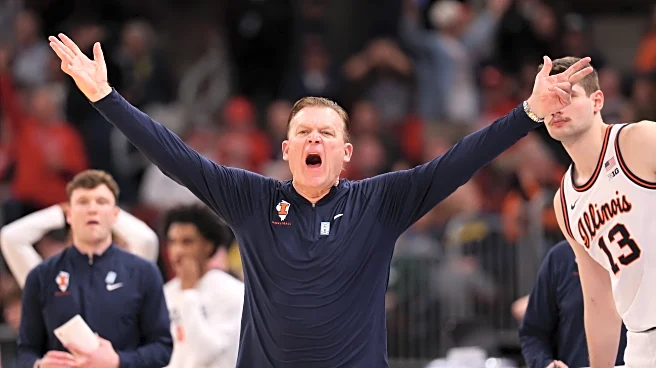
If the phrase “it’s so over” were a game, this year’s edition of Braggin’ Rights was exactly that. The Tigers lost to Illinois 91-48 in St. Louis, marking one of the worst defeats in program history since World War II.
This was the darkest point of Mizzou’s season. The Tigers not only had a weak non-conference schedule, but they fumbled the few resume-boosting chances they had entering SEC play. Along with the Braggin’ Rights blowout, Mizzou also lost consecutive games to Notre Dame (bad) and Kansas (not as bad, but still not ideal). Entering January, MU’s best win was against Minnesota, which wasn’t considered an NCAA Tournament team at the time and won’t be dancing for the seventh straight season.
Postseason basketball seemed like a distant possibility. But Mizzou’s season was far from over.
Jan. 3: Chomping Gators (The Redux)
If the phrase “we’re so back” were a game, then Mizzou’s win over Florida was exactly that. 12 days after the Braggin’ Rights fiasco, the Tigers took down the defending national champions at home.
Since then, Florida has risen back to national title contender status, as the Gators lost only one more SEC game after this one. For Mizzou, this win has aged like Brad Pitt. Beating Kentucky in Lexington four days later maintained positive momentum.
Jan. 24: Onions! Double order!
Entering this game, Mizzou had lost three of its last four. Two of them were odd road losses to Ole Miss and LSU, while the other was a last-second defeat to Georgia at home.
The Tigers were on the verge of another bad loss when they trailed late to Oklahoma at home, but a double dose of heroics saved them. Trent Pierce nailed a logo 3-pointer at the buzzer to send the game into overtime. With Mizzou down by two in the waning seconds of overtime, Mark Mitchell pushed the ball up the floor and drilled a 3-pointer at the buzzer to give his team a season-saving victory in electric fashion.
In retrospect, this game might’ve been the difference between Mizzou making the NCAA Tournament and Oklahoma just missing it.
This was also T.O. Barrett’s breakout game, as he sliced and diced through the Sooner defense all game en route to a career-high 21 points.
Feb. 11: Clutching up in College Station
Despite a 3-point barrage from Texas A&M (one of the best 3-point shooting teams in the nation), Mizzou left College Station with a big-time win. The Tigers made clutch play after clutch play in the second half, and an alley-oop from Mitchell to Shawn Phillips Jr. proved to be the game-winner.
Trent Pierce also had a career-high 23 points.
Feb. 14: Getting the Horns
In a battle of bubble teams at Mizzou Arena, Texas dominated the second half en route to a 17-point win over the Tigers. Once again, Mizzou’s NCAA Tournament hopes looked bleak after this game.
And once again, it didn’t take long for the Tigers to get back on track.
Feb. 18: A near-collapse against the Commodores
Against the Commodores, who arrived in Columbia at 21-4, Mizzou was humming in seemingly every facet of the game and led by as many as 21 points. But that lead evaporated late in the second half, and VU star guard Tyler Tanner almost hit a miracle shot to complete the comeback:
But alas, Mizzou escaped with a big-time win. Five Tigers scored at least 10 points.
Feb. 24: Rocky Topped
This was a borderline football game given how physical both teams were. The halftime score was 29-26. But the Tigers never crumbled, and after a close loss on the road to Arkansas, Mizzou bounced back with a huge win once again.
Barrett was just about unstoppable en route to a career-high 28 points, while Mitchell had 23 of his own. Mizzou followed this up by dominating Mississippi State in Starkville, and at that point, it felt like the Tigers had done enough to get into the NCAA Tournament.
Mar. 12: Feelin’ the honky tonk blues
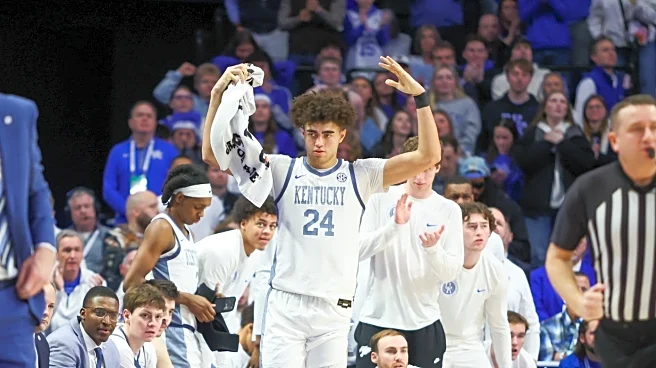
Should Mizzou bow out of the Big Dance, it could look something like MU’s loss to Kentucky in the SEC Tournament.
Mitchell had 32 points, but he was just about the only Tiger who showed up offensively. Mizzou also committed 15 turnovers and forced just nine. The Tigers clawed back in the second half and actually took a one-point lead with 2:34 left in regulation, but Kentucky ended the game on a 9-2 run.
The loss came after two straight losses to end the regular season: the first of which was a blowout to red-hot Oklahoma on the road, and the other was an overtime loss to Arkansas at home.
The players
Mark Mitchell
Overview: Mitchell is Mizzou’s offensive engine. Whether he’s posting up on the block or running in transition, MU will try extremely hard to get him the ball. He’s a bulldozer who attracts a lot of attention from opposing defenses, which is partially why he attempts eight free throws per game (he only makes about 66% of his attempts, though). He’ll try his best to get to his left hand around the basket, and if he does, he’s usually able to put up a quality shot. Mitchell is also a surprisingly awesome 3-point shooter in the clutch, given that he averages fewer than 2 3-point attempts per game.
How he got to Mizzou: Mitchell transferred to Mizzou after the 2023-24 season. He’d spent two seasons at Duke as a regular starter.

T.O. Barrett
Overview: If Mizzou had a Most Improved Player award, Barrett would win by a landslide. After playing spot minutes as a freshman last season, he took Anthony Robinson II’s role as MU’s starting point guard in late January and has yet to relinquish it. Barrett is a wildly crafty finisher around the basket — his body control is elite, and he adjusts through contact at an absurdly high level. He’s also a pesky defender. While Barrett has become a more willing 3-point shooter as the season has gone along, he’s still not much of a threat in that regard, as he’s made just nine of 41 attempts this season.
How he got to Mizzou: Barrett signed with Mizzou in June 2023 and graduated from high school in 2024.

Jayden Stone
Overview: When healthy, Stone has been Mizzou’s firecracker on the wing. He’s unafraid to launch from way downtown and has impressive verticality around the basket. The Tigers were noticeably worse on offense when Stone missed time early in the season with a hand injury.
How he got to Mizzou: Stone is one of college basketball’s many nomads. He moved to the U.S. from Perth, Australia, for high school basketball and ended up playing at three different high schools. He started his collegiate career at Grand Canyon and didn’t play much, transferring to Detroit Mercy after two seasons. He spent two seasons with the Titans and became one of their best scorers, averaging a team-high 20.8 points per game in the 2023-24 season. Stone then transferred to West Virginia, but he never played for the Mountaineers after suffering a concussion and spinal injury during practice. Stone transferred to Mizzou after the 2024-25 season.

Shawn Phillips Jr.
Overview: Phillips Jr. is Mizzou’s anchor in the paint. On offense, he’s a dunk machine who also has a soft touch around the basket. His free-throw shooting has also done a complete 180 since the early portions of the season. But Phillips Jr. can look like a fish out of water at times whenever he has the ball outside of the paint.
On defense, Phillips Jr. is MU’s best rim protector. But he struggles mightily with fouls (3.1 per game), and Mizzou’s rim protection is noticeably worse when he’s off the floor.
How he got to Mizzou: Like Stone, Phillips Jr. is well-traveled. He attended three different high schools, played one season at Arizona State and two more at LSU before transferring to Mizzou.

Trent Pierce
Overview: The 6-foot-11 forward has taken a sizable leap in his junior season. Pierce is a good 3-point shooter (especially on the move), as he’s almost seven percentage points better from beyond the arc on greater volume than last season. Pierce has also improved his ability to attack the basket off the dribble, and his length makes him tough to cover in the paint for opposing forwards.
How he got to Mizzou: Pierce committed to Mizzou out of high school — he graduated in 2023.

Anthony Robinson II
Overview: After a breakout sophomore campaign, outside expectations for Robinson II were high entering this season. While he’s still an elite defender, he didn’t take the sort of leap on offense that many thought he would. Most of his offensive statistics are the same as last season, except for his 3-point shooting, which has been worse despite higher volume (29.7% this season vs. 40% last season). Like last season, Robinson II has still struggled with fouls, averaging 3.1 per game. While he’s still a regular part of the rotation, Robinson II hasn’t started since Jan. 20.
How he got to Mizzou: Robinson II committed to Mizzou in high school — he also graduated in 2023. Robinson II and Pierce could be the first players to stay at Mizzou for four straight years since Kobe Brown.

Jacob Crews
Overview: Crews is a 3-point specialist who also makes an impact as a rebounder. But he’s just 4-of-15 from beyond the arc since Valentine’s Day, and his role is limited if he isn’t making 3-pointers.
How he got to Mizzou: Crews started at North Florida in 2020 and played two seasons there before transferring to Daytona State College, a junior college in Daytona Beach, Florida. He spent the 2022-23 season there before transferring to UT-Martin, where he earned First Team All-Ohio Valley Conference honors. He then transferred to Mizzou after one season with the Skyhawks.

Trent Burns
Overview: Burns would’ve been the runner-up for a hypothetical Most Improved Player award behind Barrett. After not playing at all last season and only seeing garbage time for most of this season, Burns has become a regular part of the rotation in recent weeks. At 7-foot-5, Burns’ length makes life difficult for opponents trying to score around the basket, although his slender frame makes him prone to being pushed around at times. While he showed flashes of a decent 3-point shot in high school, he’s just 1-of-13 from beyond the arc this season.
How he got to Mizzou: Burns, who graduated high school in 2024, committed to Mizzou in Oct. 2023.

Nicholas Randall
Overview: Nicknamed “Butta”, Randall has only played 120 minutes this season. His five minutes of action against Kentucky in the SEC Tournament marked his first appearance in a game since Feb. 18.
How he got to Mizzou: Randall committed to Mizzou in Oct. 2024 and graduated high school in 2025.

Sebastian Mack
Overview: Mack was a regular starter at the beginning of the season, but he fell out of the rotation after the Notre Dame game and hasn’t played since Jan. 27. At his best, Mack is a slashing guard who can get to the free-throw line often and a physical defender on the wing.
How he got to Mizzou: Mack transferred to Mizzou after two seasons at UCLA, where he was a regular part of Mick Cronin’s rotation.

Luke Northweather
Overview: Northweather’s season has been very similar to Mack’s. The 6-foot-10 stretch big man played at least 10 minutes in every one of Mizzou’s non-conference games, but his playing time plummeted once SEC play began. Like Mack, Northweather also hasn’t played since Jan. 27.
How he got to Mizzou: Northweather transferred to Mizzou after two seasons at Oklahoma, where he averaged about 10 minutes per game.

Jevon Porter
Overview: The latest Porter brother to don the black and gold, Jevon started in each of Mizzou’s first 10 games of the season and showed promise against lower-level competition as a jumbo forward. But Jevon has dealt with injuries for much of the season and hasn’t played since Dec. 14.
How he got to Mizzou: Jevon played his first two collegiate seasons at Pepperdine, where he turned into one of the team’s top scorers. He then spent one season at Loyola Marymount before transferring to Mizzou this past March.

Annor Boateng
Overview: After not playing much as a freshman, Boateng’s playing time increased at the beginning of this season, and he even started four straight games in December. But his playing time petered out once SEC play started, and on Jan. 31, Boateng suffered a season-ending knee injury after slipping while going up for a dunk against Mississippi State.
How he got to Mizzou: Boateng committed to Mizzou as a four-star recruit in the class of 2024.

Aaron Rowe
Overview: The 6-foot-2, 155-pound guard hasn’t played this season and, unless something catastrophic happens to Mizzou’s rotation, Rowe almost certainly won’t play in March Madness.
How he got to Mizzou: Rowe graduated from Father Tolton Catholic in 2025 and signed with Mizzou in Nov. 2024.

The coach
After the 2021-22 season, then-coach Cuonzo Martin was fired, as Mizzou looked for a refresh after missing the NCAA Tournament. The program struck gold when they hired Dennis Gates.
A former player at California, Gates had coached at Cleveland State since 2019, leading the Vikings to the NCAA Tournament in 2021. He’d previously been an assistant at several schools, with his longest stint coming at Florida State from 2011-19 under Leonard Hamilton, whom Gates has mentioned as one of his closest mentors.
He wears the same outfit every game: A black suit jacket, black pants, a white dress shirt and a gold tie. While his emotional intelligence and stoicism are high, giving referees an earful after controversial calls (or no-calls) isn’t uncommon for him.

Gates has helped Mizzou earn three NCAA Tournament berths in four seasons as MU’s head coach. However, in the two previous NCAA Tournament appearances, Mizzou lost to No. 15 Princeton and No. 11 Drake, also known as two teams many thought the Tigers would beat.
The Tigers will likely win if they …
Dominate the paint. Mizzou takes (and makes) most of its shots from inside the arc, as Mitchell, Phillips Jr. and Barrett are tough to handle inside. MU’s collective length has been an issue for opponents on both ends of the floor.
Get contributions from numerous players. Mizzou is at its best when it isn’t a one or two-man show. The Texas A&M win was a shining example of this, as it felt like all seven players who played meaningful minutes performed well in some regard. Interestingly, Mizzou is 1-4 when Mitchell scores over 25 points.
Shoot efficiently from beyond the arc. The Tigers don’t take many 3-pointers, but when they make a lot of them, they almost always win. Mizzou is 14-2 when shooting above 34% (the national average) from beyond the arc.
The Tigers will likely lose if they …
Get into foul trouble. Mizzou’s regular rotation features just seven players, so anyone having to sit for extended periods of time is especially hurtful. Robinson II and Phillips Jr. average about three fouls per game, and both are vital to the team’s success: MU’s only other true point guards besides Robinson II are Barrett and freshman Aaron Rowe (who hasn’t played a single second this season), while Mizzou’s rim protection is much worse when Phillips Jr. is off the floor.
Struggle to make free throws. Mizzou is shooting 68.6% from the charity stripe this season, which ranks 308th nationally. While Mizzou does a solid job of getting to the free-throw line, the Tigers have struggled once they get there. MU’s free-throw percentage this season is its lowest since the 2016-17 campaign and is the fifth-worst of any NCAA Tournament team.
Free throws cost Mizzou in its road defeat to Ole Miss (12 misses in a 7-point loss), and it almost cost the Tigers in close wins over Florida, Texas A&M and Southeast Missouri State.
Can’t take care of the ball. Mizzou’s turnover percentage is 15.4, which is by far the highest among all SEC teams and tied for the fourth-highest among all power conference teams.
Allow a high percentage of 3-pointers to fall. Mizzou’s opponents have shot 36.5% from beyond the arc this season, the highest of any NCAA Tournament team.
Other numbers to know
8-3
That’s Mizzou’s record in games decided by five points or less this season.
1-8
That’s Mizzou’s record in March over the past two seasons; its only win came against Mississippi State in the SEC Tournament last season.
79.8
That’s the average height, in inches, of Mizzou’s entire roster (about 6-foot-7). That’s the highest number in Division I. The Tigers also have seven players listed at 6-foot-8 or taller, tying Creighton for the most in the nation.
MU assistant coach and former player Tre Gomillion told me before the season that he believed Mizzou was the tallest team in the country, and the numbers actually back it up. Here’s the Google Sheet if you want to dive deeper. (Unsurprisingly, Army is the shortest team in college basketball, as you can’t enlist if you’re taller than 6-foot-8.)
Mizzou’s NCAA Tournament history
There are a few big things you should know about Mizzou’s history in the NCAA Tournament.
Historically speaking, Mizzou has been a frequent attendee at the Big Dance. The Tigers will make their 30th appearance in March Madness this season, one more than Michigan and one fewer than Georgetown (that’s right, younger readers, the Hoyas used to be not totally miserable at basketball like they are now. For the older readers, I’m sorry I had to explain that).
But while Mizzou has plenty of postseason basketball under its belt, the Tigers haven’t usually participated for long. The Tigers have never made it past the Elite Eight — they have the third-most NCAA Tournament appearances without a Final Four berth behind BYU and Xavier. Additionally, Mizzou hasn’t made the Sweet 16 since 2009, when the Tigers made the Elite Eight as a No. 3 seed and lost a tight contest to top-seeded UConn.
A major reason why Mizzou hasn’t made deep runs in March is that it’s often fallen to inferior opponents (on paper, at least). Since the NCAA began seeding teams in 1979, the Tigers have a staggering eight losses to teams at least four seed lines lower than them, including last season’s stinker against No. 11 Drake.
Mizzou is also one of two Division I teams that have lost to a No. 15 seed twice: the Tigers fell to Norfolk State in 2012 and Princeton in 2023. The other team to accomplish this unwanted feat is Arizona, which lost to Santa Clara in 1993 and to Princeton three decades later.
As a No. 11 seed this season, Mizzou being upset is highly unlikely. But that was also the case in 2023, and that’s exactly what happened, so don’t rule out that scenario altogether.
But at the forefront of a lot of people’s minds is the fact that Mizzou hasn’t experienced much success in the tournament for a long time, period. Since that Elite Eight run in 2009, the Tigers have won just two games in the NCAA Tournament despite making eight appearances.
Simply making the Big Dance isn’t enough in Columbia — people are understandably hungry for success. Since 1976, Mizzou has never gone more than five straight seasons without an NCAA Tournament berth. Many of Norm Stewart’s great teams of the 1980s and 1990s gave Mizzou fans something to cheer about while the football team largely stunk during that timespan.
Unfortunately, for as central a figure as the men’s hoops program has been at Mizzou, the Tigers have always fallen short of the ultimate glory: winning a national title. Here are five NCAA Tournament appearances you should probably know about, ones that largely encapsulate Mizzou’s past appearances in the Big Dance.
2012
If you’re around Mizzou fans this week, this is the one tournament you probably shouldn’t bring up out loud.
The 2011-12 team was just so … fun. They had one of the best offenses in the nation, featuring elite scorers all over the floor and a point guard in Phil Pressey who led the Big 12 in assists and steals. Mizzou finished the regular season with just four losses, won the Big 12 Tournament and secured a No. 2 seed in the NCAA Tournament riding a massive wave of momentum.
It took less than two hours for everything to come crashing down.
In a colossal upset, MEAC champion Norfolk State beat Mizzou 86-84, as Mizzou’s shoddy defense collapsed against the Spartans. Pressey’s potential game-winning 3-pointer hit the side of the rim, and he buried his head into his jersey along with (probably) every other Mizzou fan watching.
If there was any silver lining, it’s that the Tigers weren’t alone in being on the wrong end of a Cinderella story, as No. 15 Lehigh took down No. 2 Duke that same night.
2009
Mizzou was a No. 3 seed that year, marking the first time since 1994 that MU earned a protected seed in the NCAA Tournament. The Tigers dominated No. 14 Cornell before winning close, high-scoring contests against No. 6 Marquette and No. 3 Memphis, the latter of which featured Marcus Denmon swishing a heave from beyond halfcourt as the halftime buzzer sounded.
But just like 1994, the Tigers bowed out to a No. 1 seed in the Elite Eight. This time, it was at the hands of UConn, and a freshman guard named Kemba Walker led the Huskies with 23 points off the bench. This proved for the first of many times that playing Walker in the postseason was quite difficult.
2002
Should Mizzou make a deep run in this year’s NCAA Tournament, the Tigers would follow a similar path as the ‘02 team, which entered the tournament as a No. 12 seed and beat Miami (Fla.) in their first game. They then defeated No. 4 Ohio State before beating No. 8 UCLA in the Sweet 16. The run finally came to an end against No. 2 Oklahoma in the Elite Eight. Clarence Gilbert, one of Mizzou’s top scorers, went full ‘94 John Starks, shooting 1-of-16 from the field.
1995
Three of the four No. 1 seeds in this tournament failed to reach the Final Four. The only one that did almost lost to Mizzou in the Round of 32.
The No. 8-seeded Tigers led top-seeded UCLA by one with 4.8 seconds left in regulation. Then, this happened:
UCLA went on to win the national title (its first since John Wooden’s last season in 1975), and Tyus Edney’s heroics at the horn to squash Cinderella are a major reason why.
1994
This wasn’t just Norm Stewart’s best team at Mizzou. This was — and still is — the best team in program history. The Tigers went 14-0 in Big 8 play and captured what is still their only No. 1 seed in the NCAA Tournament. They blew out No. 16 Navy, then won high-scoring contests against No. 9 Wisconsin and No. 4 Syracuse before meeting No. 2 Arizona in the Elite Eight.
At this point, both Mizzou and Arizona were consistently great teams in the regular season, but neither had ever won a national championship. The Wildcats dominated the Tigers 92-72 en route to the Final Four, ending Mizzou’s magical season.
Arizona eventually reached the mountaintop, winning the national title in 1997. Mizzou, meanwhile, has still yet to break through.
Doing so this year would require one of the greatest Cinderella stories in the history of college basketball to unfold. But making a deep run in March as a No. 11 seed has been done before.
The path to a deep NCAA Tournament run
It’s going to be difficult.
History is somewhat on Mizzou’s side, as at least one No. 10 seed has advanced to the Round of 32 in all but two tournaments. 25 of them have advanced to the Sweet 16 and nine have advanced to the Elite Eight, while only one has advanced to the Final Four.
But a key difference between Mizzou and the successful No. 10 seeds of the past is that many in the latter group entered the NCAA Tournament hot. Davidson and Kent State, for example, each entered the Big Dance riding long winning streaks before making runs to the Elite Eight.
The only No. 10 seed that’s gone on a deep run after limping into the Big Dance was, funnily enough, the only No. 10 seed that has made the Final Four. In 2016, Syracuse lost five of six games entering the NCAA Tournament before making it to Houston.
Will any of that matter? Probably not. Every year is different. This time around, the West Region features teams with high ceilings and low floors. Here are the strengths of the top six seeds in the region:
- No. 1 Arizona: They have no major weaknesses
- No. 2 Purdue: Red-hot, won the Big Ten Tournament, led by one of the nation’s top point guards (Braden Smith) and an elite frontcourt
- No. 3 Gonzaga: Won the WCC Tournament, plays great defense, is dominant in the paint, led by one of the nation’s top big men (Graham Ike)
- No. 4. Arkansas: Red-hot, won the SEC Tournament, has arguably the nation’s best isolation scorer (Darius Acuff Jr.), beat Mizzou twice in the regular season
- No. 5 Wisconsin: Led by one of the nation’s best backcourts, has nine Quad 1 wins
- No. 6 BYU: Led by a potential top-three NBA Draft pick (AJ Dybantsa), who leads Division I in points per game (25.3)
And here are the weaknesses:
- No. 1 Arizona: Has lost to a team at least four seed lines lower than them in three of the past four tournaments
- No. 2 Purdue: Shaky defense, inconsistent (lost four of final six regular-season games), the only school that has lost to a No. 15 and No. 16 seed in the NCAA Tournament
- No. 3 Gonzaga: Doesn’t take many 3-pointers, struggles at the free-throw line
- No. 4. Arkansas: Bad interior defense
- No. 5 Wisconsin: Poor defense
- No. 6 BYU: 6-9 in their last 15 games, defense isn’t good, arguably second-best player tore his ACL on Valentine’s Day (Richie Saunders)
Some of the lower seeds are also dangerous. No. 9 Utah State won the Mountain West regular-season and tournament title, No. 12 High Point possesses the longest active winning streak in Division I (14) and No. 13 Hawai’i plays a fascinating no-help defense.
Opponent brief
First, Mizzou has to get through No. 7 Miami (Fla.), which is a mirror image of Mizzou in many ways. The Hurricanes don’t take (or make) many 3-pointers, run much of their offense through a jumbo forward, utilize a short rotation and are even worse than the Tigers at free-throw shooting.
The Hurricanes made their first-ever Final Four in 2023, but then plummeted to the bottom of the ACC in the ensuing two seasons. Legendary head coach Jim Larrañaga stepped down in Dec. 2024, and former Duke assistant Jai Lucas was hired to replace Larrañaga the following March. The last time Miami (Fla.) was in the 7-10 game was 2022, when it made the Elite Eight as a No. 10 seed.
The winner of Mizzou-Miami (Fla.) will face the winner of No. 2 Purdue and No. 15 Queens. The Royals from Charlotte are one of the worst teams in the field, but Purdue and Mizzou have both been chapters in Cinderella stories on multiple occasions, so who knows? Plus, there’s a fascinating underlying story with Queens. Not only did they make the NCAA Tournament in their first year of eligibility (they moved up from Division II to Division I in July 2022), but the school is also merging with Elon University this summer. This was literally the only year Queens could’ve made March Madness in their current form, which sounds like a quintessential March Madness tale. Plus, their head coach, Grant Leonard, has become known for wearing festive sweaters on holidays.
Thankfully, we won’t need to wait long for all of this to play out. For Mizzou, the madness will begin close to home.
How the heck did Mizzou end up in St. Louis?
The Tigers got a lucky draw in where they started the NCAA Tournament, as they’ll play Miami (Fla.) at the Enterprise Center in St. Louis.
In essence, a series of fortunate events landed Mizzou just a couple of hours east of Columbia.
This is rare for a team of Mizzou’s caliber. Since 2000, only 19 teams seeded No. 9-16 have played their first NCAA Tournament game within two hours of campus.
If you made it this far, I appreciate your persistence. I hope you learned something valuable within that sea of words. Happy March!