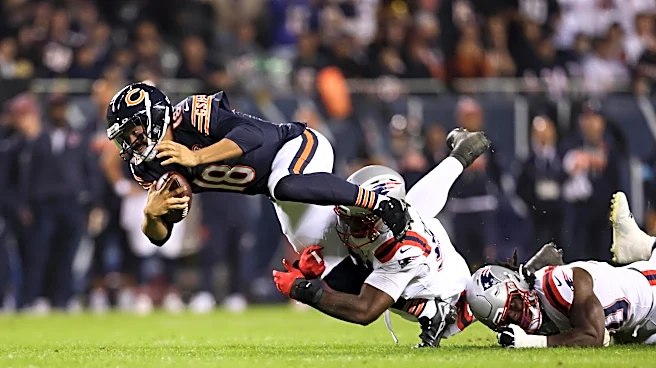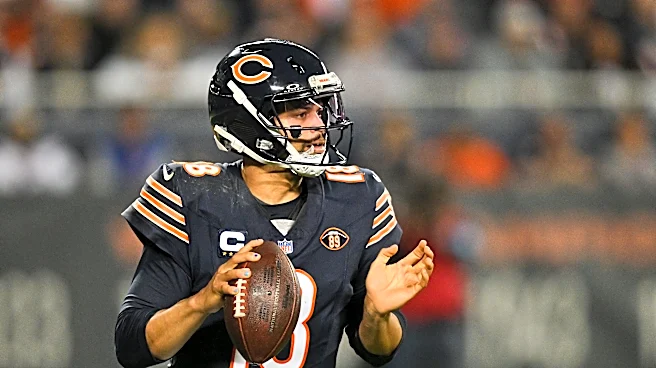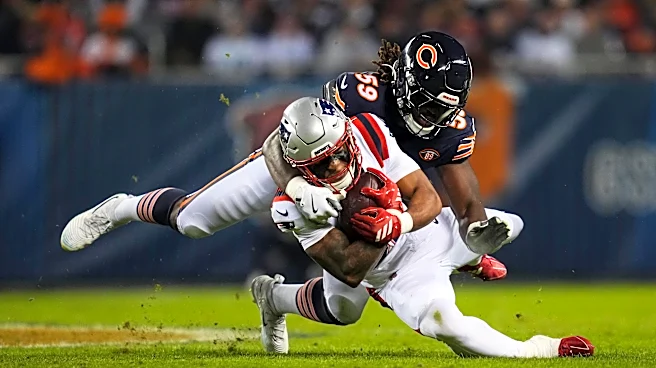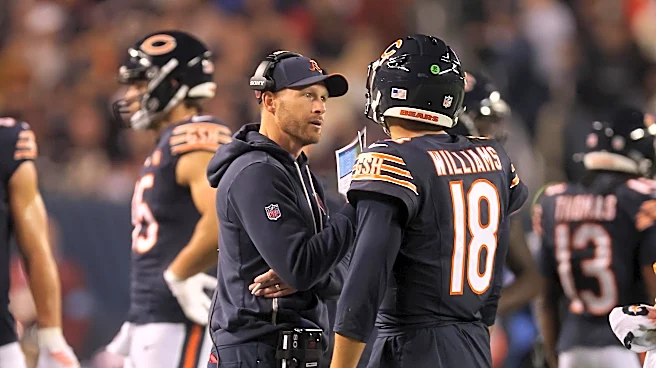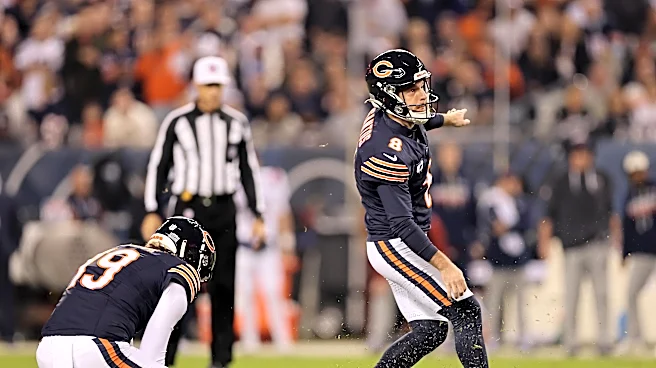

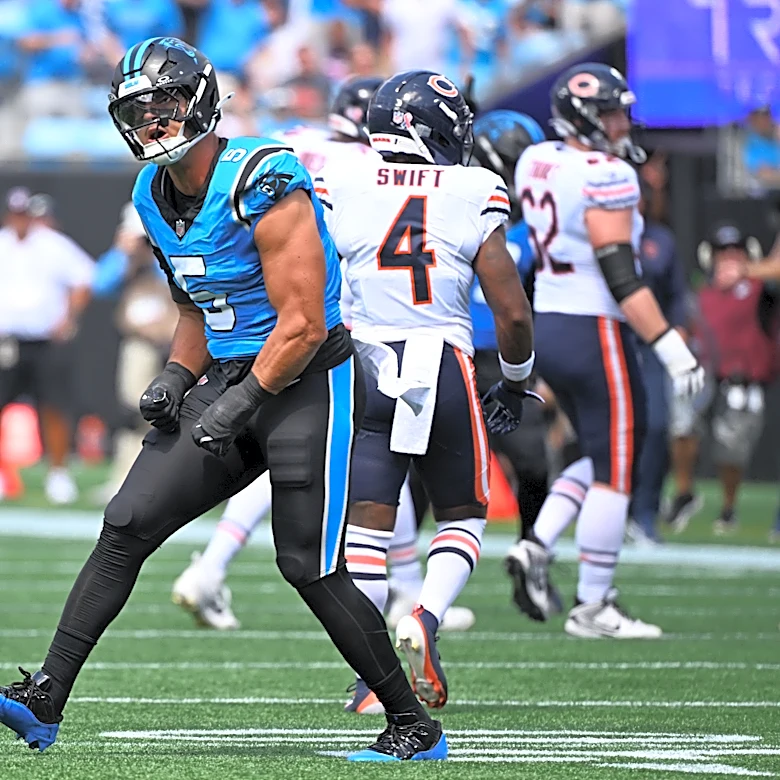



Hello Chicago Bears fans! Thursday Night Football at Soldier Field and downtown Chicago was rockin and a rollin. Caleb Williams threw for 308 and two scores, D’Andre Swift found the end zone, and Cairo Santos hit a career-long 58-yarder to seal it. Chicago improved to 5-2. But about those yellow pieces of fabric? Let’s go to the tale-of-the-cloth. Official totals: Chicago 9–69, New England 10–71. The calls were fairly balanced on the surface. The tape told a bit of a different story. One illegal
forward handoff, one declined OPI that should not have been thrown, one late roughing the passer that extended a scoring drive, and a late intentional offside that Vrabel admitted was coached.
Upon Further Review — Grading System
The series reviews every accepted flag and every meaningful no-call in a Chicago Bears game. Each play is graded against the rule, the tape, and the “clear and obvious” standard. The same scale is applied to both teams. The goal is a transparent differential, not a complaint.
- Correct — The flag matches the rule and the tape. Bright-line fouls (false start, delay, illegal formation, clear hold, late hit with force, etc.) are Correct. Judgment calls that a reasonable crew could make and that the available angles support are also Correct.
- Arguable — The contact or action is real, but reasonable observers can differ. Most holding, most illegal contact, most pass interference that is neither a clear push-off nor a clear non-call lives here. The flag is defensible; so is the non-call.
- Incorrect — The flag does not match the rule or the tape. Mutual contact with no restriction called OPI. A finished legal pancake called holding. A soft post-release shove called roughing the passer. A play still live (or not whistled dead) called unnecessary roughness. All-22 or clear broadcast angles reverse the call.
- Horrible — A bright-line miss that a crew should not make. The tape shows the opposite of the foul that was thrown, or shows a foul that was not thrown, with no reasonable ambiguity. Examples used in the series: a legal pancake finished and called holding; incidental or defender-initiated contact on a completed short conversion called OPI; a clear facemask or head/neck hit that is not flagged when the rule is written for it.
The Four-Tier Scale
Replay overturns are judged against the “clear and obvious” standard. If the call on the field was not clearly and obviously wrong, the reversal is Incorrect.
Weight (1–4)
Weight measures impact, not correctness. A Correct flag can be Weight 4; an Incorrect flag can be Weight 1.
- 1 — Housekeeping / pre-snap. False starts, delays, too many men, illegal formations that do not change field position or down-and-distance in a meaningful way.
- 2 — Drive disruption. Holds or contacts that wipe chunk plays, create third-and-long, or move the chains without scoring or red-zone leverage.
- 3 — Scoring or red-zone leverage. Automatic first downs that extend scoring drives, red-zone holds, personal fouls that set up points, or flags that turn a field goal into a touchdown opportunity (or the reverse).
- 4 — Wiped score, wiped turnover, or game-ending leverage. A takeaway erased, a touchdown erased, a flag that directly produces or prevents the final points in a one-score game.
No-calls receive the same grades and weights. An unthrown flag that the tape supports is graded as if it had been thrown, then marked as a no-call.
Compilation
- Every accepted flag and every graded no-call is listed by team.
- Counts are tallied: Correct / Arguable / Incorrect / Horrible for calls against the Bears and calls against the opponent.
- A combined crew grade is given.
- A differential is stated: which team received the better (or worse) treatment on the accepted flags, and which team benefited from the unthrown flags.
- The “Bears Tax” is noted when the pattern is repeated across games: holds or contacts that are flagged on Chicago are not flagged on the opponent in the same techniques and game states.
First Quarter
CHI 0, NE 0
Will Rouse (NE), offensive holding, 10 yards — 14:15. Opening drive. Wipes a completion. Correct. Wt 2.
Marcus Williams (NE), encroachment, 5 yards — 7:00. On third down. Process. Correct. Wt 1.
Darnell Wright (CHI), false start, 5 yards — 6:48. Offsetting the encroachment. Process. Correct. Wt 1.
Santos from 43. 3–0. Swift from 4 after a 58-yard Burden catch. 10–0.
Second Quarter
CHI 10, NE 0
Chicago, defensive too many men, 6 yards — 13:42. Gives New England a first down. Process. Correct. Wt 2.
Maye scores on a scramble after a successful challenge. 10–7.
Chicago, illegal forward handoff (Caleb Williams to Joe Thuney), 5 yards — 7:49. 2nd-and-3 at the NE 8. Trick play. Williams fakes to Swift and hands the ball forward to the guard. Thuney gains a few yards. Flag. The rule is absolute: an interior lineman may only receive a handoff backward. Ben Johnson later said “it’s got to be backwards.” Williams said he didn’t know the rule. Bright-line. Correct. Wt 3. Sets up third-and-8. We will cover it in detail in the Flag of the Game section.
Rome Odunze (CHI), offensive pass interference, 10 yards (declined) — Next play. Incomplete in the end zone. Flag thrown, declined. Bears take the field goal. All-22 shows no restriction and mutual contact. The receiver is not the initiator of a push-off or grab that significantly hinders the defender. The flag does not meet the standard. Incorrect. Wt 2. 13–7.
Charles Woods (NE), defensive holding, 5 yards — 2:58. Third down after the Maye interception in the end zone. Extends the drive. Correct. Wt 2.
Zavion Thomas (CHI), offensive holding, 10 yards — 2:43. Negates a Johnson gain. Arguable. Wt 2.
Gabe Jacas (NE), roughing the passer, 15 yards — Same play. On a 22-yard Burden catch. Late hit after the release. Automatic first and yards. Correct. Wt 3. Takes Chicago to the NE 33 at the two-minute warning.
Burden screen for the touchdown on third-and-17. 20–7. Stevenson 48-yard score as time expires. 20–14.
Third Quarter
CHI 20, NE 14
Graham Bradbury (CHI), offensive holding, 10 yards — 11:55. Negates an Odunze catch. Arguable. Wt 2.
Additional process flags on both sides pad the totals. Correct on the bright-line ones. Wt 1.
Fourth Quarter
Santos from 58 seals it. 30–24.
Cory Durden (NE), offside / encroachment (intentional), 5 yards — Late, after the two-minute warning. Third-and-short. Vrabel confirmed postgame the coaches told Durden to jump to manage the clock and timeouts. Accepted. Correct under the rule (you cannot intentionally commit a foul to gain an advantage). Wt 2. Chicago still converted the field goal.
Calls against Chicago
9 accepted. 5 Correct, 3 Arguable, 1 Incorrect, 0 Horrible.
The Thuney handoff is the cleanest Correct of the night. The Odunze flag is the Incorrect: All-22 shows mutual contact with no restriction. The rest of the Chicago ledger is mostly gray holds and process.
Calls against New England
10 accepted. 7 Correct, 3 Arguable.
The Jacas RTP is the one that matters. Late contact after the ball is gone on a completed chunk play. Automatic first, yards, and field position that set up the Burden touchdown. Earned.
No-calls
Clark Phillips III (CHI) helmet-to-helmet on Maye scramble — Second quarter, near the goal line. Maye scores on the play after a successful challenge. No flag. The contact is forcible to the head/neck area on a quarterback who has left the pocket but is still a runner. Arguable under the runner/QB distinction. Wt 2. The challenge and the score make it visible; the non-call is the review item. Patriots fans complained all over social media, but the fact is Maye lowered his head – which created the head-to-head contact, and that kind of contact happens with running backs being tackled all the time. Also – even had it been called – it would have been enforced on ensuing kickoff. Less mentioned by Patriot fans is the fact that yet again we had a call on the field overturned despite the fact that it wasn’t clear that a part of Maye’s leg wasn’t down bf the ball broke the plane – if it broke the plane at all.
Crew card: Accepted flags 12 Correct, 6 Arguable, 1 Incorrect. With the no-call: 12 Correct, 7 Arguable, 1 Incorrect.
Differential. The accepted tape is still balanced in volume. The Odunze Incorrect is the only clear miss against Chicago; it was declined and the field goal still stood. The Jacas RTP remains the highest-weight Correct against New England and directly aids a scoring drive. The Thuney illegal handoff is the highest-weight Correct against Chicago and costs a red-zone opportunity. The Phillips helmet hit is the only unthrown flag of consequence. No Horrible calls. No clear Tax. The game was decided by Williams, Burden, and Santos more than by the flags.
Grade: One Incorrect, otherwise clean enough. The trick play was correctly killed. The late RTP was correctly thrown. The Odunze flag was not. The rest was process and gray holds that both sides earned.
Flag of the game: Gabe Jacas roughing the passer on the Burden 22-yarder. Late, obvious, automatic first and yards on a drive that ended in a touchdown. Correct, Weight 3. Runner-up: the illegal forward handoff to Thuney, also Correct, also Weight 3. The Odunze OPI is the Incorrect that All-22 removes from the ledger.
Flag of the Game: Illegal Forward Handoff (Caleb Williams to Joe Thuney)
Q2, ~7:49. CHI 10, NE 7. 2nd-and-3 at the NE 8.
Grade: Correct. Weight: 3.
Chicago is in the red zone with a chance to push the lead to two scores. Ben Johnson dials up a trick play the staff had worked on for weeks. Caleb Williams takes the snap, fakes a handoff to D’Andre Swift (who had lined up in the slot and is running right), and instead hands the ball forward to left guard Joe Thuney. Thuney has come out of his stance and is in front of Williams when he receives it. He gains a few yards before the whistle.
The flag is immediate: illegal forward handoff. Enforced from the previous spot: third-and-8. On the next snap Rome Odunze is incomplete in the end zone (with a declined OPI that All-22 later showed as mutual contact with no restriction). Cairo Santos kicks the 31-yard field goal. 13–7. What was a second-and-3 at the 8 becomes a field goal instead of a chance to punch it in.
The rule is not ambiguous and is not new, despite the fact that most of the observers (including yours truly) had no idea what the rule was here. An interior lineman may only receive a handoff that travels backward. A forward handoff to an ineligible receiver is a foul. The last time a team was flagged for it was the Lions 16 years earlier. Johnson said afterward, “It’s got to be backwards, it’s as simple as that.” He noted the staff had originally drawn it with Williams placing the ball on the ground for Thuney to pick up, and that in hindsight that version might have been cleaner. Williams said he didn’t know the rule existed. Thuney, who had never carried the ball as a pro, said it was “fun, but illegal, I guess,” and that he “should have been more behind” the quarterback.
This is the definition of Correct, if unexpected. The tape matches the rule. The crew threw the flag the moment the handoff traveled forward to an interior lineman. It is Weight 3 because it occurs in the red zone on second-and-3 and turns a potential touchdown opportunity into a field goal. The game state keeps it from being a 4—the Bears still led and would go on to win 30–24—but it is the snap that most cleanly shows the crew applying a bright-line rule the offense had misread.
Runner-up is the Gabe Jacas roughing the passer on the Burden 22-yarder later in the quarter (Correct, Weight 3), the late hit that gave Chicago the automatic first and the field position for the touchdown that made it 20–7. The Thuney handoff is the Flag of the Game because it is the rarest call of the night, the one both sides agreed was correct once the rule was stated, and the one that cost Chicago a red-zone chance on a play the offense thought it had drawn up legally.
League file — Flags of the Week
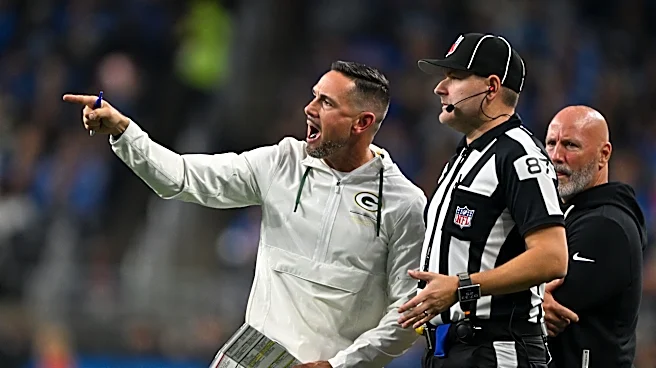
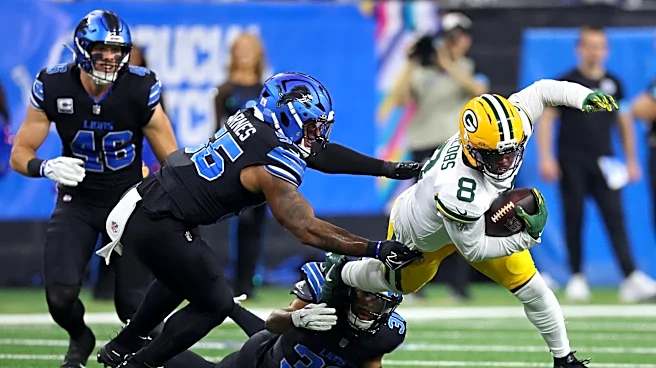
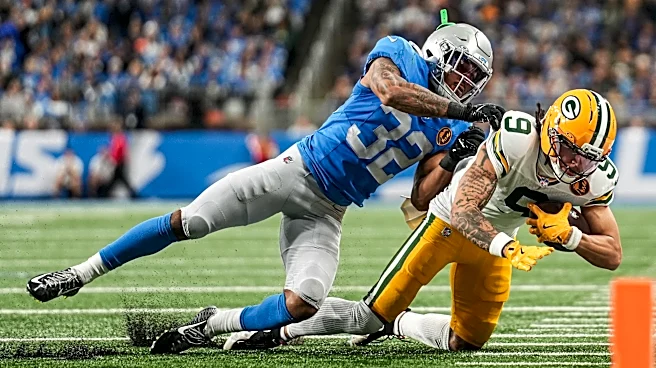
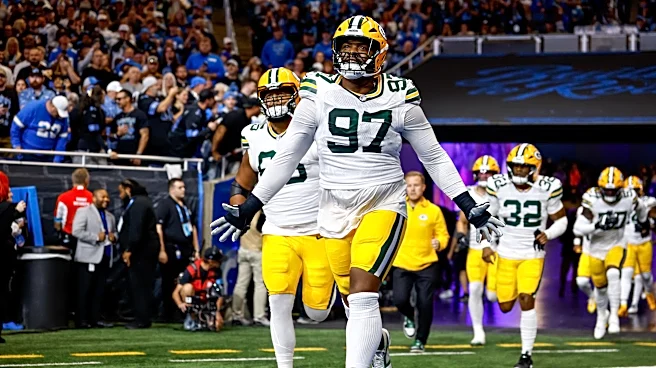
Packers at Lions, Sunday, Oct. 25. Ford Field. Lions 20, Packers 17.
Crew: Alex Moore.
I can’t believe I am featuring the Packers for the second week in a row, but here we are. To be clear, the Packers loss was more a function of their licker, Smack, failing to smack the ball through the uprights – twice! – in the game than any specific calls. But the calls in that game, and my grannies garters, there were so many, that went against the Pack were egregious. Green Bay left Ford Field arguing the officials. Official totals: Packers 8–81, Lions 5–50. Xavier McKinney called the officiating “bullshit a lot of the times.” Matt LaFleur said there were some tough calls and stopped short of more. The tape shows four flags that extended or created Detroit scoring chances and one that wiped a Packers takeaway. The crew’s pool-report explanations did not end the argument.
Flag 1: Devonte Wyatt, unnecessary roughness, 15 yards.
Third quarter. Lions inside the Green Bay 25.
Grade: Incorrect. Weight: 4.
Jared Goff completes a short pass to Amon-Ra St. Brown. Isaiah McDuffie makes the initial tackle. St. Brown gets up and continues with the ball as if the play is live. Wyatt drives him down again. As St. Brown falls, his cleat clips umpire Terry Killens Jr., who is already going to the ground. From his back, Killens throws the flag. The penalty is unnecessary roughness on Wyatt. It moves the ball half the distance and gives Detroit first-and-10 at the 11. Two plays later Goff hits Jameson Williams for a 10-yard touchdown. 17–14 Lions.
LaFleur’s postgame line: “There was no whistle blown, and the guy continued to run, and our guy didn’t hear a whistle—he continued to play too, and then we get called for a penalty.” In the pool report, referee Alex Moore said the crew ruled the play was over and that Wyatt tackled St. Brown “again with force after the play was over.” He added, “I can’t honestly hear if there was a whistle or not.”
The distinction is the problem. If no whistle sounded and St. Brown was still moving with the ball, the second tackle is legal football. The flag is thrown from the ground after contact with an official. The call turns a third-and-7 into a first-and-goal and produces seven points. Weight 4.
Flag 2: Karl Brooks, roughing the passer, 15 yards.
Fourth quarter, ~2:45 remaining. Lions’ game-winning drive.
Grade: Incorrect. Weight: 3.
Goff completes an 18-yard pass to Sam LaPorta. Brooks is flagged for roughing. The contact is after the release and does not show the force, the high target, or the late drive that the rule is written to punish. The automatic first and 15 yards keep the drive alive. Detroit later kicks the 22-yard field goal as time expires. 20–17. FOX announcers on the call said it was not a foul. Green Bay has now been called for eight roughing-the-passer penalties this season; opponents have been called for zero. This is the one that arrives on the final drive.
Flag 3: Brenton Cox Jr., roughing the passer.
Third quarter.
Grade: Incorrect. Weight: 2.
Cox is flagged after trying to catch himself while fighting through a block. The contact with Goff is incidental to the attempt to stay upright, not a drive or a late hit. It nullifies a third-and-10 incompletion and gives Detroit an automatic first. Another soft RTP in a season in which the Packers have drawn them at a league-high rate.
Flag 4: Jordan Love, intentional grounding.
First play of the fourth quarter.
Grade: Incorrect. Weight: 2.
Love is outside the tackle box and throws in the direction of tight end Tucker Kraft. The ball does not reach the line of scrimmage. The crew calls intentional grounding. Moore’s pool-report explanation: the pass “just can’t be in the direction” of Kraft; “it has to actually reach where he is if it doesn’t get to the line of scrimmage.” Rules analyst Dean Blandino said on the broadcast, “That is not grounding.” The penalty backs Green Bay up. Two plays later Love is intercepted by Brian Branch. The same standard had not been applied to a similar Goff throw earlier.
Additional note: Brandon Cisse defensive pass interference.
Wipes a Cisse interception. The contact is the type of early or incidental hand-fighting that has been treated inconsistently all season. Arguable at best; Incorrect on the available angles. Weight 3 because it kills a takeaway.
Why these are the Flags of the Week
The Wyatt unnecessary roughness is the clearest miss. A play that was still live (or at least not whistled dead) becomes a personal foul after an official is cleated, and the result is a touchdown. The two roughing calls continue the season-long pattern of soft RTP flags against Green Bay that have not been matched on the other side. The grounding call fails the standard the rule and the broadcast analysts applied. Together they kept Detroit drives alive, produced points, and wiped a Packers takeaway in a three-point game. Alex Moore’s crew left Ford Field with the Packers arguing that the flags decided the outcome. The tape supports the argument on four of them.
Grade on the set: three Incorrect (Wyatt, Brooks, Cox, Love) and one Arguable/Incorrect (Cisse DPI). The Wyatt flag is Weight 4. The rest are Weight 2–3. This is the league file for the week.
But what did you guys think about the calls and no-calls in the Bears vs. Patriots game? What did you think about all the yellow markers down in the Lions vs. Packers game? Can the officiating in the NFL this year get any worse? Tell us in the comments below!