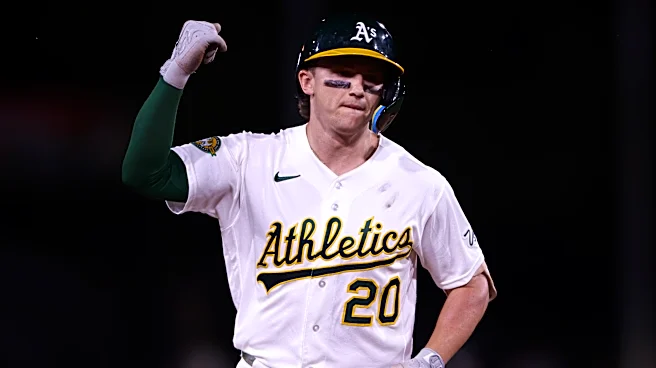



Zack Gelof is one of those athletes who only has one speed: full bore ahead. It’s part of what makes him an elite athlete and at times it makes it difficult for him to stay on the field. But there is also a difference between playing with “reckless abandon” and having “no regard for your body,” and hitting the ER because the other team’s stadium operations executives had no regard for your body.
In July, 2017 the A’s acquired Dustin Fowler from the New York Yankees as he was recovering from a serious
knee injury, a rupture of his right patella tendon. In December, 2017, Fowler sued the Chicago White Sox, claiming negligence due to an unpadded, metal electrical box that was located in precisely the area where Fowler impacted the wall. Fowler’s lawsuit settled for an undisclosed amount of cash.
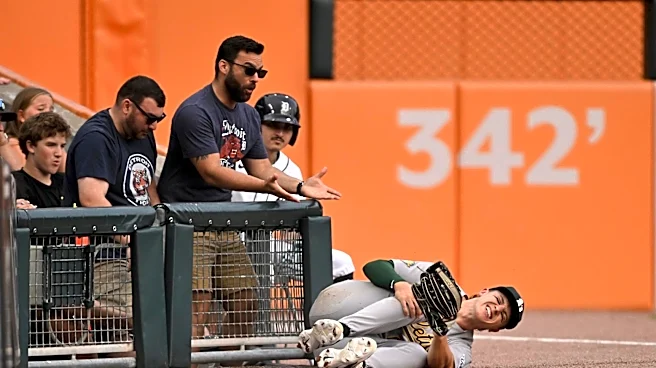
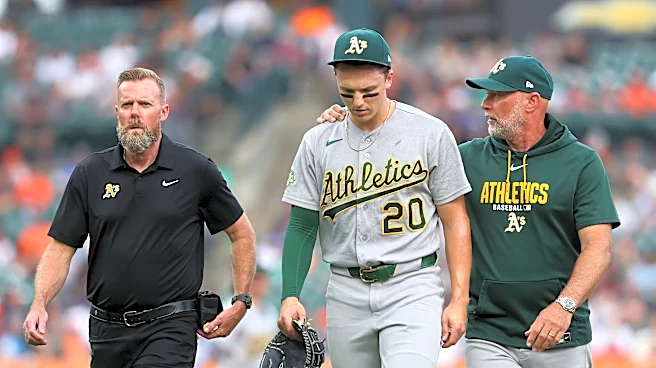
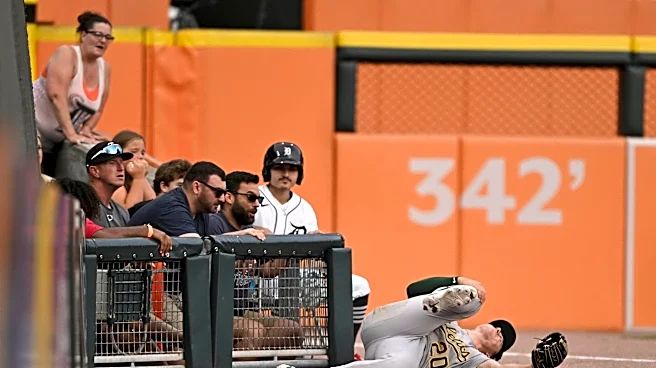
Now comes Gelof’s lawsuit filed against the Detroit Tigers after Gelof badly lacerated his leg on July 9 when his pursuit of a foul fly ball took him into the side wall — where instead of padding there was a stretch of metal wiring that sliced Gelof’s knee like a Veg-O-Matic and kept him out of action for a month.
Some injuries are preventable and many aren’t. Some mishaps are the result of foreseeable gross negligence and many are just plain bad luck. Stadium operators are obliged to notice clear safety hazards, and many hazards only reveal themselves when a fluky play exposes a formerly unknown truth.
The question in front of a judge or jury, first to be mediated by posturing attorneys, is whether Gelof’s injury was caused by a negligence that anyone could have, and should have, reasonably foreseen. The law doesn’t compensate you for bad luck like it does for bad faith.
Did the Tigers expressly have an obligation to put padding, or avoid putting a wire facing, in a part of the playing field a fielder might slide or crash into? Did Gelof have some obligation either to avoid going full tilt into a very visible wire structure or to notice the hazard during batting practice and bring it to someone’s attention?
Separately there is the question of “damages” as the two sides haggle about the “value” of the case. Certainly there was appreciable pain and suffering — that much was clear at the time of the collision as well as the fact that Gelof could not take the field in a big league game for 32 days.
But he was also paid while on the IL and rehab assignments, so there was no loss of income there. His future value, and how this injury did or did not affect it, is a pretty subjective question, but we do know that Gelof put up a 116 wRC+ before the injury and a very similar 112 wRC+ after.
One thing is for sure: Fowler’s case will be raised, by both sides, in conversations around Gelof’s chances of prevailing in his lawsuit and the value of any settlement. Fowler created precedent that informs comparable cases. And once again, here is an outfielder who was racing into foul territory when he bludgeoned himself on an exposed and unforgiving barrier to his pursuit.
What do you think are the material facts in Gelof’s case and who do they ultimately favor? In all likelihood this case, like the one before it, will settle and never go to trial and the settlement amount will not be made public. But if you were on a jury and were asked to rule on the merits, what information would most inform your verdict and what would that verdict look like? In the end, will Gelof get the 65th win of the season to bring vengeance upon the stadium where Oakland’s season was ended 20 years prior?