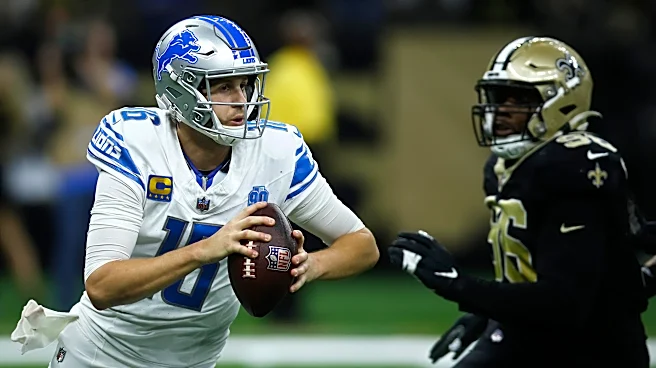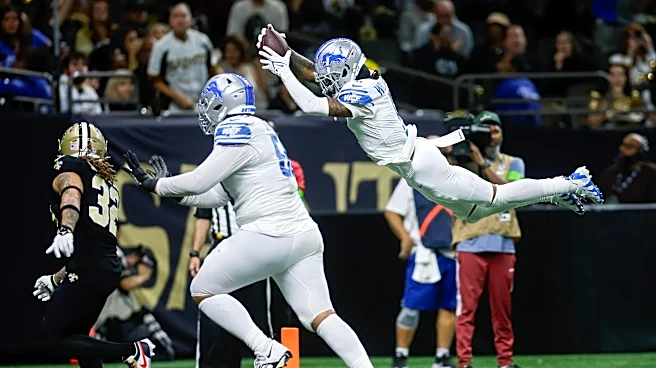




As enjoyable as NFL free agency, the NFL Draft, organized team activities, training camp, preseason, and 53-man roster coverage can be, nothing beats an NFL Sunday—and Week 1 is one of the most fulfilling and anticipated days of the year.
The Detroit Lions need this Week 1. They need it to wash away the ghosts of last year’s opener and fully bury the disappointment of last season for everyone in the organization and the fan base. And to get back to playing Dan Campbell football, the Lions will take
on the team that helped cultivate Campbell into the coach he eventually became in Detroit.
The New Orleans Saints entered last season much like the narrative surrounding the 2026 Arizona Cardinals: written off and considered a favorite to land the first overall pick in the NFL Draft. But New Orleans’ season became a tale of two halves. The Saints were a plucky bunch that started 1-8 before finishing on a 5-3 tear.
That makes them a potentially dangerous Week 1 opponent—a team with a decent roster and coaching staff entering Year 2 that has built some belief in itself. That’s something Lions fans should be plenty familiar with.
Below are my three key stats and matchups for the Lions’ season and home opener.
Note: Unless otherwise indicated, all statistics are sourced from NFL Pro, FTN Fantasy, Pro Football Reference, or Pro Football Focus.
Staley’s resurgent renegades
A strong finish to one season doesn’t always translate to a team immediately picking up where it left off the next. But without any in-season evidence yet, it’s our best sample to judge what once-heralded defensive mind Brandon Staley’s defensive demons might be trotting out at Ford Field—even with the offseason losses of Deario Davis and Alontae Taylor, along with future Saints Ring of Honor member Cameron Jordan already ruled out.
From Weeks 10-18 last season, the Saints finished top 10 in defensive DVOA and top five in passing EPA, rushing EPA, passing success rate, and rushing success rate allowed—including an absurdly low 39.2% offensive passing success rate.
During that span, edge rusher Chase Young spent 98.9% of his snaps lined up on the defensive right side, while Carl Granderson spent 88% of his snaps on the defensive left. Young’s 36 total quarterback pressures ranked tied for 11th among all defenders, even with Micah Parsons, while Granderson’s pass-rush win rate jumped from 8.0% early in the season to 12.3%.
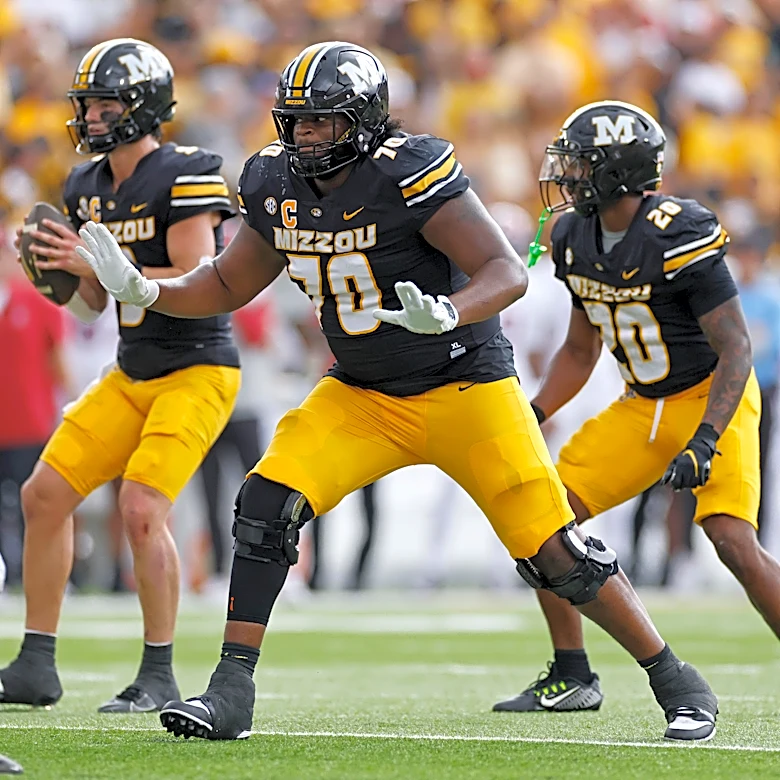
Even with the addition of Tyree Wilson, there will likely be a steady dose of Young against Penei Sewell and Granderson against rookie Blake Miller. That’s two formidable foes for the Lions’ newly entrenched bookends to kick off the season.
Kool-Aid McKinstry also became a completely different player during the second half of the season. After allowing a 120.0 passer rating, 68.1% reception rate, six touchdowns, and committing five penalties early in the year, those numbers plummeted to a 73.3 passer rating, 45.9% reception rate, two touchdowns, and zero penalties over the second half. McKinstry will enter his third season with confidence as the Saints’ CB1.
Also notably, linebacker Pete Werner improved from a 50.4 PFF defensive grade in the first half to 67.6 in the second. New third linebacker on the depth chart Danny Stutsman played 147 of his 204 season snaps during the second half and raised his PFF defensive grade from 59.8 to 74.3.
Then-rookie safety and now nickelback Jonas Sanker experienced a similar surge, with his run-defense grade climbing from 63.6 to 78.1, which ranked 13th among 67 qualifying safeties from Weeks 10-18.
It’s a relatively young defense that began to coalesce within Staley’s system down the stretch and is now being further entrusted to develop into a unit capable of helping guide New Orleans back to the postseason. This is a solid, ascending defense that will challenge the Lions and new offensive coordinator Drew Petzing immediately, providing a proper Week 1 litmus test for whether Detroit’s offense can get back to being a consistently dominant unit.
Heat up the gut
Stalwart Saints linebacker Demario Davis returned to the New York Jets for his third stint there after a wildly successful eight seasons in New Orleans. Replacing him is a Saints boomerang and the son of former Lions standout Luther Elliss, Kaden Elliss, who will play on the second level alongside Pete Werner and Danny Stutsman.
Elliss is one of the most disruptive pass-rushing off-ball linebackers in football, averaging 7.9 pass-rush reps per game over the last four seasons. During that span, Elliss has combined for 19.5 sacks and 42 quarterback hits—as many QB hits as Cameron Jordan—which rank second and first, respectively, among all off-ball linebackers.
Last season, Elliss recorded an 18.3% pass-rush win rate, fifth among off-ball linebackers, along with an impressive 17.6% pressure rate. That came one season after he generated a 21.5% pressure rate in 2024, which ranked seventh among off-ball linebackers.
Elliss is a one-man demolition crew as a pass-rushing linebacker up the middle. With Bryan Bresee out for the season and the Saints’ remaining defensive tackle group largely unproven or lackluster, Elliss and his attack-mode aggression will provide the toughest test for the Lions’ gelling interior offensive line of new center Juice Scruggs, third-year left guard Christian Mahogany (and possibly Ben Bartch), and second-year right guard Tate Ratledge.
Their communication and chemistry in the middle will be key to preventing Elliss from single-handedly submarining a Lions drive or two.
Aww, Shoughs
The two highest-rated recruits in Oregon’s 2018 recruiting class were Lions sixth-year left tackle Penei Sewell and Saints second-year quarterback Tyler Shough, with Shough intended to be the eventual heir apparent to Justin Herbert. Not everything went according to plan there. However, the Saints’ decision to take Shough early in the second round last year did, as the signal-caller positioned himself to potentially be their long-term answer after taking over as the starter in Week 9 and holding the job through the final nine games.
During that span, Shough ranked tied for third with a 69.2% completion percentage, ninth at 7.6 yards per attempt, and ninth with a 95.8 passer rating. Those are impressive top-10 metrics for a rookie quarterback in Year 1 of Kellen Moore’s system.
Not only were the Saints the fastest-paced offense in football last season, averaging just 27 seconds between snaps, but Shough also made quick decisions with the football once he became the starter. His 2.71-second average time to throw was the fourth-fastest in the NFL, with Jared Goff ranking first.
Shough was particularly successful targeting players out of the slot, with his leading targets there going to Juwan Johnson (28), Chris Olave (24), and DeVaughn Vele (12). On throws to the slot, Shough ranked top 10 in passer rating (10th, 104.6), yards per attempt (sixth, 8.8), completion percentage (fourth, 74.5%), and, most impressively, EPA per dropback (fourth, 0.45) among 33 qualifying quarterbacks.
Defending targets to the slot is one of the biggest mysteries for the Lions. Those matchups will likely involve some combination of Christian Izien (questionable) and Day 3 rookie Keith Abney II at nickelback, along with still-uncertain coverage responsibilities for linebackers Jack Campbell, Derrick Barnes, Malcolm Rodriguez, and Devin White, plus safeties Chuck Clark, Avonte Maddox, and Thomas Harper.
Factoring in the communication required to defend a fast-paced offense and quick passing game that frequently attacks the slot, this will provide a much-needed early-season test for Detroit’s middle-of-the-field coverage defenders.
All of that comes with one important weakness to keep in mind: Shough short-circuited under pressure. His 25.9% pressure-to-sack rate ranked 29th out of 33 qualifying quarterbacks, potentially providing an avenue for the Lions’ high-upside defensive front to feast against an otherwise above-average Saints offensive line.