
Here we are on the eve of the 2026 MLB season, and we’ll have Colorado Rockies baseball this weekend. Finally, we will get to see the Paul DePodesta–Josh Byrnes rebuild strategy in action.
That also means it’s time for my yearly SWOT analysis. (Read 2024’s here and 2025’s here.)
As a refresher, my preference is to write a (very rough) SWOT analysis that examines strengths, weaknesses, opportunities, and threats. This year’s column poses a challenge. After all, these 2026 Rockies are a very different
team than they were in September of 2025. With a new front office and coaching staff, deeper roster, enhanced analytics capabilities, and an updated approach to the game, it’s an exciting, albeit unpredictable, time.
That’s a long way of saying that we don’t really know what 2026 will look like, but we do know (with some certainty) that it will be different.
With that said, here’s my best attempt to evaluate the 2026 Rockies though I would add one caveat. I am not confident of the categories in which I have placed the evidence. Is the new front office a strength or an opportunity? I’m not sure, but I went with strength. You get the idea. And one of the things I hope we discuss in the comments is how these factors should be evaluated and which ones I’ve missed.
(And for those of you who do this professionally, please forgive my amateur application of the form.)
Strengths: Characteristics that give an organization an advantage over others
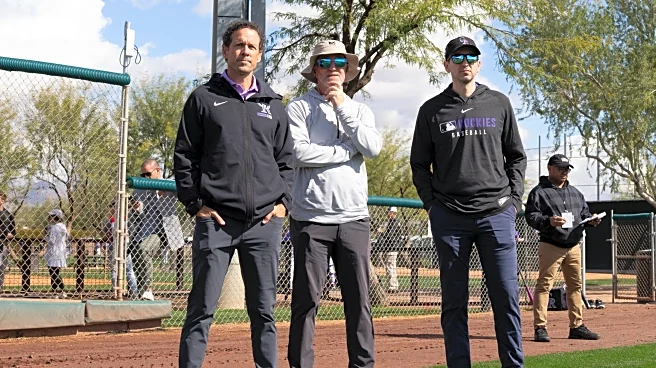
- A new front office — This is not exactly a strength since the Rockies are playing catchup to other organizations, and they won’t be caught up in six months when the season ends. However, the Rockies now have a serious MLB front office. While we should expect to see improvement from players on the field, the real changes will be happening behind the scenes, and it will be some time before we know their effectiveness. This front office is going to rely on more than “guys playing better,” and they may even surprise folks.
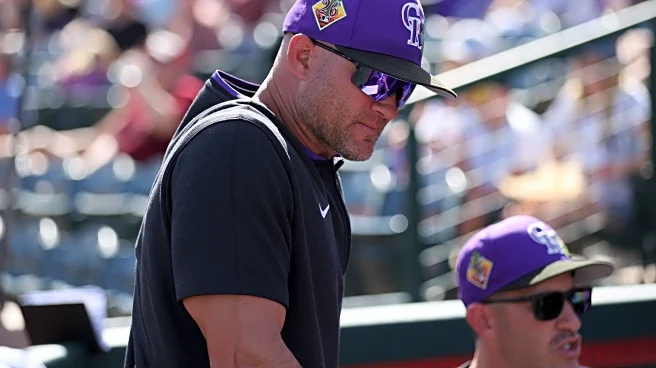
- A coaching staff the players like — The players have been clear — pretty much all of them — that they like manager Warren Schaeffer and the ways in which the coaching staff is working with them. After a miserable 2025, Schaeffer earned their trust and managed to get young players through an unforgettable (derogatory) season. This is no small feat. That terrible season gave Schaeffer a chance to hone his skills and build trust, and this season, he should be able to capitalize on that investment. Someone commented a couple of weeks ago that if Schaeffer can get this team under 100 losses, he should be under consideration for Manager of the Year. I agree.

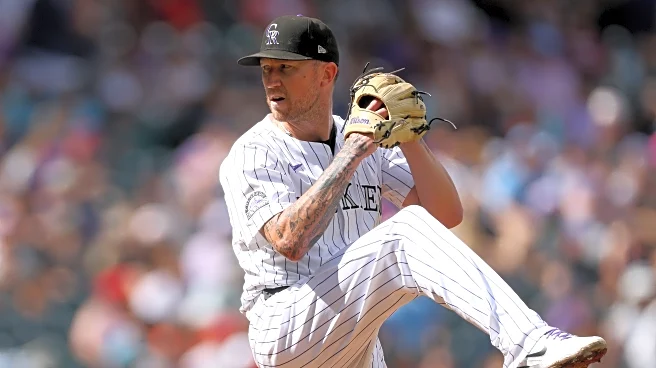
- The bullpen — Bullpens are, of course, volatile conglomerations, but the potential is there for the Rockies to have a bullpen that much of MLB overlooks. That may prove valuable during the season and certainly as the trade deadline approaches.
- Hunter Goodman — I suspect the Rockies All-Star and Silver Slugger came as a bit of a surprise to MLB, but Rockies fans always knew the bat was for real. Will Goodman regress? We don’t know. But if he doesn’t, the Rockies will have a catcher with significant offensive upside, which is a valuable commodity.
Weaknesses: Characteristics that place the organization at a disadvantage relative to others
- The Rockies are behind — For all those strengths outlined in the previous section, the fact remains that the Rockies are woefully behind their peers. Should fans expect losing? Yes. Should they expect a lot of it? Also, yes. But should things be improved? Probably. Still, losing is hard on professional athletes, and while DePodesta and Byrnes implement their system, there will surely be some grim games lying in wait.
- The offense is bad — This may change, but based on what we saw last season, the Rockies had an offense that couldn’t hit and struck out a lot. That’s no way to win baseball games. Hopefully this is an area in which the Rockies will improve, but based on what we saw last season, there’s work to be done.
- The starting rotation will have its work cut out — Last year’s starting rotation was historically bad, and it’s not possible for the Rockies (or any team) to win without at least a replacement-level rotation. To their credit, DePodesta and Byrnes have set out to correct this by signing veterans with diverse arsenals who aren’t afraid of pitching at elevation.

- The farm system is marginal — Ranking systems have been down on Rockies prospects since last year. The question remains whether this is a lack of talent or a lack of player development. By September, we will have a better idea.
- Kris Bryant’s contract — We’ve written words — so many words — about Byrant’s seven year, $182 million dollar contract. It is increasingly clear that Bryant’s playing days are over. Until the Rockies have resolved the KB conundrum, they will have a level of uncertainty in their ability to plan financially.
Opportunities: Elements in the environment that the organization could exploit to its advantage
- Coors Field should be weaponized — We’ve talked about the “Coors Effect” ad nauseam, and the Rockies talk a lot about the challenges of playing at elevation. This year, it feels like, finally, they have a front office ready to transform Coors Field into a visiting pitchers’ house of horrors.
- The Rockies will have players to deal at the trade deadline — I expect the Rockies to be very active at the trade deadline — as in, “I-wonder-if-Purple-Row-will-be-able-to-keep-up” active. DePodesta and Byrnes have said that they will listen to offers on any player, and the Rockies may have players — especially pitchers — to move in July. Add to that the possibility of trading Brenton Doyle, Mickey Moniak, and Ezequiel Tovar, and the Rockies can begin rebuilding their farm.

- A curious fan base — We hear a lot about how “Rockies fans show up no matter the team’s record,” but serious fans know that’s a fiction. Much of the gate is driven by fans of visiting teams who are either transplants or taking a three-day weekend. Just go to any series with the Chicago Cubs or the Los Angeles Dodgers or the Houston Astros or the Baltimore Orioles . . . I could go on, but you get the idea. One thing that has happened because of the front office and coaching changes is a fan base that is ready for winning and a front office that is ready to answer questions and build relationships. The Rockies need to spend this capital wisely.
Threats: Elements in the environment that could cause trouble for the organization
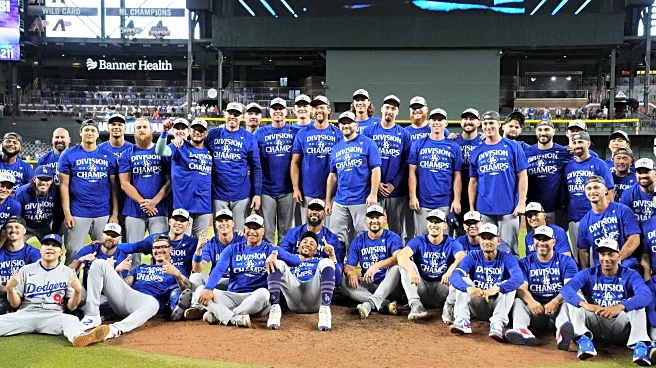
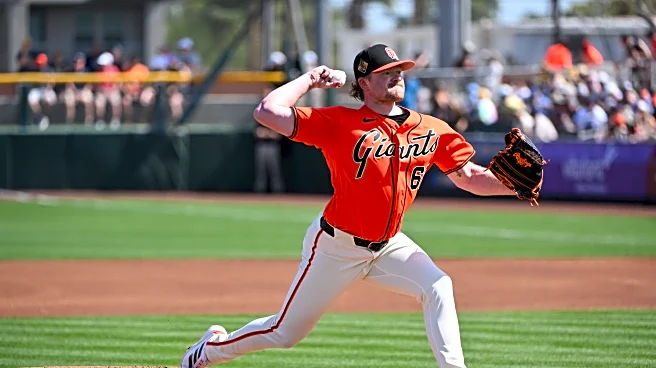
- The NL West — The Dodgers have built a juggernaut. They want a third consecutive World Series (and to their credit, who wouldn’t?). They made offseason moves in signing Kyle Tucker and Edwin Díaz to load up to take another run at it. The Rockies luck against the Dodgers has rarely been good, and that trend will probably continue in 2026. In addition, I think the Arizona Diamondbacks are sneaky good. In addition, the San Diego Padres and San Francisco Giants are solid. Before the Rockies can contend, they must find a way to win in the NL West.
- The looming lockout — Strictly speaking, this is beyond the scope of the 2026 season, but any momentum the Rockies build they risk losing in the event of a lockout that extends into the 2027 season. Certainly, no team would be immune from its effects, but for a young and rebuilding team, the impact might be especially devastating.
Predictions
Okay, so here are my (probably wrong) predictions.
- The Rockies will go 63-99. That would mean three additional wins per month, and that strikes me as reasonable given the improvements the front office has made. Any record that includes fewer than 100 losses is an unquestioned win for this organization.
- Three players will surpass 30 home runs: Hunter Goodman, Ezequiel Tovar, and T.J. Rumfield.
- The Rockies will be in the top 10 teams in terms of stolen bases.
So that’s what I’ve got.
Let me know what you think.
This week on the internet
I know the World Baseball Classic happened last week, but I feel compelled to share this Ezequiel Tovar video:
May that energy carry on into the season.
Rockies stay connected on mound with coach calling pitches from dugout | MLB.com
Thomas Harding talked with Rockies coaching, pitching, and catching staffs to get their takes on pitching “suggestions” coming from the dugout. Truly, this one is worth your time.
Four months ago, this Rockies prospect couldn’t speak. Now, he’s back in baseball | The Athletic ($)
Catch up with Braylen Wimmer in a pretty terrific article. (I think I’ve provided a gift link.)
Please keep in mind our Purple Row Community Guidelines when you’re commenting. Thanks!