


We are officially through the quietest stretch of the offseason, and the regular season is finally creeping up on us. With training camp right around the corner at the end of the month, we are about to see the 2026 rookie class transition from theoretical projections on the Jaguars’ depth chart to actually battling for roles on a deep roster.
Following a free agency window that saw some major veteran mainstays depart, the philosophy across this roster has shifted entirely toward youth, specialized
fit, and cost-controlled depth. For a team with high aspirations in a brutal AFC, the margin for error is razor-thin. Success this fall won’t fall just on Trevor Lawrence and the established stars; it’ll require immediate, tangible contributions from the first-year players.
This isn’t an evaluation of what these players might look like three seasons from now. It’s an evaluation of the present. We are looking at their immediate opportunity, their specific schematic fit under this coaching staff, and how easily they can push their way onto the field.
To map out exactly what those expectations look like, we’ve put together our 2026 Jaguars Rookie Impact Meter. By slicing through the remaining offseason noise, we are assigning a definitive 1-to-10 rating to each pick based on how much they will actually move the needle for Jacksonville this season.
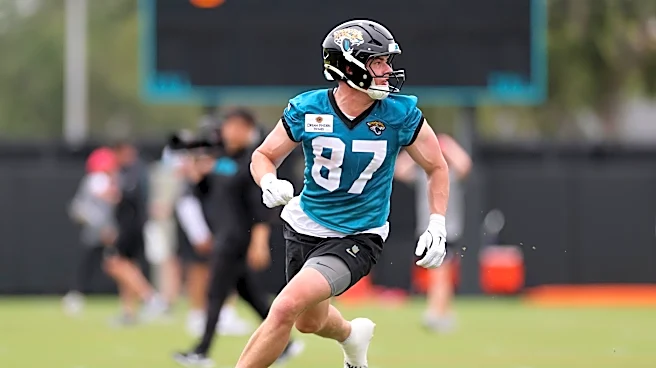
Nate Boerkircher – TE
The initial shock and awe of the Jaguars using their top draft choice on a pure blocking tight end with minimal collegiate production has mostly faded into the background. However, Nate Boerkircher’s rookie year is still going to be heavily scrutinized because of exactly that. Despite the lack of eye-popping statistics in college, there is an immediate, definitive path for the former Nebraska and Texas A&M product to make a tangible impact on this offense. Throughout last season, Jacksonville’s offense played an exhausting game of musical chairs trying to find a reliable direct backup to Brenton Strange. The team juggled three different middling options on the depth chart, and because none of them established consistency, opposing defensive coordinators easily diagnosed what Liam Coen’s unit was trying to do on any given down based purely on which tight end subbed into the game.
In theory, Boerkircher eliminates that problem by injecting disguise and versatility back into heavy personnel groupings. His baseline capability as an in-line blocker provides the Jaguars with a stable presence they can comfortably deploy in both 12- and 13-personnel packages without tipping their hand. Now, his box-score numbers as a pass-catcher are almost certainly not going to turn heads this season. Given the sheer volume of weapons across this roster, expecting high-end volume from him this fall would be a bit misguided. Instead, Boerkircher’s real value will live in those heavy packages where his run-blocking can pave the way, paired with his ability to cleanly execute off play action when his rare receiving opportunities do present themselves.
Impact Rating: 7
Albert Regis, DT
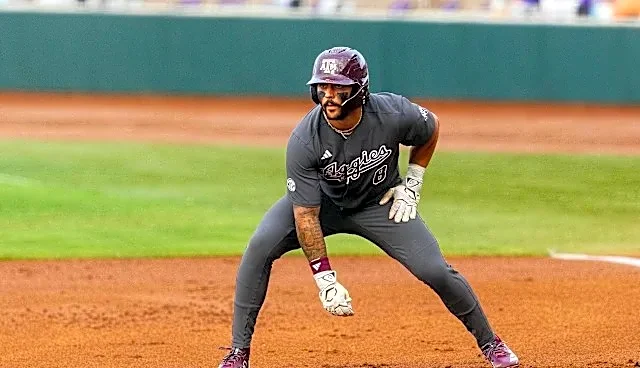
Throughout the offseason, mock drafts everywhere had the Jaguars prioritizing defensive tackle above all else, so it came as no surprise when the front office targeted the interior with their second pick of the draft. However, the presumed need leading up to April was for a penetrating three-technique who could consistently push the pocket and juice up the interior pass rush—and the former Texas A&M product is much more of a stout, tone-setting run-stuffer. Even with that stylistic difference, he projects as an important piece for a defensive tackle unit that simply needs more functional depth in all facets of the position. He gives the coaching staff a heavy-handed body type they previously lacked in the room, flashing the ability to keep his pad level low and use natural leverage to dictate terms at the point of attack.
His game provides a fantastic contrast to the lighter, more explosive interior rushers on the roster like Arik Armstead and recent trade acquisition Ruke Orhorhoro. While he likely won’t be a three-down defender anytime soon, his immediate floor is high enough to warrant early playing time. Expect him to carve out a highly specialized, reliable role right away, eating up space and anchoring the defensive front in obvious running situations.
Impact Rating: 5
Emmanuel Pregnon, OT
After the surprising swing on Nate Boerkircher at pick 56, the Jaguars had a gift slide directly into their laps when Emmanuel Pregnon tumbled all the way to No. 88. Leading up to April, plenty of mock drafts had the guard sneaking into the tail end of the first round, making his availability late in the third round an absolute heist in terms of pure value. The former Wyoming, USC, and Oregon standout enters a situation in Jacksonville that features glaring, immediate question marks at both guard positions. Patrick Mekari struggled to find his footing throughout his first year with the Jaguars in 2025, and while Ezra Cleveland performed reasonably well on the other side, he is slated to hit free agency at the conclusion of this season.
This unstable depth chart hands Pregnon a massive opportunity not just to solidify himself as the team’s long-term future on the interior, but to actively hijack a starting spot right out of the gate. The right guard position is entirely up for grabs, and it is firmly on the table that the rookie could outright win the job in training camp and be the Week 1 starter. His raw physicality and brute strength are exactly what this front needs; he injects a violent, tone-setting presence into an offensive line unit that has otherwise leaned far too heavily on finesse and technicality.
Impact Rating: 8
Jalen Huskey, S
Huskey was a highly productive college defender, but he was widely viewed as yet another “reach” relative to consensus draft boards. Nonetheless, he projects as a very comfortable schematic fit in Anthony Campanile’s defensive system, which famously asks a ton out of its safeties. His sure-tackling ability and natural knack for finding the football mean his presence will be felt immediately on special teams, with a realistic chance to occasionally push his way into defensive packages here and there.
That said, Huskey is walking into a remarkably deep safety room. Antonio Johnson and Eric Murray are written in pen as the clear-cut starters, while recent draftees Caleb Ransaw and Rayuan Lane are also primed to battle for key rotational snaps. Because Huskey’s logistically crowded path to early defensive playing time is a bit clunky, expectations for a massive rookie-year statistical footprint should be kept in check.
Impact Rating: 3
Wesley Williams, Edge
Technically speaking, Williams is the highest-selected edge rusher (119th overall) the Jaguars have drafted since taking Travon Walker first overall back in 2022. He lands in Jacksonville following a highly productive career at Duke, flashing the functional versatility to hold his own across all three downs.
From a logistical standpoint, Williams actually has a slightly clearer path to defensive playing time than Jalen Huskey. The edge depth directly behind Walker and Josh Hines-Allen is mostly unproven, leaving the door wide open for someone to step up. However, Williams faces some limitations due to a relatively middling physical and athletic profile by NFL standards. To carve out a consistent defensive role, he’ll have to outwork and beat out rising fan favorites like Danny Striggow and B.J. Green II in training camp. Expect his most realistic and immediate avenue to the active gameday roster to come via special teams while he refines his pass-rush arsenal.
Impact Rating: 3
Tanner Koziol, TE
Earlier this offseason, the Jaguars pursued Seattle wide receiver Jake Bobo, ultimately missing out when the Seahawks matched their restricted free agent offer sheet. Tanner Koziol may very well have been the insurance policy for that failed acquisition, projecting in a similar light. He brings a radically different skill set to the tight end room than his rookie classmate, Nate Boerkircher; rather than functioning as an in-line blocker, the former Houston standout is a pure “big slot” weapon who operated primarily as a jumbo wideout during his collegiate career.
At 6-foot-7 with a massive catch radius, Koziol adds a unique element to the pass-catching corps that can create immediate schematic mismatches for opposing defenses. While his baseline blocking remains an ongoing project, his spatial awareness and high-pointing ability make him a natural target over the middle of the field. Look for Liam Coen to draw up heavily tailored concepts for him early on, making him a factor in specialized red-zone packages throughout his rookie year.
Impact Rating: 5
Josh Cameron, WR
Cameron screamed “big-bodied, Liam Coen blocking wideout” long before the draft kicked off, making his selection in the sixth round a logical dot-connecting move. His operational projection closely mirrors the niche role Tim Patrick carved out for the Jaguars last season—functioning as a physical, downfield blocker in the run game who can double as a boundary-stretching, 50/50 ball winner on passing downs.
However, translating that physical profile into consistent offensive snaps in year one will be an uphill battle. Cameron is walking into one of the absolute deepest wide receiver rooms in the NFL, which severely caps his baseline offensive volume. Instead, his most immediate and reliable path to the active gameday roster will live on special teams, where his extensive collegiate experience as a return specialist gives him an elite edge to make a tangible impact right away.
Impact Rating: 3
C.J. Williams
Williams was the fourth pass-catcher taken by Jacksonville in April, but early returns out of OTAs and minicamp hint that he could outpace some of the rookies selected ahead of him. Williams was a bit of a late bloomer at the collegiate level across multiple stops, but he emphatically broke out following a 2025 transfer to Stanford. He paced the Cardinal offense by leading the team in all three major receiving categories, proving he can shoulder heavy volume.
Williams has consistently stood out in early offseason work, flashing crisp route running and soft, reliable hands. Much like his new teammate Josh Cameron, Williams brings a bigger-bodied frame to the perimeter that translates to noticeable functional play strength through contact. While the receiver room remains crowded, his refined technical polish gives him a legitimate chance to see playing time in year one.
Impact Rating: 4
Zach Durfee
Famously tabbed by ESPN as “Prospect X”—the most overlooked player with the highest upside in the 2026 class—Durfee overcame an grueling journey from a student at North Dakota State to a dominant stretch at Division II Sioux Falls and finally Washington just to get his shot in the NFL. While fans are quickly falling in love with his underdog story, his on-field profile is where things get really intriguing.
A former high school quarterback, Durfee has only been playing the edge position for four years. That lack of structural registry means there is substantial technical refinement needed before he can be trusted with meaningful defensive snaps. However, his raw athletic profile, anchored by an explosive 39-inch vertical and 4.55 speed at 258 pounds, paired with a relentless motor, makes him the exact type of high-ceiling traits bet you happily make in the seventh round. He’ll look to refine his pass-rush plan on the practice squad or carve out an early niche as a core special teamer.
Impact Rating: 1
Parker Hughes
Hughes flew largely under the radar as a bit of an unknown prospect throughout the draft cycle, but his elite athletic profile makes all the sense in the world as a late seventh-round dart throw. Hughes turned heads during the spring when it was reported he clocked a blazing 4.40-second forty-yard dash at his Middle Tennessee State pro day, which is a metric that places him in the upper stratosphere of raw speed for the linebacker position.
On the downside, Hughes is pretty light in the pockets and noticeably lacks the necessary length and physical bulk to consistently hold up in the box or see meaningful defensive snaps in year one. However, in the modern NFL, that type of rare, linear sideline-to-sideline speed is a premium commodity for coverage units. He enters training camp with a very distinct, realistic opportunity to carve out a roster spot as a core four-phase special teams weapon.
Impact Rating: 1
What rookie are you expecting to outplay their rating, Jags fans?