




By the end of the day on Thursday, only four teams will remain in the FIBA World Cup.
Among all the talent that will take the floor in Berlin, these four players will have a significant say in determining which four squads will still be standing, advancing out of the quarter-finals and into Saturday’s semi-finals.
Here’s more on why I think the United States’ Aliyah Boston, France’s Leïla Lacan, Belgium’s Julie Allemand and Spain’s Iyana Martín are so critical to overcoming the challenges their favored
teams will face in the quarter-finals. In the comments, let us know who you see as the difference-making players.
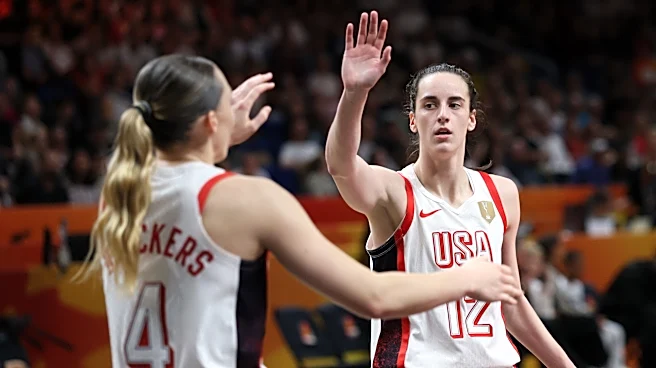
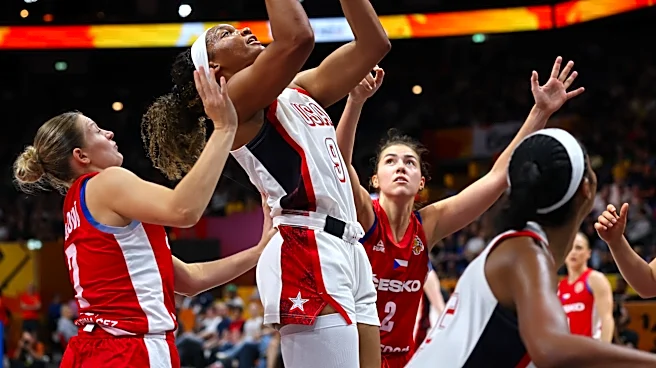
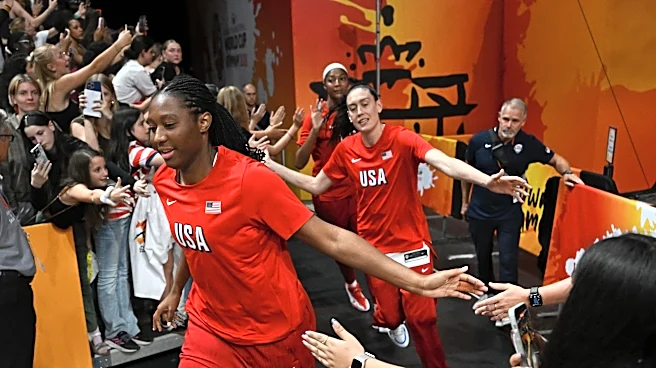
Team USA vs. Hungary (5:30 a.m. ET, TNT/truTV): Aliyah Boston

All 12 players on Team USA are capable of emerging as the star who seizes the World Cup spotlight and steers the team into the semi-finals.
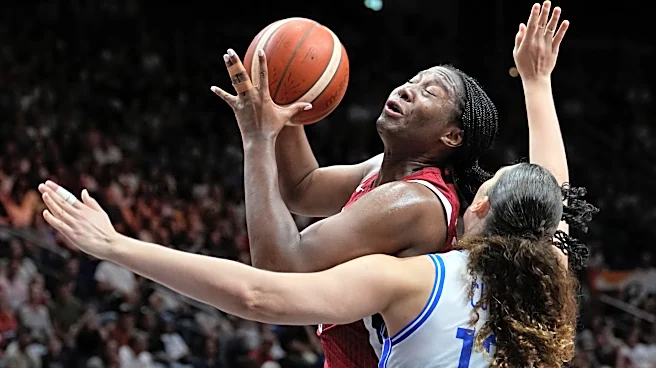
But among the American dozen, Aliyah Boston stand outs as a player who could be particularly important to Team USA’s should-be-guaranteed quarter-final victory over Hungary.
I’ve already argued that Boston should be in the starting lineup, as she would give the Americans’ first five more balance as a true big. But Boston is not just a true big. The breadth of her skillset is as wide as anyone’s on Team USA, and it’s one that can neutralize, or even pulverize, Hungary’s lone strength.
The tandem of Dorka Juhász and Virgas Takacs-Kiss, both of whom are listed at 6-foot-4, have carried Hungary in the quarters. Yet, I don’t think that either of them, or even both of them combined, can handle Boston on both ends of the floor.
Boston is Team USA’s best rim protector, possessing the size and the length required to prevent Juhász and Takacs-Kiss from finishing effectively. On the other end, Boston’s ability to pound in paint for a score around the basket, operate from the elbows as a driver or passing hub and stretch out behind the arc together present a package of offensive versatility that surpasses the defensive capacities of most opposing bigs.
Team USA can also double down on snuffing out Hungary’s size by continuing to lean into Boston’s pairing with Angel Reese, or have Reese and Kiki Iriafen serve as one-two punch of physicality that backs up Boston.
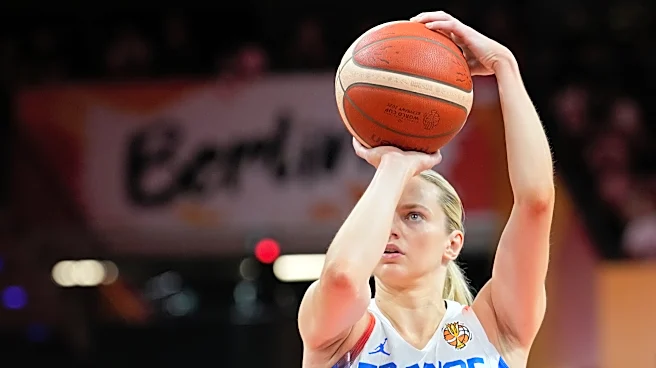
France vs. China (8:30 a.m. ET, HBO Max): Leïla Lacan

China often fails to maximize their size due to poor guard play. They finished group play second in turnovers, coughing up the ball more than 19 times per game.
So, let’s see an unleashed Leïla Lacan hounding China’s inadequate ball handlers at the point of attack, ensuring they’re unable to feed a clean pass to Han Xu or China’s other bigs.
Thus far, France has enjoyed electric offensive performances, cruising into the quarter-finals by shooting almost 67 percent on 2-pointers as a team and nearly 49 percent on 3-pointers.
Those numbers are unsustainable. When their percentages normalize, can France find a way to gut out wins?
A defensive demon like Lacan, combined with another one in Gabby Williams, can give France a high floor, even when Marine Johannès isn’t swishing just about every 3-pointer she throws up.
France already has been excellent defensively, leading the competition in steals in group play. However, as Team USA has experienced, a team’s defensive edge can wane when the shots aren’t falling, resulting in distracted, rather free and fierce, defense.
If that happens against China, look for Lacan to re-inject France with the ferocity needed to advance.
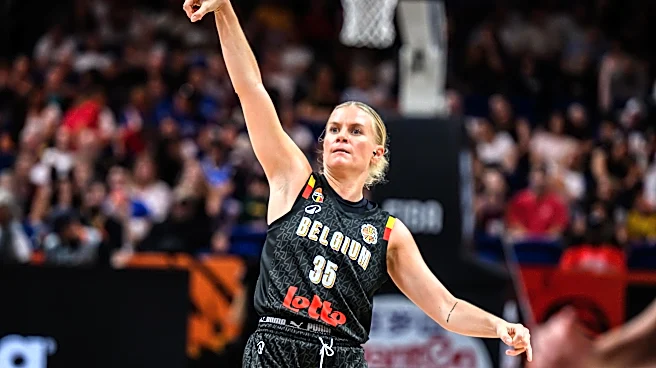
Belgium vs. Germany (11:45 a.m. ET, HBO Max ): Julie Allemand

As Edwin Garcia just wrote, Emma Meesseman is in all-world form, while Julie Vanloo has been absolutely nails from behind the arc.
But, the third member of Belgium’s core triumvirate, Julie Allemand, is most important to ensuring that Belgium can separate from Germany, sending the hosts home and the Cats into the semis.
When she suits up for Belgium or Fenerbahçe, a triple-double is not an outlandish expectation for Allemand, as she stuffs the stat sheet as the chief orchestrator of offensive systems that prioritize ball movement. Oftentimes, it’s the scoring column, as much as the rebounds or assists, where Allemand can struggle to reach double figures. In group play, she averaged less than nine points per game, shooting less than 38 percent from the field.
Allemand, however, has a track record as an efficient scorer. This WNBA season, she’s shooting 54.3 percent from the field and 42.4 percent from 3 for the Toronto Tempo. She also has a reputation for rising to the moment. She was named the 2026 EuroLeague Women Final Six MVP for Fenerbahçe, putting up 13 points, 10 assists and eight rebounds in the final.
Point guard play also is a weakness for Germany, meaning an outlier scoring game from Allemand can provide the extra edge Belgium might need as they strive to win the first World Cup medal in national team history.
Spain vs. Australia (2:45 p.m. ET, HBO Max): Iyana Martín

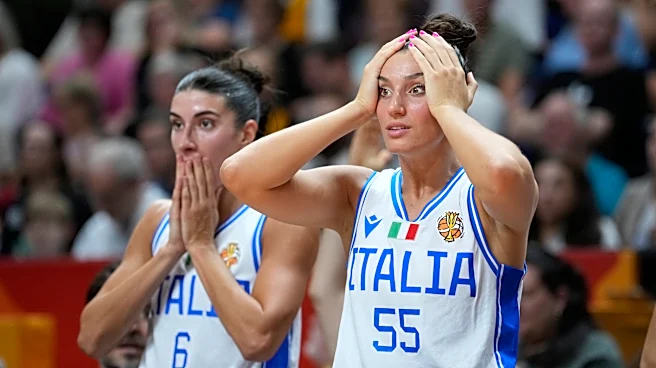
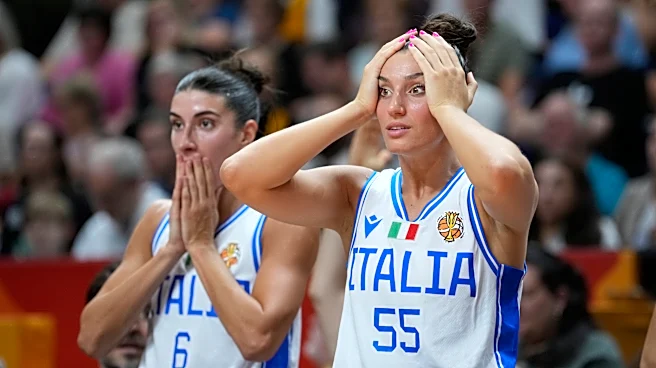
On the cusp of coasting to a double-digit win in their single-elimination game against Italy, Australia instead made things way too interesting, having to stave off a late Italian surge in order to win by two points and earn a date with Spain.
Did that experience steel the Australians, making them more ready for the challenge ahead, or exhaust them, sapping them emotionally in ways that will have lingering ramifications?
For Spain, the goal should be to make the latter true.
Despite sporting a lower FIBA world ranking, No. 6 compared to No. 3, Spain has reason to believe that they’re the better team. And that can be confirmed, in significant part, because they have then best young guard in this game: Iyana Martín.
While the potential of Awa Fam remains enticing, the reality of Martín can help Spain advance.
In group play, Martín was the tournament’s fifth-best scorer, averaging 17.3 points per game on better than 56 percent shooting from the field and almost 44 percent from 3. She’s demonstrated a deep scoring bag, capable of taking her defender off the dribble, breaking the paint and scoring at the basket or draining quick-trigger pull-up or catch-and-shoot 3s.
Australia would counter that their young guard is just as special as Martín, as Isobel Borlase scored a tournament-high 30 points in Australia’s single-elimination win. Borlase, however, hasn’t been empowered as a primary scoring option the way that Martín has. And as demonstrated by her season with the Atlanta Dream, Borlase still hasn’t established the consistency required to be trusted as a top scorer.
Spain, in contrast, has entrusted Martín, positioning her as the potential difference maker in what profiles as the most competitive quarter-final game.