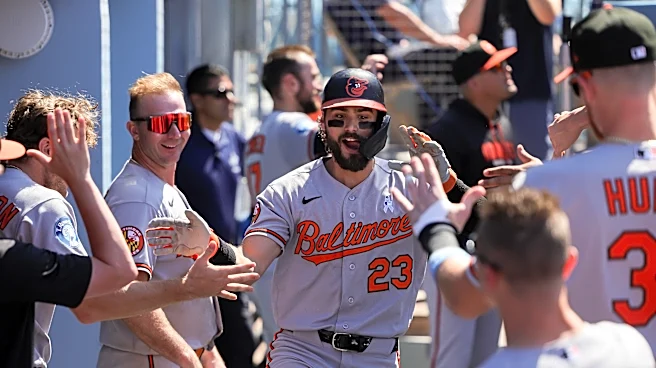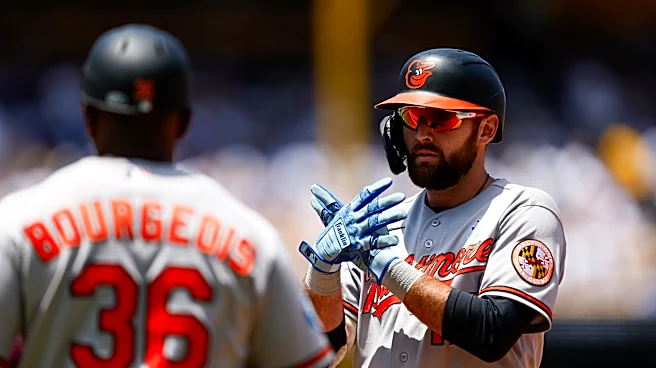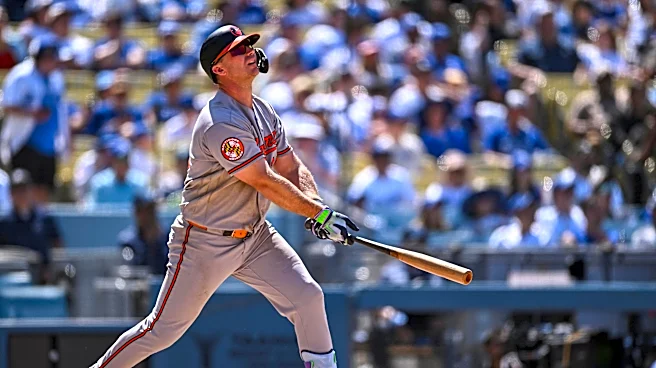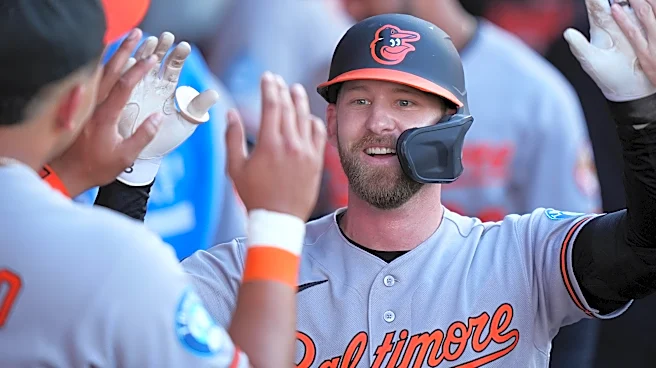





After tonight’s game with the Angels, the Orioles will officially reach the 81-game mark of their 2026 campaign. Heading into Game 81, it’s safe to say that the first half of the O’s season has largely been disappointing. Seen by most as a strong Wildcard contender heading into the season, Baltimore currently sits below .500 and is currently sitting on the outside looking in for the American League Wildcard spots.
As we’ve seen countless times from Birdland over the last two years, there is again
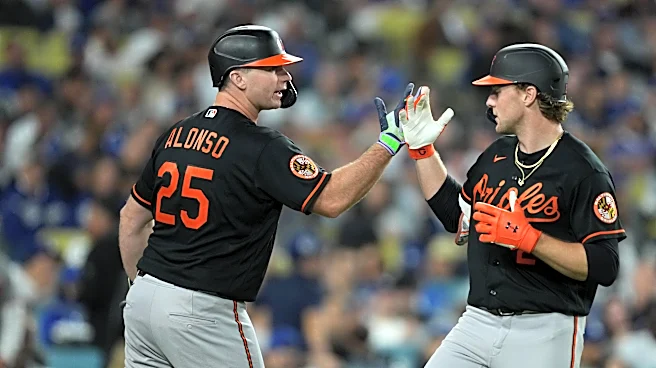
a growing chorus calling for Mike Elias to lose his job due to the Orioles’ underperformance. This renewed consternation for Elias and the front office comes after their most aggressive offseason in the 7+ years since Elias’ hiring — an offseason that saw Elias & Co. make their first major free-agent commitment with Pete Alonso.
It’s undoubtedly true that this Orioles team has failed to coalesce and become the contender many — including Baltimore’s front office —thought they’d be. After all, this team is only [3/4] games ahead of the pace of last year’s last-place team.
And yet, does that actually mean that the front office’s attempts to improve this team were all failures? As we reach the halfway point of the 2026 season, let’s grade the nine offseason moves that were supposed to transform this team.
The move: Signing OF Leody Taveras to a 1-year/$2M deal
The grade: C+
Taveras was signed to be outfield depth in CF the same way the O’s front office took chances on Ramón Laureano and Dylan Carlson last season. Through the first 30 games of his Oriole career, he looked like a Laureano-esque signing, hitting .277 with a .821 OPS while taking over the starting CF job from Colton Cowser.
Since the beginning of May, however, we’ve seen a noticeable drop-off from the former longtime Texas Ranger. In his last 126 ABs, Taveras is only hitting .238 with a .620 OPS while striking out 31% of the time.
This move still gets a passing grade as Taveras was a plus contributor throughout the first month-plus of the season and has allowed the Orioles to ride out an injury to Dylan Beavers and cold stretches from Cowser and Tyler O’Neill without having to resort to playing Triple-A talent in the Baltimore outfield.
The move: Trading RHP Grayson Rodriguez for OF Taylor Ward
The grade: B
Like Taveras, Ward started off the season incredibly hot and has cooled off as of late. Ward finished the first month of the season with a .304 average and an MLB-leading .438 on-base percentage and a . For an offense that was often struggling to find its rhythm, Ward was a consistent and elite producer at the top of the lineup.
Across May and June, his average has dipped to .223 and his OPS is down to .660, though he’s still maintained a strong .363 OBP amidst his struggles. We’ve yet to see anywhere close to the power output that Ward showed last year with the Angels, as he’s on pace for 40-45 extra-base hits after producing 69 for the Halos last season.
And yet, his on-base ability at the top of the lineup has been extremely valuable for Baltimore, and the front office will be faced with the tough decision of potentially trading his expiring contract at the deadline if the team’s play doesn’t improve. Given that the cost of acquiring Ward was only the perpetually injured G-Rod, this move has so far earned a solid, if not outstanding, grade.
The move: Signing 1B Pete Alonso to a 5-year/$155m deal
The grade: A-
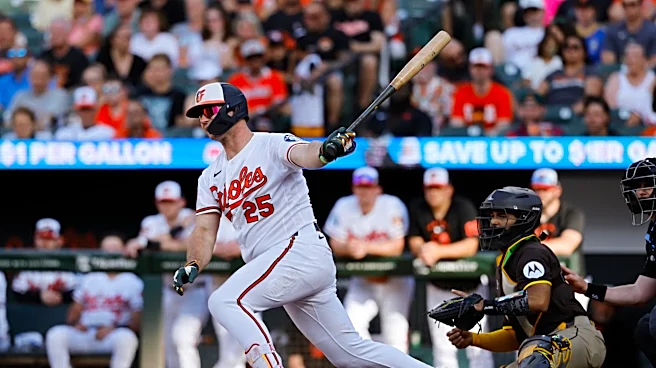
The Alonso signing was the biggest move the Orioles made this past offseason and his first three months in black and orange have been exactly what the O’s paid for. The five-time All-Star leads the Orioles in hits (74) and home runs (18), while his 52 RBIs are not only best on the team but good enough for fifth in the American League. The Polar Bear is also playing the best defense of his career in Baltimore. Alonso was paid to be the best player on this Orioles’ offense, and through the first half of the season, he’s been just that.
The only reason this signing doesn’t earn a higher grade is that Alonso started the season off cold. Through the first month of the season, the star 1B was slashing .198/.306/.362 with only four homers. Since then, he’s been blazing hot, slashing .282/.357/.547 with 14 long balls in his last 181 ABs. If not for that slow start, the Polar Bear is likely challenging Yordan Alvarez and Nick Kurtz for the status of best hitter in the AL.
The move: Trading RHP Kade Strowd and prospects for INF Blaze Alexander
The grade: B+
Our Tyler Young went into great detail yesterday about how Alexander has significantly outperformed the expectations placed on him when he was acquired to be a super utility player. On analytics alone, he might be the best hitter on this year’s team. His grade doesn’t surpass Alonso’s because his overall offensive impact has been much smaller. But it was still undoubtedly a strong move by the front office to acquire the 27-year-old from Arizona.
The moves: Trading for RHP Shane Baz, signing RHP Chris Bassitt and re-signing RHP Zach Eflin
The grade: C–
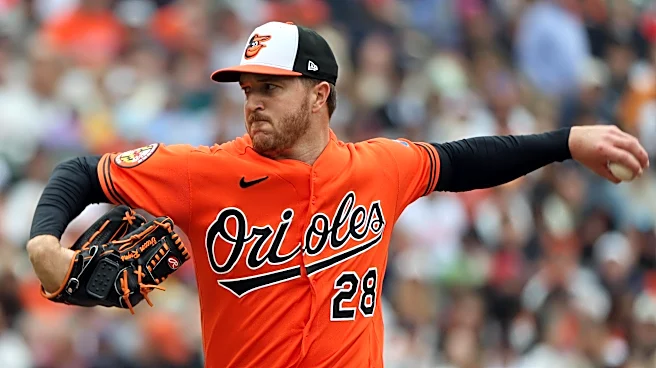
Elias & Co. made three moves to supplement the existing rotation options of Trevor Rogers, Kyle Bradish, Dean Kremer, Brandon Young and Cade Povich. The Baz trade (and subsequent extension) has been the most impactful acquisition. While his season ERA of 4.04 doesn’t jump off the page, he leads the Orioles with 89 IP and has put up a 2.62 ERA with a .223 BAA over his last seven starts. The former Ray is clearly a foundational piece that the O’s can build their rotation with going forward.
The other two veterans are what sink this grade. Perhaps including Efflin in this calculation is unfair because he only pitched 3.2 strong innings before blowing out his elbow and being lost for the season. Bassitt hasn’t been much better, posting a 5.27 ERA and 0.0 bWAR in 56.1 IP before landing on the IL with back discomfort two weeks ago.
Getting essentially zero positive impact from the $26.5M they invested in Eflin and Bassitt is far from ideal and may be enough to justify a lower grade. But the biggest swing was Baz, and that move looks better and better with each start, earning the front office a grade just above failing.
The moves: Re-acquiring RHP Andrew Kittredge and signing RHP Ryan Helsley to a 2-year/$28M deal
The grade: D-
The Orioles had a bad bullpen in 2025, with their relief corps ranking 25th in ERA at 4.57. The O’s went into this most recent offseason not only trying to patch the hole in their patchwork ‘pen, but also to find a new closer after another injury to Félix Bautista. The front office responded by reacquiring 36-year-old Andrew Kittredge and bringing in former All-Star closer Ryan Helsley.
Through the first half of the season, both have been plain bad. Kittredge is currently sporting a 6.11 and has more hits allowed (21) than strikeouts (16). Helsley is only slightly better with his 5.11 ERA in 12.1 IP, having missed most of the season due to right elbow inflammation.
The O’s currently sit 21st in bullpen ERA this season with most of that improvement coming via the strong seasons by Rico Garcia and Yennier Cano. And while the relative weakness of the bullpen isn’t this team’s biggest problem, it is certainly the place the front office failed to strengthen the most.