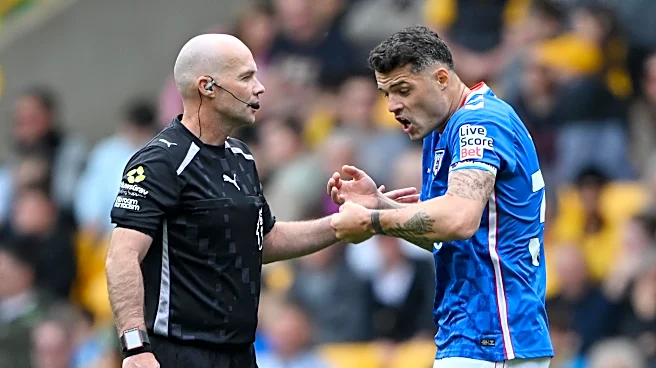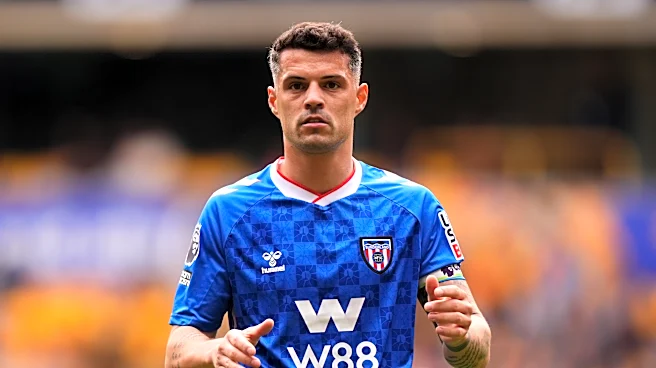




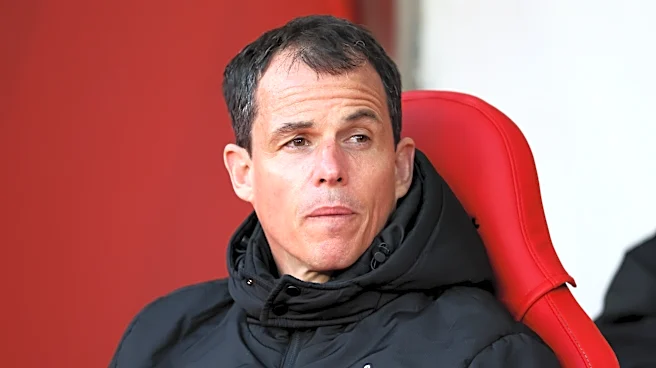
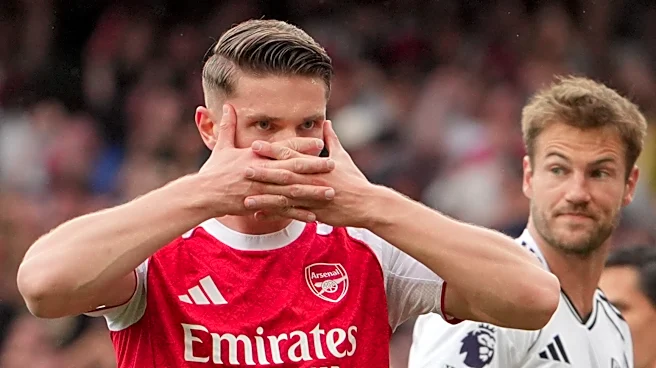
It’s perhaps a mark of the sheer impact made by Granit Xhaka during his time at Sunderland that despite arguably not being at his absolute game-changing best in recent weeks, he still exudes enough in the way of sheer aura to leave nobody in any doubt of his influence, his standing and perhaps most importantly, his ability to carry a responsibility that can be crushingly heavy.
When he swapped the glitz, glamour and glory of the Bundesliga and Bayer Leverkusen for the Stadium of Light last summer,
the sound of the thwacking of jaws hitting the ground right across the Sunderland fanbase could be heard throughout the footballing landscape.

Despite demands to the contrary from then-manager Erik ten Hag, we eventually signed a Leverkusen league winner, a top twenty Ballon D’Or entrant and a former Arsenal captain — and as a newly-promoted side, no less. Just how was this possible? Genuine world class talents don’t pass this way very often, yet here was one arriving to turbocharge our quest for survival (and possibly even more) following promotion.
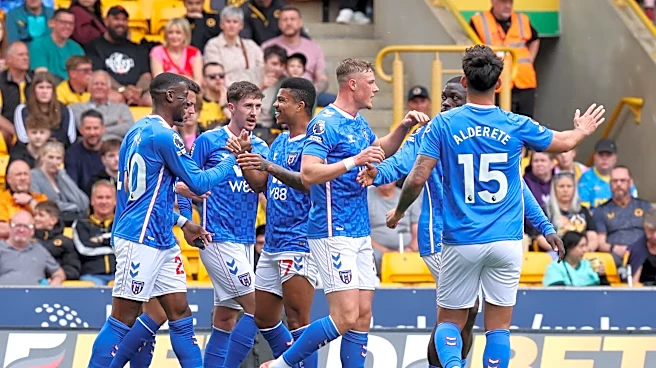
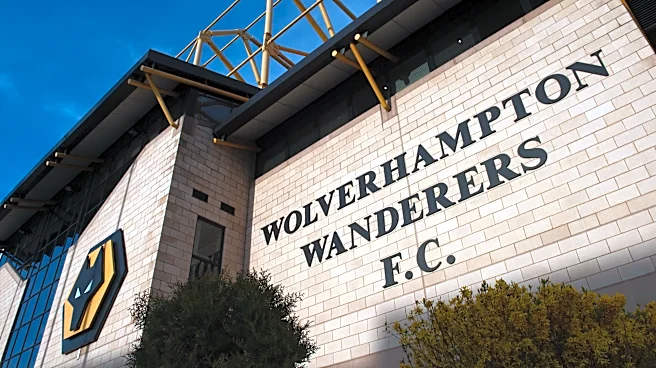
As Sunderland reflect on a job well done and possibly begin to cast their eyes towards the summer and what needs to be done to continue our upward trajectory after securing our Premier League status with a point at Molineux, it’s become obvious that the addition of the Swiss international midfielder was far more than merely a definitive signing of this era: it’s one of the most important we’ve ever made.
Breaking the cycle was very much the target following promotion. That needed to be reflected in our transfer business and it was no mean feat — Sunderland often fail to make these kinds of signings following elevation to the top flight.
We did it with Steve Bould and Stefan Schwarz back in 1999, but we didn’t repeat the trick in 2005 and nor did we do so in 2007 (Russell Anderson? Michael Chopra? Get out of here). Of course, in those days, the gulf between the two divisions wasn’t as wide and you could occasionally get away with it, but this was different. It needed to be, and Xhaka was at the very heart of the revolution.
Make no mistake: were it not for his influence as captain, his status as a focal point around which everyone can rally, his role as a club ambassador of the highest quality and an unbelievably talented midfielder to boot, 2025/2026 might well have panned out differently.
As mentioned above, he’s not quite dominating games as he did earlier in the campaign. His playing time will perhaps need to be regulated next season in order to preserve his fitness, and others will need to step up to ease the burden and share the workload, but that’s a discussion for another day, because what he’s done for us this season shouldn’t be overlooked.
On every level, he just oozes class.
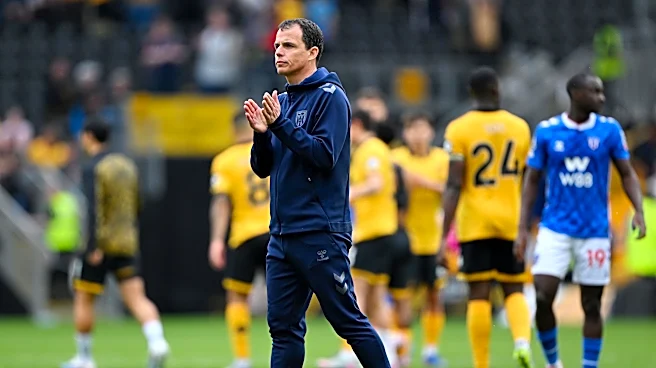
He leads through his deeds, not just his words (although his words have been pretty damn impressive, too). Furthermore, he and Régis Le Bris have formed the kind of head coach/captain’s axis that evokes memories of Peter Reid and Kevin Ball, and the results have spoken for themselves.
He wasn’t the only high-quality summer arrival but he was certainly the most valuable and much like Italian maverick Attilio Lombardo, who pitched up at Crystal Palace in the summer of 1997, Xhaka has pulled off the rare feat of becoming a firm fan favourite during a relatively modest number of appearances — something that’s very hard to do at Sunderland.
Even as the captain of a side expected to struggle, the notion of Xhaka leading his team into environments in which he was ever likely to be intimidated was always somewhat fanciful.

At St James’ Park, for example, why would the sight of a flag featuring a road sign, the spire of a council building and what I remain convinced was a top-hatted woodpecker throw such a player off his game? He might’ve been leading a young and somewhat green Premier League side, but for a man who’s seen a lot and done a lot, games such as this were challenges to be relished and boy, did he rise to them.
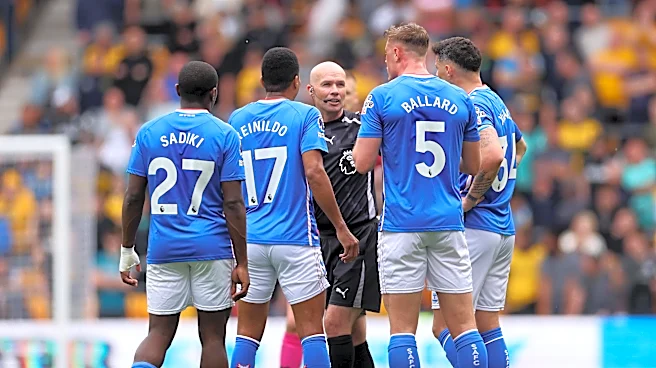
Unlike one of his spiritual predecessors in Niall Quinn, Xhaka won’t spend seven years on Wearside in a playing capacity, even if like fellow veteran Reinildo, he’s most definitely got at least one more season of Premier League football left in the tank and will remain a vitally important figure until his Sunderland career draws to a close.
However, when he does eventually call it a day and the accompanying social media content appears, he’ll be able to reflect on an achievement that stands comparison to anything accomplished by a Sunderland skipper of the past two decades — one that cemented his status as a true red and white hero.
Thanks, Granit. We couldn’t have achieved our goal without you.