



There is no doubt that one of the biggest weaknesses for the Royals in 2026 was the bullpen. Royals relievers had a 5.07 ERA overall, second-worst in baseball, with 26 blown saves and a league-worst 6.65 ERA in the ninth inning. J.J. Picollo acknowledged it as a top priority in his end-of-the-year press conference, when he indicated that the “bullpen is going to be a focus for us” in the offseason.
It might be tempting to take a shortcut and splurge in the free agent market to upgrade the pen. But
the Royals have tried that before. Before the 2024 season, Picollo signed free agent relievers Will Smith and Chris Stratton, paying them a combined $13 million. In 2024, they pitched in 102 games, combining for a 5.98 ERA.
Ah, but maybe the problem was that they were shopping in the bargain bin? Let’s look at all of last year’s top free agent relievers who signed for $7 million or more and how they fared.

The results are pretty mixed. Of the 14 pitchers, I think you can say Tyler Rogers, Luke Weaver, Raisel Iglesias, and Gregory Soto were unqualified successes, while the rest either had injury issues or were ineffective.
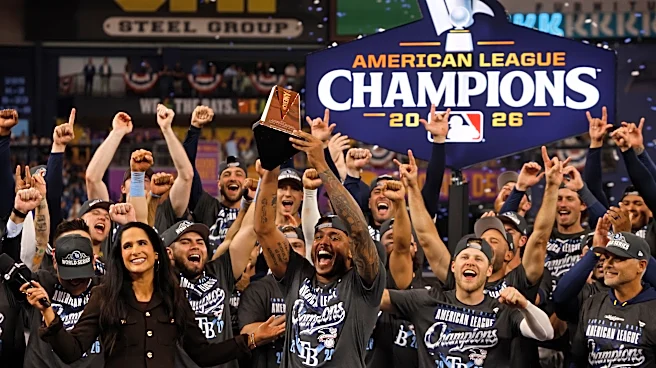
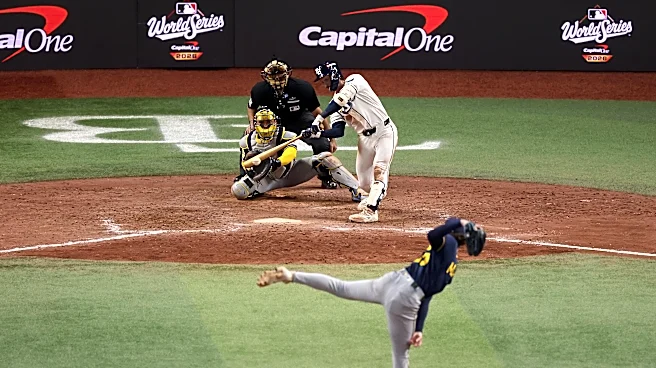
The two World Series participants, the Brewers and Rays, do not have a single member of their bullpen who was signed as a Major League free agent aside from Steven Matz, who was signed as a starter. Instead, the found quality relievers through a number of different avenues – the draft (Ian Seymour, Aaron Ashby), international signings (Abner Uribe), minor league trades (Garrett Cleavinger, Chad Patrick, Trevor Megill, Grant Anderson), major league trades (Bryan Baker, Tyler Wells, DL Hall, Antonio Senzatela), cash considerations (Cole Sulser), minor league deals (Cam Booser), and the Rule 5 draft (Kevin Kelly).
The Brewers and Rays illustrate a different way to build a bullpen. Rather than paying a premium for established relievers, they assembled their relief corps through a variety of avenues, giving them more chances to find undervalued talent. Not every acquisition works, of course, but spreading the risk across several pitchers makes it easier to absorb a miss without having an expensive contract clog up the bullpen.
Of the top 50 relievers with the lowest ERAs last year, only seven were originally acquired by their team as a major league free agent – Aroldis Chapman, Taylor Clarke, Raisel Iglesias, Yuki Matsui, Tyler Rogers, Tanner Scott, and Luke Weaver. Free agent relievers tend to be old, and older relievers tend to be less effective. In 2012, Bill Petti and Jeff Zimmerman at FanGraphs found relievers “age more dramatically than starters.” Their velocity drops, their strikeout rates decline, and their walk rates rise.
Relievers also tend to have volatile performances on a year-by-year basis. Petti also found reliever performance was much more erratic on a season-by-season basis than for starters. Craig Edwards at FanGraphs looked at the bust rate for relievers in 2017 and found that while elite relievers tend to meet projections, “merely ‘good’ relievers had more trouble.” Relievers have smaller samples of performance to evaluate, leaving open the possibility that a few bad outings or plain bad luck can turn a promising season into a disappointing one. That makes it risky to pay a premium for a reliever based on one strong season, particularly when projecting how he’ll perform over a multiyear contract.
Instead, smaller-market clubs should value flexibility. If a free-agent reliever on a multiyear, multimillion-dollar deal endures a rough stretch, a team can find itself stuck with him, reluctant to eat the remaining salary or risk losing him for nothing. But if the bullpen is populated by lower-cost pitchers, the team has more options. A struggling reliever with minor-league options can be sent down to work things out, while another can be released without leaving a significant financial hole. The club can cycle through arms until it finds the right combination, giving opportunities to younger pitchers or taking a chance on someone else’s castoffs.
Of course, this approach isn’t without drawbacks. Cheap relievers are cheap for a reason, and a bullpen built entirely from unproven arms can become a revolving door of ineffectiveness. There is something to be said for coaching and pitcher development, areas in which the Rays and Brewers have excelled in for a long time. The Royals need to be on the cutting edge of development as well. They need to find enough quality among those lower-cost options to build a reliable group while reserving the biggest investments for pitchers who offer a meaningful advantage over the alternatives.
For the Royals, this may mean cultivating in-house options that show signs of success, like Steven Cruz and Nate Pearson, and supplementing them with pitchers acquired through other means. Picollo suggested the team will look at pitchers who provide a variety of “different looks” or “different stuff,” giving hitters a wide range of arm angles, pitch shapes, and velocity profiles to contend with.
That could mean trying more pitchers like Jose Cuas, who throws from different arm angles. It could mean trying more pitchers like Carlos Durán, who excels with a slider, but struggle with command. It could mean trying more pitchers like Nolan Hoffman, who throws from a lower arm angle.
But it is clear that the solution won’t come exclusively from spending lavishly on free agents. The Royals have already tried that approach, and it hasn’t consistently produced the results they need.
“We plan to be aggressive in acquisition,” J.J. Picollo said at his end-of-season press conference, before cautioning that he didn’t want that to be mistaken for being “aggressive in payroll.” He noted that the Royals ranked among the top five teams in bullpen spending over the previous three seasons, but the results have been mixed.
The lesson isn’t that the Royals should stop spending on relievers, but that spending more money doesn’t necessarily translate into a better bullpen. They need to be more effective at identifying which pitchers are worth investing in, while continuing to look for value through trades, player development and lower-cost acquisitions.