


Real Madrid’s productive summer in the transfer market has continued with another significant sale from the club’s academy.
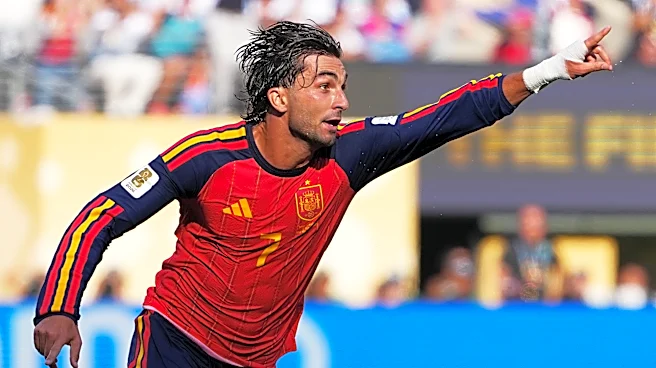
The club officially announced on Monday that 20-year-old striker Jacobo Ortega has joined Ligue 1 side Racing Strasbourg. The deal is reportedly worth €10 million for 70 percent of the player’s rights, meaning Real Madrid retain a 30 percent stake in the youngster.
Ortega has signed a five-year contract with Strasbourg.
The size of the deal is particularly notable given Ortega’s
lack of senior experience. The striker, who was registered with Real Madrid C and never made his competitive debut for the first team, has become the most expensive academy player Madrid have ever sold without previously appearing for the senior side.
It represents another example of Real Madrid extracting considerable value from the talent being developed at Valdebebas, even when there is no immediate pathway into the first-team squad.
Ortega joined Madrid’s academy in 2018 at the age of 12 and spent eight seasons progressing through the club’s youth structure. His final campaign was an important one: he finished as Real Madrid’s leading scorer in their UEFA Youth League campaign as Juvenil A went on to win the competition in 2025-26.
Madrid confirmed his departure with the following statement:
“Real Madrid CF and RC Strasbourg Alsace have agreed to the transfer of our player Jacobo Ortega.
Jacobo Ortega joined Real Madrid in 2018 at the age of 12 and has been part of our youth academy for eight seasons. In the 2025-2026 season, he won the UEFA Youth League with the Juvenil A team.
Real Madrid will always be his home and thanks Jacobo Ortega for his dedication during all these years he has been part of our club.
Real Madrid wishes him and his family all the best in this new stage of his life.”
Another major piece of business from La Fábrica
Ortega’s departure fits into a broader trend that has become one of the stories of Real Madrid’s summer.
Madrid have generated unprecedented revenue from players developed at Valdebebas, completing around a dozen transactions involving academy products. Nico Paz, Gonzalo García and Víctor Muñoz are among the notable names to have been sold as the club continues to capitalize on a generation of young players attracting considerable interest elsewhere in Europe.
The Ortega deal stands out even among those transactions.
Receiving €10 million for 70 percent of a teenager who has yet to play first-team football is substantial business. At the same time, retaining the remaining 30 percent allows Madrid to maintain a financial interest in Ortega’s development should his value increase in France.
That structure has become an important part of Madrid’s strategy with academy graduates.
The reality of breaking into Real Madrid’s senior squad remains brutally difficult. The club can develop players capable of competing at a high level without necessarily having the first-team minutes available to continue their progression in Madrid.
Rather than allowing those players to stagnate, Madrid have increasingly found ways to turn academy development into both immediate transfer revenue and potential future value.
For Ortega, Strasbourg offers the opportunity to leave the youth-football environment and establish himself at senior level in one of Europe’s major leagues. For Madrid, meanwhile, the move produces another considerable return on a player developed almost entirely within their system.