
The Seattle Seahawks head into the 2026 NFL Draft with just four selections, which puts added pressure on maximizing value across the board. This is not a predictive mock draft, but rather a board-based exercise built around consensus ranges for prospects and how they could realistically align with Seattle’s picks.
Even with Ty Okada currently projected as a starter after Coby Bryant departure, that shouldn’t prevent Seattle from adding competition and depth to the room — especially in a system that demands
versatility and constant rotation in the secondary.
Under Mike Macdonald, versatility in the secondary is not optional — it’s foundational. Safeties are expected to rotate, disguise coverages, and impact both the run and pass game. With that in mind, here are names to watch at each stage of the draft.
First round
Emmanuel McNeil-Warren, Toledo
Coming out of University of Toledo, McNeil-Warren profiles as a long, downhill safety who does his best work near the line of scrimmage. He’s an enforcer-type defender, capable of elevating a run defense with his urgency, physicality, and ability to slip blocks and meet ball carriers early in the rep.
One key limitation is his lack of true top-end speed, which makes him a poor projection as a single-high safety at the next level. Asking him to consistently cover large amounts of space on the back end could expose him to mismatches. However, when deployed closer to the box, his value becomes much clearer.
He’s particularly effective working underneath, whether in robber roles, matching up against tight ends, or attacking routes in front of him. He consistently finds ways to impact the game, either by breaking up passes, forcing fumbles, or simply arriving with physicality to disrupt plays.
His anticipation in coverage stands out — he reads quickly and closes fast — but his game is built more on instincts and physical presence than pure range. His production arc reflects steady growth: from a rotational role in 2022 to a disruptive force in 2023 (four forced fumbles), followed by consistent tackling and playmaking production through 2025, where he earned third-team All-American honors and first-team All-MAC recognition.
For Seattle, the fit is clear. McNeil-Warren would give Macdonald a physical, tone-setting presence who thrives in disguise-heavy looks and middle-of-the-field traffic — even if his role ends up being somewhat specialized.
Second round
A.J. Haulcy, LSU (30 visit scheduled)
Haulcy’s journey from University of New Mexico to University of Houston and eventually LSU tells the story of a proven, battle-tested defender. His production followed him at every stop, culminating in All-SEC honors in 2025.
Nicknamed “Mr. Give Me That,” Haulcy is a throwback safety with a compact, powerful build and elite instincts. His pattern recognition is among the best in this group — he diagnoses quickly, attacks passing lanes, and plays with the mentality of both a ballhawk and an enforcer.
There are limitations. His lack of true top-end speed can create issues in man coverage, particularly against vertical threats, and he’s more comfortable playing forward than operating in deep space. Despite being a secure tackler overall, his open-field consistency can fluctuate.
One important contextual note: despite his best tape coming in his final season, he was used extensively as a free safety, which doesn’t fully highlight his best traits — those show up closer to the line of scrimmage and in underneath zones.
In a zone-heavy system like Seattle’s, Haulcy projects as a plug-and-play starter who brings reliability, instincts, and takeaway ability.
Has a Dark Side Mentality.
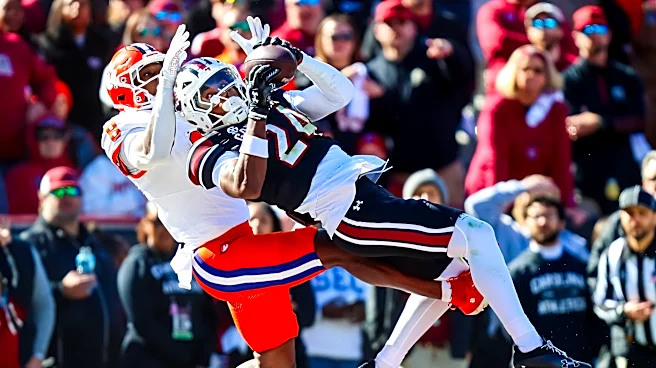
Jalon Kilgore, South Carolina (30 visit scheduled)
Kilgore, out of University of South Carolina, is one of the most versatile defensive backs in this class. A Freshman All-American who quickly turned into a high-level SEC playmaker, his production — especially in 2024 and 2025 — backs up the tape.
He’s a big, long defensive back who has already played multiple roles, including nickel, overhang “Star,” and deep safety. At his best, he’s operating closer to the box — covering tight ends, setting the edge, and impacting the run game — but the athletic traits suggest he can line up deep, in the slot, or even outside in certain matchups.
That versatility is what makes him especially appealing in today’s NFL. With tight ends becoming more dynamic, Kilgore’s ability to match up physically and disrupt passing lanes gives him immediate value.
There are areas to clean up, particularly tackling consistency, but his combination of length, agility, and play strength gives him one of the higher ceilings in this group. How he’s ultimately deployed in the NFL will be key — but he has the tools to do a bit of everything.
Has a Dark Side Mentality.
Third round
Zakee Wheatley, Penn State
At Pennsylvania State University, Wheatley showed steady year-over-year development, culminating in a much more decisive and instinctive player in 2025. He’s a long, athletic safety with the range to play over the top and the burst to close quickly on underneath targets.
He’s still refining his game. His physicality near the line of scrimmage is average, and inconsistent pursuit angles can lead to missed opportunities as a tackler. Still, the trajectory is encouraging, and his blend of range and coverage instincts makes him a strong developmental starter candidate.
Kamari Ramsey, USC
Ramsey, from University of Southern California, brings versatility and experience across multiple alignments. After splitting time between safety roles in 2024, he saw increased usage as a nickel defender in 2025.
He shows solid anticipation in man coverage and improved tackling technique, but there are questions about his athletic ceiling — particularly his short-area burst, which could limit his ability to consistently cover slot receivers at the next level.
Durability is another concern. Multiple missed games across recent seasons could impact how teams value him. Still, his versatility and improved tackling give him a pathway to early rotational snaps.
Genesis Smith, Arizona
Smith, out of University of Arizona, is a classic ballhawk with strong instincts and excellent route recognition. He reads quarterbacks well and has a natural feel for finding the football, which shows up in his playmaking production.
However, his profile is polarizing. His open-field tackling is a major concern — too many missed tackles and broken attempts lead to explosive plays. He also offers limited value as a run defender. Teams willing to live with those flaws will be betting on his ability to create turnovers. For others, the risk may outweigh the reward.
Bud Clark, TCU
Clark’s career at Texas Christian University is defined as much by resilience as it is by production. A sixth-year senior and multiple-time team captain, he brings leadership, experience, and high-end ball skills to the position.
From a traits standpoint, nothing jumps off the page — but his tape consistently does. He’s a versatile coverage defender with the ability to range deep or match up in the slot, and his instincts lead to frequent takeaways.
The concerns are significant, though. He has dealt with multiple injuries throughout his career — including missing time in both 2021 and 2022 — and his age will also factor into evaluations. Add in questions about size and durability, and it’s easy to see why he might slide.
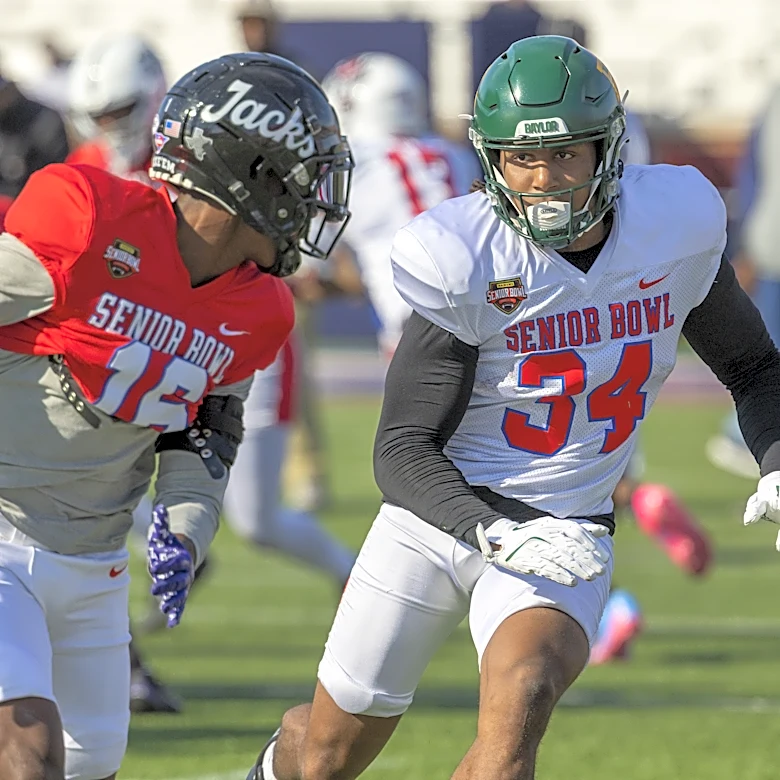
Without those concerns, he likely would be much higher on boards. As it stands, he’s a high-IQ, playmaking defensive back with leadership qualities that teams will value. Had a great Senior Bowl week.
Sixth round
Lorenzo Styles Jr., Ohio State
Styles, from Ohio State University, is a classic late-round projection based on athletic upside. A former wide receiver turned defensive back, he’s still developing the instincts and technical refinement required for the position.
His transition shows — tight hips and inconsistent route recognition limit his effectiveness in man coverage — but he flashes awareness in zone and plays with solid leverage underneath.
At this stage, his path to the roster likely runs through special teams, where his coverage ability could buy him time to develop. This is a bet on traits, not polish.
Cole Wisniewski, Texas Tech
Wisniewski, out of Texas Tech University, brings one of the more intriguing profiles in the late rounds. His game is built on versatility, production, and football intelligence.
He has experience lining up in multiple roles across the secondary, showing comfort both in deeper alignments and closer to the box. His instincts and awareness allow him to stay involved in plays, and his production reflects that consistency.
Beyond the field, his background points to a player with strong preparation habits and understanding of defensive structure — traits that often translate into special teams value and depth roles early in an NFL career.
He may not have elite physical tools, but his versatility and feel for the game give him a legitimate shot to stick on a roster and carve out a role over time.
Final Thoughts
With limited draft capital, the Seahawks don’t have the luxury of missing. At safety, the class offers a wide range of profiles — from enforcers like McNeil-Warren, to instinct-driven playmakers like Haulcy, to versatile chess pieces like Kilgore.
The key will be alignment between value and role. In a defense that demands flexibility and intelligence, the right safety — even in a limited role — can make a meaningful impact early.