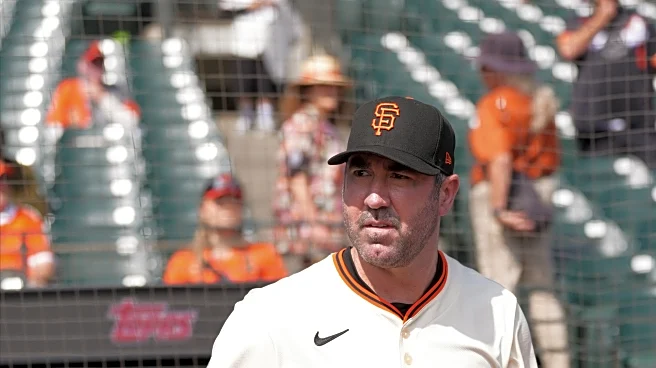

2025 stats: 38 G, 38.1 IP, 3.76 ERA, 3.53 xERA, 1.23 WHIP, .253 opp. BA, 7.28 K/9, 2.82 BB/9
Joey Lucchesi made his Major League debut for San Diego in 2018. He made nearly 60 Major League starts over his first
two seasons before the 2020 season and an eventual trade to the Mets tossed him into a transactional limbo that, having just been non-tendered by the Giants after half a season, he still hasn’t escaped from five years on.
Optioned, recalled, assigned, traded, injured, assigned, transferred, activated, selected, optioned, recalled, optioned again, recalled again, injured again, rehabbed, designated for assignment, outrighted, elected free agency…this had been Lucchesi’s professional life when the Giants signed him to a minor league contract last February. He had thrown just 95 Major League innings over the previous four years. No team viewed him as a starter anymore. No team really viewed him as a big leaguer. He was matchless, a lone sock stuck in the endless cycle of the dryer’s drum. Still, he lingered on the periphery of play because there’s always hope a match will come along. A lefty with some funky mechanics and a trick pitch — those kinds of assets will always turn heads.
Lucchesi’s “churve” is his calling card, and it’s been poked and prodded by front offices, coaches, and journalists since his college days. A pitch that Lucchesi grips like a change-up but snaps like a breaking ball. Statcast reads it as a straight curve, but it’s significantly flatter with less glove-side run than average. It’s a weird one to watch, and fun to say, but the question teams have to ask: Is it good? Is it a sublime blend, some ungodly concoction? Or is it even special enough to be that extreme?
Looking at the numbers, it’s the latter. The pitch has accrued a -1 Run Value since 2021. It’s RV/100 in 2025 was -0.2, which is pretty close to a neutral zero. That being said, opponents hit on the interstate against the pitch and their expected batting average was even lower. It’s apparently a tough pitch to barrel up, and Lucchesi did well to keep sniffing opponents honest with a pair of low-90s fastballs (4 RV in ‘25).
In the grand scheme of things it probably helps to be known for a specific pitch. Hitters know Lucchesi as that churve guy and the pitch grows like a coconut in their brain. They expect it, they want it, they overthink it.
Case in point. Corbin Carroll completely stalled out on this 1-2 churve back in September. The pace had him discombobulated. His hips opened up while his hands tried to stay back. He misjudged the shape and swung well under the ball. Around 80 MPH seems to be the target velocity for the pitch. The quicker the offering the flatter the break the stranger the experience for a hitter.
The harsh reality is weird comes with a lower ceiling. His mechanics and offering make for an uncomfortable at-bat, especially for lefties, and he avoids hard contact and keeps the baseball on the ground, but he just doesn’t miss enough bats to really excel. Life is hard for contact-oriented relievers in this day and age. Options are limited, because trust is limited. Managers don’t want to leave anything up to chance and balls in play can be pretty darn chance-y. Big arms for big moments, and Lucchesi’s sub 20% K-rate and whiff-rate just doesn’t cut it.

The majority of his appearances for Bob Melvin came in the 7th and 8th innings with the Giants either in a shallow hole or leading by five runs. Some high leverage scenarios fell into his lap, especially after the deadline bullpen purge, but that isn’t a role that matches his profile.
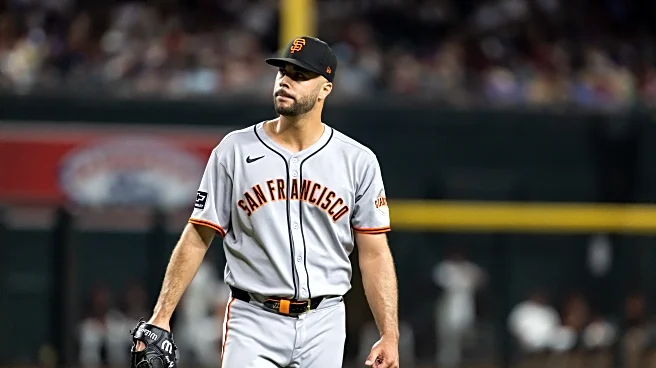
It wasn’t until mid-June that the Giants called Lucchesi up, a footnote to the Rafael Devers trade that left an opening on the 40-man and in the bullpen. He owned a 3.23 ERA and sub-1.00 WHIP over 30.2 relief innings pitched in Sacramento. Overall he kept that pace for San Francisco as a middle reliever, posting a 3.76 ERA over 38.1 innings pitched. He started out relatively strong with a 13 outing scoreless streak from the end of June through July. He was tagged for a run in just eight of his 38 appearances, but in six of those games he surrendered more than one run.
Ultimately, Lucchesi presence on the mound came to represent a weakened relief corps. He wasn’t Camilo Doval, or Tyler Rogers, nor was he Erik Miller or Randy Rodriguez. His somewhat solid performance didn’t afford him any solid footing to haul himself out of the brutal current of transactions either. His contract was non-tendered in November with cost a factor in the front office’s decision. As Bryan pointed out, the team liked Lucchesi, they liked his story and that he was from the Bay Area — but he was projected to earn $2 million in 2026 while his lefty comp Matt Gage would earn the league minimum. For a medium leverage, middle reliever — no story is worth that much!
Lucchesi is a free agent again. Unsigned as of December, I’m sure he’ll find new threads to wear while spinning his churve by the start of Spring Training.