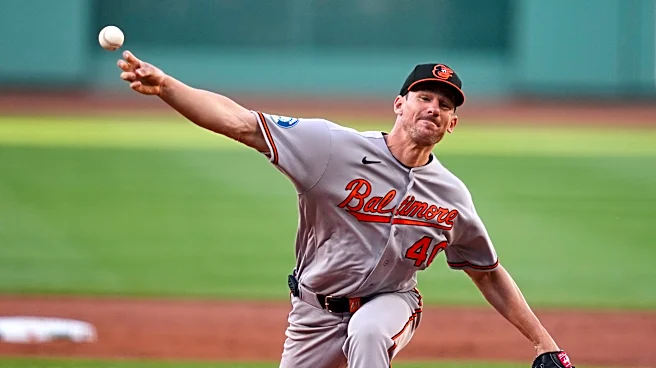


Yesterday afternoon, the Orioles announced that Chris Bassitt was heading to the IL with “lower back discomfort.” Bassitt joins Zach Eflin, Dean Kremer and Cade Povich as current starters on the IL, and along with Trevor Rogers, is the fifth Orioles starter to miss time with injury this season.
On the surface, this seems like the latest episode in the Orioles’ bad luck with injuries. Baltimore signed Bassitt to a one-year, $18.5M deal this past offseason to be a complementary depth piece behind the trio
of Rogers, Kyle Bradish and Shane Baz.
After posting a 3.89 ERA across three seasons with the Blue Jays, Bassitt has shown signs of age-related regression with the Orioles, posting a 5.27 ERA in 12 appearances prior to this injury. The 37-year-old has provided three quality starts this season and another outing where he pitched five scoreless innings. However, he’s struggled to give the O’s length and quality this season, only completing 5+ innings in six of his 12 appearances and allowing 4+ runs five times.
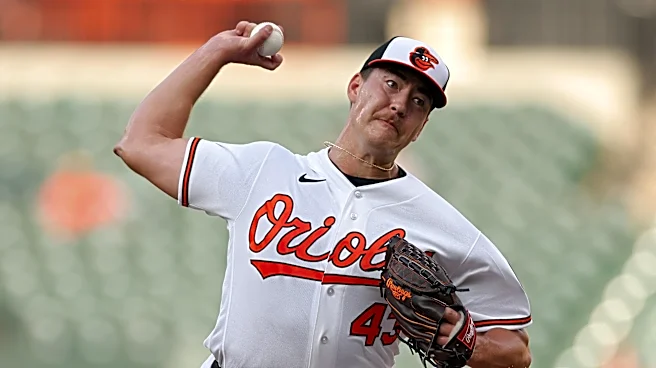
The veteran’s back soreness opens the door for an extended look at top pitching prospect Trey Gibson. The 24-year-old right-hander has made three appearances for the O’s this season and is coming off a dominant showing against the Rays last time out. Back on May 27th, Gibson pitched 5.2 innings of one-run ball against Tampa, scattering six hits and four walks by getting eight ground ball outs and three double plays.
However, despite his excellent display against the Rays, he was immediately sent back down to Triple-A Norfolk. It was the third time this season that the O’s have called up Gibson, had him make one appearance and then immediately sent him back down. It’s a pattern they’ve repeated with the likes of Brandon Young, Albert Suárez and Povich as they tried to fill in the gaps in a pitching staff that’s been burdened by injuries since the beginning of the season.
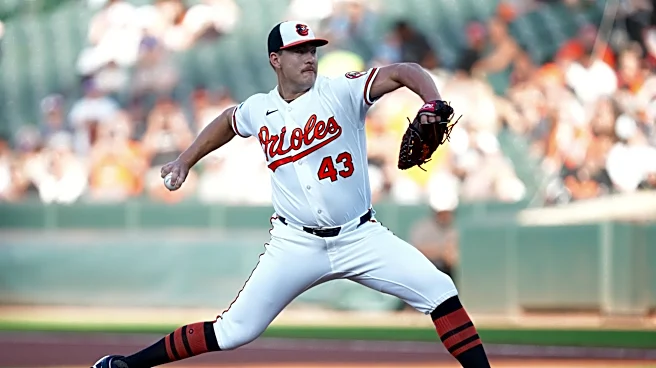
As we’ve seen with Young, though, letting young players have an opportunity to stick in the majors can lead to unexpected benefits for this team. The 26-year-0ld Texan has arguably been the Orioles’ best starter since joining the rotation full-time at the end of April. In eight starts, Young has a 3.86 ERA, a .269 average against and a 1.40 WHIP. And while those numbers don’t exactly jump off the page, what does is the Orioles’ 7-1 record in Young’s starts.
The biggest bump we’ve seen from Young this season is with his fastball command. Opposing hitters are chasing Young’s heater 40% of the time this season, compared to 26.7% in 2025. By getting hitters to expand the zone at the top against his four-seamer, it’s helping his slider to play up low in the zone to right-handed hitters. The improved fastball effectiveness has also seen him drop his OPS vs. LHB’s from .935 in 2025 to .670 in 2026.
To watch Young pitch is also to see a starter whose confidence has grown with increased time in the major leagues. We saw flashes of Young being an above-average major league starter last year, punctuated by his near-perfect game against the Astros. However, consistency was a problem, as Young would often follow up his strong performances by getting shelled in his next outing. This year, he’s been a model of consistency, allowing three or fewer earned runs in eight of his nine appearances.
And while Gibson and Young are not similar pitchers in terms of their approach, like the latter, the former needs time to adapt to big league hitters and develop an updated plan of attack now that he’s in the majors. Gibson was named the 2025 Orioles Minor League Pitcher of the Year largely on the back of his strikeout prowess—punching out 166 batters in 120.1 innings split between three levels.
Seventeen innings into his big league career, he’s shown himself to be more of a groundball pitcher, following up his groundball-heavy performance against the Rays by getting six groundball outs in 4.2 innings last night vs. the Mariners. Conversely, the rookie right-hander has only five strikeouts in 17 IP during his early major league career.
That does not mean that Gibson cannot develop the kind of strikeout stuff we saw in the minors against major league opposition. It does mean that, like Young, the 24-year-old needs to refine his pitch selection and game plan to get his best results with the Orioles. He cannot do that by constantly yo-yo’ing between the Orioles and Tides.
Bassitt’s IL start date is retroactive to June 5th, meaning the earliest he can come back is June 20th. Barring anything disastrous, that means Gibson should get at least three starts before the veteran can be brought back. If that relative consistency can see Gibson make a Young-like jump, it would restore the rotation depth that has been robbed by injury. It would also decrease Baltimore’s reliance on an injury risk like Bassitt going forward.
A Gibson breakout would also potentially change the front office’s approach to building up this rotation as we barrel toward the trade deadline and beyond. Under Mike Elias, the O’s have leaned on veterans on short contracts to supplement the rotation. That approach has seen the Orioles rely on the likes of Eflin, Bassitt, Tomoyuki Sugano, Suárez, Cole Irvin and Charlie Morton—none of whom have been huge successes.
If the acquisition of Baz and the accession of Young are any evidence, the O’s could be shifting to a more youth-oriented approach in building their rotation. Should Gibson find similar levels of success, it should further push the front office toward targeting mid-20s pitchers with clear upside both at this year’s trade deadline and beyond. It may even convince Mike Elias to do the unthinkable and actually invest high draft picks in pitchers in future drafts.