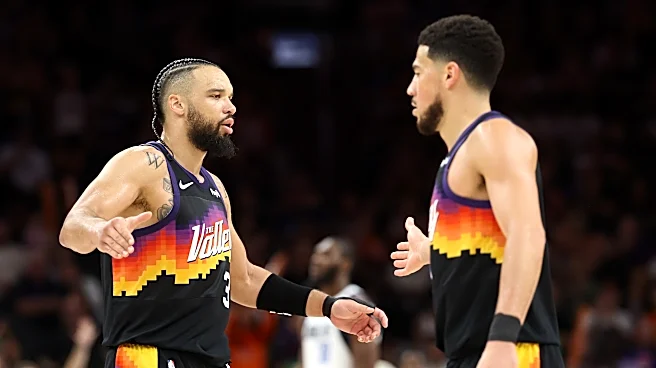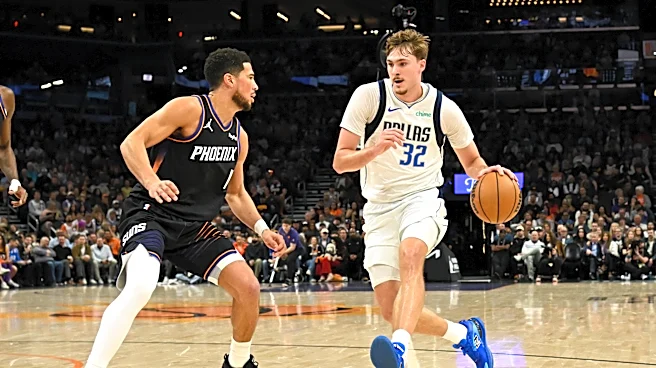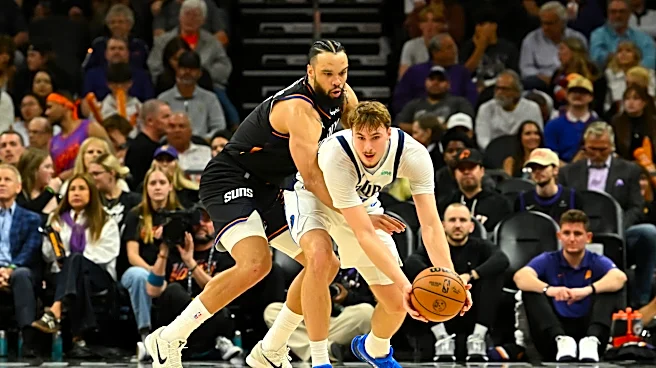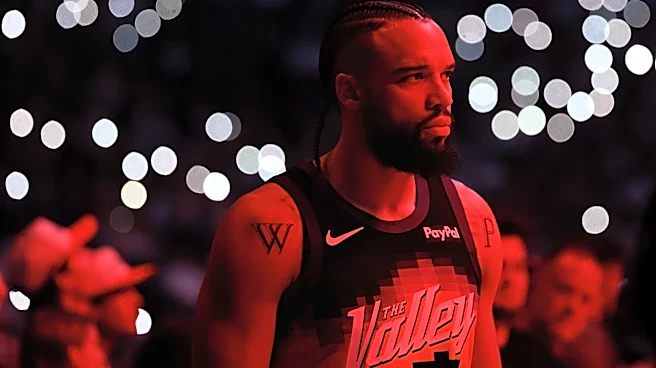





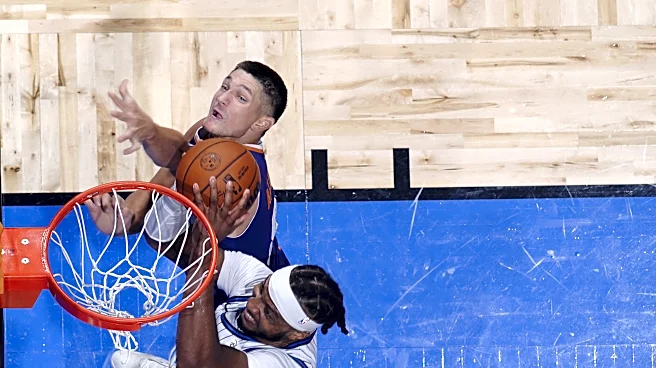
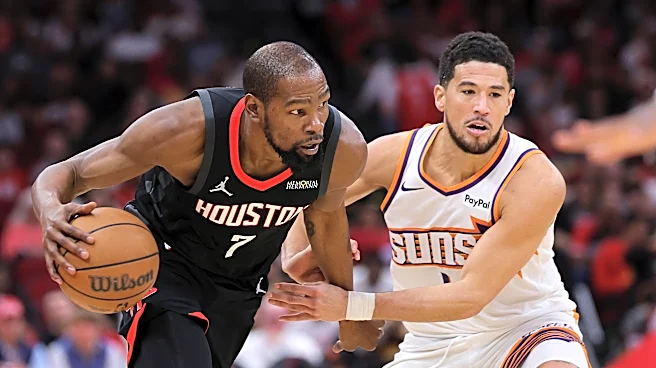
With their win over the Dallas Mavericks on Wednesday night, the Phoenix Suns grabbed hold of something that feels official when you say it out loud. The seventh seed. Because yeah, they “secured” it. In theory. In the clean, sanitized version the league office pushes out. In reality, all they did was earn the right to host a high-stakes coin flip inside the NBA Play-In Tournament, which lives somewhere between competition and content inventory.
You can feel the fingerprints of Adam Silver all over
it. Rolled out in 2021, polished up, packaged nice, and sold as opportunity, drama, and meaningful basketball. And maybe it is, if you squint hard enough and ignore the part where an 82-game grind now funnels into a night where one bad shooting stretch, one tweaked ankle, one whistle that feels a little off, and everything you built starts to wobble.
This year it comes with a new corporate tag hanging off it, courtesy of SoFi, because of course it does. Every inch of this thing is monetized, every moment stretched and dressed up so it can be sold, replayed, clipped, sponsored, and pushed. It is less about rewarding a season and more about creating another product to slide into the league’s portfolio, something shiny that executives can point to while counting the revenue streams stacking up behind it.
And look, I understand the machine. This is how it works. Take something pure, run it through the grinder, and present it back to us like it is an upgrade. Tell us it is good for the game. Tell us it adds excitement. Tell us it gives more teams a chance. Meanwhile, the teams that actually handled their business for six months are now staring at a scenario where one weird night can rewrite everything. That is where the frustration lives. You fight through the season, the travel, the injuries, the weird Tuesday nights in February that nobody remembers, all to land in a spot that used to mean something concrete. Now it means you get to host a game that decides whether your work holds weight or gets tossed into the same pile as everyone else who hovered around mediocrity.
So yeah, the Suns won. They put themselves in position. There is value in that, there always is. But this thing they are walking into — this shiny, sponsor-stamped, chaos-driven mini-tournament — is not a reward. It is a gamble dressed up like progress. And everyone is supposed to clap for it.
Rant over, I guess. Classify me as no fun, but I’m simply not a fan of possibly losing out on a postseason opportunity to a team that finished under .500. Handle your business is the answer, I know. Like most Adam Silver-based pointless tournaments, I can’t find myself excited for their sheer existence. Everything is a damn tournament now in the NBA. I wonder if each morning at the NBA’s corporate offices there is a tournament for who gets to take a shit in the bathroom first. Why? “Because it’s fun.” I just hope the guy who made the poor decision to slam some Taco Bell last night after one too many margs wins that tournament, for all of their sakes.
All of that being said, it is time for a quick history lesson on the seven seed. Because if you are going to live in this space, you might as well understand the room you are standing in.
Start here. In the first five seasons of the NBA Play-In Tournament, the seventh seed has always made the playoffs. Every single time. That is a 100% advancement rate into the first round. Their overall mark hosting the first Play-In game sits at 8-of-10 for teams slotted in that spot. The only stumbles came in 2023, when the Hawks beat the Heat, and in 2024, when the Pelicans dropped their opener to the Lakers. The Heat then advanced after downing the Bulls, and the Pelicans recovered to beat the Sacramento Kings.
That is the landscape sitting in front of the Phoenix Suns. The path is there. The numbers say it is there, and the door has opened every time for teams in this position. And still, you can feel that little voice creeping in, the one that says “do not be the one that breaks the pattern”. Because the scenario is simple. Lose twice, both games at home, and the season ends. You sit there as the seven seed in name, and nowhere to be found in the postseason. That possibility exists. It is real and it lingers whether you want to acknowledge it or not.
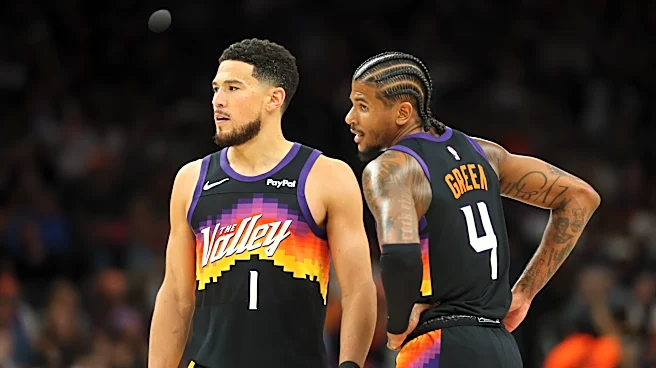
History also reminds you that this spot is not a dead end. It can be a runway. In 2023, those same Los Angeles Lakers came through the Play-In, handled the Memphis Grizzlies in six games, then took out the Golden State Warriors in six more before running into the Denver Nuggets in the Western Conference Finals. That Nuggets group lost four games total on their way to a title; two of those came against a Suns team powered by Devin Booker and Kevin Durant.
Zoom out and bring it back to franchise history. The Suns have lived the seven-seed life twice. In 1996, they went 41-41, earned seven the old-fashioned way, and ran into the San Antonio Spurs in the First Round. A 3-to-1 series loss that ended things quickly. The following season they landed at seven again at 40-42, this time facing the Seattle SuperSonics, and pushed it to five games before falling 3-to-2.
So this is the space. A spot that has produced opportunity, a spot that has carried risk, a spot that asks you to handle your business for 48 minutes and then do it again if needed. The numbers lean your way. The history gives you a blueprint. Now you have to go live it.
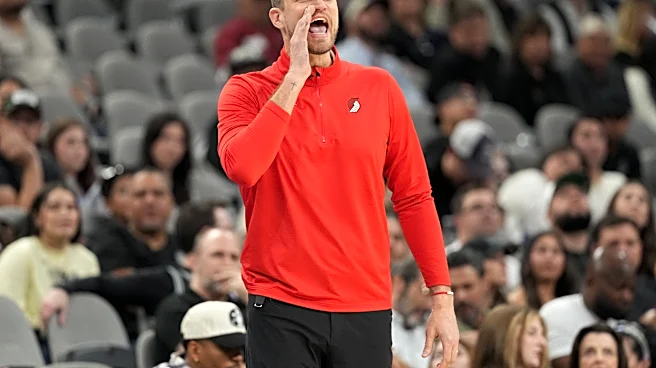
The opponent is still floating out there. The Clippers and the Trail Blazers are battling for the right to walk into this thing as the eight seed, and as it stands now, the numbers lean heavily one way. According to Basketball Reference’s playoff probabilities, the Clippers sit at a 77.6% chance to land that spot, while Portland lingers at 22.4%. One more meeting between them is still on the schedule.
We should have clarity soon. Tuesday, April 14, the Phoenix Suns will host at the Mortgage Matchup Center, and the stakes are clean and simple: win and move on to face the San Antonio Spurs.
Protect home court. Handle Tuesday. Close the door before anything weird has a chance to creep in, before the tension builds, before the fan base starts pacing and fills the arena with anxiety. Because no one around here needs that kind of energy.
Then again, this is Arizona sports. You already know how this story likes to behave.