
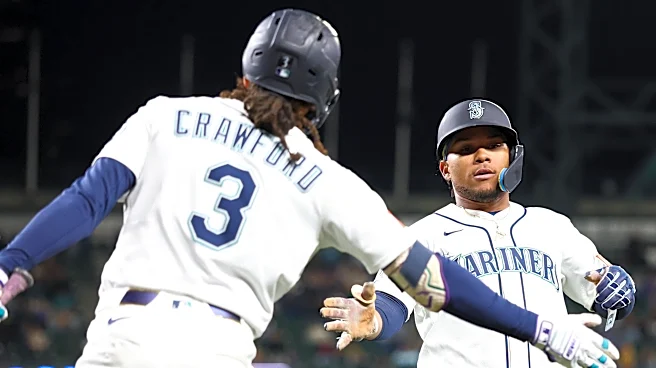
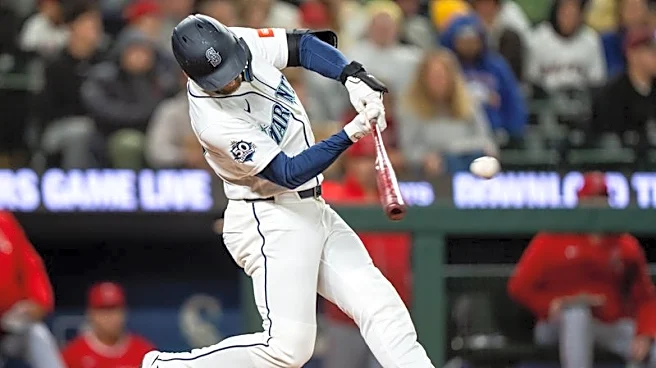
The going got tough for the Mariners in 2026, but the tough never got going.
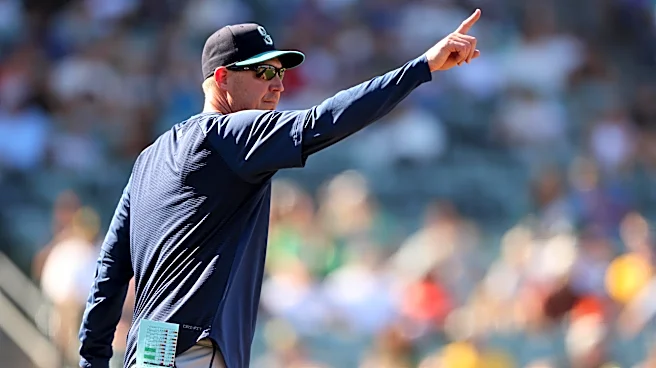
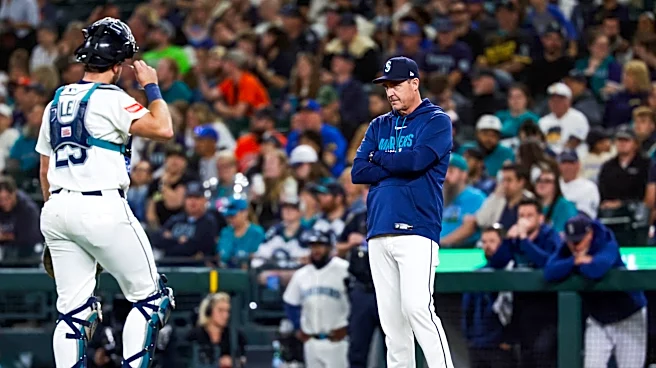
The Mariners moved on from manager Dan Wilson on Sunday, providing a merciful conclusion to the 2026 season. It was an obvious decision, not just because changing managers is standard for a team that falls short of expectations, but because Wilson had become the frowning face of failure in Seattle. The Mariners allowed him to finish the season and walk away without an official firing given his place in the team’s Hall of Fame.
But make no mistake, Wilson’s tenure ended the way it always would, with hard feelings, finger pointing, and an awkward attempt to save the organization’s most cherished possession: its nostalgia.
The Mariners began the year with strong projections and an easy path back to the postseason. Instead, they played lousy baseball into the All-Star break, and were arguably the worst team in the majors out of it. Wilson, through his slouched posture and tedious postgame presence, was unable to convince anyone that this wasn’t his fault. He struggled to communicate with the media. He was unwilling to explain in-game decisions. He gave fans no reason to like or respect him, and offered nothing to the public beyond the acknowledgement that losing is “tough.”
This vacancy was soon filled with a familiar brand of online conspiracy and bloodlust. The cottage industry that once assembled to excoriate Jerry Dipoto on a nightly basis had shifted its focus to Wilson. There were palm readers and armchair psychologists and Monday Morning Managers, all offering a clear picture of a clubhouse they’d never set foot in. If you need a sense for the dramatics, Wilson was never “hired” as manager but “installed.” It didn’t matter that his players said they liked him. It didn’t matter that independent analyses found his in-game decisions to be pretty good. It didn’t matter that he’d already made it further into the postseason than any manager in team history. Wilson was a punchline and punching bag by late summer, and took a beating like few old men in pajamas ever have.
The fixation eventually built to distractible levels. His players had to defend him in interviews. He was booed at the organization’s latest celebration of itself. National pundits smelled blood in their timelines and felt free to speculate on his ousting, perhaps aided by anonymous sources hoping to pass the buck. Even local media were more than willing to lay the season at his feet, clearly frustrated with the performance of a roster they’d heaped praise on in the spring. The Mariners made a lot of people look stupid in 2026, and Wilson was a convenient place to dump accountability and reflection.
Of course, Wilson didn’t ask for his best players to get hurt. Wilson didn’t assemble the worst defensive group in the majors. Wilson didn’t acquire two of the worst batters in team history. Wilson didn’t build a one-man bullpen. Wilson didn’t stall for months on experimental rotation structures that slowly leached his staff. Wilson can’t be blamed for the 2023 or 2024 seasons, or the two decades before them. And most of all, Wilson didn’t hire himself.
The 2026 Mariners were supposed to be good, they were bad, and Wilson was their feckless manager. But the roster he was saddled with proved disturbingly thin. These were real losers, born at a high level, far more than managerial choices. Wilson took the fall because somebody had to, and he was an easy target who refused to defend himself. But now he’s gone, the foil has been removed, and the heat rises again. The front office will soon begin work on their 12th offseason at the helm, and their 10th following a playoff miss. The path ahead has never looked quite this tough.
The Projections
The Mariners began the season with their best ever projection. It was a small but notable step forward from the “good” rosters of the past few years. They weren’t quite the best team in the American League on paper, but they were arguably the favorites given an easy path through the West. That’s to say, expectations were high, and justifiably so.

Still, it was clear the Mariners weren’t quite “going for it” in 2026. They entered the season with question marks in the lineup, the bullpen, and the back-half of the 40-man, still favoring a long-term outlook over the passé present. The team didn’t see their narrow World Series miss in 2025 as an ultimatum to get markedly better, but as proof of concept for their “going for good” strategy. Dipoto said as much in December:
“And while we’ll continue to evolve our model, mold our model in certain places… I don’t think we’re going to bust it and start over again. We like the model. And right now we’re starting to see some tangible results of what that looks like.”
In other words, this was never meant to be “the year,” more than it was simply year five of a 10-year plan. Elevated expectations were a sign that this plan was working.
The Stars
The fundamental premise of the Mariners roster was the all-time duo of Cal Raleigh and Julio Rodríguez. They were the best teammates in the majors in 2025 and were projected to be the best teammates again in 2026. Steamer projected Cal and Julio at a combined 11.5 WAR, a year after posting 14.9 WAR.

They instead posted 4.6 WAR. The Mariners as a team were projected for 42 WAR and finished with about 30 WAR, meaning Cal and Julio made up most of the shortfall in expectations. In fact, the rest of the roster was about as productive as they’d been in 2025, emphasizing just how crucial these down years for Cal and Julio were in the final standings.
Of course, both players had their seasons directly and indirectly shaped by injury. Cal was terrible in the first half while playing through an oblique strain, and he was great in the second after taking a break on the injured list. Julio was the opposite: he got off to a good start, suffered a concussion before the All-Star break, and struggled the rest of the way. The framing of the season as their “fault” isn’t quite fair, because injuries can happen to anyone. But a team who loses its two best players will likely be worse as a result, and nobody had more to lose off the top than the Mariners.
The Lineup
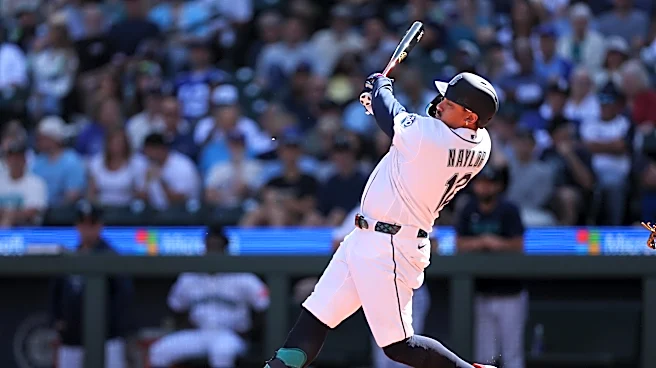
The rest of the lineup was… OK? The natural reflex is to say they were terrible, because in many cases they were. Donovan was hurt most of the season, Josh Naylor toed replacement level, Colt Emerson had an unfortunate debut, Rob Refsynder was so bad he had to retire, Taylor Ward was one of the worst players ever acquired at the trade deadline, and the dredges of the roster got tons of screen time with predictable results. The lineup’s slump in June was one of the worst of this decade.

Still, Randy Arozarena had a career-year and finished in the top 10 in the majors with a 151 wRC+ and 5.6 WAR — one of the best seasons in team history. Dominic Canzone built on a breakout from last year to prove himself as an everyday player and top 20 hitter. Cole Young had more good months than bad months. Donovan, when healthy, was fantastic (at the plate). J.P. Crawford, when healthy, was passable (at the plate). Luke Raley, when healthy, had one of the great months in team history (at the plate).
The Mariners ultimately finished the year with a 102 wRC+, or eighth best in the majors. It didn’t always feel like it, because most of the success was concentrated in Arozarena and Canzone. The whole project was also sunk by the dreaded “BA with RISP” dynamic, where the Mariners could only score via the home run for weeks at a time.

Nevertheless, we can see the non-Cal, non-Julio portion of the lineup was similar — and often better — than they were in 2025, a year in which the Mariners had the second best wRC+ in the majors (113).
The Defense
Unfortunately, whatever competence existed at the plate was quickly hurled into the camera well. The Mariners were far and away the worst fielding group in the majors, with negative value at pretty much every position. In fact, they were one of the worst defensive teams ever assembled.

This wasn’t too surprising, as they’d been awful in the field the year before, and didn’t seem motivated to change. The team kept Crawford at shortstop despite being bad there for most of the decade. They started Donovan at third base despite having not played there most of the decade. They punted on the corner outfield spots to get both Arozarena and Canzone in the lineup. Again, we knew this group wouldn’t do well from the preseason.
But, at the risk of beating this point into the ground, their struggles were compounded by the missing performance of their stars. Cal was one of the worst defensive catchers in the majors, and Julio was below average in center. The Mariners lost 24 fielding runs relative to 2025 from those two alone — the difference between “very bad” and “worst ever.”
The Pitching
The pitching is hard to describe. It was a lot of things in 2026. It was the best in the majors in the first half. It was the worst in the majors in the second half. In the end, they were kind of just average, even if there was never a time they resembled anything close to average.

The rotation was phenomenal out of the gate. Emerson Hancock showed up with a revamped arsenal that made him competent (and occasionally dominant) for the first time in his career. Bryce Miller returned from the injured list with his best-ever stuff. With the main trio as strong as ever, and Luis Castillo still fighting the aging curve, the Mariners had six legitimate starters — an embarrassment of riches.
Of course, it did serve to embarrass at times. The Mariners first instinct was to combine Miller and Castillo into a “piggyback” outing, where one would start for five innings and the other would come in from the bullpen to finish the job. It was brilliant, in effect. For three starts, the piggyback covered 27 innings, allowed five runs on 12 hits, and struck out 30 batters. Unfortunately, neither piglet was enthused. Castillo was caught on camera huffing and puffing in the dugout after being pulled, and Miller was similarly vocal in his displeasure. The team decided to scrap the plan for a more traditional six-man setup.
It was fine initially. Miller was excellent for a few turns as a true starter. Castillo was strong in June. The Mariners leaned on their six-man front to take them into the All-Star break with the most WAR of any rotation in the majors. It was the best the group had ever pitched.
This was crucial as trouble lurked in the background. Andrés Muñoz’s fastball was worse and he’d become especially prone to homers. Gabe Speier’s dominance had all but vanished. Matt Brash was hurt and missed most of the season. José Ferrer was closer to replacement level than the bullpen ace he’d been in D.C. And once again, the low-leverage arms were hardly competitive. The Mariners pushed starters for six, seven, or even eight innings a night to avoid the bullpen as much as possible — no team used theirs less early — but they were playing at the edge of a cliff in the first half of the season.

Then, they tumbled over. Miller couldn’t hold up as a starter over time. Hancock’s stuff faded. Bryan Woo struggled on the road. Logan Gilbert developed a pesky home run problem. George Kirby… nobody really knows but it was bad and sad. Kade Anderson was called up to try to inject some life, but his strict pitch count only exacerbated the issue. Short starts turned to bullpen days turned to blowouts turned to losing streaks. August was the worst pitching month in team history, with dual slaughterings of 22-0 and 19-2 in the same week. The Mariners posted a mere 1.0 WAR in the second half of the season, as the worst pitching staff in the majors.
It’s not clear why the season ultimately took this shape. But if Cal and Julio were the sputtering engine, the pitching was the severed brakes that plummeted this roster into oblivion.
The End
I don’t know what the lesson in all this is.
The truest thing I can say is the 2026 Mariners were unlucky. Their two best players got hurt. Any team would struggle in that position. Cal and Julio aren’t just good players, they are great players, irreplaceable players, expectation-defining players. That this season was a massive disappointment is a tremendous credit to their greatness these last few years. The Mariners would be nowhere without them, and they were nowhere in 2026.
But framing this season as poor luck doesn’t fully satisfy. By Baseball Prospectus’ injury ledger, the Mariners were healthier than the average team, and lost less WARP to the injured list than their peers. Now, BP’s numbers don’t factor missing performance from players who played through injuries, but even generous assumptions don’t suggest the Mariners were nearly as banged up as the Astros. The pitching staff especially was one of the healthiest in the majors, and their underperformance came mostly from their “A” group.
That makes it tricky to know exactly where this team stands going forward. The Mariners in 2026 posted about 30.1 fWAR (21st in the majors). If we take away Arozarena and assume level performance everywhere else, that’s a baseline of 25.5 WAR in 2027. To get back to 40 WAR, or merely the 10th best team in the majors in most seasons, the Mariners will need to add about 15 WAR this offseason from internal improvements and external additions.
Even if we think Cal and Julio will double their production from 2026 and return to being premier players at their positions, that still leaves a 10-WAR gulf between the current roster and the bare minimum for contention. We’re talking more “yes” than “no” on big steps forward for Kade Anderson, Colt Emerson, Cole Young, and Lazaro Montes; bounce backs for Josh Naylor and Brendan Donovan; a third baseman that doesn’t yet exist in the organization; reversion to 2023 or 2024 production for multiple members of the rotation; and an entirely rebuilt bullpen. That’s a lot to go right, before considering what can (and will) go wrong. Again, that’s just to get back to mere Wild Card contenders. A bad injury, an underperformance, a failed development, a frowning pythagorus, and the Mariners are out of the playoff picture, firmly trending into a rebuild after six years of a 10-year plan.
Still, if I had to choose a result for the 2027 Mariners, my first instinct is to say 86 wins. I’m not sure why, given all of the above. Maybe it’s a sign that I’m still a true homer. Maybe it’s a sign of my unwavering belief in Cal and Julio. Maybe it’s a sign that I, too, was uninspired by Wilson and think a new coaching staff will do everyone some good. I’m sure it means something, just as I’m sure it means something that even my subconscious optimism can’t imagine the Mariners next year as anything more than “good.” In the end, that may be the toughest pill to swallow.