


The Sunderland AFC economy was a major talking point on the 18th of October 1980, with Echo reporter Geoff Storey outlining the tight budget manager Ken Knighton was working to.
On the pitch, things had been going well; that same afternoon the Lads secured an encouraging point away at Arsenal as their promising return to Division One continued, yet their promotion had not brought the immediate riches it would now, and money remained tight as a consequence. The club’s annual meeting was set to take
place the following month and ahead of that the board had just made their annual statement of accounts public, with caution very much needed given the state of the balance sheet.
As Storey outlined, putting together a squad that was capable of going up had not been cheap. The arrivals of John Hawley, Stan Cummins and Claudio Marangoni had seen Sunderland’s record transfer fee being equalled and then broken twice in quick succession, with the signings of Pop Robson, Chris Turner, Barry Dunn and Joe Hinnigan ahead of the financial year end putting further dents in the coffers.
Once put against the outgoing sales of Alan Weir, Wayne Entwistle, Jackie Ashurst, Wilf Rostron and Mick Henderson a transfer deficit of over £600,000 still remained and led to an overall loss of just under £490,000, whereas the previous accounts had recorded a total operating profit of just over £100,000. These figures made for stark reading, not least because income had been propped up by around £500,000 courtesy of ‘donations’ from the Sunderland AFC Supporters’ Facilities Fund (and the Morpeth Branch in particular), Roker Bingo, Sporting Club of Washington, Cleadon Development Fund and the Sunderland AFC Supporters Association.
While increases in revenue were recorded by several club departments they were offset by increases in expenditure, mainly on player wages and bonuses but including higher travelling expenses, insurances and policing costs also. Emoluments of seven employees exceeded £20,000 for the first time as well, but the numbers, whilst disappointing, had been expected and chairman Tom Cowie was already looking to tighten things up having only just taken up his position in June. The £150,000 fee needed to secure Sam Allardyce’s arrival from Bolton Wanderers prior to the start of the current campaign had already been offset by the sales of Mike Coady and Bob Lee, with Knighton and his assistant Frank Clark being told by the hierarchy that any additional strengthening would have to be covered by further departures too.
One of the players Storey believed had already been made available to buy was Marangoni, who had recently been allowed to make a guest appearance for European Champions Nottingham Forest in a friendly against Tampa Bay Rowdies. Forest boss Brian Clough had supposedly been keen on the Argentinian prior to his Roker move but having now seen him up close was thought to have cooled his interest, although Southampton, Arsenal and Tottenham Hotspur were also being linked with potential bids. The player himself however was said to be making noises about remaining on Wearside and fighting for a way back into the side, so that was one monetary boost that looked unlikely, and with any fees possibly being ringfenced anyway, Cowie had other ideas about how to help bring some cash in.

The reason being in the topflight was not necessarily a huge money spinner was because at this point, television coverage usually cost clubs more than it brought in. Since returning to the big time Sunderland had seen each of their home league games being selected for broadcast by either the BBC or Tyne Tees, but for highlights shows only, not live coverage, and this usually meant a drop in attendances at stadiums. Match of the Day was in an unfamiliar Sunday teatime slot during the season and Shoot was the regional Saturday night offering, and both attracted huge audiences, but the increased exposure was generating little in the way of tangible benefit so the producers were politely told ‘no’ when they approached and asked for permission to record the upcoming visit of Ipswich Town.
Several other clubs had been growing concerned about the situation too, but it was Cowie that became the first owner to put his head above the parapet that season – the only problem with that was in doing so he also put the onus back on supporters to dig deep and come back to the turnstiles if they wanted to watch their side in action, and that was not going to be the easiest of choices given the huge inflation and deep recession being suffered that year under the administration of his political ally, Prime Minister Margaret Thatcher.
Although they didn’t speak about it publicly, several of Cowie’s fellow Roker board members were already thought to be uneasy with the way the new chairman seemed to view the fanbase, and this was well before his infamous goading about the supposedly superior loyalty of rival supporters. At the same time, and as mentioned by Storey in his financial piece on this day, long serving directors Fred Stewart and Jack Ditchburn were to retire by rotation at the November summit and were expected to offer themselves up for re-appointment. It was little surprise that they were duly retained, or that they continued to maintain strong reputations thereafter.
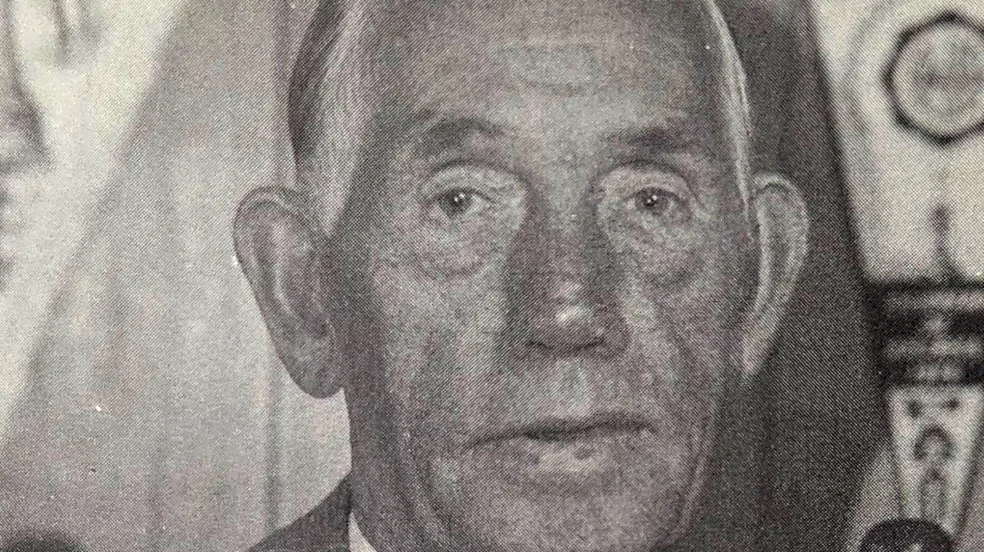
Ditchburn, the subject of a recent On This Day feature OTD (27/09/1985): One Fan Returns To Roker As Another One Moves Over | Roker Report and Stewart were well known to each other. The former, a solicitor, had represented the latter, a building contractor, at a public enquiry way back in 1959 regarding the acquisition of land in Whitburn that was being contested by Boldon Urban Council. Both parties wished to develop the farm site yet had different types of housing in mind, but what wasn’t under question was Stewart’s dedication to his football club. Bob Stokoe, ‘The Messiah’ no less, in 1987 during a public spat with Lawrie McMenemy, the man that was appointed by Cowie with a remit of turning the fortunes of the club around only to send it spiralling further down, suggested that “no football club could ever have had a better servant” than Stewart, whose dedication to watching the Lads once got him into trouble with the law even.
The comment was in response to McMenemy’s accusation that ‘not one department at Sunderland had been right over the last 30 to 40 years’. Even if you put aside the fact this claim was made when McMenemy himself was in charge of the side and failing it badly, and how in the period questioned the team had won the FA Cup, it was a ludicrous statement to make. At this point the team was languishing in the bottom half of the second tier, a far cry from the ‘Bank of England’ era under the ownership of Ditchburn’s father Bill, when the club was one of the most glamourous in the country and challenged on occasion for major silverware.
Cowie in later years was disparaging about the Ditchburn family’s service to the club, and the work of others, and perhaps had already made his feelings known to his acolyte. That Stokoe chose to use Stewart as an example of how wide of the mark McMenemy had been spoke volumes about his standing, and there was also a presumably unintended jibe in his retorts – gates were falling once again and nobody was rushing to watch the latest Sunderland vintage, whereas in 1955, during Bill Ditchburn’s tenure, Stewart was fined £2 for driving through East and West Boldon at more than 30 miles an hour, and the reason for his speeding was that he was worried he would be late for a crucial FA Cup tie against Newcastle United!
Fred and his twin brother Richard had run Stewart Bros, a building firm that during World War II operated out of Lambton Street in the town centre. Regular advertisers in The Sunderland Echo and Shipping Gazette as it was then known, they offered ‘all Classes of Repairs & Alterations to fireplaces, ranges, brickwork, gates and fences’ and by the early 1950s had become fireplace specialists of ‘merit’, with sales being handled via a Blandford Street showroom. Expanding into larger scale projects also, by the end of the decade Fred was a noted figure and was elected President of the Sunderland and District Building Trades Employers’ Association.
Stewart lived just off Tunstall Road and in 1962 was the victim of a theft outside his home. Having just been to the bank to collect wages for his employees, he parked his car and left the money inside it whilst going into the house, only to find that when he came back out the motor had been stolen. This was despite his gardener being present throughout the incident, and there also being two other employees doing a job on a nearby bungalow. They had all assumed that the opportunist was known to Stewart, who in turn hoped that either his son or foreman had borrowed the vehicle, but then had to inform the police when that was found not to be the case. Officers later recovered the abandoned car, minus the pay packets, three quarters of a mile away from Stewart’s property, yet he made sure his staff still got what they were owed by taking out additional funds.

Ten years later he had something more positive to recall. He was first co-opted onto the Roker board in October 1972 when alongside Maurice Bewick and Alan Martin he was brought in to replace Stanley Ritson and Jack Cooke, who had been named vice-presidents. Then, in December 1973, he was re-elected having been part of a whirlwind cup run under Stokoe, who had joined a month after Stewart and soon entrusted him to carry out several scouting trips on his behalf. He remained heavily involved thereafter, and rather than baiting fans looked to work alongside them, at one stage acting as Chairman of the Supporters Association while still being on the club board. He also served on the committee of the Northern Intermediate League.
Stewart died aged 71 the day before a vital relegation clash against Brighton & Hove Albion in 1982. A minute’s silence was observed and the players wore black armbands for the fixture, pulling off an important victory, with the following edition of the Roker Review (Manchester City) opening with a glowing tribute to “a much loved and loyal friend, as well as a much-respected director”.
The win over Brighton was dedicated to a man who “travelled many thousands of miles supporting Sunderland teams at all levels”. He had been ill for around eight months but as a “Roker fanatic…nobody could have been more thrilled when he became a director of this Football Club”. Following the funeral at St. Nicolas’ Church by Queen Alexandra Road Alan Durban, who was Knighton’s permanent successor, described Stewart as “the best kind of director. He had a deep love for the game and a passion for his own club, All of us had a great respect for him.”
Fred Stewart left a widow, two sons, a stepdaughter and two stepsons. One of his sons, Mel, was awarded an OBE in the early 1990s for his services to British commercial interests abroad.