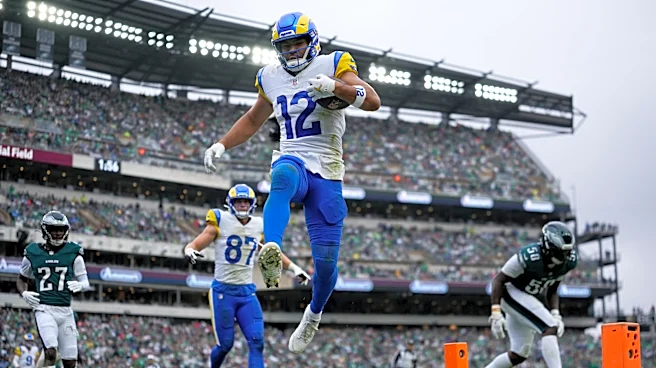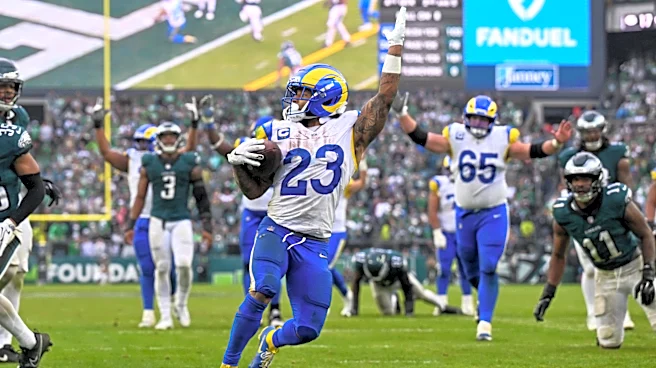



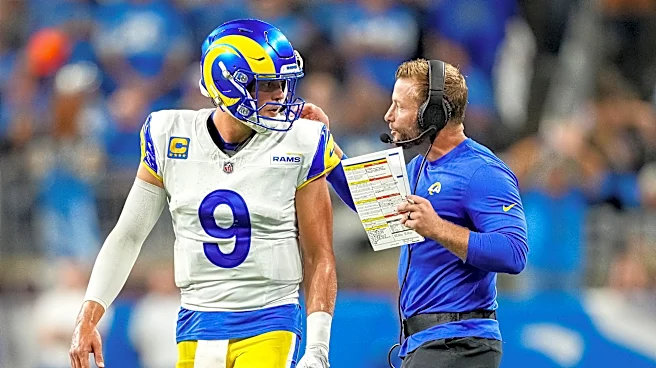
The Los Angeles Rams needed Kyren Williams to come up big in Week 4, and the veteran running back did just that.
In a win over the Philadelphia Eagles that was anything but pretty for the Rams offense, Williams became a vital outlet for the passing game while also being his typically efficient self on the ground. This was especially important in a game where Los Angeles’s second-best pass catcher, Davante Adams, struggled uncharacteristically and frustratingly.
Williams caught a career-high 10 passes
against the Eagles, six of which were “successful” (based on generally accepted calculations for success rate), while three turned into new first downs for the Rams (another would have led to a manageable 4th-and-1 situation but was aided by a penalty on the Eagles).
We’re going to look at one play in particular from this week’s fourth-quarter comeback, in which Sean McVay and L.A. weaponized Williams against an ill-equipped Philadelphia linebackers group.

And the end zone view:

The Rams will always be happy with Kyren Williams matched up one-on-one in space against Jihaad Campbell (11). These choice routes are a staple of McVay’s offense and in this situation it sets up a scoring opportunity moments later.
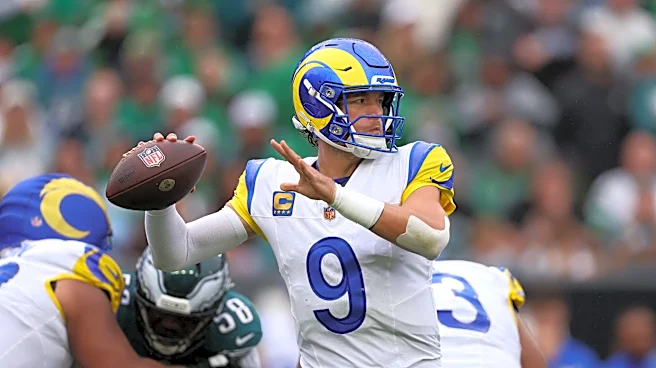
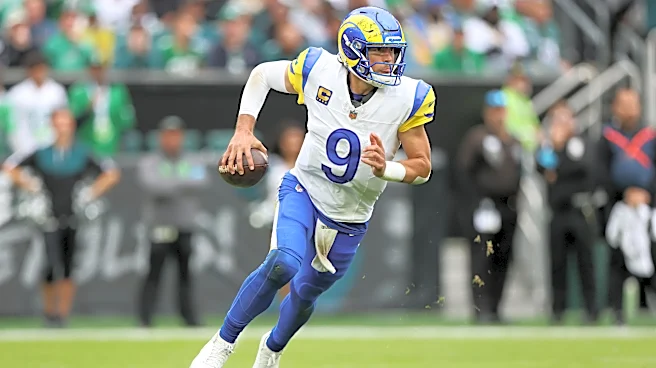
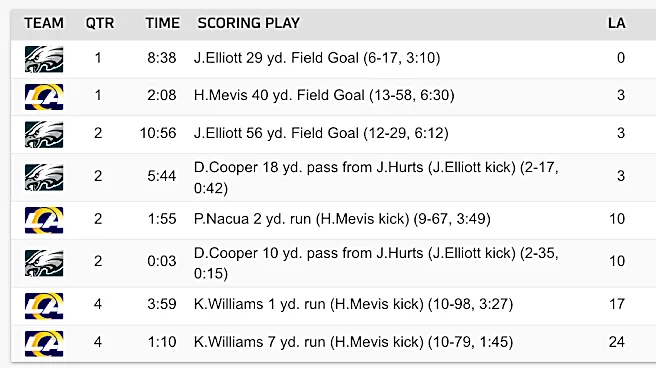
Williams is even with Campbell after releasing from the backfield with a gaping hole in the middle of the field. The veteran running back takes the inside option, running the angle route across quarterback Matthew Stafford’s face and beating Campbell to the spot. The linebacker didn’t gain any depth here, leaving him no margin for error before the running back breaks inward. He’s dropped at the one-yard line but punched it in to cap the 98-yard scoring drive.
HB Angle on the goal line is always a good call, but when you’ve got a linebacker on skates from the start you’re in excellent shape. McVay and all the coaches from his tree (Kyle Shanahan and his coaching descendants included) thrive on putting linebackers in conflict. Again, the Rams are going to attack Campbell or a similar player every single time in this spot.
If this concept looks at least vaguely familiar, it should. It led to a Williams touchdown reception in Week 2 against the New York Giants.

The setup here is very similar to this week’s case study. The Rams are in 11 personnel both times, the only difference being the tight end is aligned to the right of the formation in Week 4 instead of the left like he is in Week 2. It’s out and up out of the backfield for Williams, once again putting a linebacker, in this case rookie Arvell Reese, in conflict.
That’s where we start to see some differences. Here, Reese does gain depth and also has help in between the hashes, putting a lid on the potential for Williams should he take the inbreaking option. That depth, however, opens a huge passing lane for Stafford as his running back takes the vertical option instead. Reese and co. took away the angle, but Williams still split him and the boundary defender with a seam route for a 10-yard touchdown snag.
The great Dan Casey broke down this particular play on Twitter as part of a longer deep dive on the Rams, which is worth your time.
McVay and the Rams offense have a great deal of trust in Williams, and it allows them to pick defenses apart in the low red zone. You can’t do this with every running back, but with one with good hands and a legitimate route tree it opens up so many potentially explosive opportunities.
Los Angeles needed someone to step up on offense to beat the Eagles this week, and Williams, paired with an old faithful option from the playbook, answered the call.