
Welcome to the NBA Draft class of 2026! This year’s batch is positively loaded with star power at the top, with three to five premier prospects (depending on who you ask) boasting All-Star or even All-NBA potential and the talent to lift their floundering franchise to the promised land.
The race between Big 12 stars AJ Dybantsa and Darryn Peterson for the number-one selection is so hotly contested that even we are split 50-50 on who should be the first off the board. Pick either player, and you’ve
likely chosen correctly. Thus, 1A and 1B. Is this a cop-out? Perhaps. But the team at SLC Dunk has spoken, so let it be written.
Then there’s Cameron Boozer — yes, that Boozer — Duke’s stable and relentless forward who has clashed all season long with UNC’s Caleb Wilson, the defense-forward yin to Boozer’s offense-forward yang.
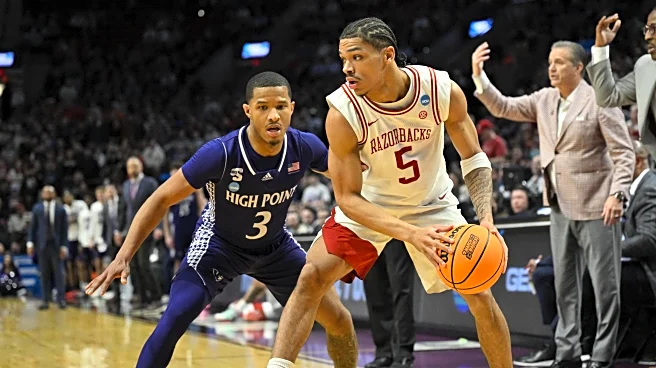
Darius Acuff has flashed such insane potential under John Calipari at Arkansas that it wouldn’t be wholly unreasonable to buck the trends and push him to the top of your draft board (though it seems that’s exactly what Sacramento has been doing, so maybe it would be better to stay away for that reason).
That’s all well and good, but you’re holding up the line, sir. Would you please just pick a flavor and take your seat already?
Breaking down the NBA Draft class of 2026
1A: AJ Dybantsa | F | BYU

Measurables: 6’9”, 210 lbs, 19 years old
2025-26 Stats: 25.5 PPG, 6.8 RPG, 3.7 APG
AJ Dybantsa is muscle-wrapped Clark Kent, squeezing behind a desk at the Daily Universe as the buttons of his marble white shirt cling to life. His disguise is paper-thin — peek behind the black-rimmed glasses, and you’ll discover perhaps the most obvious superhuman walking the face of the Earth. He’s the hallucinogen-spiked fantasy of mad scientist Dr. James Naismith, a six-foot-nine 19-year-old with the refined palette and polish of a 29-year-old NBA All-Star.
He absorbs fouls like a sponge and drenches the box score at the foul stripe. He draws in defenders like a magnet and finds teammates so wide open on the wings that they have time to check the rings of their Apple Watch before hoisting an uncontested jumper. He attacks the paint like a toddler, violently finger-painting during art time. By extension, he is no friend to rims, on which he swings freely and frequently. Much of this is thanks to his unpredictable footwork, a gallery of offensive options, and a competitive drive that simply does not slow, no matter the circumstances.
Posting a BYU freshman record 43 points, the program’s first triple-double in nearly a decade, and carrying the injury-plagued Cougars to a six-seed in the NCAA Tournament, AJ has made his case. Dybantsa is generating buzz as the likely number-one pick, and it’s easy to see why: he’s an obvious superstar.
— Calvin Barrett
1B: Darryn Peterson | G | Kansas

Measurables: 6’5”, 205 lbs, 19 years old
2025-26 Stats: 20.2 PPG, 4.2 RPG, 1.6 APG
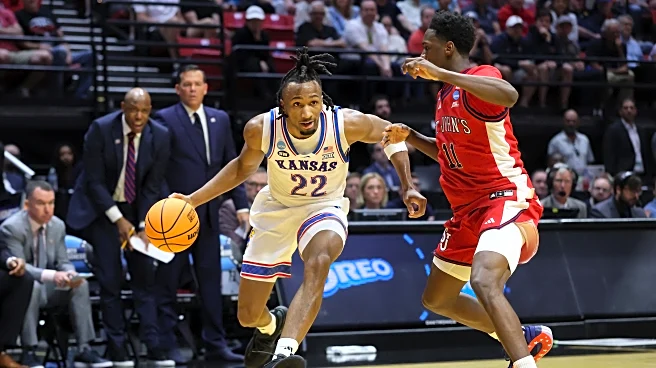
Coming into this season, Darryn Peterson was considered by many as the most likely #1 pick. His high school tape coming into the season is as impressive as it gets with a mix of elite skill, athleticism, and physical talent. With the season over, Peterson has become one of the most polarizing prospects. There were multiple games where Peterson was a late scratch, or games in which he appeared to pull himself abruptly from the game. Peterson has said that he was dealing with an injury for most of the beginning of the season, which also led to some of the cramping he experienced. There seems to be two camps now: those who believe in the talent and that he was dealing with an injury, and those who think he’s some sort of diva who puts himself before the team.
That said, Peterson is as tantalizing a guard prospect as we’ve seen in some time. He has zero weakness in his game. When healthy, he’s as elite a shot maker as you’ll find, and there’s a massive amount of potential for him as a distributor that was rarely seen at Kansas. He’s also a high-level defender who will fit into any defensive scheme he joins. You know a prospect is great when all their comps are all-time greats. The closest player comp I can think of for Peterson would be SGA, with his elite scoring ability and ability to playmake for others.
That’s what makes Peterson the toughest decision for whoever wins the #1 pick. He has the potential to be an MVP-caliber lead guard. But there’s going to be that nagging worry that you might be drafting a player who becomes a problem for non-basketball reasons. The talent is so good, teams might not care.
— James Hansen
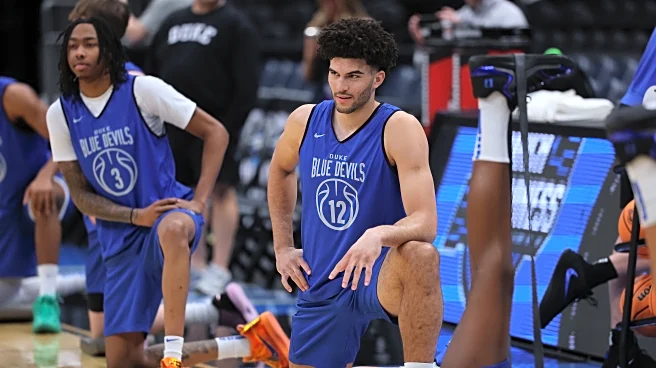
3: Cameron Boozer | F | Duke

Measurables: 6’9”, 250 lbs, 18 years old
2025-26 Stats: 22.4 PPG, 10.3 RPG, 4.2 APG
Much like his father, who we should all be aware of by now if you dare call yourself a Jazz fan, Cameron is a highly polished 250-pounder juggernaut forward that’s a walking double-double machine. He’s actually a more advanced prospect than his dad was at this age, showing a higher ceiling as a playmaker and shooter. He already has an NBA body — he uses elite functional strength to finish through contact and owning the glass on both ends. Unlike traditional bigs, he adds a deep 3 (shooting 39.8%) with a repeatable, high-arching shot. He’s not a ‘high-flyer’ who’s going to posterize someone who’s under the rim, but he’s so strong and skilled that he finishes through contact with ease.
It’s more of a mixed bag on the defensive end. He uses his strength and smart positioning to vacuum up rebounds, and has heavy hands that are elite for poking loose balls and racking up steals. Though he lacks the vertical pop to be a traditional rim protector, much less a shot-blocking anchor. His main challenge at the next level would be lateral quickness, where faster NBA guards are going to hunt him on switches out on the perimeter where he can struggle to keep up.
Taking the Blue Devils to the Sweet 16 (as of March 27th), Boozer’s made his claim to the jury that he deserves to be a top-3 selection. At this point, my only questions for Booz are: what jersey number do you want, and is your brother a package deal?
— Kato Parina
4: Caleb Wilson | F | UNC

Measurables: 6’10”, 215 lbs, 19 years old
2025-26 Stats: 19.8 PPG, 9.4 RPG, 2.7 APG
Caleb Wilson is the wild card of this NBA Draft class. There’s absolutely a world where Wilson is the best player to come out of this draft. With elite size and athleticism, Wilson simply owns the court while he’s on it. Unfortunately, he had trouble staying on the court. While he was playing, he helped UNC be one of the best teams in college basketball. Some people are even making outlandish comparisons to Kevin Garnett or Giannis Antetokounmpo with the way he just dominates the court. So why is he only projected 4th, aside from the other people in this draft class?
Unfortunately for Wilson and UNC, on February 10 against Miami, he fractured his left hand, leaving him sidelined and his future at UNC in question. Some thought he’d be out for the season, but Wilson made it clear he was working toward a return sometime in March. As Wilson was getting closer in early March, he suffered a broken right thumb in practice, and the thumb would require season-ending surgery. Some have serious concerns using such a high draft pick on Wilson with all the serious injuries he’s suffered in just one year, but I believe the talent is just too much to pass up on.
All that being said, there’s no doubt Wilson is one of the most skilled players in this draft, with his scoring ability, defense, length, athleticism, size, strength, and personality. It’d fit right in perfectly with the rest of the guys currently on this Jazz roster, and if the Jazz have the opportunity to select Wilson, they might seriously regret it later if they pass.
— Owen Sullivan
5: Kingston Flemings | G | Houston

Measurables: 6’4”, 190 lbs, 19 years old
2025-26 Stats: 16.2 PPG, 4.0 RPG, 5.2 APG
Kingston Flemings joined a Houston Cougars team that made the last NCAA championship game, led by veteran guards Milos Uzan and Emanuel Sharp. You would think a freshman guard for one of the best teams in the country with a well-established backcourt would probably come off the bench, or at least be one of the secondary options, but no. Flemings immediately became the go-to guy, leading the team in minutes and usage rate(not to mention points and assists).
Flemings is listed at 6’4”, which, to be honest, seems like a very generous measurement. In a class full of guards around a similar tier in the lottery, Kingston Flemings is the best defender. He may be on the smaller end of point guards, but what he lacks in length and physical bulk, he makes up for with intensity and elite lateral quickness. He is a great on-ball defender and remains engaged off the ball, giving him the upside of a strong point of attack defender against point guards. His active hands regularly force turnovers and create transition opportunities.
On offense, Flemings is a composed playmaker. He knows how to create for his teammates while avoiding turnovers, shown by his nearly 3:1 assist-to-turnover ratio. He’s an explosive athlete with impressive speed and change of direction, making him very difficult to stay in front of. What makes him especially unique as a point guard is his ability to play off the ball. He can impact the game without the ball in his hands every possession by attacking closeouts and shooting off the catch.
Flemings is deadly in the midrange and shot a solid 38.8% from distance, despite his non-traditional shooting form. While he shot it well with Houston, critics worry that his form isn’t repeatable or consistent enough to succeed against high-speed NBA closeouts. To get to the next level offensively, he needs to shoot a higher volume of threes. It would also be ideal if he packed on some muscle.
— Oliver Jones
6: Darius Acuff Jr. | G | Arkansas

Measurables: 6’3”, 190 lbs, 19 years old
2025-26 Stats: 23.3 PPG, 3.1 RPG, 6.5 APG
In the 2026 draft, there are few prospects as divisive as Darius Acuff. It is impossible to deny his impact on the collegiate level, but how does his playstyle translate to the next level? Arkansas fans may already be furiously typing in the comment section, but the question is justified; Ja Morant and Trae Young set a pattern of highly skilled but defensively lacking guards having less interested suitors in the trade market than intuition would suggest.
Offensively, he is nearly indisputable; I love an advanced statistical analysis as much as the next guy, but simply put, his level of youth (19.6 on draft night) and offensive production (led the SEC in points and assists per game) is very tantalizing. Acuff seems to just have the answers – throw whatever you want at him, and he finds a way to get his 25 points and 7 assists. His passing seems simplistic, and the athleticism is nothing to write home about, but there’s something to be said for just making things happen. A key stat to note and follow is Acuff’s three-point shooting – it went from a middling percentage in high school to one of his biggest strengths in college. That would need to prove sustainable if Acuff hopes to provide all-star value on the offensive end. On offense, Deron Williams is a popular comparison for Acuff, but if you’re looking for something more realistic, I’d turn to a guy like Reggie Jackson instead.
The picture is less pretty defensively. He rarely uses physicality, struggles to get steals or blocks, and his effort leaves a lot to be desired. In an NBA that is clearly moving away from small guards who can’t hold their own on defense, Acuff will need to show something on that end to buck this concerning trend.
— Grant Nielson
7: Mikel Brown Jr. | G | Louisville

Measurables: 6’5”, 190 lbs, 20 years old
2025-26 Stats: 18.2 PPG, 3.3 RPG, 4.7 APG
Mikel Brown Jr. wishes to blot out the sun with the preposterous number of three-pointers he launches into the sky. A high-volume shooter, Brown toes the line between “Get to a TV, this guy can’t miss!” and “If he takes another shot, I may do something I’ll regret”. He fired over seven three-pointers per outing in his freshman season at Louisville and hit at a 34.4% clip. Fortunately, for every 2-for-13 or 1-for-7 night Brown posts, he has an equal number of 4-for-8, 3-for-7, and even 10-for-16 performances.
Brown heats up in a hurry, but volatility could be his downfall at the next level. Of course, even the best shooters in the world have bad nights — the best shooter in the world misses more in-game three-pointers than he makes — but Brown has a good head on his shoulders, and seems much more Malik Monk than Dion Waiters, who famously stated that he’d rather go 0-for-30 than 0-for-9 from deep. As a freshman, he shot many, many attempts off the dribble, which likely played into his relative inefficiency. At the pro level, he’ll need to become more comfortable shooting off the catch and operating within the offense than standing behind the control panel with the ball in his hands.
Injury concerns aside (he spent notable time on the bench nursing a back injury this season), Mikel’s size and comfort operating the offense are promising, and make him one of the more attractive guard prospects in the class. Improve his playmaking efficiency (4.7 assists to 3.1 turnovers), and most any NBA coach would gladly hand him the keys to the offense, but he might be better served as a secondary scoring option. At his best, he could shadow the career of Damian Lillard. At his worst, you’re more likely to find Jordan Poole.
— Calvin Barrett
8: Nate Ament | F | Tennessee

Measurables: 6’10”, 207 lbs, 19 years old
2025-26 Stats: 16.9 PPG, 6.4 RPG, 2.3 APG
Nate Ament was one of the most highly touted prospects coming into this season, and it’s easy to see why with his impressive measurables and skill set. Ament stands 6’10” and sports an all-around mix of ability that hints at incredible upside. He’s not the most explosive athlete, but his size makes up for his lack of explosion. That said, his season started in a very unimpressive way. In his first 17 games, Ament shot 27% from three and 40% from the field. The numbers weren’t very impressive, and he didn’t always match the eye test. The physicality of the game looked too much for him at times.
Things did improve for Ament as the season went along. In his last 12 games of the season, you could see a marked improvement. He shot 42% from the field and 41% from three in those games, and you could see him getting into the lane and knocking down threes with regularity. That type of improvement might not be enough for a GM to take a big swing on Ament, but it’s enough to likely sway a bunch of GMs. Ament’s mix of size and skill is rare, and if a GM believes in their team’s development program, he could end up being a steal in the draft.
Ament feels like the biggest swing in the draft. He’s the type of prospect that, if everything comes together, could be a star. He’s also a prospect that could get a GM fired. It’ll be fascinating to see where he ends up, it could be all over the board.
— James Hansen
9: Keaton Wagler | G | Illinois

Measurables: 6’6”, 185 lbs, 19 years old
2025-26 Stats: 17.8 PPG, 4.9 RPG, 4.4 APG
Wagler was the breakout star of the 2025-26 college basketball season, who entered Illinois as an unheralded recruit ranked as low as No. 261. Now the high-IQ combo guard is projected to be a top-10 pick. He’s considered a lights-out shooter, netting over 40.8% from three on high volume. That was the most noticeable aspect of him after he dropped 46 points (including 9 triples) in a road upset of #4 Purdue, setting a record for an Illinois freshman. Originally a shooting guard, he moved to point guard in December 2025, producing an exceptional assist-to-turnover ratio (2.5), and is an advanced pick-and-roll operator. Despite being 6’6”, he isn’t a high flyer — he quite literally recorded zero dunks during his freshman season. Instead, he relies on step-backs and ‘unbothered’ poise to score.
While his offensive game is NBA-ready, his defense is going to be a developmental area. He uses his high IQ to disrupt passing lanes and rack up steals (averaging nearly a steal a game), but his light 185 lbs frame makes it difficult for him to finish through contact or defend more physically developed NBA-level guards. He’s a quality point-of-attack defender, but can be a target on switches due to an average lateral quickness.
Wagler is the ultimate draft riser and will likely stay there as his team battles through the harsh winter that is the March Madness tournament. He offers a lethal combination of deep range and playmaking that every modern NBA offense salivates over.
— Kato Parina
10: Brayden Burries | G | Arizona

Measurables: 6’4”, 205 lbs, 20 years old
2025-26 Stats: 16.0 PPG, 4.8 RPG, 2.5 APG
Brayden Burries is maybe one of the biggest risers, at least from where he was expected before the season started. He’s really played himself into a lottery selection lock, with some thinking he could even go in the 7-9 range. He’s helped lead the Arizona Wildcats, who’ve been consistently one of the top teams in the country all year, and at the time of this writing are still competing for a national championship.
Burries is a two-way combo guard. He’s strong and really utilizes his physicality. He can play on or off the ball and plays good defense for his position. Burries is a true three-level scorer, excelling at getting to the rim with his strength, using his crafty skills in the midrange area, and shooting 37% from three-point land. Not a traditional point by any means, as he’s not exactly a star playmaker, but he makes the right reads, and most of the time, for Burries, the best read is him getting to his shot.
While some question Burries’ ceiling at the NBA level, if the Jazz don’t jump in the lottery, they might want to consider drafting Burries even if the superstar ceiling isn’t there, like some of the other freshmen in this class. Because Burries absolutely has the potential to be a great NBA-level contributor!
— Owen Sullivan
11: Hannes Steinbach | F | Washington

Measurables: 6’11”, 220 lbs, 19 years old
2025-26 Stats: 18.5 PPG, 11.8 RPG, 1.6 APG
Steinbach is a highly skilled big man with soft shooting touch and a good feel for the game. His balance and body control make him a crafty finisher despite shot contests – he shot 68% at the rim on good volume. More than just a roll man, he’s also effective on post-ups, cuts, and in transition. Good free-throw percentage (76%), touch on floaters, and the ability to hit turnaround jumpers all indicate future development as a shooter.
Steinbach is an excellent rebounder – he led all of college basketball with 11.8 per game. Defensively, he struggles to stay in front of quick ball handlers, and at the NBA level, he won’t have a size or length advantage against other bigs. He’ll be most effective paired with a rim-protecting defensive anchor.
12: Labaron Philon | G | Alabama

Measurables: 6’4”, 177 lbs, 20 years old
2025-26 Stats: 21.6 PPG, 3.4 RPG, 5.0 APG
After receiving advice and evaluations from the league during the pre-draft process last year, Labaron Philon has shown a bit of everything at Alabama this season. It’s necessary to remember that the league isn’t kind to players of his archetype (small guards who are best on the ball offensively and don’t bring much defensively), but watching Philon is so fun that it’s easy to forget. He’s my pick for the best handle in the 2026 class, and when you combine that with his fluidity and balance? The best word to describe him is slithery. A true three-level scorer, Philon slices and dices like a professional. While I am unsure that his playmaking skills project him to be a full-time point guard in the NBA, he does well at noticing the open man and getting the ball to their shooting pocket.
Philon isn’t a sieve defensively, but projecting him to a positive is likely too optimistic. He was better last year with less usage, but it is so difficult to provide strong value defensively as a guard lacking elite strength or athleticism. Philon’s slender build gives me some pause with his offensive evaluation as well; at the beginning of his career, he may struggle with getting bumped off of his spots by mature defenders.
— Grant Nielson
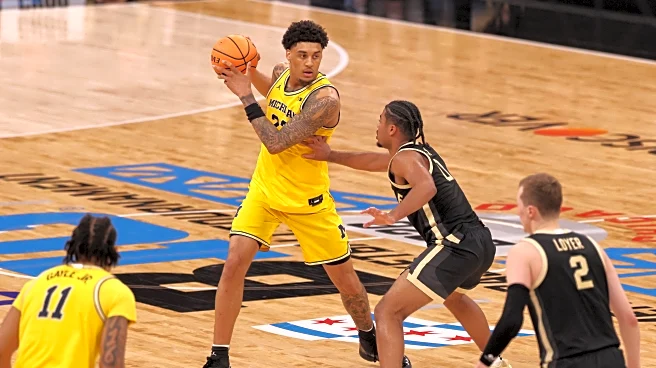
13: Yaxel Lendeborg | F | Michigan

Measurables: 6’9”, 230 lbs, 23 years old
2025-26 Stats: 14.7 PPG, 6.9 RPG, 3.2 APG
As a junior at UAB, Lendeborg was so impressive that we projected him to go in the first round of last year’s draft, before he pulled out to play his final collegiate season in Ann Arbor.
Now, as the face of an excellent Michigan team, Lendeborg just keeps getting better. He won’t blow you away with his ball skills, scoring repertoire, or portfolio of highlight plays, but Lendeborg is a hearty scoop of vanilla ice cream — he makes any given situation better. Versatile and switchable practically from 1 to 5, it’s hard to imagine an NBA franchise that wouldn’t want a player like Lendeborg, no matter where they are in the development cycle. Sure, at the age of 23 (24 at the beginning of his rookie season), he’s practically elderly by NBA Draft standards, but any pre-established team in the NBA adds reliable defending and rebounding that, while not exactly sexy, makes him uniquely valuable in the late-lottery.
You know what you get with Lendeborg — he’s a proven commodity — but his late-blooming development path suggests that he theoretically still has room to grow. He’s a lubricating passer, a trustworthy hand behind the three-point arc (though he struggled a touch after the dawn of Big Ten Conference play), and has a clear path forward as a pro.
Selecting Yaxel may not alter your franchise’s status quo alone, but he’s a very safe bet for his draft range.
— Calvin Barrett
14: Jayden Quaintance | F | Kentucky

Measurables: 6’9”, 225 lbs, 18 years old
2025-26 Stats: 5.0 PPG, 5.0 RPG, 0.5 APG
Jayden Quaintance entered college basketball as a 5-star prospect and one of the country’s elite defensive players. But injuries have been the story for Quaintance, who just can’t seem to stay healthy. The 6’9” defensive monster showed, in his time at Arizona State last season, that he had a ton of potential as a big-time defensive prospect, but his season was cut short with an ACL tear. He transferred to Kentucky and showed some impressive flashes in his four games played, but was then shut down because of swelling to the injured area.
There are probably more question marks with Quaintance than any prospect in this draft, but there have been a lot of great flashes. Quaintance is showing that if he can return from his ACL tear to 100% of his former self, he can be a big-time all-defense type player. But that’s if he’s healthy. He’s a little bit undersized at center, and because he’s not a fully developed shooter, that’s probably where he’ll end up. His 7’3” wingspan will do the trick, though, and he plays with intensity and motor.
A lot of GMs are going to be nervous to draft Quaintance because of the question marks, but if he hits, he has a chance to give a team an elite prospect that is only scratching the surface of his potential. It’s safe to say he could be a Bam Adebayo-esque player if everything comes together.
– James Hansen
15: Koa Peat | F | Arizona

Measurables: 6’8”, 235 lbs, 19 years old
2025-26 Stats: 13.7 PPG, 5.5 RPG, 2.7 APG
At 6’8” and a muscular 235 pounds, Peat’s physical tools are exactly what NBA teams look for. His size and strength allow him to absorb contact in the post or paint, while his high motor and instinctual awareness give him versatility and switchability on the perimeter. He’ll primarily defend forwards and would hold his own in short stints defending bigger guards and some centers.
Offensively, Peat is a fantastic passer and playmaker for his size. Out of the pick and roll, he makes quick reads in the short roll, punishing rotating defenders with accurate passes to shooters or cutters. He sees the court well and knows when to cut or reposition into space. However, Peat struggles as a shooter, hitting just 6-19 from 3 and 62% from the free throw line on 155 attempts. From the mid-range, his mechanics look good – but shooting from deep, his jumper falls apart, and there’s a noticeable hitch just before his release.
If Peat can develop into a passable shooter from outside, he’ll be a hell of a player. Without a decent 3-point shot, he’s probably a bench big.
— Jordan Cummings
16: Braylon Mullins | G | UConn

Measurables: 6’6” 196 lbs, 19 years old
2025-26 Stats: 12.1 PPG, 3.5 RPG, 1.5 APG
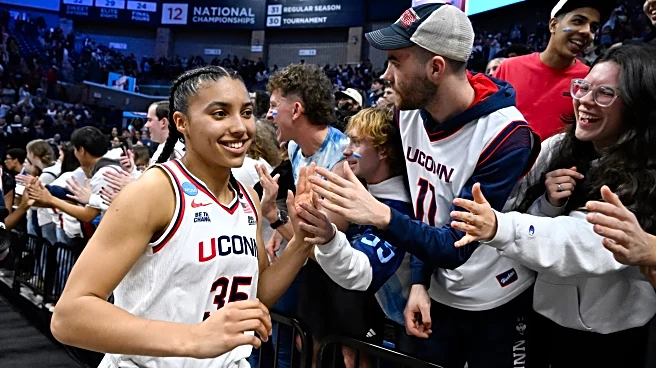
Braylon Mullins is yet another impressive freshman player in this class. While we’re outside of the lottery picture now, Mullins might be the best pure shooter in the class, and we’ve all seen how good the last best pure shooter is doing in the NBA. While Mullins is no Knueppel, he could be a very nice piece to add to your NBA roster.
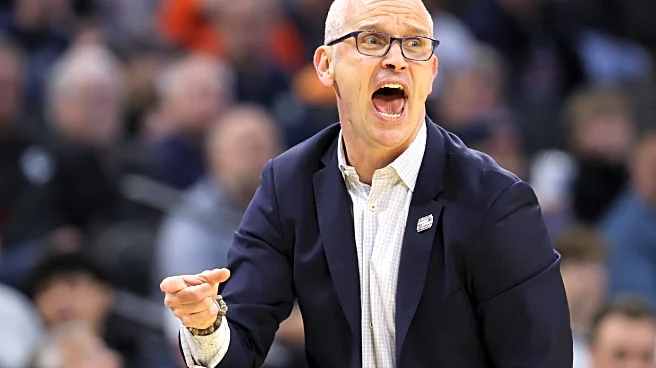
Mullins plays for UConn under Dan Hurley, so that immediately means he’s gotta have tough skin. Anyone on that roster would. He thrives finding space offensively, moving without the ball, and he only needs the smallest amount of space to let it fly. At 6’6”, he has good size for his position, and he’s shown signs he could be a plus player in the NBA with his shooting ability.
Mullins is not a perfect prospect by any means, though. Mullins is not a guy who’s gonna create for himself or break defenders down consistently. He’s not exactly athletic, and scouts question his defensive ability to guard NBA-level talent on a consistent basis. The idea here is maybe he turns into a Grayson Allen or a Luke Kennard. Maybe he does, maybe he doesn’t. Overall, it wouldn’t be a horrible selection in the mid to late first round, depending on the team’s needs.
— Owen Sullivan
17: Bennett Stirtz | G | Iowa

Measurables: 6’4”, 180 lbs, 22 years old
2025-26 Stats: 19.7 PPG, 2.7 RPG, 4.5 APG
In addition to elite outside shooting (nearly 52% on catch-and-shoot threes), Stirtz is a prolific pick-and-roll ball handler. While that won’t be his primary role in the pros, the threat of his playmaking makes him more difficult to defend – close out too hard, and he wreaks havoc driving into the paint for wrong-foot layups or kick-outs to open shooters. Give him too much space, and his lightning-quick release will punish defenders.
Defensively, he has good awareness, knows when and where to rotate, and plays with effort. Unfortunately, his athletic limitations will be an issue at the point of attack. Teams will run multiple screening actions to force switches onto quicker players, where he’ll struggle to contain ball handlers.
Stirtz has a good shot (pun intended) to carve out a role as a deadeye shooter and secondary/tertiary playmaker, and should be a plus player despite his athletic and defensive limitations.
— Jordan Cummings
18: Christian Anderson | G | Texas Tech

Measurables: 6’2”, 165 lbs, 19 years old
2025-26 Stats: 18.5 PPG, 3.3 RPG, 7.4 APG
Christian Anderson is on the short list of contenders for the best shooter in the 2026 NBA draft. Whether he’s pulling up from 28 feet or catching in the corner, when he shoots, you expect the ball to go in. He reminds me of Payton Pritchard — a shorter point guard who doesn’t wow you with athleticism, but is such a master of blending shooting and playmaking that perhaps it doesn’t even matter. Anderson is as good an all-star guard bet (besides Darryn Peterson) in the class. In a word? Electric.
The question is whether he’ll be able to hold up athletically at the NBA level. Throughout the year, he has struggled to get to the rim, especially without a screen – his weak frame and lack of burst led to troubles when his difficult shotmaking momentarily deserts him. He competes defensively and knows where to be, but the combination of major offensive usage and poor physical traits almost never leads to a positive defender. However, at the end of the day, this combination of explosive scoring and real point guard abilities doesn’t come by often – you take the bet on Anderson and hope you can build the infrastructure to support him.
— Grant Nielson
19: Thomas Haugh | F | Florida

Measurables: 6’9”, 210 lbs, 22 years old
2025-26 Stats: 17.1 PPG, 6.1 RPG, 2.1 APG
Haugh made the leap this season, shouldering a heavier load in the Gators’ championship-defense campaign. 9.8 to 17.1 points per game is incredibly noteworthy, and a clear sign that Todd Golden placed his trust in Haugh with the departure of Walter Clayton Jr.
But here’s the snag: there are more red flags surrounding Haugh than a Liverpool soccer match. As a scorer, he was wildly inefficient as a junior, connecting on less than 33% of his three-point attempts. He lacks the physicality to assert himself as a defender or rebounder. These detractions suggest that Haugh has an uphill battle to compete for minutes against the bruising bigs of the NBA.
The good news is that he hits his free throws — promising future growth as a three-point shooter — though he saw a dip in his field goal efficiency while carrying a heavier load. Is this a Diet Jokic in the rough, just waiting to be polished? Probably not. To make matters worse, Haugh is not getting any younger, and Florida’s early exit from the NCAA Tournament means his bed is made; he’s at the mercy of the scouts and talent evaluators now.
— Calvin Barrett
20: Chris Cenac Jr | F | Houston

Measurables: 6’11”, 240 lbs, 19 years old
2025-26 Stats: 9.6 PPG, 7.8 RPG, 0.7 APG
There are few “ideas” in the draft more tantalizing than Houston forward Chris Cenac Jr. Putting versatile size at the power forward position is all the craze these days – there’s the slim, ball handling giants in the vein of Evan Mobley and Chet Holmgren, and then there’s the strong, opportunistic handymen like Aaron Gordon and Isaiah Stewart that it seems that every contender has. Well, the “idea” of Cenac is a combination of both. Surprisingly fluid on his feet, Cenac moves around the court like a gazelle. On top of that, he’s one of the most keen, physical rebounders in the class – at least in the rebounding department. Cenac perfectly understands his job as a role player and performs it nearly perfectly.
However, the former 5-star recruit seems not to have yet fully accepted the role that is going to make him the most money in the NBA, namely that of a skilled, athletic hustler. He has struggled so far with any other standard “big man” responsibilities – deep down, it seems like he wants to be a wing. Cenac is efficient at the rim when he gets there, but instead settles for mid-range shots that will not be acceptable at the NBA level. He has similar warts on the defensive end; he’s unwilling to use his frame and athleticism as a top-tier primary or secondary rim protector, so often he’s just kind of “there”. The upside is tangible while watching Cenac, and it’s certainly worth a bet, but whether he reaches that upside likely depends on his buy-in to a subdued role.
— Grant Nielson
21: Patrick Ngongba II | C | Duke

Measurables: 6’11”, 250 lbs, 20 years old
2025-26 Stats: 10.5 PPG, 6.0 RPG, 2.0 APG
Ngongba has good size, length, and wingspan, is an effective rim runner, and does a good job protecting the rim. While his vertical athleticism is decent, he lacks the pop of elite roll men and rim protectors like Rudy Gobert.
Ngongba has really good passing feel for a big – he’s capable of making simple reads and passes and averaged nearly 4 assists per 40 minutes as a sophomore.
Although he’s not elite in any one area, Ngongba impacts the game in every area. He posted a Box Plus Minus (BPM) of 11.3 as a freshman and 11.1 as a sophomore. Historically, an underclassman posting a BPM of 10+ is a good indicator of success at the NBA level – his “floor” as a player should be relatively high.
— Jordan Cummings
22: Cameron Carr | G | Baylor

Measurables: 6’5”, 175 lbs, 21 years old
2025-26 Stats: 19.2 PPG, 5.5 RPG, 2.7 APG
Carr likes to use his size and length to his advantage against opponents on offense and defense. While he’s played 3 seasons in college, you’re still absolutely drafting him based on what he could turn into as opposed to what he is right now. And with Will Hardy coaching, that’s probably not a problem at all, but not every NBA team has Will Hardy. Carr is a smooth athlete and really flashes in transition and while cutting. He has a good to ideal size for his position in the NBA, and he plays great defense — definitely one of his biggest strengths. A random player comp would maybe be a rawer Josh Green-type.
While Carr has some real upside to his game, as a 21-year-old junior, he’s still very unpolished. He can’t create offensively, his jumper is not consistent or reliable, and how much do you really buy into one year of production at Baylor that didn’t even really contribute to winning? If I were Carr, I’d get in the gym and start shooting threes, and I wouldn’t stop till training camp. There’s potential here. Do you want to be the one to buy it?
— Owen Sullivan
23: Motiejus Krivas | C | Arizona

Measurables: 7’2, 260 lbs, 21 years old
2025-26 Stats: 10.4 PPG, 8.2 RPG, 1.0 APG
Motiejus Krivas is a grown man. Reminiscent of Donovan Clingan during his UConn days, the most apparent strength of Arizona’s Lithuanian center is his obvious size and strength. Krivas is constructed much like Stephen Adams in the way that he is immovable like a mountain. Standing firm, Krivas gobbles more rebounds than the disgusting sum of rolls I consume at Thanksgiving dinner. He yawns as gnats toss feeble layup attempts in his vicinity, and simultaneously possesses enough body control to abstain from needless fouling.
And the wildest part of this all? Despite standing over seven feet tall and weighing roughly the same as a harbor seal, Krivas knocks down 78.2% of his free throws. Gentle enough to play the flute, and strong enough to snap it in half.
He’s 21 years old, which is a touch on the older side for NBA prospects, but does that really matter when he has such obvious value as a backup 5?
— Calvin Barrett
24: Aday Mara | C | Michigan

Measurables: 7’3”, 240 lbs, 20 years old
2025-26 Stats: 12.0 PPG, 6.9 RPG, 2.5 APG
The simplest philosophy of basketball talent evaluation tells you to obtain players who are giant, smart, and skilled. This seems to be universally agreed upon. Aday Mara is the premier giant in this draft class, and, by my money, the easiest bet to outperform his eventual draft position. Mara’s 7’3” height is not wasted on him; he gobbles up rebounds and was perhaps the most intimidating rim protector in the country this season. While his creation abilities are limited — post scoring opportunities would be reserved to the end of the shot clock — Mara puts his height to use on offense as well, with a shooting percentage of over 80% at the rim. What separates Mara from previous seven-footers who haven’t worked out is his passing ability; Jusuf Nurkic is a good comparison in that regard. He’s got the size to see over the defense and the accuracy to hit the backdoor cutter where only he can get it. Additionally, he’ll walk into the league as one of the sport’s premier outlet passers. Height will never go out of style in the NBA, and Mara combines his with a special mix of skills and smarts.
He has his weaknesses, to be sure — like many giants, anticipating him to play more than 25-30 minutes in a game is probably expecting too much of his stamina. Additionally, it is essential that he puts on some upper-body strength; some of the more physical matchups this year have been troublesome for the Michigan center. I expect him to be able to impact the game in his rookie year, but it will take some time for him to fully hit his stride. Anticipating an eventual three-point shot in his arsenal also seems too optimistic, but improving his free-throw shooting should be near the top of Mara’s offseason checklist.
— Grant Nielson
25: Tounde Yessoufou | G | Baylor

Measurables: 6’5”, 215 lbs, 19 years old
2025-26 Stats: 17.8 PPG, 5.8 RPG, 1.6 APG
Just a few months ago, it would have been considered a steal to get Tounde Yessoufou at this spot.
The Benin-born guard/wing is an athletic beast, and one of the more physically ready freshmen in the country. His combination of bully ball and vertical explosion makes him a nightmare in transition and the post. He’s also a solid rebounder for his position, grabbing nearly six a game.
As a defender, Yessoufou has all the tools to be great, just not always the mental focus. He often gets caught ball-watching at inopportune times and can struggle to navigate screens. He has impressive steal numbers, but these are often created by reckless gambles that burn him as much as they reward him. However, these are fixable issues with the right coach to hold him accountable and help him build the right habits.
Yessoufou is also a questionable shooter. He’s a masterful midrange shooter, but very streaky from three-point range. He shot a solid volume from distance this season, but at 30.2%. Against NBA athletes, Tounde Yessoufou will have to rely more on his ability to hit shots from the perimeter because he won’t always be able to physically dominate. Bully ball from a 6’5” or 6’6” player isn’t going to work in the league.
Baylor also had a very unsuccessful season, especially for their standards. Baylor, which went 6-12 in Big 12 play and missed the tournament, is led by Yessoufou, so he naturally shoulders a lot of the blame. He has low assist numbers coupled with high usage, which suggests that he doesn’t elevate players around him. I wouldn’t say he is a selfish player, but his inability to make high-level reads after the defense collapses on his drives leaves a lot to be desired.
— Oliver Jones
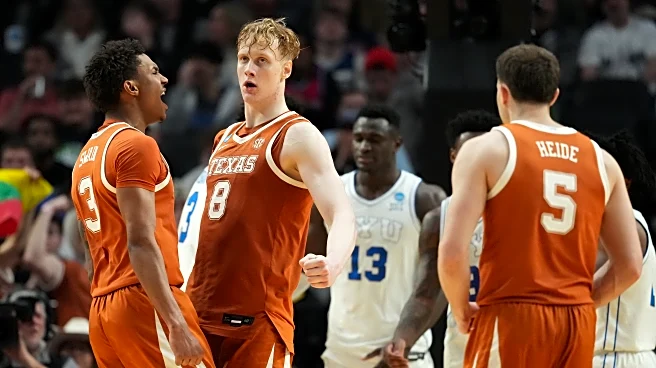
26: Dailyn Swain | F | Texas

Measurables: 6’7”, 200 lbs, 20 years old
2025-26 Stats: 17.4 PPG, 7.5 RPG, 3.5 APG
After a transfer from Xavier to the University of Texas, Swain has taken on more offensive usage, flashed some intriguing attributes, and solidified himself as a first-round pick in the 2026 draft. However, I’m curious what’s stopping him from rising above the ranks of the mid 20s to eventually become a lottery candidate. It certainly isn’t self-creation — outside of Boozer and Dybantsa, there isn’t anyone in the class above 6’7 who I am more comfortable with dribbling outside of the perimeter than Swain. Great flexibility, quick change-of-direction, and a solid handle let Swain get to the rim at will, where he finishes at an excellent rate. The rest of his offensive profile raises more questions – he won’t have the same usage in the NBA as he did in college, will he be able to utilize his athleticism off-the-ball? Additionally, his scoring profile features an odd quirk where he’s better at shooting three pointers off-the-dribble than in a catch-and-shoot; he’ll need to iron that out to best play his role at the next level. But, at the end of the day? This combination of size and on-ball scoring seems to show an amount of potential that shouldn’t slip this far in the draft.
Defensively, Swain is more conceptual than actualized at the moment. In his lower-usage seasons at Xavier, Swain was a man-possessed when it came to disrupting the offense. This season was more hit-and-miss, which was to be expected; it is notoriously difficult to maintain defensive intensity with a sizable uptick in offensive responsibilities. The hope is that, once he enters a prebuilt system where the offense doesn’t fall on his shoulders, he’ll be able to utilize his athleticism (moves very well on his feet for his size) and know-how to cause havoc like he did during his first two years at college.
— Grant Nielson
27: Joshua Jefferson | F | Iowa State

Measurables: 6’8”, 220 lbs, 22 years old
2025-26 Stats: 16.4 PPG, 7.4 RPG, 4.8 APG
After transferring from St. Mary’s to Iowa State, Joshua Jefferson has transformed into one of the most unique point-forwards in the country, playing a vital role in the Cyclones’ elite defensive system while acting as a playmaking hub on offense. Jefferson is a unique point-forward who initiates offense with elite passing vision, averaging 4.8 assists as a senior for Iowa State. Though he lacks vertical explosiveness, he’s a physical finisher at the rim and has developed as a reliable floor spacer by jumping to a 34.5% three-point this season.
He’s a high-feel team defender who uses his sturdy 240-pound frame to disrupt passing lanes. While not a vertical shot-blocker, his disciplined positioning allows him to switch effectively. He’s a high-motor rebounder to act as the ‘primary glass-cleaner’. After transferring to Iowa State in 2024, Jefferson’s rebounding jumped to 7.4 over the past 2 seasons. He grabbed a career-high 17 rebounds in a road win against Baylor in January.
Jefferson’s age makes him a “what you see is what you get” prospect. He doesn’t have the same developmental tree as the freshman, meaning that his draft ceiling as a late-first is going to be his cap. As an experienced, high-IQ college senior, his unselfish role player style would be a welcome sight for any NBA contender.
— Kato Parina
28: Karim Lopez | F | Mexico

Measurables: 6’9”, 225 lbs, 18 years old,
2025-26 Stats: 11.9 PPG, 6.1 RPG, 2.0 APG
Karim Lopez was born in the same year as me… that’s weird. He turns 19 in just a few weeks. He’s a 6’9” wing who plays professional basketball for the New Zealand Breakers. Lopez is one of the top international prospects of the 2026 pipeline. It should be noted that while NCAA college basketball is changing, Lopez is going up against real grown men every game, and that’s great prep for the NBA level.
Lopez uses his plus size to score and even has guard-like flashes. He can handle the ball, pass, and attack closeouts. Lopez makes smart reads and the right reads. Nothing perfect or super polished, but with Lopez, you’ll see flashes of shot creation — step-backs, pull-ups, and he uses his size to attack mismatches. He’s a little more than “just a role player” prospect. Playing in the NBL is a serious edge over others. That being said, the NBL is no NBA.
There are serious concerns with Lopez and his ability to consistently shoot at the NBA level, and some question his physique, as he definitely needs to fill out his frame. This shows when he drives, as he often struggles with contact. The tools are there to be a solid defender, but Lopez has struggled with effort and discipline. Lopez is a developmental project — very raw, but maybe he pans out. That’s the beauty of the whole draft process.
— Owen Sullivan
29: Isaiah Evans | G | Duke

Measurables: 6’6”, 175 lbs, 20 years old
2025-26 Stats: 15.0 PPG, 3.3 RPG, 1.3 APG
Isaiah Evans is one of the best shooters in this class. While he initially had to find his footing on a loaded Duke roster, this season he carved out a role as one of their premier perimeter threats. Standing at 6’6”, he has the high release that NBA teams covet in a modern wing. He isn’t just a shooter; he is a tough shot maker who sometimes appears to be even more comfortable when the difficulty is at its highest.
Evans is a high-level movement shooter, capable of running off pin-downs, flares, and stagger screens from all angles to knock down shots. When defenders run him off the three-point line, he has a polished one-to-two dribble pull-up.
While he is a long and active defender, his thin frame will make it difficult for him to guard NBA wings. If he doesn’t put on some functional bulk, he will likely be hunted in mismatches by stronger forwards.
Isaiah Evans isn’t going to be a primary creator or offensive engine in the league, but his shooting and off-ball movement are valuable to every NBA team. I can absolutely see Isaiah Evans playing for a good team in a role similar to Isaiah Joe, providing floor spacing and elite gravity.
— Oliver Jones
30: Tyler Tanner | G | Vanderbilt

Measurables: 6’0”, 170 lbs, 20 years old
2025-26 Stats: 19.5 PPG, 3.6 RPG, 5.1 APG
The Vanderbilt website lists Tanner at 6’0” even, but after watching him play, even that feels generous. However, height is likely not the first thing on your mind after watching Tyler Tanner – you will instead be entranced by just how much he can make happen. He is a firecracker on the court in every sense of the word. Elite burst, crazy vertical athleticism, lightning-quick release on his shot, good manipulative passing, and a tendency to be everywhere on defense make Tanner perhaps the most entertaining watch in the class.
However, I can’t get away with glossing over his height like that. The margin of error is minuscule for a player who is likely to measure in at 5’10” without shoes at the combine. And when you see how easily an advanced NBA offense can pick on favorable matchups each time down the court in the playoffs, it’s easy to paint a not-so-pleasant picture of Tanner’s NBA outlook. However, if any sub-6’0” prospect is going to make it in the big leagues, Tanner is your best bet because he just finds a way to play bigger than what the tape measure says. He’ll need some solid positional size around him, to be sure, but it’s a lazy evaluation to disregard Tanner simply because of the height.
— Grant Nielson