
Being a Mets fan must be exhausting. Being of New York is a status symbol, which carries privilege but also responsibility. The Mets are expected to win! And short of that, they’re expected to do everything they can to win. And if they don’t, there’s no choice as a fan but to be miserable. Plenty of Giants fans would like to think their favorite team is in the same boat, but I would hope a close inspection of the franchises situations would reveal that they’re not anywhere close to the same. For
the Mets, the floor is “good,” but the expectation is great. For the Giants, “good enough” is the primary philosophy.
It’s hardly a distinction without a difference, too. “Good” means spending way, waaaaaay more than it should’ve cost to acquire Juan Soto (15 years, $765 million).“Good enough” means trading for Rafael Devers in his decline phase or filling out a thin rotation with oft-injured Tyler Mahle and fifth-starter-at-best Adrian Houser. “Good” carries the expectation that the team will make the postseason, meaning that David Stearns, the Mets’ President of Baseball Operations, had compose an actual offseason plan after “let beloved Mets figures Pete Alonso and Edwin Diaz walk.”
Our colleagues over at Amazin’ Avenue gave the team an “A-” for their offseason additions of free agents closer Devin Williams, first baseman Jorge Polanco (he’d played just 1-2 innings at the position prior to the signing), reliever Luke Williams and infielder Bo Bichette (whom they pivoted to after losing out on Kyle Tucker) along with trades for infielder Marcus Semien, outfielder Luis Robert, and starter Freddy Peralta.
It was a substantial rebuild of the team’s core done within the span of a single offseason with enough bona fide talent that it blows past the “well, if everything works out”-style prognostication that typically follows a Giants winter. The Giants have typically operated in that “good enough” area where if a couple of things break right, the team will be really successful. “Good,” or the pursuit of it, means building something that is less likely to fail.
But that’s why they play the games and all that very relevant history of Baseball. The Mets aren’t the Dodgers (who’ve started 4-2) nor are they the Yankees (5-1). Then again, they could be. The Giants picked up their first two wins of the season in games started by pitchers who are probably very close to the end of their major league careers (Walker Buehler & German Marquez). Like with the Yankees series, the moment they faced an average-to-above average major league starter (depending on how you want to label Nick Pivetta), their bats went cold.
The Mets’ staff has a 2.50 ERA through their first 6 games (57.2 IP) of the season, but given the peripherals, they’re right around where the Giants are (3.74 team ERA btw) in terms of value (+0.7 fWAR vs. +0.6fWAR). But they’re also just 20th in runs scored (23). Of course, the Giants are last (14 runs scored). It’s so early in the season that the sample size factor ought to be our main consideration when comparing the two teams. Of course, the next consideration is substantial, too.
While the Giants have a group that looks solid on paper, it doesn’t really measure up to the Mets. There’s the Juan Soto of it all, of course. He just hit his first home run of the season yesterday, but has started the year with a line of .346/.414/.538 (29 PA). Last season, he hit 43 home runs in 160 games and drew 127 walks. He’s quite good; and, at Oracle Park, he’s been stellar: a career .313/.422/.604 in 25 games and 116 plate appearances. So, you know, let’s look at him as a given. A guy to pitch around and a guy who will hurt you late in the game.
The Mets are missing Pete Alonso now, and that’s a nice development. Then again, they have Francisco Lindor and now Bo Bichette. While he doesn’t have much experience logged against the Giants, the guy with a career .292 average is off to a .111 start. Can the Giants sneak past his bat in this 4-game series?
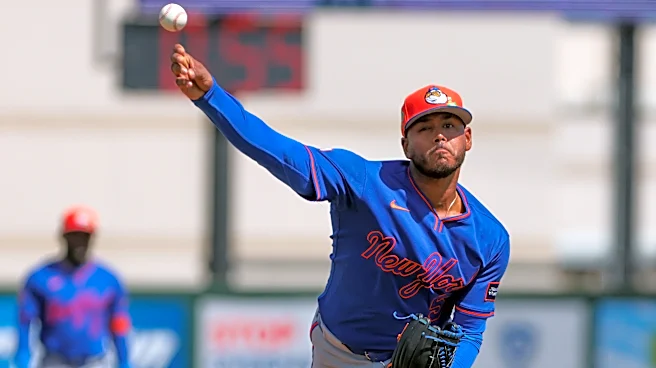
The tougher part will be the pitching, as Nolan McLean is considered by some to be an ace in waiting. Clay Holmes, Kodai Senga, and Freddy Peralta are all #2-type pitchers. Devin Williams is a great closer when he’s not pitching for the Yankees. There are plenty of obstacles in the Giants’ way.
I don’t think it’s right to do this, but I can see the argument in assuming the Giants are in no way competitive against the Yankees or Dodgers and figure all of those will be losses. The problem is, if you start doing that with two teams, then why not three teams? The only way the Giants will be able to upend some assumptions about their .500-ness is by winning games against good teams, especially at home. It’s not too early in the season to start doing that. On the other hand, winning a game or two with the aim of getting through this tough part of the schedule around 3-5 games under .500 is the sort of “good enough” we might expect from the Giants.
The Mets have been constructed for the express purpose of winning the National League East. The Giants have been built in hopes of competing for a Wild Card slot as deep into the season as possible.
Series overview
Who: San Francisco Giants (2-4) vs. New York Mets (3-3)
Where: Oracle Park | San Francisco, CA
When: Thursday at 6:45pm PT, Friday at 7:15pm PT, Saturday at 6:05pm PT, Sunday at
National broadcasts: Friday (MLB Network simulcast)
Projected starters
Thursday: David Peterson (LHP, 0-0, 0.00 ERA) vs. Robbie Ray (LHP, 0-1, 3.38 ERA)
Friday: Nolan McLean (RHP, 0-0, 3.60 ERA) vs. Tyler Mahle (RHP, 0-1, 4.50 ERA)
Saturday: Clay Holmes (RHP, 1-0, 3.18 ERA) vs. Landen Roupp (RHP, 1-0, 0.00 ERA)
Sunday: Kodai Senga (RHP, 0-1, 3.00 ERA) vs. Logan Webb (RHP, 1-1, 7.36 ERA)
Players to watch (besides Logan Webb & Juan Soto)
Mets
Francisco Lindor: He has just 3 hits on the season, but 2 of them are triples! He also has drawn 7 walks to just 3 strikeouts. He has a career .909 OPS against the Giants with a .927 OPS specifically in Oracle Park.
Brett Baty / Mark Vientos: Why not put Bo Bicette here? Well, frankly, because I wrote about him above. He’ll either continue slumping or get some hits against the Giants in this series to frustrate them and boost his batting average. But with these two, it’ll be key to watch how they’re used. In a lot of other front offices, these two would’ve been penciled in as starters to maintain “payroll flexibility.” The Mets don’t have such considerations and so now these two ostensible corner guys are being used in a variety of roles — DH, first base, outfield, third base, second base. Baty took a step forward last season when he hit 18 home runs and drove in 50 across 130 games (432 PA) on a .748 OPS. Vientos had 27 home runs and 71 RBI on a .266/.322/.516 line in 2024 (454 PA) before backsliding to a .233/.289/.413 line with 17 homers and 61 RBI (463 PA). The Mets shed three Giants killers in the offseason: Pete Alonso, Ronnie Mauricio, and Jeff McNeil. Will either or both of these guys take their places?
Sean Manaea: The former Giant seemed to have been in a career renaissance at the end of his sole year with the Giants (2023), catching on with the Mets in such a big way that they signed him to a 3-year, $75 million deal at the end of 2024. Now he’s in the bullpen. Will he frustrate his former team late in the game or over multiple innings if one of the Mets’ starters goes down? Let’s hope not.
Giants
Rafael Devers: Rafael Devers is probably still nursing an injury. How else to explain his .593 OPS to start the season? Well, he’s getting a lot of pitches outside the strike zone (54.8%) and swinging at them more than his career average — 35.1% through the first 6 games of 2026; 32.6% for his career. He’s also making 80% contact on those pitches. The dreaded zone contact rate that is the canary in the coal mine for his contract being underwater the moment the Giants traded for him remains… stable, compared to recent years. 2024: 74.9%, 2025: 73.9%, 2026: 74.3%. So, really, it’s that he’s swinging at pitches he can’t do a lot of damage on. His average exit velocity is at 84.5 mph. His career average is 92.6. It’s been 93 since 2020. So, there you go.
Ryan Walker: He will probably have a save situation in this series, in which case, we’ll all be holding our breaths for good reason. He’s looked as shaky this season as he did through half of last season. The Giants’ defense is a bit shaky right now and, at best, is prone to giving up lots of hits (just ask Logan Webb), which is exactly what Ryan Walker doesn’t need right now as he tries to minimize baserunners.
The bench: With the Giants now setup to play 7 games in a row, we’ll finally get to see Tony Vitello deploy his bench players a bit more. How will Jared Oliva, Jerar Encarnacion, Daniel Susac, and Christian Koss fare in this series? Not sure, but it’s going to be important to see how they’re used because it’s a long season and it would be great if they got more regular work. The two off days in the team’s first 4 games was unusual.
Tony Vitello watch
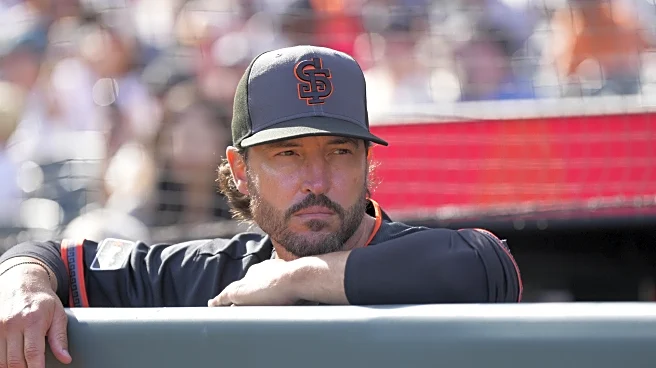
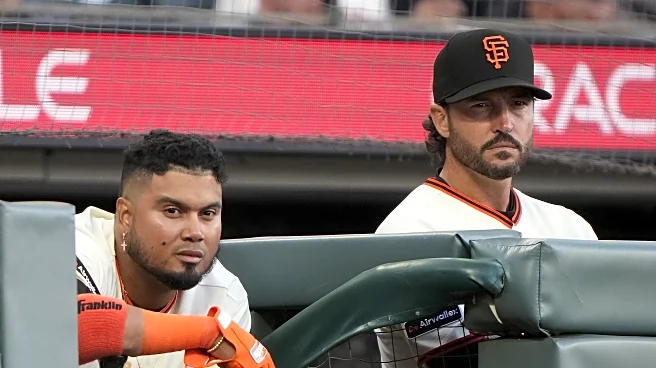
Not only will we be watching how he deploys his bench, we’ll see how he manages a pitching staff across a 4-game series. Now, the front office determines a lot of the pitching plan, of course, but he’s going to become familiar with the Mets by the end of the series and he’ll be far enough along with this roster that the repetitive nature of a 4-gamer might make him comfortable enough to do something distinctly Tony.
Don’t worry. I’m thinking of ways to improve this section.
Prediction time
The Giants will manage to avoid a sweep.