





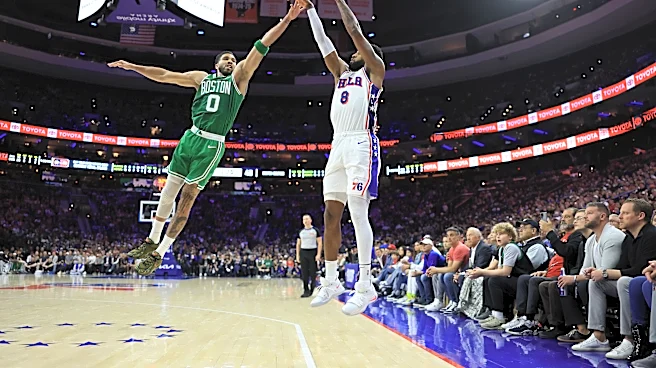
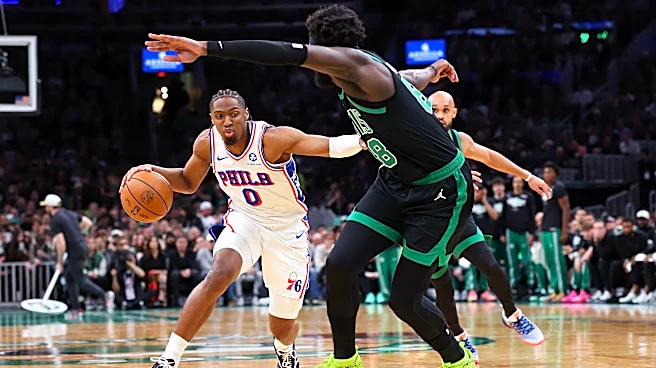
BOSTON – On Sunday night, the Celtics were on top of the world, holding a 3-1 series lead over their rival Philadelphia 76ers, equipped with a fully healthy roster and on the heels of a spectacular 56-win regular season.
Fresh off a 32-point offensive masterpiece, Payton Pritchard sat at the podium and reflected on the biggest game of his playoff career.
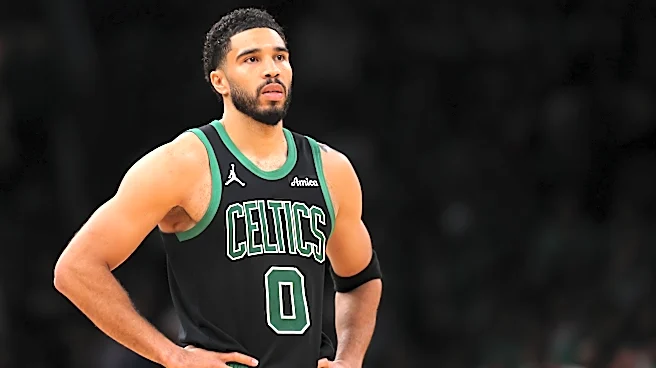
Jayson Tatum and Jaylen Brown had just finished their 119th playoff game as teammates.
Jordan Walsh was emerging as one of the best defensive stoppers
of the playoffs.
In the locker room after the game, Brown randomly dubbed Baylor Scheierman “Big Shot Bob” with a smile.
The vibes, as the kids say, were high. And, the Celtics seemed to be at the beginning of what felt like an inevitably long playoff journey.
Instead, they never won another game. Six days later, the season is over.
At the Celtics locker room at TD Garden, Brown stares straight ahead. The players are silent. Tatum is in street clothes. Derrick White is fighting tears.
How did it all go to flames in the blink of an eye?
The big-picture, non-technical answer is: sports. The unpredictability of basketball is what makes it great. It’s what keeps us watching. It’s also what makes the heartbreak so sudden.
The same Orlando Magic team that lost to the Celtics’ bench unit came out and assumed a 3-1 series lead over the Detroit Pistons a few weeks later. And, just a few days after that, that same Magic team scored a stunning 19 points in the entire second half of their Game 6.
The Celtics were, and are, aware of that unpredictability.
After they took a 1-0 lead in the Philly series, Joe Mazzulla’s media availability was filled with questions about how great a job he’d done this season, about his incoming Coach of the Year award.
He, as he’s done all year, deflected the praise.
“This could all change 24 hours from now, to where we’re having different conversations,” Mazzulla said. “So it’s part of just the perspective of being rooted in something, regardless of the environment around you on a 24-hour cycle.”
Unfortunately for him, those words aged well: the Celtics’ season, a season that was as special as it was unexpected, is over.
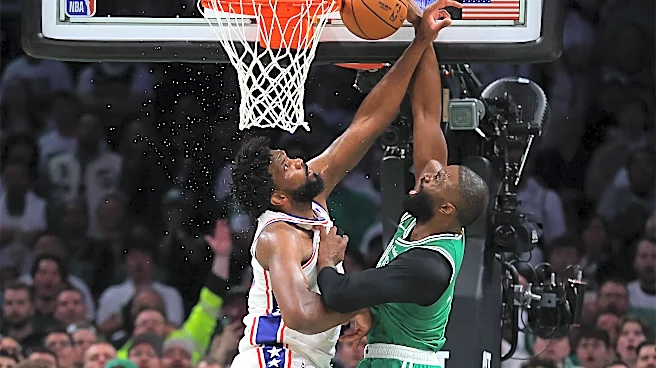
The bleeding began last Tuesday night, when the Celtics got crushed in the second half of Game 5, and missed 14 straight field goals to lose the game. A 13-point third-quarter lead turned into a blowout loss.
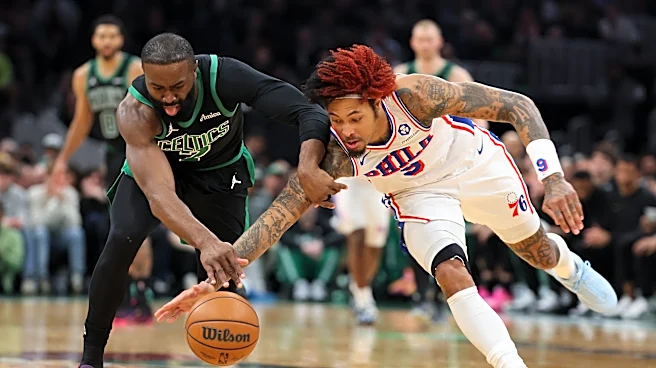
In Game 6, they were outworked in front of a raucous 76ers crowd that brought back the “We Got Boston” chants.
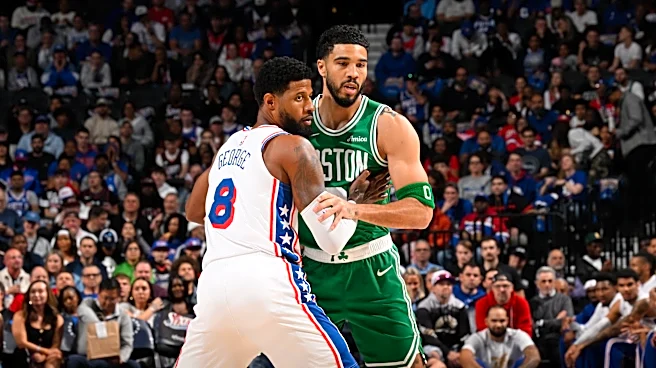
And in Game 7, all the mileage had begun to catch up to Tatum. After missing the last 15 minutes of Game 6, he was a late add to the injury report on Saturday, with left knee tightness.
Two hours before tip-off, he was ruled out.
“He came in today with knee discomfort,” Mazzulla said. “We made the decision for him.”
Mazzulla made the decision to bench two starters — Neemias Queta and Sam Hauser – in favor of Ron Harper Jr. and Luka Garza. Neither guy ended up playing significant minutes — Harper Jr. played 4 minutes, and Garza played 9 — but that stunning decision set the tone for what ultimately ended up being a wild Game 7.
The Celtics trailed by as many as 15 in the first quarter and by as many as 18 in the fourth, but each time, they clawed their way back into the game, ultimately cutting the deficit to 1 with two minutes to spare.
But, just like in Game 5, they went cold. For the final 5 minutes of the game — until a meaningless Pritchard layup in the waning seconds — they missed 10 straight field goals.
Game 7, however, was in many ways different. The Celtics went 10 guys deep, relying on 13 first-half Hugo Gonzalez minutes.
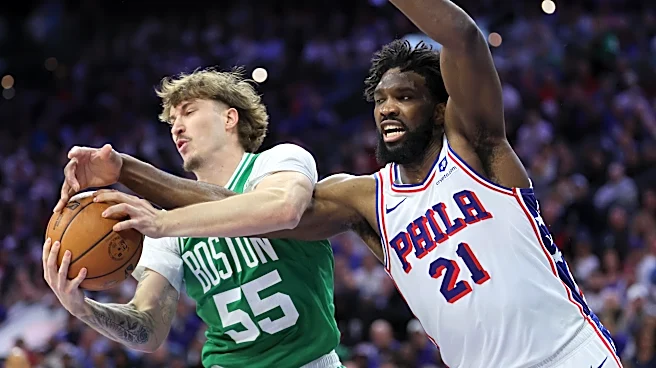
For the first time since Game 1, they recorded fewer turnovers than their opponents. They were undoubtedly the harder-playing team. Neemias Queta, who struggled through the series’ first six games, put together a masterful performance, tallying 17 points on 7-8 shooting.
Brown wished that the Celtics had played that frenetic pace all series, before Game 7.
“Tonight, I wish we played that style and trusted that style more even throughout the playoffs,” Brown said. “Even through wins and through losses. Obviously, it’s not always the easiest decision, but I wish that style for our team was how we empowered the rest of our group, and you saw tonight how everybody came out, and they played their tail off. I wish we trusted that more.”
Still, the season ended in heartbreak.
How does one make sense of that?
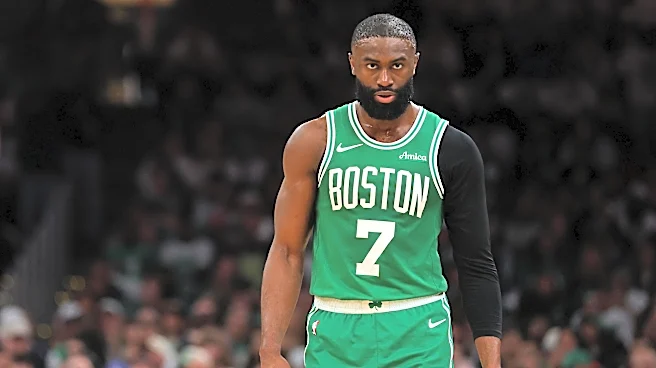
At the podium, Jaylen Brown was filled with gratitude.
“I’m so grateful to be with this group,” he said. “This group is awesome. I had a fun year. This is probably one of my most fun years playing basketball. It wasn’t always perfect. It wasn’t always analytically or aesthetically pleasing.”
“But we won a lot of basketball games, and people could see grit and the fight that we played with every single night. Tonight was an example of that. We left it all out there, we played a rookie, we played whatever, and we scrapped all the way to the end. Just came up a couple plays short.”
For Payton Pritchard, the perspective was about the big picture, about how the 2025-2026 season could be used as a building block.
He pointed to the individual development that took place.
“Just because you don’t win a championship one year, doesn’t mean it didn’t build for the next championship,” Pritchard said. “So, when we won Banner 18, four years before that, we lost four straight — lost to Miami, lost in the finals. So those might have been disappointing years, but maybe those led to the championship. So, that’s how I look at it.”
It’s difficult to immediately make sense of the fact that a season that had so many beautiful highs ended with sudden devastation.
But, as White exited the floor with a towel over his head, it was hard to believe that less than a week ago, the Celtics were returning to Boston with a 3-1 lead, seemingly on top of the world.
Sports.