



This is the time of year when fans are desperate to figure out which players have the best chance of improving their teams, and for Bears fans, it’s easy to focus on the anemic pass rush that the team has suffered from over the last few years. The defense has not generated pressure. However, figuring out who Ryan Poles should target, especially in an off-year with a low overall draft priority, can be difficult.
Methodology
First, the goal was to look at new players, different from those already evaluated in the Draft
Codex. However, I also wanted to be able to measure the initial impact of these players without limiting myself to a single year’s performance. Therefore, the population for this group is all edge defenders drafted in the first three rounds of the 2021-2024 NFL Drafts, and they will be compared using their first two years in the league. However, it seemed best to exclude Marshawn Kneeland from this dataset, as it would be incomplete for reasons outside of the context of football. This left me with a pool of 56 players.
Secondly, any time players are going to be evaluated, there needs to be the question of what criteria will be used in that evaluation. Since the inception of the Draft Codex, I have been using the concept of Defensive Victory on Down as a measure of defensive success. Put simply, it credits a player for every pass breakup, every sack, and every tackle for a loss–every time that player was responsible for the defense cleanly “winning” the down. However, it is not a completely inclusive statistic. As a cross-check, I reflexively grabbed the “pressures” recorded by these players in their first two years, figuring that typically edge defenders are valued when they pressure the quarterback. Interestingly, though, when that figure is compared to the pressures recorded by the players in the pool, there is a 0.85 correlation.
Then, I pulled everything that might make a difference that was public information available for most of these athletes. Combine performances (sometimes supplemented by Pro Day performances), RAS scores, college statistics, and the Big Board rankings of Daniel Jeremiah and Pro Football Focus. I picked Jeremiah because every prior time I have evaluated a draft class compared to performance, he has been the best. I picked PFF because I often find that they have a high rate of disagreement with other boards and despite frequently being the least-aligned with the league itself in their boards, fans tend to value what they have to say. I also used the Consensus Board as a cross-check on both.
What Doesn’t Matter
No individual combine drill actually matters. Only around a third of the pool completed the 3-cone and the shuttle. The 40-yard dash is so poorly correlated with pressures and DVDs that it is basically background noise. At that, the 40-yard dash is still better than the bench, the vertical jump, or the broad jump. This confirms longstanding research in the field that most combine drills do not have value as individual markers. In the interest of transparency, prior to the measure falling out of favor among the athletes themselves, there was a growing belief that 3-cone could be a measure of value, but I had no reasonable way of assessing this.
Isolating the single best year of sack production in college is a better indicator than total sacks, but even that isn’t all that meaningful. Nor is there a cutoff for sacks, as the third-lowest sack producer in the group is Micah Parsons, who ties with Odafe Oweh (who is in the top 10% of pressures generated).
What almost matters
If a player qualifies for a RAS score and if that score is compared to pressures, there is a moderate correlation (0.42 for people who care) between the two (and also between RAS and DVDs). So, RAS is not meaningless, but it certainly should be taken with a rather large grain of salt. The highest RAS score was actually 32nd out of 50 in pressures and only four of the top ten pressure scores were recorded by those with RAS scores in the top ten. The 13th highest pressure score was recorded by the 7th-lowest RAS score. Someone desperate to find cutoffs could say that a RAS lower than 7.5 was probably concerning and that once a RAS reaches around 9.0 there is unlikely to be much difference, but even that strong of a conclusion would be overreading the available data.
Likewise, a moderate correlation can be built between the best year of college performance in total stops (DVDs) and the total stops produced in the first two years in the pros. If players from non-P5 schools are “corrected” by halving their totals, then the correlation between these two numbers is 0.50. This composite number is more aligned with total stops and pressures than individual measures like college sacks or college tackles, but all it really tells us is that there is a decent chance that a player who is generally impactful in college will likely be generally impactful in the NFL. That doesn’t seem like a sentence that needs a spreadsheet to back it up.
Notably, Adjusted College DVDs are still below the level of alignment found between these players’ relative ranks on PFF big boards and their pressures produced over their first two seasons (0.53). This suggests that having individuals who assess these players in context remains one of the most effective ways for casual fans to understand prospects. This makes sense, as the boards were certainly constructed based on multiple factors. Of note, though, PFF had at least two clear misses where the top ten producers were ranked rather low on their boards and also two times where their top prospects were near the bottom of the entire pool. This is consistent with previous tests I’ve done, wherein if PFF is an outlier to other systems, it is likely PFF that is in error.
Of all two-factor checks I explored, the strongest came from combining adjusted DVDs (as mentioned above) and RAS, which had a 0.54 correlation with pressures. Note, however, that this sort of correlation simply shows very broad and general relationships. There is not a clear cutoff score in either direction.
What Matters
Experts matter, especially if they are not Pro Football Focus. The relative ranks on the Consensus Board have a 0.60 correlation with the pressures generated in the first two years, which is typically considered the cutoff point for a strong relationship between two factors. This is impressive, and it suggests that if a casual fan were to want to rely on a single source to evaluate edge prospects, the Consensus Board is not a bad way to go. However, there is a better option remaining.
Daniel Jeremiah. His relative annual board ranks have a 0.63 correlation with the pressures generated by edge rushers in their first two years. That is not only the strongest single measure I found, it is stronger than any two-factor measure I was able to test. Adding RAS actually decreases the correlation slightly. The only way I was able to beat Jeremiah’s relative ranking by itself was by combining his relative ranking and the players’ best year of college stops–which has a 0.64 correlation with the players’ total tackles for a loss in their first two years in the NFL, but not other professional production.
Jeremiah had 16 of the best 18 performers in his Top 50 each year, and the two he missed were Byron Young and Tuli Tuipolo. Likewise, in three of the four years, all of Jeremiah’s four top edge rushers ended up being a top five pressure-producer. The only “off” year was 2023, which so far has stymied other measures just as much.
Where Do Indicators Go Wrong?
Imagine for the moment that it was somehow possible to create an even better Daniel Jeremiah. Perhaps a Super Scout serum or the equivalent thereof. That scout would still get a few wrong, because even perfect prospects can falter due to bad situations and bad coaching (on offense, Shane Waldron had this effect on both Jaxon Smith-Njiba and Caleb Williams on two different teams, for example). That doesn’t even include factors like injuries and life events. On the flip side, prospects with hidden potential can fall into better circumstances or overcome personal challenges to reinvent themselves (Maxx Crosby comes to mind).
This exact problem is compounded with more narrow factors such as RAS, where what is being measured is relative athleticism. When compared to other top athletes, the differences that can be parsed out with a stopwatch or tape measure are likely to be far less meaningful than what an experienced evaluator can tease out of the player’s actual onfield performance. When something like RAS is instead reduced to its components (like 40-time), then the difference is actually close to meaningless.
In short, fans who want to know how to assess prospects should listen to those with professional experience and probably study the players themselves–not highlight reels, which take performances out of context, but multiple games worth of successes and failures. Jeremiah is elite, but even “weak” evaluators are going to be more valuable than simply scouting box scores and reading combine results.
What Does This Mean for 2026?
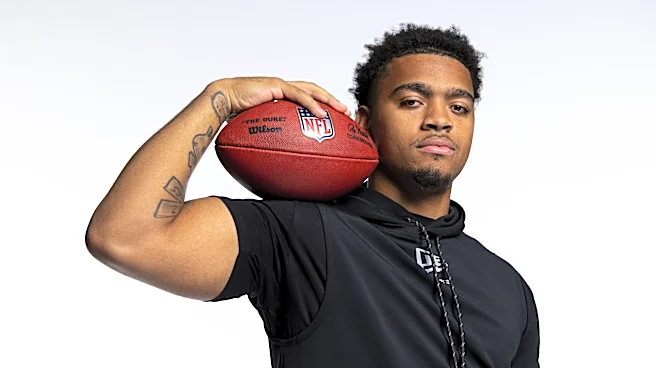
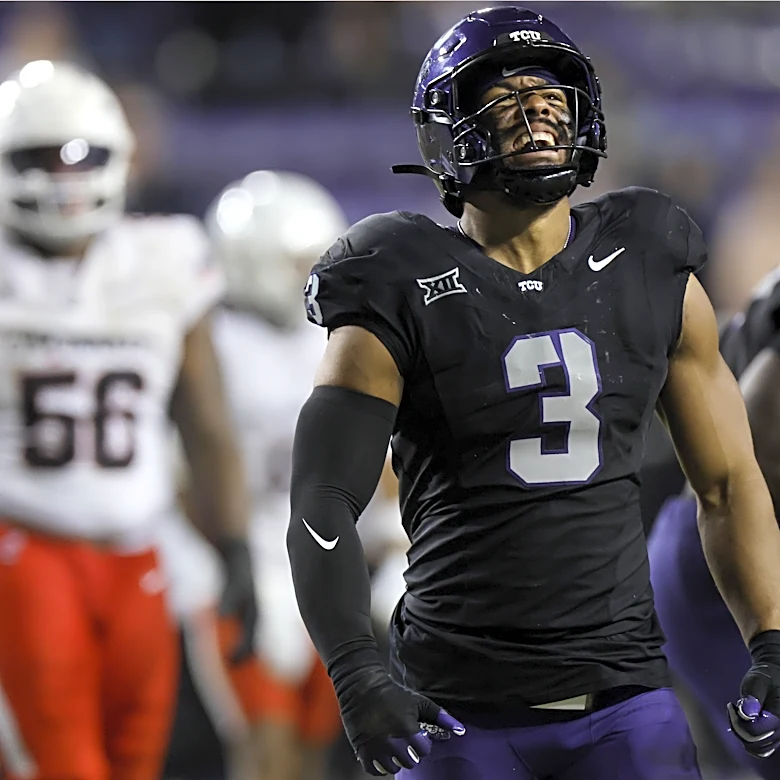
Of prospects who have strong rankings from the Consensus Board and from Daniel Jeremiah, while also having strong “best year” adjusted DVDs, there are multiple standout candidates who might be in range for Chicago. Akheem Mesidor, despite his age, is in Jeremiah’s Top 25 and posted 21.5 stops back in 2022, well before that figure can be attributed to his increased physical development. That number exceeds the best single-year performance of Keldric Faulk, who Jeremiah ranks eight overall spots lower. Perhaps most importantly, the edge defender between those two players, TJ Parker, has 31.5 college stops in 2024 and is within Jeremiah’s Top 25. The five players in the studied population who match him in these regards are Will Anderson, Tuli Tuipulotu, Laiatu Latu, Gregory Rousseau, and Aidan Hutchinson—that’s not bad company.