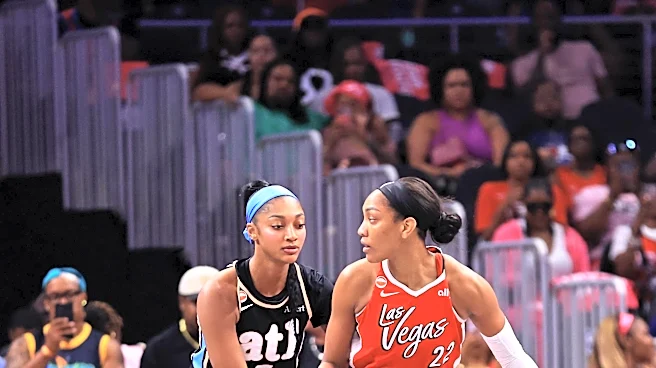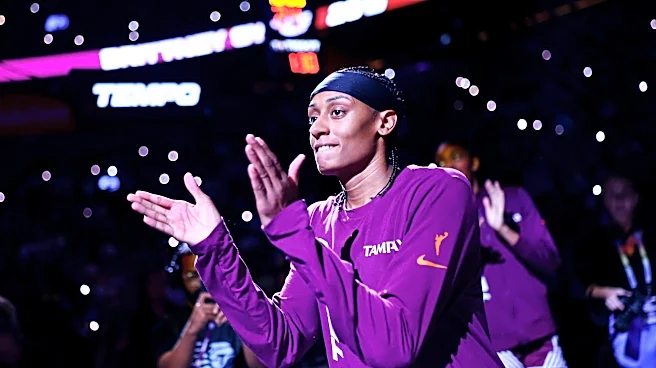



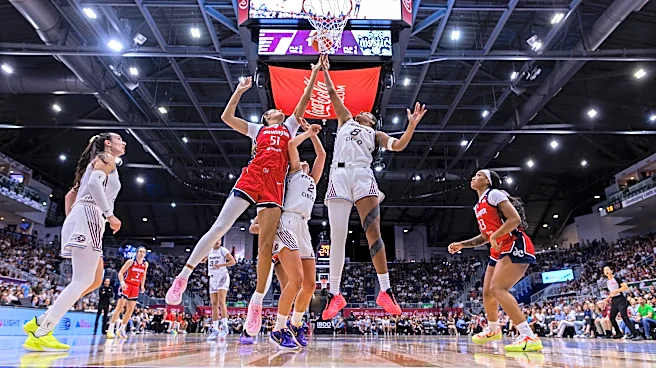
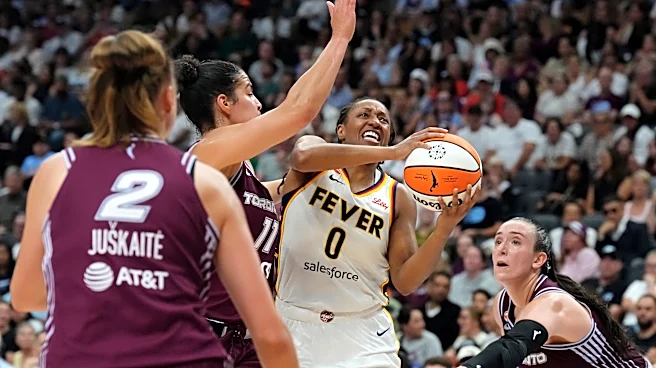
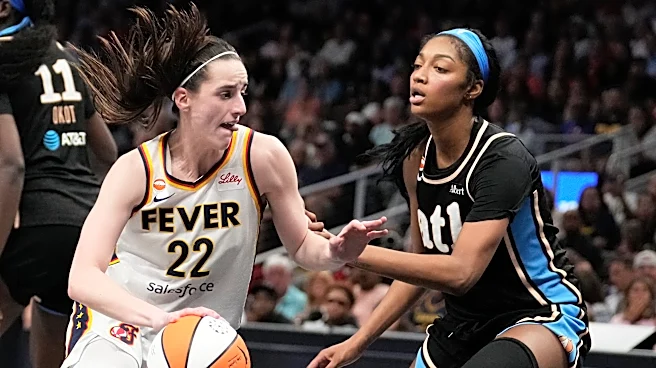
The Toronto Tempo skid into Vancouver on a 12-game losing streak, now 15 games under .500 and officially eliminated from playoff contention.
Their expansion opponent on Friday night (10 p.m. ET, ION), the Portland Fire, are holding steady in the No. 9 spot in the WNBA standings, a respectable five games under .500.
Of the 2026 expansion teams, Portland, clearly, is the greater success, right? That Toronto is falling
far short of the postseason ambitions they loudly announced, whereas Portland expressed no such bold intentions, only underscores that the Fire are the expansion “winners.”
I might have to disagree with that seemingly obvious assessment.
Entering the season, I was skeptical of the Tempo’s approach. I thought they overspent on their million-dollar backcourt of Marina Mabrey and Brittney Sykes, too eagerly investing in the imagined superstar potential of two players who had been inconsistent offensive options during their WNBA careers.
Marina, Slim and the Tempo proved me wrong.
Mabrey has proven to be the perfect star for Canada’s first WNBA team, something Zack Ward presciently foresaw. She was a surefire All-Star, having authored the most memorable single-game performance of the 2026 season when she ignited for a record-tying 53 points. Sykes was on track to join Mabrey in Chicago if not for a foot injury that robbed her of a second-straight All-Star nod.
Sykes’ injury, from which she just returned two games ago after missing 18 games, was the pivot point for Toronto. One game under .500 with Slim, Toronto has tanked since then, increasingly unable to overcome accumulating injuries.
However, the Mabrey-Sykes backcourt, in addition to the ready-to-go rookie Kiki Rice, have provided enough of a proof of concept for Toronto.
No, it’s no the best backcourt in the league, but it’s good enough, with better health and an improved supporting cast, to become the foundation for a genuine playoff contender. Had Sykes stayed healthy, it’s easy to imagine the Tempo hanging around the edges of the playoff race, encouraging them to make a more aggressive frontcourt upgrade at the trade deadline.
Now, that roster refurbishment can happen in the offseason. And if the lottery gods bless the Tempo with the No. 1 overall pick in the 2027 WNBA Draft, Toronto could be quite dangerous.
Even if that optimistic outcome doesn’t materialize, I still have to admit to being too skeptical of Toronto’s plan. Going for it out of the gate with a pair of star-caliber guards has the Tempo prepared to be competitive in today’s WNBA, where things often change fast.
So, while I’m inclined to support the processes implemented in Portland, where, instead of chasing an immediate postseason high, they were intent upon building a program that, eventually, would produce a consistent winner, I do wonder if slow and steady actually wins the race.
In modern sports, it’s seen as “smart” to value process over results, but teams, from executives to coaches to players, are judged on results.
The Fire likely will continue to garner praise (including from these parts) for their emphasis on player development, head coach Alex Sarama’s innovative coaching strategies and a commitment to culture. Yet, all that good process might just result in them remaining a plucky, hard-playing team that never advances into a playoff threat that has to be taken seriously. Adding a star-level player or two, the prerequisite for true postseason success, could change the calculation for Portland, although it would also be a deviation from the organization’s prevailing approach.
Presuming the Fire do not make a late-breaking playoff push this season, I would predict that the Tempo, not the Fire, become the first team of the expansion class of 2026 to make the playoffs.
That, in turn, makes them expansion “winners,” even if the Tempo, without Mabrey (adductor), Nyara Sabally (calf) and María Conde (calf), lose for a 13th-straight time on Friday night. (Introducing a pair of mascots also gives them some bonus credit.)
How would you assess the two expansion teams?
Do you see the ideal vision, confirmed by a playoff berth, coming together first in Toronto or Portland? In today’s WNBA, should all teams just go for it, with winning now prioritized over everything? Can a more measured team build actually come to fruition when things seem to change so fast and frequently?