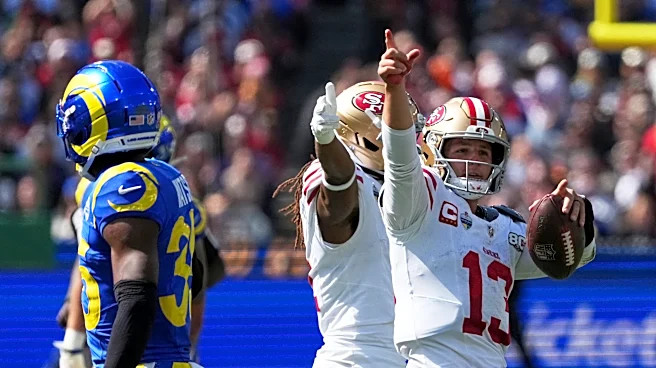


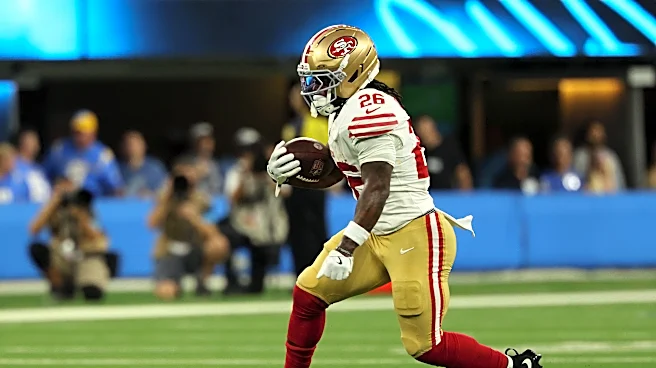
The YAC bros are so 2020. That’s a thing of the past. The San Francisco 49ers had the Rams chasing their tails in Week 1 against the Los Angeles Rams because of their overdose of “dash” motion, when a player is still going in motion at the snap.
The 49ers offense featured motion at the snap on 65.6% of plays against the Rams, their highest rate in a game in the Kyle Shanahan era. Kyle Juszczyk was in motion at the snap on over half of snaps (17 of 33). No other 49ers player had more than five such
snaps.
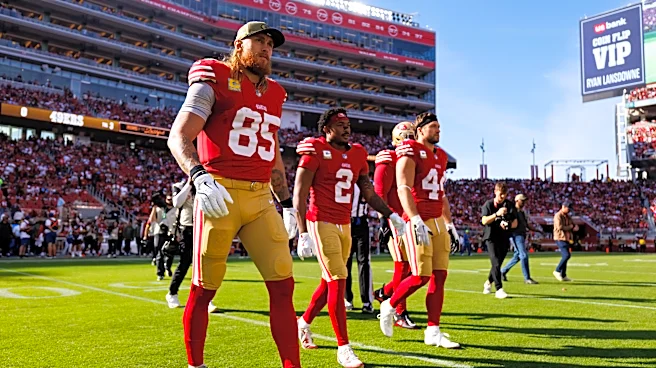
The player closest to Juszczyk was George Kittle. On Thursday, Kittle coined the nickname “Dash Bros.” He said, They’re not my favorite, but they’re very effective. So I just put my pride aside and just do them. I just don’t like cutting and running that much. I like lining up and hitting people in the face. That’s kind of what I do.”
There are several advantages to using motion at the snap. Football is a numbers game. Whenever the 49ers used dash motion, they were either +1 or +2 from a blocking perspective to the side of the ball they ran it to. So it’s no surprise the Niners averaged over six yards per carry on runs with motion in Week 1.
Another advantage that showed as the game went on was that you never know where the person in motion will insert as a blocker. Juszczyk blocked the backside defensive end several times. The change-up came in the third quarter.
After 2.5 quarters of Juszczyk working to the other side of the formation, which caused everybody from the edge defenders to the linebackers to overadjust, Juszczyk ran back-to-back plays late in the third quarter where he went in dash motion into the backfield, only to return to the side he started.
That allowed Deebo Samuel to block the defensive end twice. It gave the right side of the offensive line the angles they needed to secure their blocks. Shanahan’s play-calling sequencing was superb.
That’s because everything looked the same. The 49ers ran inside zone about 27% of the time, compared to outside zone roughly 37%. They sprinkled in enough man concepts (16.7%) to keep the defense off balance. The execution provided better results than essentially any game from a year ago:
Counter: 1 carry, 4 yards → 4.0 YPC — 0% success rate
Outside Zone: 11 carries, 67 yards → 6.09 YPC — 60% success rate
Man: 5 carries, 33 yards → 6.6 YPC — 54.55% success rate
Inside Zone: 7 carries, 29 yards → 4.14 YPC — 42.86% success rate
Even into the fourth quarter, with the dash motion, Juszczyk still hadn’t inserted up the middle to block a linebacker. Sure enough, that’s what he did, leading to a seven-yard gain for Christian McCaffrey.
So Juszczyk went in motion all game, but with multiple insert points, it forced the Rams to hesitate, so much so that they blocked themselves. It’s part of why the 49ers’ running backs averaged 2.79 yards before contact — the highest stat in Week 1.
Generating yards before contact was one of the biggest issues for the 49ers’ run game in 2025. They were 29th in the NFL, at 0.93. So Week 1 was quite the jump in production for the offensive line. Part of that goes to the motion, but you can’t ignore how dominant the offensive line performed.
Dominick Puni no longer playing on one leg helps. Having a Hall of Fame left tackle doesn’t hurt. Jake Brendel and Connor Colby exceeded expectations, while Colton McKivitz looked like his usual self as a run blocker.
The biggest surprise may have been Luke Farrell. After an inconsistent season in 2025, Farrell looked comfortable executing the blocks he was tasked with, and they were not easy. We know what Kittle is capable of, but if Farrell can play as he did in Week 1 for the rest of the season, the 49ers’ running game should look more like 2023 than it did in the previous two seasons.
One thing we can bank on: The Dash Bros are here to stay.