



The Los Angeles Rams changed the NFC West arms race the moment they acquired Myles Garrett.
Whether the move ultimately results in a Super Bowl or not, the message was impossible to miss. Los Angeles believes its championship window is open right now and was willing to spend premium assets to maximize it.
Naturally, that raises an interesting question in Seattle.
How should the Seattle Seahawks respond?
The answer probably isn’t panic. John Schneider has spent the last several years building one of the deepest
and youngest rosters in the conference. Seattle possesses extra draft capital, financial flexibility and a coaching staff entering it on more season together. The Seahawks do not need to make a move simply because the Rams did.
At the same time, Schneider has never been the type of executive to sit back and watch a division rival aggressively improve without considering his own options.
That doesn’t necessarily mean Seattle needs a blockbuster trade.
But it would be surprising if the Seahawks reached the trade deadline without adding at least one veteran contributor. It also wouldn’t be shocking if another move occurred before the regular season begins, particularly as teams finalize their 53-man rosters and unexpected names become available.
If the Rams have made their all-in bet on Garrett, these are some of the players who could represent Seattle’s version of a counterpunch.
EDGE Maxx Crosby, Las Vegas Raiders
If Seattle wanted to answer the Garrett trade directly, there is no bigger swing than Maxx Crosby.
The Seahawks already possess one of the league’s deepest defensive fronts. Adding Crosby would not be about fixing a weakness. It would be about creating a unit capable of overwhelming opposing offensive lines every single week.
More importantly, this isn’t a hypothetical connection. Schneider has reportedly explored Crosby trades before, and few general managers have shown more persistence when pursuing players they genuinely covet.
The circumstances surrounding Crosby could also work in Seattle’s favor.
Before concerns regarding his health complicated matters, Baltimore had a massive trade package for the veteran pass rusher. Even if Crosby proves healthy throughout training camp and the regular season, it feels unlikely Las Vegas would receive the same return the Ravens were once prepared to pay.
That distinction matters.
A year ago, acquiring Crosby may have required multiple first-round selections. Now, a package centered around a first-round pick plus additional Day 2 compensation feels far more realistic. Expensive? Absolutely. But no longer franchise-altering from a draft capital perspective.
The fit in Mike Macdonald’s defense is obvious.
Pairing Crosby with Leonard Williams, Byron Murphy II and DeMarcus Lawrence would give Seattle arguably the most intimidating defensive front in the NFC. Offensive coordinators would spend entire weeks trying to determine where protection should slide, only to realize there is no correct answer.
The contract is the bigger challenge. Crosby would likely seek an extension placing him near the top of the EDGE market, potentially exceeding $40 million annually.
Still, if Seattle believes its championship window is opening, few players could impact that pursuit more dramatically.
EDGE T.J. Watt, Pittsburgh Steelers
A year ago, the idea of T.J. Watt becoming available would have sounded absurd.
Today, it might not be quite as impossible.
The biggest reason is Nick Herbig. Pittsburgh recently committed to the young pass rusher with a contract extension, reinforcing the belief that he will be a major part of the franchise’s future. While that doesn’t automatically place Watt on the trade block, it does give the Steelers more flexibility than they have had in previous years when discussing the long-term outlook of their edge room.
Watt remains one of the most accomplished defenders of his generation. He is a former Defensive Player of the Year, an eight-time Pro Bowler, a four-time First Team All-Pro and the Steelers’ all-time sack leader. Few defenders over the last decade have impacted games more consistently.
At the same time, there are reasons Pittsburgh could eventually consider difficult conversations.
Watt is now in his thirties, his sack production has declined from the peak years of his career and durability has become a growing concern after multiple injury-related absences over the last several seasons. The Steelers also signed him to a massive extension that runs through 2028, meaning any decision regarding his future would have significant financial implications.
That is where Herbig enters the equation.
If Pittsburgh believes Herbig is ready to become a featured pass rusher alongside the rest of its young defensive core, moving Watt for premium draft capital could become a much more realistic discussion than many would have imagined a year ago.
For Seattle, the appeal is obvious.
Even after a relatively down season by his standards, Watt remains one of the NFL’s most disruptive defenders. His ability to generate pressure, force fumbles and create game-changing plays would fit perfectly within Mike Macdonald’s aggressive defensive philosophy.
The contract is substantial, but Seattle has more financial flexibility than most contenders and possesses the draft capital necessary to enter serious negotiations.
The compensation would likely begin with a first-round pick and additional assets, although Watt’s age and contract situation would prevent the price from reaching the level typically associated with younger elite pass rushers.
Whether Pittsburgh ever seriously entertains the idea remains to be seen.
But if the Steelers fall out of contention and decide to build around their younger core, Nick Herbig’s emergence could make T.J. Watt one of the most fascinating trade candidates in football.
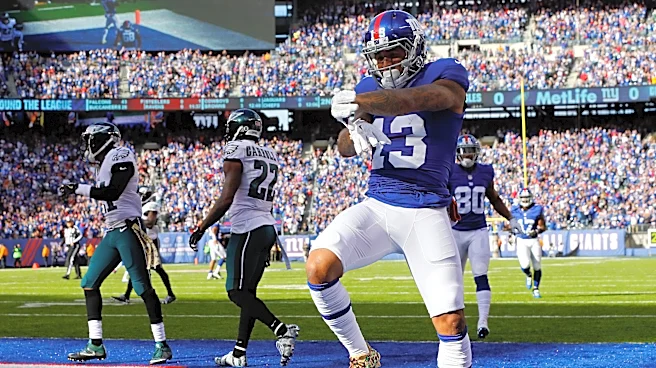
EDGE Kayvon Thibodeaux, New York Giants
Not every response to Garrett needs to involve another superstar.
Kayvon Thibodeaux represents a different path.
The former fifth overall pick remains one of the most physically gifted young pass rushers in football, but circumstances in New York have changed significantly. Brian Burns and Abdul Carter have become central pieces of the Giants’ future, leaving Thibodeaux in a somewhat unusual position for a former top-five selection.
The Giants reportedly value him highly, meaning Seattle wouldn’t be buying low.
Unlike Crosby, Thibodeaux should be entering the prime years of his career. Seattle would be betting on untapped upside rather than paying premium prices for established production. Macdonald has consistently demonstrated an ability to maximize versatile pass rushers, and Thibodeaux possesses the length, explosiveness and athletic profile that defensive coaches love working with.
The risk is that Seattle would be paying for potential.
The reward is potentially acquiring a cornerstone defender for the next five years.
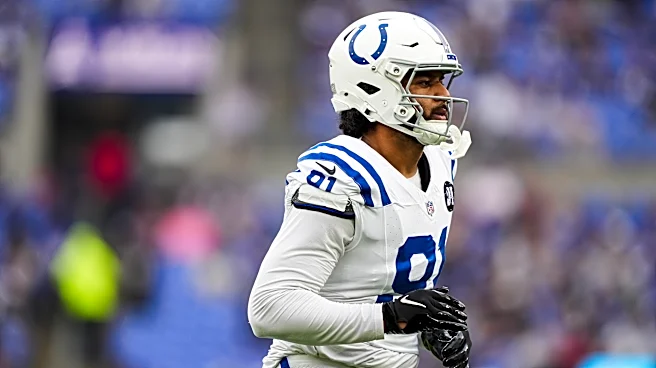
G Quenton Nelson, Indianapolis Colts
Perhaps the smartest response to Garrett isn’t another pass rusher at all.
Maybe it’s finding a way to block him.
That is what makes Quenton Nelson such an intriguing possibility.
For years, Seattle searched for answers along the offensive line. Now the Seahawks finally have a promising foundation. Charles Cross and Abe Lucas have developed into one of the better tackle pairings in the conference, while Grey Zabel projects as a long-term building block inside.
Adding Nelson can fix the weakest point on our OL.
With Brian Fleury taking over as offensive coordinator, the expectation is that Seattle will continue emphasizing physical football, a strong rushing attack and efficient play-action concepts. Sam Darnold’s success will also depend heavily on avoiding interior pressure, one of the quickest ways to derail any offense.
Nelson improves all of those areas.
Unlike Crosby, the trade compensation probably wouldn’t reach blockbuster territory. Guards simply do not command the same type of return as elite pass rushers.
That doesn’t mean he would come cheap.
A second-round pick plus additional assets feels like a realistic starting point, especially if Indianapolis decides it cannot justify another massive contract extension.
If Seattle enters the season believing it can compete with Philadelphia, Detroit and Los Angeles, adding a future Hall of Fame guard could be one of the most impactful moves available.
DT Kris Jenkins Jr., Cincinnati Bengals
Kris Jenkins Jr. might be the most realistic trade target on this list.
The Bengals have invested heavily along the defensive interior, creating a situation where Jenkins could struggle for snaps despite entering only his third NFL season.
Seattle would have several reasons to be interested.
The first is familiarity.
Mike Macdonald coached Jenkins during Michigan’s 2021 season and already knows exactly what type of player he would be acquiring. That familiarity eliminates much of the uncertainty normally associated with younger trade targets.
The second is projection.
Jenkins entered the NFL with a reputation as a high-floor run defender. He plays with excellent leverage, strong hands and the physical style Seattle values along the defensive front.
However, many evaluators believed his pass-rush upside exceeded his college production.
The traits remain there.
The Seahawks would not need Jenkins to become an immediate starter. Leonard Williams and Byron Murphy II already anchor the interior. Instead, Seattle could add another talented piece to the rotation and allow Macdonald’s staff to continue developing the pass-rush side of his game.
If the asking price falls somewhere in the Day 3 range, Jenkins feels exactly like the type of move Schneider loves making.
G Cesar Ruiz, New Orleans Saints
The former first-round pick has been inconsistent throughout his NFL career, but he remains a relatively young interior lineman with significant starting experience. If younger players emerge in New Orleans, the Saints could decide moving Ruiz is the best roster decision available.
For Seattle, the attraction would be straightforward.
The Seahawks have improved their offensive line dramatically, but the depth behind the starters remains largely unproven. Ruiz would create competition while also providing insurance against injuries.
The likely cost would be modest, perhaps a Day 3 pick.
For a team hoping to contend deep into January, those types of moves often matter more than fans realize.
EDGE James Houston, Dallas Cowboys
Every year, productive pass rushers become available simply because teams have too many of them.
James Houston could become one of those players.
Dallas has assembled considerable EDGE depth, and Houston may find himself fighting for snaps despite continuing to generate pressure whenever he gets opportunities.
Seattle already has a strong pass-rush rotation, but Macdonald has consistently emphasized depth across the defensive front.
Houston would not need to start. He would simply need to contribute as a situational pass rusher capable of creating pressure on obvious passing downs.
The likely cost would fall somewhere in the Day 3 range, making him one of the more affordable additions on this list.
CB Terrion Arnold, Detroit Lions
Terrion Arnold might be the most fascinating buy-low candidate available.
Part of the reason is historical.
Before the 2024 NFL Draft, Arnold was frequently connected to Seattle throughout the pre-draft process. His physical profile, competitiveness and versatility aligned perfectly with the type of cornerback the Seahawks have traditionally valued.
Detroit selected him before Seattle had the opportunity.
Two years later, Arnold’s development has not gone exactly as expected.
Injuries and inconsistency have prevented him from becoming the immediate impact player many envisioned coming out of Alabama. Yet the traits that made him a first-round pick have not disappeared. Far from it.
Arnold still possesses outstanding athletic ability, strong ball skills and the competitive mindset teams covet at cornerback.
From Seattle’s perspective, the attraction is obvious.
Macdonald has developed a reputation as one of the league’s best defensive teachers, and the Seahawks possess enough secondary depth to avoid rushing Arnold into a major role. He could develop naturally while learning within a defense built around versatility and disguise.
The biggest obstacle is Detroit’s asking price.
Former first-round corners rarely become available cheaply, and the Lions may still believe Arnold’s breakout season is coming.
If that belief changes, Seattle should absolutely make the call.
Final thoughts
The Rams have already made their move.
Now the rest of the NFC West must decide how to respond.
That response doesn’t necessarily need to involve matching Los Angeles headline for headline. Seattle’s roster is already talented. The goal should be finding additions that maximize the strengths already in place.
Maxx Crosby would be the direct answer to Garrett. Kayvon Thibodeaux offers a younger and potentially cheaper alternative. Quenton Nelson could help Seattle counter elite pass rushers by strengthening the offensive line. Kris Jenkins Jr., Cesar Ruiz and James Houston would improve depth in the trenches, while Terrion Arnold and represent intriguing developmental bet in the secondary.
The Seahawks don’t need a desperate reaction. But if Schneider believes one move can meaningfully improve Seattle’s chances of winning the NFC West, history suggests he won’t hesitate to pull the trigger.