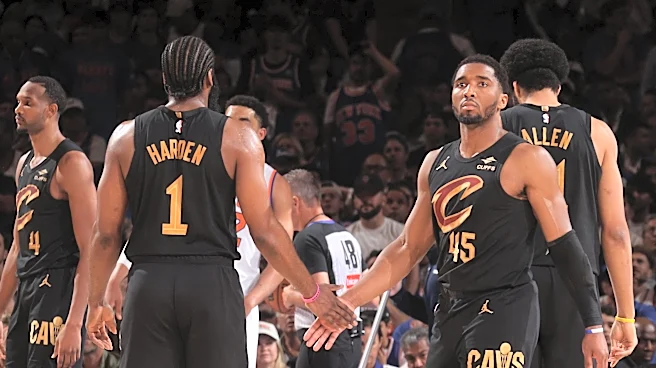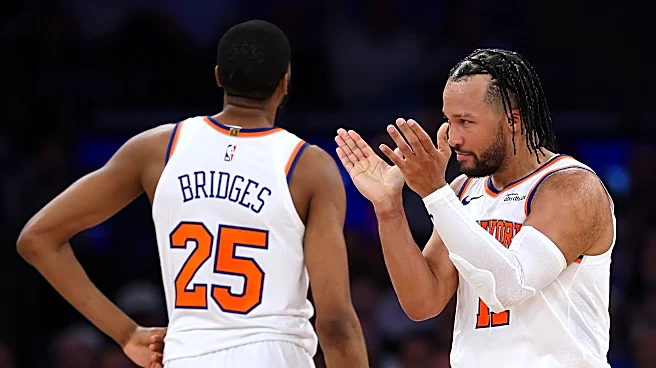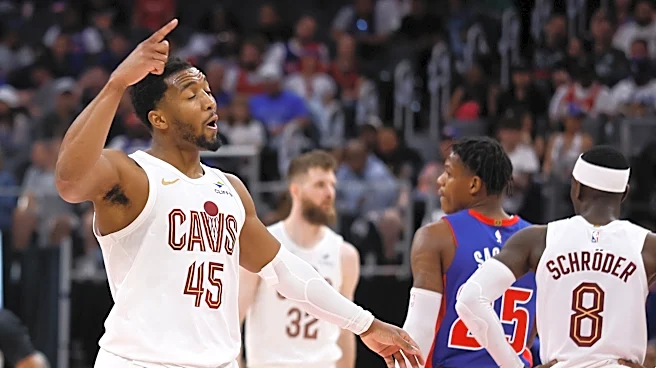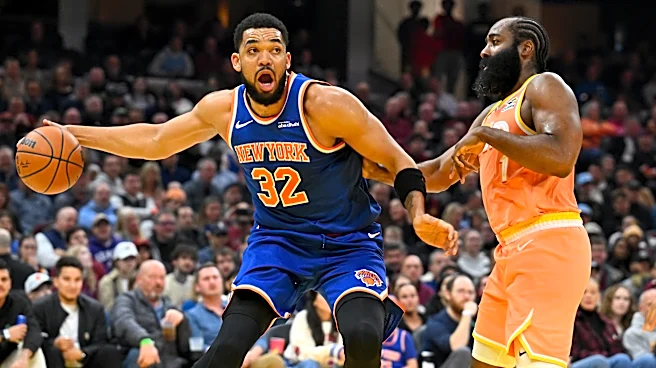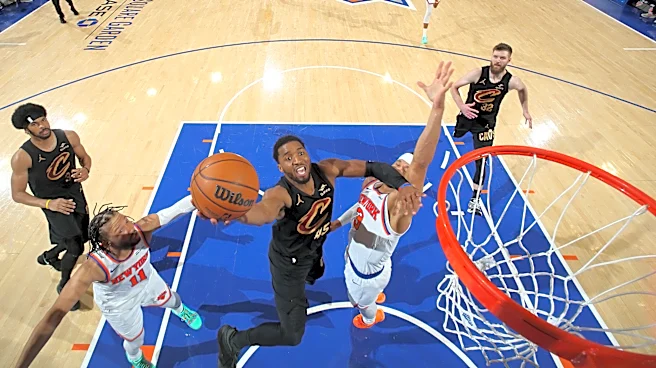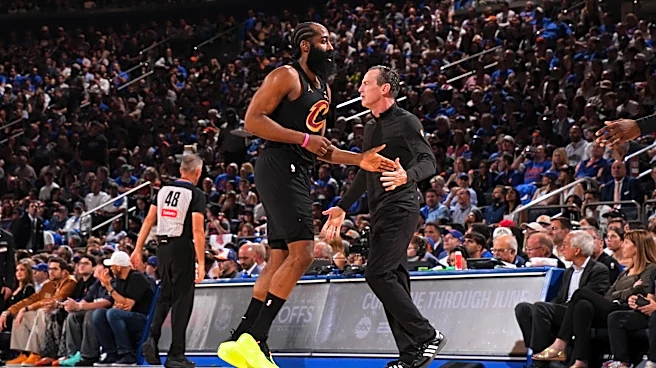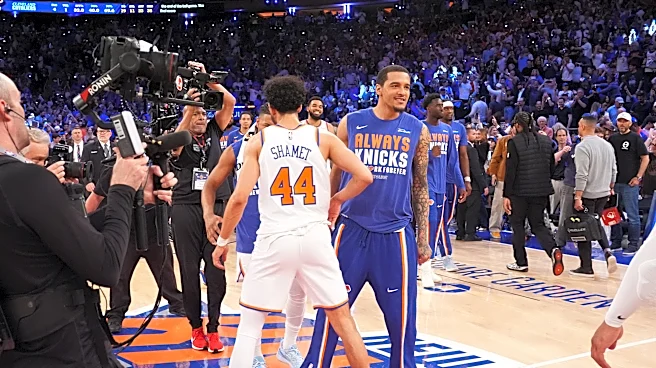






What. A. Game.
The Knicks were down 93-71 with 7:40 left in Tuesday’s series opener at Madison Square Garden. No matter how optimistic you are, this game was over.
At that moment in time, I was just trying to mentally move on to Game 2, the same way I did after that stunning loss to Indiana last year in Game 1. Splitting at home is not the end of the world, and regardless of how this game went, I knew that the Knicks were capable of picking themselves up and making the adjustments they needed to come
out firing on Thursday.
Well, I was right in my belief; it just happened two days sooner. It was the most unbelievable stretch of basketball I’ve ever watched in my entire life.
Jalen Brunson outscored an entire team by himself over the last 14 minutes of the game.
The Knicks, who have had some incredible runs and quarters in this playoff run, somehow topped themselves with a 44-11 run to end the game.
I don’t care if the average NBA fan might prefer the true avalanche of triples that willed the Pacers to a win in Game 1 last year. This game completely erased the stench of one of the most mortifying losses I’ve experienced as a sports fan. Regardless of what happens in this series and beyond, the Knicks got their getback from the utter humilation they experienced at the hands of Aaron Nesmith and Tyrese Haliburton.
But how did they do this? Was it as simple as finally making their threes and Cleveland cooling off? While, of course, a comeback of that caliber is impossible without certain things that don’t necessarily require schematic shifts, there were several things that the Knicks managed to pick up on during the game that helped them rally.
Even if they hadn’t come all the way back. Even if Sam Merrill’s in-and-out shot in the final seconds of regulation went in to let Cleveland escape with a win, these changes are something that they’ll absolutely be able to apply moving forward and do to prevent themselves from falling into such a large deficit in the first place.
No Longer Doubling The Ball
The adjustment that the Knicks made after falling behind 1-2 to the Atlanta Hawks four weeks ago was pretty straightforward.
We’re not going to let CJ McCollum beat us. Blitz every screen, show every action, make him make a play.
It worked to a tremendous degree, so they applied it again to Tyrese Maxey in the next series.
It worked again, so they decided to stick with it against a turnover-prone James Harden to start this series.
In the first half, it did work. Harden was making bad decisions and the Cavs were missing the good looks they were getting when good ball movement left the Knicks helpless on a 4-on-3, but when Cleveland drained six of their last seven threes to end the half, the warts really started to show.
Out of the locker room, the Knicks kept at it, and the Cavs continued to beat it with excellent precision. You could tell it was their emphasis coming out of the locker room. If the Knicks’ offense didn’t heat up and Cleveland was able to abuse this defensive coverage, they had Game 1 in the bag.
Look at how Harden finds Jarrett Allen in the center of the court and collapses the defense. On every one of these possessions, there’s a shooter open. Dennis Schroder, Max Strus, and Sam Merrill, it didn’t matter. You had to choose one of them to leave open because of the 4-on-3 and they kept making you pay.
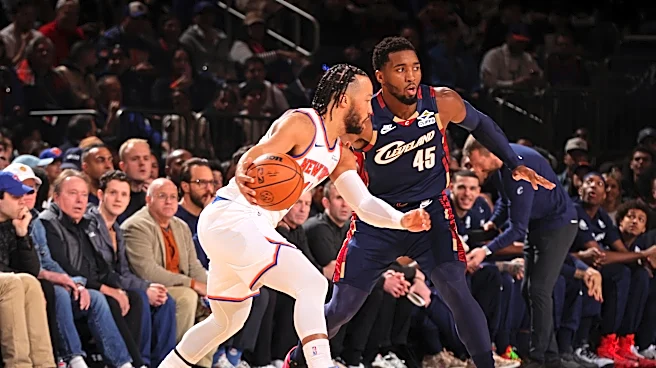
If it wasn’t an open three, it was an open layup. Hard closeouts on shooters led to driving lanes and cuts to the rim by Allen and Evan Mobley that the Knicks couldn’t stop. There were also times where Donovan Mitchell was just able to drive straight to the rim with ease.
No timeout effectively stopped the double-teaming, but after Merrill’s three-pointer with 3:05 left in the third quarter, the Knicks primarily switched their coverage to straight-up. The rest of the way, Cleveland scored just a grand total of 27 points in 20 minutes.
The only times I noticed the Knicks doubling the ball after that were on sporadic possessions, but also during Cleveland’s collapse. The blitzing worked in the first half when their offense was out of sorts, so returning to it when the sky is falling on them can work.
Ultimately, the Knicks cannot enter Game 2 thinking that Cleveland won’t abuse this coverage if attempted. I know it’s a scary proposition to deal with Harden or Mitchell 1-on-1, but it’s as rare as a blue moon when both of them are on their game at the same time, and we saw that again today. It’s enticing to try to force turnovers at half-court, but they have too much shooting to let them continue to exploit it.
Attacking James Harden
Through three quarters, I was pretty impressed watching how Harden was holding up defensively. After all, his reputation is certainly not the best on that end.
But a nearly 37-year-old man did not suddenly wake up and become good defensively, no matter if he has three inches and 30 pounds on Brunson. The final eight minutes of the first half were a schematic masterpiece for a Knicks offense that was abysmal in the first 40. The Cavs were voluntarily giving up a switch between Dean Wade and Harden and allowing Brunson to get to his spot repeatedly against the former MVP. Just watch this masterpiece.
OG Anunoby and Mikal Bridges repeatedly drew Wade away from the action to leave Harden on an island, and it wasn’t until the Knicks had come all the way back that they finally sent a double team with Merrill. By that time, Brunson was willing to give the ball up to OG Anunoby, who further opened up the offense with hard drives to the rim that opened up three-point looks for Landry Shamet and Mikal Bridges.
Give the Knicks enough time, and they’ll find your defensive weakness. They did it with Joel Embiid; they figured out how to do it with Harden. The Cavs will certainly adjust one way or another, but the game plan into Game 2 is clear: Let Jalen Brunson go to work against single coverage all day, every day.
Benching Josh Hart
I love Josh Hart. He’s an extremely important part of this team, both on and off the court. If the Knicks are going to end a 53-year long championship drought, their glue guy is going to be a massive part of it.
But sometimes, it’s not your series. It’s really early, but all of the data suggests that Hart might be out of place here. After all, if he’s not a willing shooter who’s able to somewhat consistently make shots, it freezes up the Knicks’ offense with the ghost coverage that opponents are able to play.
Hart was minus-23 in 31 minutes. The Knicks outscored the Cavaliers by 34 points in 22 minutes with him on the bench. That entire run in the fourth quarter and overtime was with him on the bench. He wasn’t providing enough defensively to make up for what he was doing to the offense.
There’s value to Hart in this series, but he needs to be used differently. The starting lineup has now been absolutely decimated in three combined matchups against the Cavs this year, putting up a net rating worse than -30 in 43 combined minutes, getting the team off to a slow start on Christmas, and struggling in February and last night.
I believed that Mitchell Robinson was the answer if the Knicks ever needed to change the starting five in this series, but the answer might be the likes of Deuce McBride or Landry Shamet after what we just witnessed.
Granted, it’s one game. It’s statistical noise. The Knicks didn’t just find a lineup that turns the Cavs into goop on both ends of the floor, but there are stylistic reasons why a change there could be beneficial.
For one, Shamet did a great job on Mitchell when he defended him, and it allowed Bridges to frustrate Harden with his length, while Anunoby did what he does best off the ball. If you go to Mitch, you match up with the Cavs’ double big lineup and take away any rebounding disadvantage that the Knicks seemed to have early in this game.
There are multiple factors that Mike Brown is going to need to consider over the next two days heading into Game 2, but you have to hope that a guy who was hired to be innovative with the lineups won’t revert to something that doesn’t work for extended stretches.