


A little over a year ago, I wrote about the Packers’ defense and its plans for 2025. Heading into the second year of the Jeff Hafley era, the Packers wanted to force even more turnovers than they had in 2024, which I argued was an admirable but misguided plan. “Get more turnovers” isn’t really a strategy, because it’s not really something teams can control, at least not in the same way they can control other aspects of defensive performance.
A year later, planning to bolster the Packers’ defensive
performance by increasing their turnovers is still a bad plan — but it may have a better chance of working this year, though not because of anything the Packers will do.
My colleague Paul Noonan recently wrote a terrific piece about the Chicago Bears. You should go read it, then send it to your friends who root for the Bears and get them to read it, too. They’ll love it, and they’ll definitely appreciate Paul’s thoughtful critique and adjust their expectations for 2026 accordingly. They’ll probably thank you for it, honestly.
Anyhow, buried in that piece is this nugget:
Turnovers are not ALL about luck, but the Bears were extremely lucky on fumble recoveries, and while interceptions involve more skill than fumble recoveries do, they managed an incredible 32.4% interception rate on their passes defended, easily leading the league. No other team was above 25%, and the league average is closer to 20%.
That data comes from the FTN Football Almanac and, in addition to telling us about the Bears, can also tell us a bit about the Packers.
The calculation for interception rate is pretty simple: you divide a team’s total interceptions by their total number of passes defensed. The almanac draws its data from charting by Sports Information Solutions, so its passes defensed numbers are a bit lower than official NFL stats or ones you might see somewhere like Pro Football Reference, but the general idea holds: when they got their hands on the ball on defense, the 2025 Chicago Bears converted a disproportionate number of those opportunities into turnovers.
The Packers, however, did not.
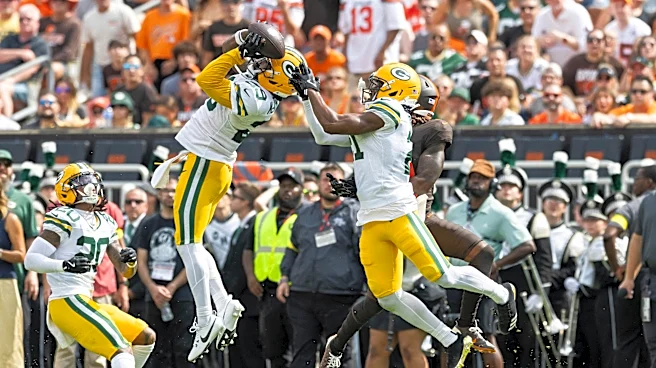
In 2025, according to numbers from Pro Football Reference, the Packers recorded seven interceptions against 59 passes defensed, a rate of just 11.86%. The league average, according again to Pro Football Reference, was 16.1%. The Packers, according to the numbers, were a bit unlucky in the interception department.
That tracks with their overall regression on turnovers last season. In 2024, bolstered by Xavier McKinney intercepting everything in sight, the Packers were well above the league average for turnovers forced. But in 2025, they cratered — only four players caught an interception in 2025 at all, and only McKinney and Evan Williams nabbed more than one.
This shouldn’t have been a surprise to anyone paying attention. It’s very unusual for a team to outproduce the league average in turnovers in consecutive years. The Packers have only done it once in the Matt LaFleur era (2021 and 2022), the first times they’ve done it since the Charles Woodson/Nick Collins maximum ballhawking era.

Fortunately, there’s reason to be optimistic for 2026. Though nobody’s ever “due” for interceptions (the pesky Gambler’s Fallacy has something to say about that), the Packers have never really been consistently below average forcing interceptions, either. Here are their year-by-year interception ratio numbers for the Matt LaFleur era.

If FTN’s 20% interception to passes defensed ratio is accurate (give or take, factoring in differences between statistical sources), I think we can expect the Packers to have a good shot at outperforming their 2025 interception ratio.
The odds seem pretty good that the Packers’ interception totals will tick up in 2026. They still shouldn’t bank on turnovers alone for better defensive outcomes this season, but there’s good reason to think more picks will come their way. Even if the Packers are merely average in that department, they’ll produce more turnovers this season than last.