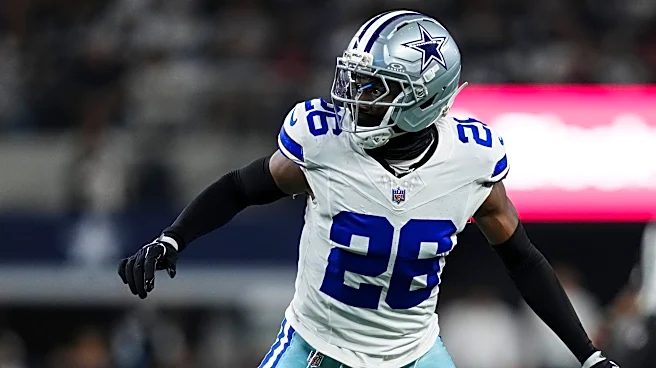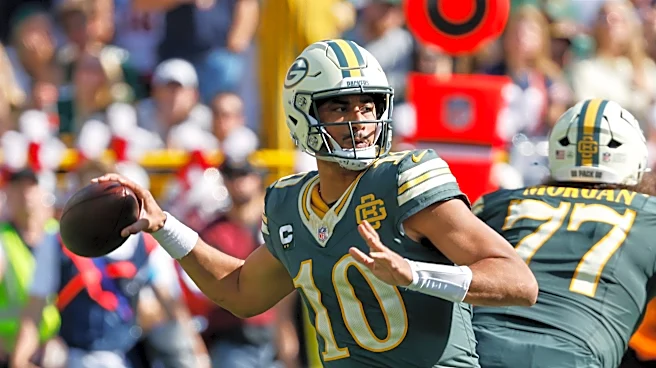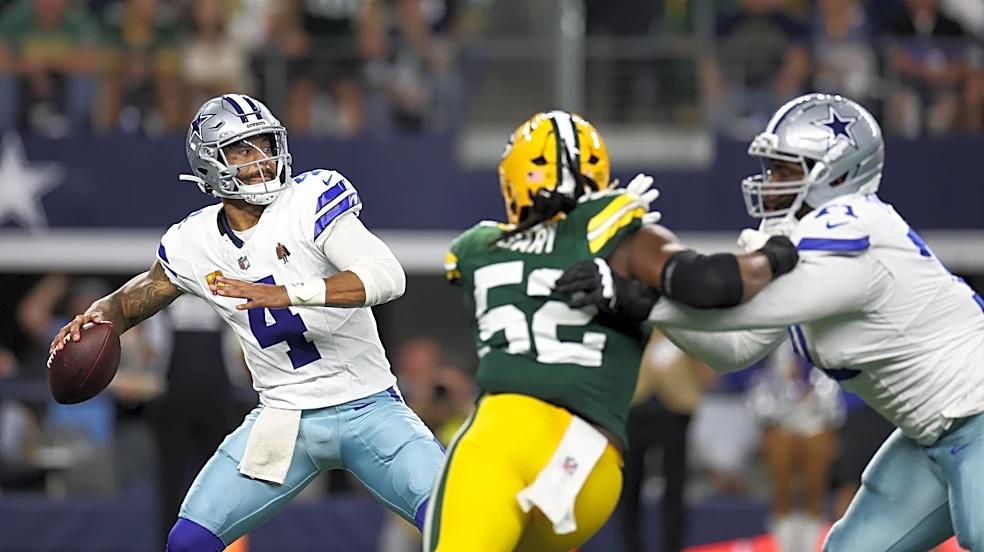




So far through Week 5, the Dallas Cowboys and quarterback Dak Prescott have thrown 18 passes 20+ yards downfield. That may not seem like a lot, but Prescott has connected on eight of those passes for two touchdowns and 271 yards, ranking 9th in yardage. And he has a variety of weapons around him that give him the confidence to push the ball deep.
The Cowboys’ primary non-play-action shot play is “989.” 989 is a three verticals passing concept. Both outside receivers run go routes, the inside receiver runs
a post or middle read, and the quarterback throws to whichever deep matchup the safeties fail to cover. It is one of the oldest dropback shots in football and still a weekly call for offenses built around an elite outside receiver.
What is 989
The name is the play call, and legendary San Diego Chargers head coach Don Coryell made it a staple. His playbook featured dozens and dozens of plays represented by a number system. Each receiver gets one digit, assigned in a fixed order starting with the X on the single-receiver side, and each digit is a branch of the route tree.

The above image is from Marty Schottenheimer’s 2005 Chargers playbook, the father of current Cowboys head coach Brian Schottenheimer. In that tree, even numbers break inside, odd numbers break outside, and the 9 is the straight vertical exception. An 8 is the post. So 989 reads X go, Y post, Z go. Teams outside the Coryell tree usually call the same idea “double go” or “double go, middle read.”
The concept is deliberately simple. It isolates the two outside receivers one-on-one against corners and uses the inside vertical to occupy the deep middle. Its value is less in clever structure than in what it forces a defense to show about its safeties before the ball comes out.
Only three players run routes that matter. Everyone else exists to buy time for a throw that travels 40-plus yards.
The X receiver, aligned to the single-receiver side, runs the 9. He wins vertically with whatever release he judges best and protects the space between the numbers and the sideline.

The Z receiver on the field side runs the same 9 with the same rule. The quarterback may pre-select this side if it offers the better matchup.
The Y or slot receiver runs the 8, which in modern versions is a middle read.

Against two-high safeties, with the middle of the field open, he runs the post.
Against a single-high safety, with the middle of the field closed, he converts to a 10-to-12-yard in route (a “basic”) or a dig. The back and any extra tight end stay in to protect or chip the edges, then release late as the checkdown.
How it attacks coverage
It can attack each coverage in a variety of ways. One deep safety cannot help on both sidelines, and two deep safeties leave a seam between them. Whatever shell the defense shows, one of the three routes is aimed at the hole it creates.
Cover 1 (man-free). Both outside receivers are one-on-one, and the free safety can help on only one side. The ball goes to the go route the safety does not favor, after the quarterback moves him with his eyes.
Cover 3. Each outside-third corner carries a vertical alone, and a post would run straight into the free safety. The quarterback looks to the outside go against the weaker corner while the inside route flattens under the safety.
Cover 2. The safeties help over the top outside, which leaves the deep middle and the sideline window behind the corner soft. The post splits the safeties first, then the quarterback looks to the “hole shot” between the corner and safety.
Tampa 2. The middle linebacker carries the deep middle, so the inside route stops short in front of him instead of finishing the post. That route instead converts to more of a dig route over the middle and the quarterback can then take a hole shot between the corner and safety.
Quarters. The safeties key the inside receiver’s vertical, and a more vertical post stresses that rule. The post is there if the safety bites or squats. If he stays on top, the ball goes to the go route on the isolated side.
2-Man. The defenders underneath trail their receivers while the safeties cap the outside. The post splits the safeties over a trailing defender.
The quarterback’s read
The read starts before the snap. The quarterback identifies the shell, picks the outside matchup he likes, and then reads that matchup against the middle route. Checkdowns come last.
Against a closed middle (one-high), his first look is the preferred outside go, the matchup he picked pre-snap. Second is the middle route, now flattened under the safety. That is often a tight window, since the safety and hook defenders bracket it. Third is the back or tight end releasing late after protecting.
Against an open middle (two-high), the progression flips. The middle read splitting the safeties comes first, the hole shot down the sideline behind the corner comes second, and the late-releasing back or tight end comes third.
The safety is the quarterback’s real assignment. Against Detroit’s Cover 1 robber in 2021, Rodgers held the middle safety with his eyes long enough for Davante Adams to win on an out-and-up down the left side. Tom Brady did the same in Tampa, using his eyes to hold or shift the free safety before throwing outside.
The Cowboys and 989
It has been a staple passing concept for the Cowboys this season with Prescott hitting both the outside vertical and the inside seam routes.
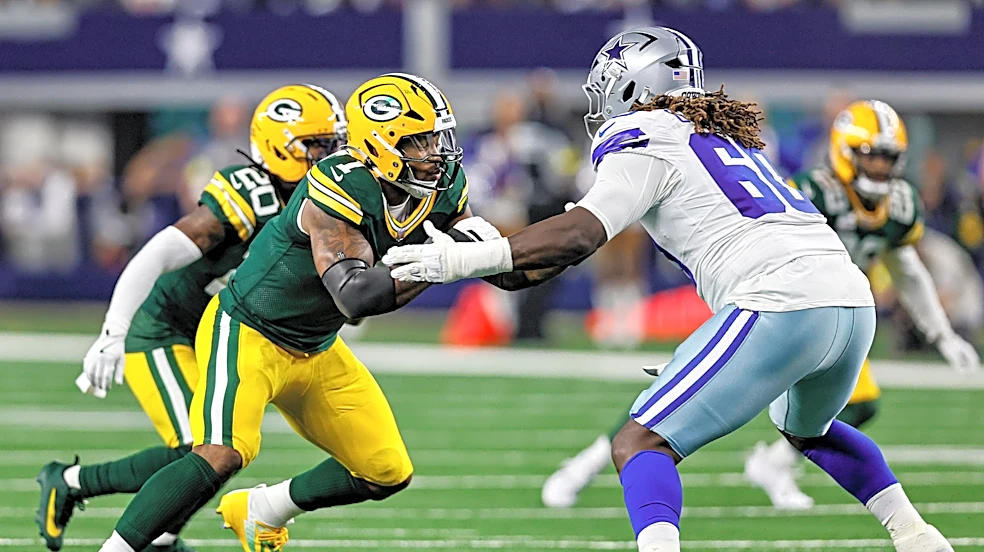
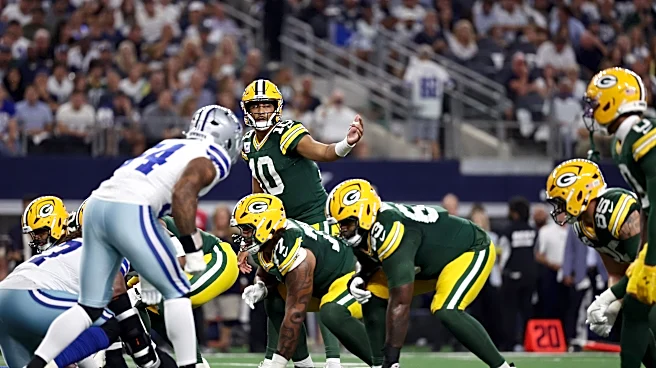
In overtime of their 2025 game against the Packers, a game they tied 40-40, the Cowboys moved the ball with ease on the defense, hitting two explosive pass plays. The second pass they hit was a bit of luck, catching the Packers’ defense gasping for air. But on the first pass they hit, they took advantage of a common defensive call on third down.
The defense is showing cover-3 or a possible blitz/pressure with man coverage. The post-snap reveals cover-2 invert, which we have covered here extensively since Hafley took over.
The Cowboys are running “989” here. The defense presented the same alignment before spinning the coverage to cover-2 invert.
Prescott saw the pre-snap alignment again and audibled the play to a more favorable concept to beat the coverage, betting that in a similar down and distance, the Packers would rotate again to 2-invert. He guessed right.
As the corner bailed diagonally to the deep half in between the numbers and hash and away from the sideline, Pickens got open on the vertical to the single receiver side and Prescott dropped it in before the coverage could get to it.
On the crucial play in overtime, the Cowboys called the same “989” concept again. This time, the Packers defense had the outside routes covered up playing cover-3 while the inside post route was wide open.
Pressure forced Prescott to escape the pocket; otherwise, he likely would have hit the throw over the middle for a big gain. Keisean Nixon was the outside corner covering Jalen Tolbert. When Prescott escaped, the offense went into scramble drill mode.
Tolbert slipped, and Nixon let up. But Tolbert quickly got up and presented himself as a target, working back down to the throw 34 yards away. Prescott launched it rolling to his right, and Tolbert came up with the toe-drag catch on the sideline while Nixon could only watch helplessly.
Final thoughts
989 is a talent-forcing play. It hands the defense a simple question: How many safeties will you commit deep? Every answer costs something. Against one-high, the offense gets its best receiver isolated outside. Against two-high, it gets a post between the safeties. The concept fails mainly when the line cannot hold up or when the outside receivers cannot beat their man.
That is why it is a good diagnostic for film study. When a team calls 989, watch three things: the shell at the snap, where the quarterback’s eyes put the safety, and how many bodies stay in to protect. Those three details usually explain the result better than the throw itself.
The Packers will need to remain coverage-sound in the deep area of the field if they hope to keep a lid on the Cowboys’ deep passing game.