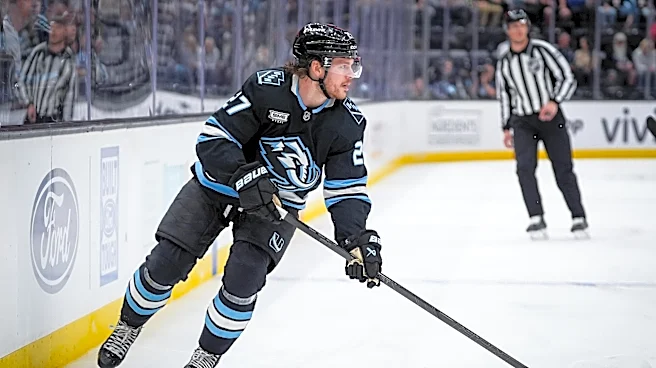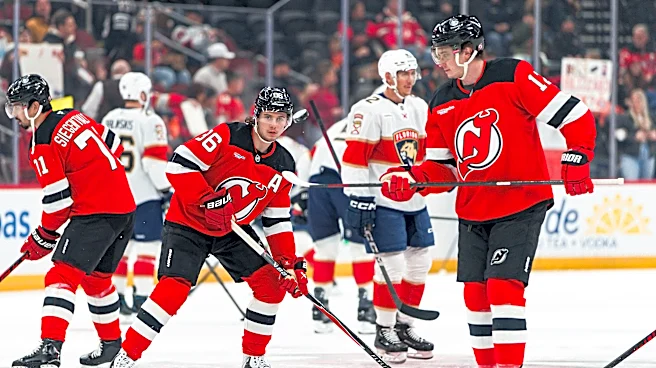



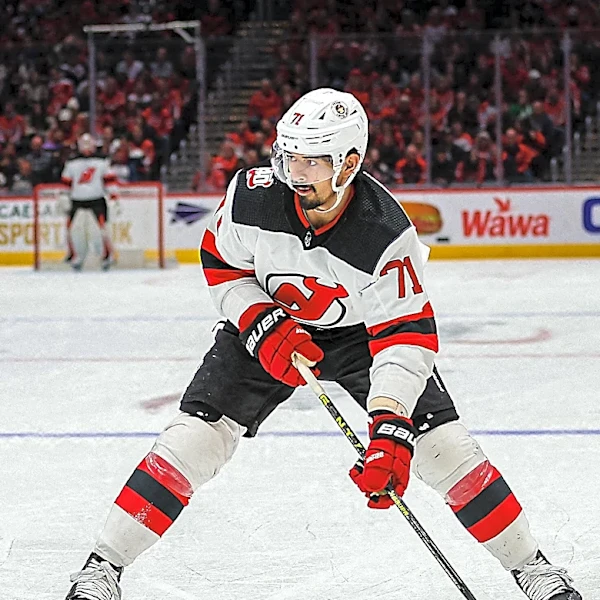




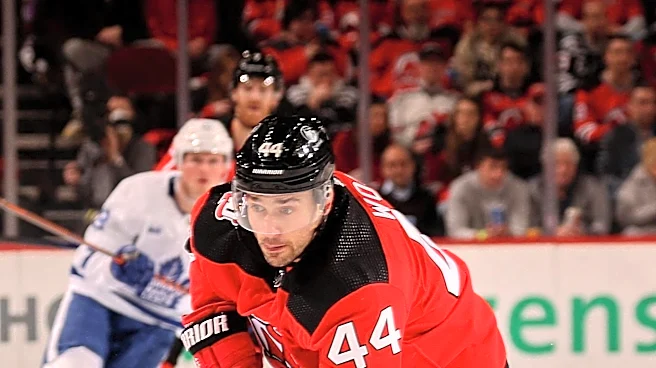


Happy Fourth of July, Devils fans. Relive a good moment for a second.
Now, Sunny Mehta is not done with his offseason work yet, but he has already made several moves that are designed to improve the short and long-term outlooks of the New Jersey Devils. Perhaps it’s just the remnants of the last several painful years of Devils fandom, but it seems that many fans out there are still wanting more for the 2026-27 season. With that in mind, I thought it would be a good idea to look at the Devils roster
as it is today and project who should slot where in the lineup, who should be scratched, and who might be left as trade pieces over the summer or upcoming season.
For the purposes of this exercise, I am operating under the assumption that the Utah Mammoth will NOT match the New Jersey Devils’ offer sheet of Barrett Hayton, accepting a second-round pick as compensation for him. However, please keep in mind that Utah has until July 8 to make any decisions on the matter.
The Analytical Sources:
- HockeyViz’s Synthetic Goal model: a catch-all evaluator that balances on-ice shot impacts, finishing and playmaking impacts, penalty impact, and special teams
- Evolving-Hockey’s RAPM: a simpler evaluator that largely focuses on a blend of expected goals, Corsi, and team goalscoring impact
- All Three Zones: a microstat evaluator that dissects what specific actions players perform more or less often than average
- Natural Stat Trick: a collection of data on individual, line, and team performance over long spans of time
- NHL EDGE: player tracking data that includes skating speed, shot speed, shot location, and team time of possession
The Forward Lineup
When constructing the New Jersey Devils’ lineup, I operate under two basic assumptions: Nico Hischier will be lined with Timo Meier, and Jack Hughes will be lined with Jesper Bratt. The rest of the lineup is thus constructed around that paradigm. Per PuckPedia, the Devils currently have 13 NHL forwards under contract, which excludes Barrett Hayton due to Utah’s right of first refusal. I am also including recent trade acquisition Amadeus Lombardi. They are in the following categories, with their shot hand listed in parentheses, and they are ordered by tenure:
Pure Centers:
- Nico Hischier (LH)
- Jack Hughes (LH)
- Barrett Hayton (LH)
Center/Wing Combos:
- Dawson Mercer (RH)
- Cody Glass (RH)
- Nick Bjugstad (RH)
- Amadeus Lombardi (LH)
- Evan Rodrigues (RH)
- Jesper Boqvist (LH)
Pure Wings:
- Jesper Bratt (LH)
- Timo Meier (LH)
- Stefan Noesen (RH)
- Arseny Gritsyuk (LH)
- Connor Brown (RH)
- Lenni Hameenaho (RH)
What the Devils will have to figure out by September is who among the centers and center/wing combination forwards will actually line up down the middle beyond Hischier and Hughes. I would not even pencil in Hayton as a definitive third-line center yet. Over the last several years, the Devils have generally struggled to form four lines that have a legitimate scoring threat to them, and that generally stems from the center position. In the modern NHL, if your center cannot transition the puck and generate scoring chances for himself or others, that line is probably not going to produce much in the offensive zone.
This is precisely why we have been disappointed in Dawson Mercer when he plays center. Mercer has the tools to generate offense. Per All Three Zones, he is a good passer, he works well from the middle of the ice, he is an excellent forechecker, he goes to the net, and he assists the defense with getting the puck out of the defensive zone. However, Mercer’s biggest drawback as an NHL forward is his lack of ability to gain the offensive zone on his own and create a scoring chance from it. The only season in which Dawson Mercer scored over 50 points, 2022-23, was one of only two seasons where Mercer was recorded as a positive offensive transition player, along with his rookie season in 2021-22.
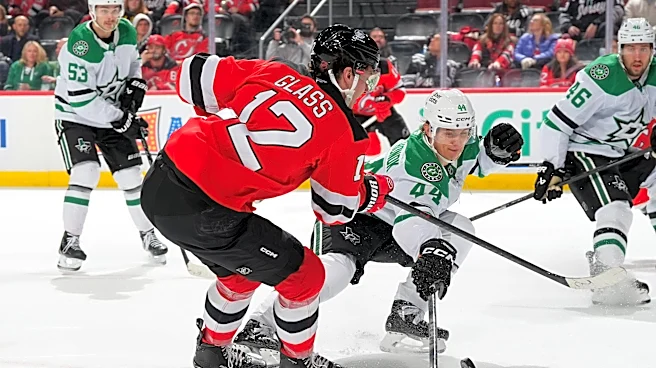
Rarely, there are defensive centers who play such good defense that it remains preferable to keep them off the wing. Cody Glass may actually be one of those players. While his offensive generation is not excellent, Glass has shown that when he shares the ice with offensive players, his lines can both shut down opposing lines while chipping in secondary scoring. Over his time with New Jersey, Glass’s impact on the game has been comparable to Carolina center Jordan Staal. From Evolving-Hockey:

Glass’s performance with the Devils is highly regarded by multiple public analytics models. HockeyViz’s Synthetic Goals rating (their catch-all evaluator) regards Glass as one of New Jersey’s four “first-line” quality forwards, along with Nico Hischier, Jack Hughes, and Jesper Bratt. Being an average player in most categories while having one of the best defensive impacts in the league has gotten him to that level.
Barrett Hayton normally would have been the fifth player to meet that “first-line” quality on the Devils, but his down season brought him down a notch. Hayton’s profile does share some similarities with Glass, but it is not quite the same. Hayton is assigned strong weaknesses in finishing and playmaking while having a better offensive shots taken impact to go with his strong defensive impact. This has been consistent throughout his career: Hayton is not a finisher, while Cody Glass has a bit more in him in that regard.
This comparison is important because both of these players should be in the top nine. These are not fourth liners. However, because Barrett Hayton has the edge in offensive chance generation, I give the edge to him to be the New Jersey Devils’ third-line center in 2026-27. He is a stronger transition player than Dawson Mercer, and he is a stronger offensive generator than Cody Glass. What would be important, then, is surrounding Hayton with two wings who can successfully put the puck on net. Historically, Hayton creates his goals almost entirely right in front of the goal, with heavy use of the backhand, per HockeyViz. He is also an adept puck deflector, joining Glass, Noesen, and Mercer as deflection goal threats, while All Three Zones notes that he loves crashing at rebounds. With Gritsyuk going to the top line, Evan Rodrigues, a voluminous shot taker and playmaker but not a supreme finisher, would be ideal on Hayton’s right to create rebound goal opportunities. Below, use the slider bar to compare Hayton and Rodrigues and what they offer in creating chances.


Thus, the top three constant center-wing combinations would be Hischier-Meier, Hughes-Bratt, and Hayton-Rodrigues, as Rodrigues would alleviate Hayton’s shortcomings as a playmaker and create a strong one-timer threat on the rush with Hayton as a net crasher if paired with one of Mercer, Brown, or Glass as a fellow wing.
Glass, meanwhile, would have to find a home as a winger. The easiest answer would be to pair him with Jack Hughes, as the two played together for about 40 even strength minutes last season and came away outshooting opponents 26-14 and outscoring them 4-2, per Natural Stat Trick. That is on the low-end for samples, but Glass has the kinds of skills that make him a good candidate to be a defensive winger for a player like Hughes: he wins faceoffs at an above-average rate, his offensive skills are suited to the low slot and netfront, and his lines see massive reductions in high-danger goals against. Jack Hughes’s lines suffered in this regard in the 2025-26 season, with Glass reducing Hughes’s high-danger goals against rate from 1.72/60 to 1.49/60, closer to the team’s average of 1.43/60 but not quite close to Glass’s rate away from Jack of 0.89/60. Do not underestimate the impact of a strong defensive winger on an offensive center. I think back to Tomas Tatar in 2022-23, when Nico Hischier outscored opponents 40-16 with his defensive helper while getting outscored 21-23 without him. In this case, though, Glass has more utility on the Hughes line, where he can take faceoffs.
If the Hughes line was set as Glass-Hughes-Bratt, that would leave a decent debate on where to play Arseny Gritsyuk, Connor Brown, and Dawson Mercer in the remaining two top nine winger slots. Arseny Gritsyuk profiles the strongest as a top six player, with amazing transition skills per All Three Zones (though I would only need my eyes to tell you that) and a strong blend of positive shot impacts and baseline finishing skills. Gritsyuk would be my pick to be Nico Hischier’s left wing, pushing Timo Meier to the right side. While his transition and shooting skills could really help Hayton, he probably stands to score more goals because of the chances that Hischier and Meier already create, and he would offset some of Meier’s defensive issues in getting the puck out of the zone.
Connor Brown had very weak shot impacts this season, and despite good highlights, his line with Jack Hughes did not break even in the goal department this season. However, Brown was able to put the puck in the back of the net pretty well, and he is one of the fastest skaters on the roster. Leveraging his ability to get open for shooting opportunities from his off-wing with two solid play-drivers in Hayton and Rodrigues could be a fit for him in third-line play. However, I would give the edge to Dawson Mercer.
If put into a position where Mercer does not have to drive play on his own or do the dirty work on the boards, he can go into a role as a shooter and playmaker. Mercer had a down year in terms of finishing, per HockeyViz, but he has grown more able and willing to use one-timers and slap shots from his off-wing. This would make him a good fit to play across from Evan Rodrigues, who loves to set up one-timers. Mercer remains a solid netfront scorer, too, and his high-slot wrister (which disappeared last season) is grounds to make him a bounce-back candidate for 2026-27. On those shots, he was finishing far worse than his career norms.

That leaves the fourth line. How do you create a line out of Connor Brown, Jesper Boqvist, Nick Bjugstad, Stefan Noesen, Amadeus Lombardi, and Lenni Hameenaho? With three candidates to play center, Mehta and Keefe have to decide whether to favor the veterans in Boqvist or Bjugstad, or to favor the younger Lombardi. Lombardi has yet to play an NHL game, but he has had two very good seasons in the AHL now and is only 23 years old. Per AHLTracker, Lombardi has had 51 five-on-five points in his last two seasons (91 games), and he ranked 22nd among AHLers with 25 or more games played in five-on-five points per game (0.57) in 2025-26. He also ranked 12th among players under 24 years old. It would be difficult to project him into the lineup right now, but what is available to us tells us that he should be in the mix for the fourth-line center role during camp and the preseason.
It probably should not be Jesper Boqvist, either, based on his 2025-26 performance. Maybe he will bounce back, but he struggled with transitioning the puck into the offensive zone and generating scoring chances, per All Three Zones, though he remains a good forechecker. Bjugstad did not have enough data to compare his 2025-26 season on, but he was a much stronger transition player in 2024-25. On Evolving-Hockey, though, Bjugstad still fares better in the direct comparison.

While HockeyViz does favor Boqvist over Bjugstad, I lean towards Bjugstad as the fourth-line center right now because of his greater recent experience at the position. Is he on the decline? Yes. am I hoping that he can hold that off a little bit this season? Yes. Bjugstad remains a solid shot generator on the rush, though he is less of a netfront presence than some may expect given his size. For that, he needs a guy like Stefan Noesen, who was a great fourth line presence for Carolina for two seasons before succeeding in a higher role in New Jersey prior to his recent injuries.
Connor Brown, of course, is the assured player on that line. Having three righties on the fourth might not be ideal (hence the extra hopes for good play from Boqvist or Lombardi), but Brown can easily outskate slower fourth lines, and teams would have to deal with Brown gaining the zone with Noesen trailing for rebounds. Fans might expect to see Brown higher in the lineup, but the expected and real results were not quite there for him in 2025-26. Brown can definitely still factor into both special teams, including the power play, but the Devils being a better team up front may mean fewer five-on-five opportunities.
This would, of course, leave Jesper Boqvist as the 13th forward for the Devils in 2026-27. Lenni Hameenaho, who has promise, is not really a fit for any of the lines with the extra additions Sunny Mehta has already made and is better suited playing top minutes in Utica. When cast into heavily defensive usage in his rookie season, Hameenaho did not fare too well and should only return if he can be put onto a line used in offensive situations. Therefore, the full “analytically-driven” Devils lineup should look something like this:
- Gritsyuk-Hischier-Meier (rush offense galore)
- Glass-Hughes-Bratt (high cycle with Glass netfront, Glass takes faceoffs)
- Mercer-Hayton-Rodrigues (Rodrigues-Mercer rush offense with Hayton crashing)
- Noesen-Bjugstad-Brown (shoot down the right, crash down the left)
- Extra: Boqvist
- AHL: Hameenaho, Lombardi (though still hoping that Lombardi can push for the 4C role in camp)
Caution
Of course, this is all reactive to their most recent performance. As noted most with Lombardi, September will have a big impact on where these players all end up in the lineup. Camp competitions and preseason games may not tell you everything, but they do often end up with players being rewarded or limited to start seasons. Something else to keep in mind that deployment can be matchup dependent. Would I suggest Cody Glass play wing against a center-deep team like Vegas or Colorado? Perhaps not. Do I think Connor Brown should be on the fourth line the whole season? No. I only look at these groups as a possible ideal average lineup. All four lines would be able to win faceoffs (Bjugstad having the lowest FO% here in 25-26 at 49.9%), create offense, and cycle or forecheck, which is the improvement the Devils need to see in 2026-27.
There are other things here that have not been tested yet. When Mercer played on the top line with Hischier and Meier last season, the Devils were not as willing to play the wingers on their off-wings as they were with the late-season line of Brown-Hughes-Bratt. So, maybe Mercer doesn’t cut it at left wing, but I would like to see this new regime push for getting Mercer back into being the kind of player he was at the start of his career. In his first two years under Lindy Ruff, Mercer could play on the rush, on the cycle, as a wing, as a center, as a shooter, and as a playmaker. Since then, the usage choices for him have been a bit baffling, and I think the Devils under Fitzgerald forgot what made Dawson Mercer a good player to begin with and tried to make him someone he is not. That is precisely why I don’t want to see Lenni Hameenaho until a vacancy opens up on a scoring line.
As of now, I do not look at any of the forwards as obvious trade pieces. Rather, I look at their broad interchangeability as a potential strength for the Devils this season. If the Devils were looking to shed salary for a move, I would still look towards the defense after the acquisitions of Chisholm and Kolyachonok. Of course, that could change if Lombardi or Hameenaho look superb in camp and get into some October games. But I am not rushing to propose a Mercer, Glass, or even Noesen trade because Mehta seems to have acquired two (pending Utah’s decision) impact forwards and a depth guy in Boqvist.
But what do you think of the Devils’ lineup outlook after the early offseason? Do you think Mehta will push Keefe to use analytics for those lineup decisions, or do you think it will be more hands-off? Leave your thoughts in the comments below, and thanks for reading.