
Welcome to Wild Card Weekend, everyone – the start of the most wonderful time of the year for NFL fans: the playoffs.
This year, despite making it interesting until the bitter end, the Steelers have made
the tournament, even earning a home game in the first round, thanks to winning the AFC North.
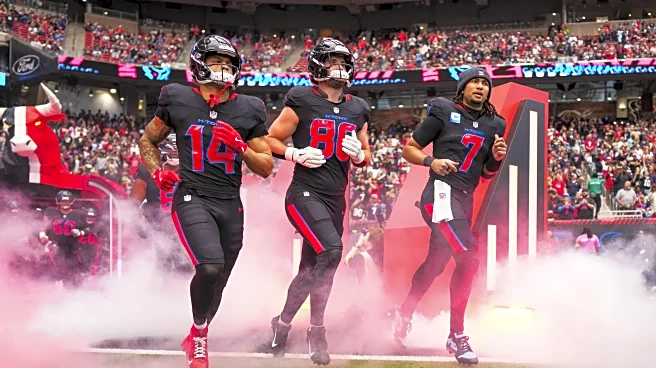
However, the 10-7 Steelers will be hosting one of the hottest teams in the NFL: the 12-5 Houston Texans, who haven’t lost a game since Nov. 2.
The general sentiment from the national media seems to be that Pittsburgh will get smoked. But Steelers fans seem to have a boost of confidence in their team following a division-clinching win over Baltimore in Week 18.
In this week’s preview, Read & React breaks down what the Steelers can expect from the Texans on Monday night.
What to expect from the Texans’ offense

Rushing YPG: 108.9 (22nd)
Passing YPG: 218.1 (14th)
PPG: 23.8 (13th)
RP: As Ryland alluded to, the general sentiment from non-Steelers fans is that Pittsburgh stands next to no chance in this game. Ryland and I aren’t exactly innocent of this pessimism; we did rank them as the second-most difficult playoff matchup for the Steelers back on December 10. In either case, the reasoning for this is based almost solely on the Houston defense, which Ryland will detail for you in the next section.
But what the national media seems to be brushing aside, and what could be the Steelers’ saving grace, is that the Texans’ offense is the textbook definition of mid. And, no, I don’t mean in the way the kids are using the word nowadays. I mean that Houston is almost as middle of the pack as you can get in every facet of offense.
With the lone exception of running the ball. Whether you’re looking at more traditional stats or advanced metrics, Houston just isn’t good at running the ball. They rank 22nd in rushing yards per game, have the fourth-worst rushing EPA (-47.7), and are tied for the second-fewest rushing touchdowns (9) in the NFL with only the lowly Raiders scoring fewer rushing touchdowns.
Part of that struggle is due to the Texans’ inability to piece together a respectable offensive line for the past several years. Last offseason, the Texans blew the unit up, returning only one starter from 2024 — left guard Tytus Howard. But even Howard was put under the gun, as the Texans asked him to make a position change from right tackle to left guard. Houston selected one of my favorite prospects in the 2024 draft when they took left tackle Aireontae Ersery in the second round, and he’s delivered a promising first season. For the other three spots, they brought in NFL castoffs: Ed Ingram (previously of Minnesota), Jake Andrews (New England), and Trent Brown (Cincinnati). If you’re noticing that those three teams were some of the teams most in need of line help after last season, that should tell you something about the line that Houston has assembled.
But the other part of the run game struggles is due to a talent deficiency in the running back room. Joe Mixon was supposed to be the starter this year, but a serious foot and ankle injury prevented him from ever taking the field. This forced Houston to turn to Nick Chubb, a running back Steelers fans should be quite familiar with. However, Chubb is not the back many Steelers fans will remember. After suffering a devastating leg injury against the Steelers in 2023, Chubb missed the first half of the 2024 season and was never quite himself. He’s looked better with Houston, but he doesn’t have the same suddenness and long speed that he once had. Chubb put up a respectable stat line, with 506 rushing yards on 122 carries (4.1 YPC), but he’s ceded more and more to rookie Woody Marks in the second half of the season. A former USC Trojan, Marks was considering more of a third-down, pass-catching back to start the season — but he finished as Houston’s leader in rushing yards(706), carries (196), though his efficiency (3.6 YPC, -32.2 EPA) has been hit or miss. Still, Marks is a shifty runner who can string together missed tackles when he gets some momentum going.
The Texans’ lack of an intimidating run game puts them at risk of being one-dimensional whenever they face a good run defense. The Steelers have been elite in this regard some weeks, and absolutely abysmal in others. It’s anyone’s guess which version of Pittsburgh’s defense will show up this week, but a stout run defense will significantly increase their chances.
Houston’s passing attack is mainly funneled through two players: star receiver Nico Collins and tight end Dalton Schultz. The two account for 40.9% of the Texans’ targets in the passing game, while four other receivers rotate heavily throughout the game. Houston uses three-receiver sets, otherwise referred to as 11 personnel, at the sixth-highest rate (65.99%) in the NFL, and the heavy rotation helps keep their receivers fresh, and allows the Texans to use them in highly specific roles.
Will start with Collins, the Texans’ leader in almost every significant statistical category. Collins is a true bona fide X-receiver — who plays around five snaps a game in the slot — and the Texans rely heavily on him. He has size (6’4, 215 pounds, 96th-percentile arm length), 4.45 speed, and has made a living winning contested catches.
Near the end zone, he is quarterback CJ Stroud’s top weapon, but he can also take the top off a defense, win over the middle, or on out-breaking routes.
Collins had a huge day the last time he played Pittsburgh, in Week 4 of 2023. On that day, he caught 7-of-9 targets for 168 yards and two touchdowns.
But while Collins will demand a lot of attention from the Steelers’ secondary, they can’t forget about tight end Dalton Schultz. While Collins is a premier vertical threat, Schultz makes a living providing Stroud with a security blanket underneath. Often, Schultz chips and releases late, with 75.5% of his targets coming nine yards or less downfield. The Steelers will need to have a game plan for that, but they can’t let the tight end lull them to sleep with his underneath routes. He has great hands and is more than capable of winning vertically too.
The Texans also deploy second-round rookie Jayden Higgins as a big man in the slot and in the red zone. He’s gotten more run on the outside this season, but that’s mainly due to the presence of Christian Kirk. The slot is truly where Higgins thrives, and while he’s not a track star, he’s a sneaky good route runner who could give the Steelers slot corners trouble.
Higgins rotates with Xavier Hutchinson (6’2, 205 pounds), with both he and Higgins having 16-24% of their snaps coming in the slot and the rest out wide. Kirk is the team’s primary slot receiver, with Noel taking most of his snaps from the slot as well.
As for the trigger man, Stroud, he’s been steady if not spectacular. He missed three games in the middle of the season with a concussion and has thrown eight touchdowns against three interceptions since returning from injury, and 19 touchdowns against eight interceptions for the season. Avoiding sacks remains a strength of his, with just 23 in 14 games; 21 quarterbacks have taken more this season. Still, there should be some opportunities for the Steelers’ pass rush. Stroud’s average time to throw is 2.82 seconds according to NFL Next Gen stats, and Pittsburgh’s defense has the second-fastest time until pressure at 2.74 seconds. If the Steelers can force a few turnovers or collect timely sacks, the Pittsburgh defense could do just enough to give Aaron Rodgers and crew a fighting chance against a fearsome Houston defense.
What to expect from the Texans’ defense

Rushing YPG allowed: 93.7 (4th)
Passing YPG allowed: 183.5 (6th)
PPG allowed: 17.4 (2nd)
RB: All week, you’ve probably been hearing that this Texans defense is elite. And I’m here to confirm that.
But there are some caveats. In late December, Houston safety Jalen Pitre had the all-time quote that “God is the greatest; the Texans defense is probably second,” but they aren’t completely flawless.
Just last week, the Texans gave up a season-high 30 points to the Indianapolis Colts. Even though Houston rested most of its impact starters after halftime, they still allowed 17 of those points in the first half.
But frankly, that being the first time Houston has allowed 30 points all season is nothing but impressive. In 2025, the Texans held the Chargers to 16 points, the Bills to 19, the Broncos to 18, and the 49ers to 15, to name a few games.
Plus, against Indianapolis, the Texans were down star CB2 Kamari Lassiter, and rotational safety K’Von Wallace, who was responsible for most of the big passing plays Houston gave up, was waived following the game. Don’t get your hopes too high that the Colts’ surprising success will be replicable past Week 18.
The Houston secondary has been one of the best in the NFL all season. This nugget from Battle Red Blog this week sums it up well: “It took until the season finale for opposing offenses to pass for more touchdowns (20) than interceptions (19) against Houston, absolutely incomparable by most modern NFL standards.”
Top cornerback Derek Stingley has been in the conversation for the best in football for the last two years, with impeccable reactive athleticism and ball skills. He’s allowed just a 57.9 passer rating this season, allowing catches on just half of his targets (30/64) with more interceptions (four) than touchdowns allowed (three).
His partner in crime, the aforementioned Kamari Lassiter, has also been elite this season and would be CB1 on most other defenses. He’s allowed just a 74.3 passer rating this year and somehow is tied for fifth on the team with a whopping 42 “stops” this year – that’s a high-level number for a safety or linebacker, and predictably, first among cornerbacks this year per Next Gen Stats.
The Texans’ safety unit is led by Jalen Pitre, a hard-hitting, guardian cap-clad heat-seaking missile who’s allowed no touchdowns this season, along with four interceptions.
That level of talent on the backend means the Texans haven’t had to get very gimmicky with their coverages this season. They have one of the lowest blitz percentages in the league, and they don’t disguise coverages much. If there were a football version of basketball’s “ethical hoops,” it would probably be the Texans’ defense.
That said, they do mix up their coverage shells a decent amount, with a fairly even distribution of Cover 1, 3, 4, and 6.
You can read the Texans’ lack of schematic trickery two ways: On one hand, the fact they’re getting such elite results without having to reinvent the wheel shows that the talented defense is doubtlessly for real. They know they have the talent to beat up any offense they line up against, and have proven it week after week this season.
In the Steelers’ case, however, it’s a rare positive for Aaron Rodgers entering the game. He’ll have plenty to worry about regarding the Houston defense, but he’s at his best reading defenses pre-snap and has had some struggles in the past against new-fangled simulated pressures and disguises.
Does the Pittsburgh passing game have an edge here? Not really. The Texans held Josh Allen and Patrick Mahomes to a combined 413 passing yards, no touchdowns, and five interceptions this season. But Rodgers versus a more straightforward scheme is something to monitor.
If there is a slight weakness in the Texans’ pass defense, it would be against the linebackers. Like pretty much every linebacker unit in the NFL, it isn’t full of high-level coverage players, and even Riley Leonard and the Colts were able to squeeze some passes in the intermediate middle of the field last week.
But don’t expect the Steelers’ quick passing game to be very successful against Houston. The Texans allow the eighth-least yards after catch in the NFL, and the secondary is full of defensive backs who love contact. This is a defense that swarms to the football in every facet of the game.
As a side note, though, while the Houston defense is tied for the third-least yards per pass play in the NFL this season (5.3), the secondary did struggle with Colts wide receiver Alec Pierce’s size/speed combination last week. There are some similarities to D.K. Metcalf there, who, regardless, will be a massive addition to this Pittsburgh offense in an all-hands-on-deck week against the Houston defense.
That all-hands-on-deck approach will also be true for the Pittsburgh offensive line against the Texans’ front seven, which has one of the fiercest defensive lines in football.
Will Anderson Jr. is one of the better edge rushers in football with 12 sacks this season, while the Texans’ other book-end pass rusher, Danielle Hunter, has 15. While Pittsburgh has been able to minimize names such as Myles Garrett through extensive game-planning this year, this will be a different problem entirely with an All-Pro-level rusher facing each offensive tackle.
Not having Darnell Washington in the lineup will be a blow given the Texans’ defensive front. Having his support chipping these edge players on passing plays, and his ability as a blocker in the run game will be sorely missed. Establishing enough of a run game to keep Houston’s pass rushers honest will be critical for Pittsburgh.
On the inside, Sheldon Rankins and Tommy Togiai have been stout against the run.
It’s a top-five run defense and a top-10 pass defense. Life won’t be easy on Sunday.
How can Pittsburgh win this one? Avoiding turnovers and staying on track as an offense against an opportunistic Texans defense will be paramount.
The most pivotal player for Pittsburgh in this game is Aaron Rodgers. Can he get the job done against the defensive line that’s capable of taking over games? And with a ragtag group of pass catchers, can he make tight-window throws and hit a few deep passes against one of the top secondaries in the NFL?
Rodgers rose to the challenge against the Ravens last week. He’s still capable of delivering in big-time moments. But this will be an especially tough challenge to open up the playoffs.