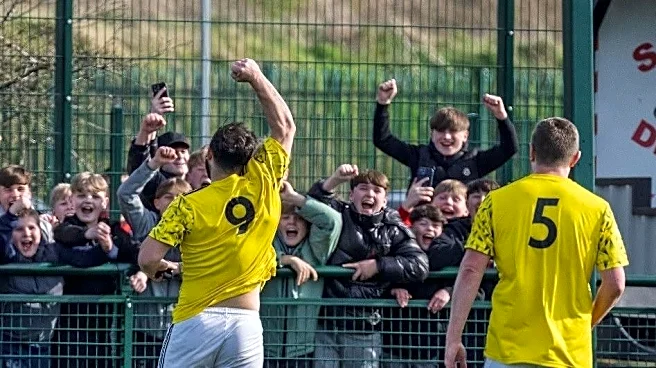





With Silksworth CW becoming the latest club to fold, Wearside must rally behind its remaining community clubs before more are lost.
The resignation of Silksworth CW from the Wearside League is both unfortunate and deeply saddening, marking another blow for grassroots football in Sunderland. Everyone connected with the club deserves recognition for their efforts over the years, and I wish them every success in whatever comes next.
In announcing its resignation, Silksworth cited a lack of matchday volunteers
and ongoing financial pressures. These are not isolated challenges. They are the same issues that contributed to the demise of Sunderland West End and Farringdon Detached last season, underlining the increasingly difficult environment in which community football clubs are operating.
The figures paint a worrying picture. As recently as 2022, Wearside was home to six non-league football clubs. Four years later, that number has been halved to just three. For a city with such a proud footballing heritage, that is a stark reminder of the pressures facing the grassroots game.
Grassroots football remains the foundation of the sport. It provides opportunities for players, coaches, officials and volunteers while bringing communities together through a shared love of football. Yet clubs cannot survive without the support of local people.
If you have never attended a non-league match, now is the time to do so. Whether it is Northern League club Sunderland RCA or Wearside League duo Sunderland Albion and Washington FC, every spectator through the gate, every volunteer giving up their time and every pound spent at the club makes a genuine difference.
The loss of another club should serve as a wake-up call. Sunderland cannot afford to take its grassroots football scene for granted. These clubs are more than just football teams; they are community institutions that develop players, provide opportunities for volunteers and offer a place where local people can come together.
Protecting grassroots football is not simply about preserving the game’s past. It is about safeguarding its future. If Sunderland wants to maintain the strength of its footballing identity, it must do everything possible to ensure its remaining community clubs are given the support they need to survive and thrive.
Whether you attend regularly or simply choose to watch a match every so often, your support can make a real difference to the future of grassroots football on Wearside.
Wearside clubs in profile
Sunderland RCA
Founded in 1963 as Ryhope Youth Club, Sunderland RCA entered the Seaham and District League for the 1963/64 season, laying the foundations for what would become one of Wearside’s most established non-league clubs.
The club currently competes in Northern League Division Two, at Step 6 of the National League System, and has played a significant role in the division’s history, having been a founding member when the Northern League introduced its second tier in 1982.
Among RCA’s notable achievements is victory in the Northern Alliance Cup in 1981, while the club has twice finished runners-up in Northern League Division Two, narrowly missing promotion in 1983/84 and again in 2009/10.
Few fixtures stir local interest quite like those involving Sunderland RCA. Traditional rivalries with Seaham Red Star, Washington FC and the now-defunct Sunderland West End have produced some memorable encounters over the decades, each carrying added significance through local pride and familiarity.
The club plays its home fixtures at the 1,500-capacity Meadow Park, located at 22 Beechbrooke, Ryhope, Sunderland, SR2 0NZ.
Sunderland Albion
Long before modern football became a global spectacle, Sunderland was home to one of the game’s earliest and most intriguing rivalries.
The original Sunderland Albion was founded in 1888 by James Allan, the founder of Sunderland AFC, following a dispute over the club’s direction. Allan had become disillusioned after Sunderland were expelled from the 1887 FA Cup for making payments to players, a practice that contravened the Football Association’s amateur regulations at the time.
Committed to maintaining amateur principles, Allan established Sunderland Albion, creating a fierce city rivalry with Sunderland AFC. The clubs met in two highly anticipated Wearside derbies – one played in aid of charity and another organised to raise funds for both clubs.
Although Albion existed for only four years, the club enjoyed considerable success. It lifted the Durham Challenge Cup in 1889 before finishing runners-up in the Football Alliance in 1891. However, financial pressures and Sunderland AFC’s election to the Football League ultimately proved decisive, and Albion folded in 1892.
More than a century later, the Sunderland Albion name returned to the local football landscape. The modern club, founded around 128 years after the original’s demise, proudly embraces its historic identity and now competes in the Wearside League Third Division.
Whether the club can eventually climb the football pyramid remains to be seen, but its revival inevitably raises the prospect of Wearside once again witnessing a competitive Sunderland derby.
Sunderland Albion plays its home matches at Ashbrooke Sports Club, Ashbrooke Road, Sunderland, SR2 7JA.

Washington FC
Based to the west of Sunderland, Washington FC traces its modern origins to 1947, when the club was established by miners employed at the F Pit in Albany.
Initially competing in the Washington Amateur League, the club quickly established itself as a dominant force, winning seven league titles between 1955 and 1963.
Washington joined the Wearside League in 1968 and went on to become one of the region’s most respected amateur clubs. Over the following decades, the side featured regularly in local cup competitions, including reaching the prestigious Sunderland Shipowners Cup Final in 1972.
The club reached its highest level in 2015 after securing promotion to Northern League Division One, where it spent several seasons before later returning to Division Two and, more recently, the Wearside League Premier Division.
The 2025/26 campaign proved another positive chapter in the club’s history. Washington finished third in the Wearside League Premier Division and reached the Durham Trophy Final, ending the competition as runners-up.
The club considers sides based in the Gateshead area, Chester-le-Street Town and Brandon United to be its traditional rivals.
Washington FC is based at The Washington Hub, Stephenson Road, Washington, Tyne and Wear, NE37 3HR.

Seaham Red Star
Among Sunderland RCA’s oldest and fiercest rivals, Seaham Red Star has long been a familiar name in North East non-league football.
The club currently plays its home fixtures at the Alexandra Steakhouse Stadium, situated within Seaham Town Park on Stockton Road.
Alexandra Steakhouse Stadium
Seaham Town Park
Stockton Road
Mount Pleasant
Seaham
SR7 0HP
Update (28 July)
This article was originally written between 26 and 27 July. Since then, Sunderland West End have announced via Facebook that they will take Silksworth CW’s place in the Wearside League ahead of the 2026/27 season.
Although it is unfortunate that Silksworth have folded, the return of Sunderland West End to the local non-league scene is undoubtedly a positive development for football on Wearside.
Sunderland West End play their home matches at the Ford Hub, Keelman’s Lane, South Hylton, Sunderland, SR4 0RW.