


By Alan Baldwin
LONDON, Aug 10 (Reuters) - Alexia Danielsson was 14 when she first drove a Formula One car, a modified 2007 Williams owned by a family friend.
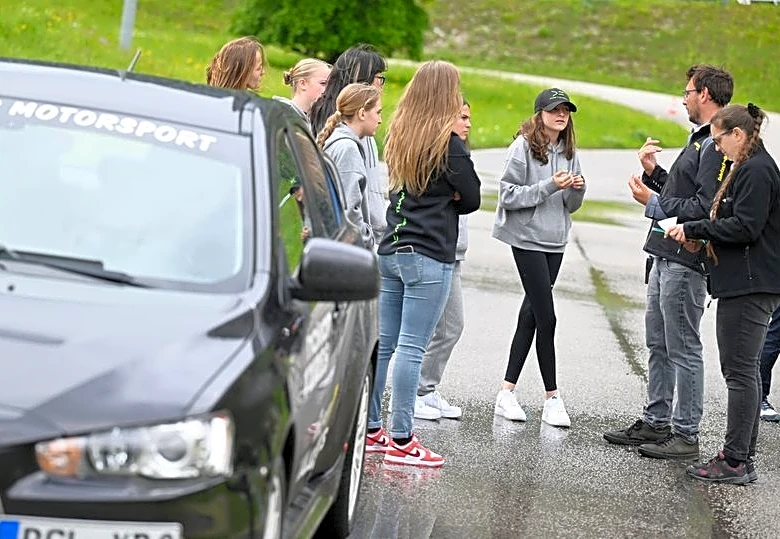
Now 17 and competing in the Central European F4 series where rivals include 15-year-old Ella Hakkinen, McLaren-backed daughter of retired double F1 world champion Mika, the Swede hopes one day to be on the grand prix starting grid for real.
"I don't think anything is impossible, you just have to really go for it. How long? I have no idea," Danielsson,
currently 26th of 49 in the standings, told Reuters.
The youngster is one of many chasing a dream that only a vanishingly small number will ever realise. And for the past 50 years, only men have managed to make it all the way.
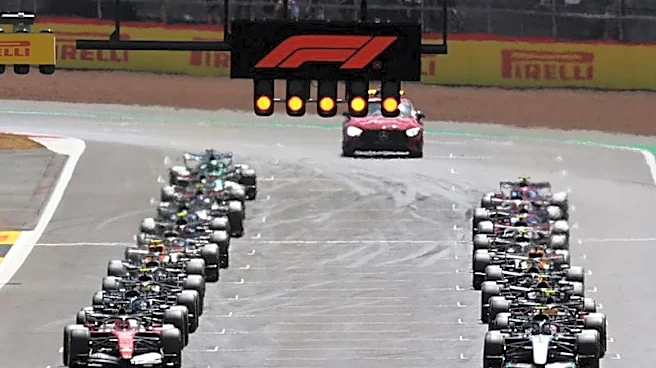
This weekend marks half a century since a woman last raced in the Formula One world championship, and the wait looks far from over. F1 chief executive Stefano Domenicali said in 2024 he could not see it happening in the next five years.
MORE THAN EQUAL SEEKS CHANGE
Danielsson, whose father Alx won the 2006 World Series by Renault, is already an elite racer -- one of a select cohort being helped by More Than Equal, an initative set up in 2022 by former F1 racer David Coulthard and Czech billionaire Karel Komarek.
The non-profit global programme's founding aim was "to identify, develop and support the first female Formula One world champion".
"We're not a race team, we don't have shiny cars with shiny stickers, we're not a race series," chief executive Tom Stanton told Reuters. "What we do is build drivers, and that's how we fit into the ecosystem."
There is no doubting the commitment of those selected, or awareness of how difficult the chosen path will be as the sport's popularity explodes. These are not starry-eyed converts to the sport, lured in by the appeal of Netflix docu-series "Drive to Survive".
Danielsson started karting at six, switching to cars at 13. Others have moved way from home, some to other continents just as some current F1 drivers did at a similar age, to pregress.
Stanton said that when More Than Equal started the driver development programme those involved knew there was a mountain to climb. Two years later it looks more like Everest, but at least the Base Camp has been clearly established.
The Formula One-backed all-female F1 Academy series, which effectively replaced a previous W Series and with whom More Than Equal has a partnership, has also raised the profile with races during selected grand prix weekends on the support programme.
Britain's Abbi Pulling won F1 Academy in 2024 as well as a British F4 race. She has also been a winner in the GB3 championship this year. Frenchwoman Doriane Pin, last year's champion, has since tested a Mercedes F1 car.
"There are starting to be more female drivers out there," said Stanton.
"Also, they are performing better. I think that's one of the things, that as female drivers start to be more consistently towards the top of the field, more people will notice. And that's a blessing and a curse because there becomes an expectation then."
PLATFORM TO IDENTIFY EMERGING TALENT
More Than Equal has created FutureLap, a platform that crunches data from karting and junior single-seater championships to identify emerging talent, male and female, that might otherwise struggle to be noticed.
A study has also been launched with the University of Portsmouth to advance understanding of female ergonomics in Formula Four.
"What we do see is that there are more female drivers coming through," said Stanton. "And it's not that they weren't there. It's just that we couldn't see them because the results are not gender marked. Andrea in the UK is a girl's name. In Italy it's a boy's name."
The first group of six selected by More Than Equal was whittled down from 1,000 applicants.The second intake of eight came from 1,500.
"The ambition is still that we want to see the first female driver win that F1 Championship, I think that we also should acknowledge that there are a number of firsts along the way that are of really equal importance," said Stanton.
"I'm not saying that the first female F1 Champion wouldn't be an absolutely meteoric event, but actually the first female to sit on the grid in some ways will have equal importance because it legitimises the notion that it can be a mixed sport.
"I think that what we're doing is unique. I also think that it will take a village to raise this child. It's going to be a combination of us and teams and other support systems, and we are all going to have to work in concert to make it work."
(Reporting by Alan Baldwin, editing by Ed Osmond)