










By Laura Gottesdiener
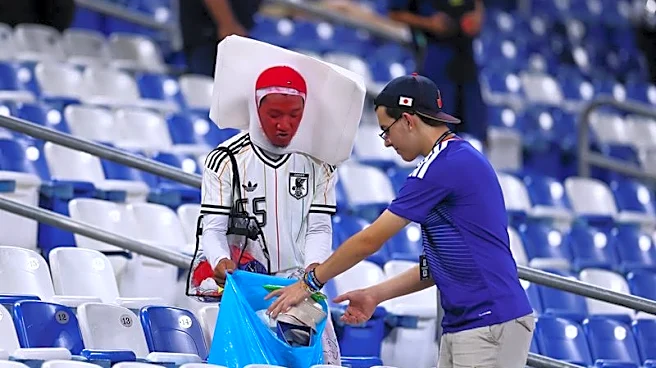
MONTERREY, Mexico (Reuters) June 20 - Japanese fans celebrated their team's 4-0 victory over Tunisia in the 1,000th match in World Cup history on Saturday by staying behind at Monterrey’s stadium to collect rubbish from the stands.
The practice, known in Japan as gomi hiroi, reflects an emphasis on taking responsibility for shared spaces.
Ken Okawa, 30, said he was happy to bring this tradition to his very first World Cup match as he stooped down to collect discarded cups and other
garbage from the floor around his seat.
"We are guests in Mexico," he said. "I have been treated wonderfully, so this is my way of showing my appreciation."
The practice is instilled from a very young age in Japan, where schoolchildren are taught to clean up their own classrooms.
Miku Takeya, 41, said that the habit of tidying up after herself has become second nature.
"It's a natural part of our culture," she said. "We do this to ensure that everything we use is left clean so that the next person can use it comfortably."
Images of Japanese fans cleaning up in stadiums after Samurai Blue matches during this year's World Cup have gone viral.
Ahead of Saturday's match, Nuevo León Governor Samuel García said he had arranged for 20,000 trash bags to be distributed in the stadium during the match, as well as at Fanfest and other tourist sites, following requests from Japanese fans, according to local media.
While this practice has captured global attention, many Japanese fans say it is nothing out of the ordinary for them.
"It's common sense in Japan," said Ichiro Oyo, 27.
Still, Ryo Matsuoka, 32, said he was proud to bring this part of Japanese culture to the world stage.
"I think it is a matter of great pride that this is being showcased in a stadium like this, where people from all over the world are watching," he said.
(Laura Gottesdiener and Rodrigo Gutierrez in Monterrey, Mexico; Editing by Peter Rutherford)