

By Trevor Stynes
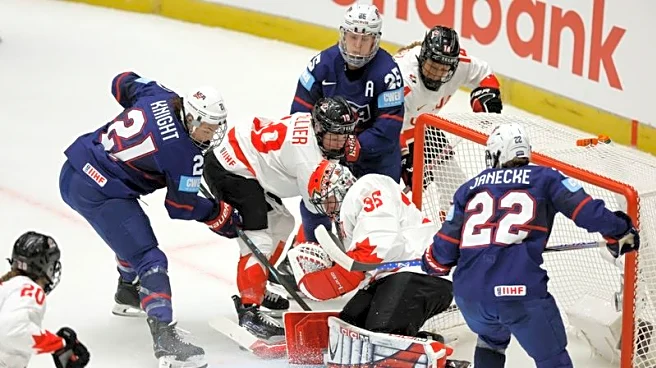
MILAN, Feb 3 (Reuters) - Since its introduction to the Olympics, women's ice hockey has been one of the more predictable events, with Canada and the U.S. routinely renewing their rivalry in the final, but their dominance could come under threat and all thanks to North America's own professional league.
The launch of the PWHL in 2024 has raised standards across women's hockey, giving elite players regular high-level competition and accelerating the development of national programmes
beyond the traditional North American powerhouses.
Canada have won five of the seven gold medals to date, with the U.S. claiming the other two. The only time the pair did not contest the final was when Sweden took silver in 2006, the last time Italy hosted the Games.
The Canadians come in as champions, but the United States will fancy their chances of redemption given the recent form between the two.
The U.S. are on a six-match winning streak against their neighbours, stretching back to last year's World Championship where they defeated Canada twice, including in the final.
More recently, in November and December, the U.S. completed a commanding whitewash in the four-match Rivalry Series, outscoring their opponents 24-7, including a 10-4 victory.
Canada have leaned heavily on experience, naming 16 gold medallists from four years ago in their 23-player roster, and every member competes in the PWHL.
The U.S. have 11 survivors from the last Games, and seven of their squad still play college hockey. This younger roster may need to deal with the pressure of the favourite's tag.
THE MAIN CHALLENGERS
Typically Sweden and Finland, the other major rivalry in the event, would be the most likely candidates to have any chance of upsetting the odds, and both have four PWHL players in their ranks.
The Czech Republic, however, with eight PWHL players, cannot be ruled out in what is only their second Olympics appearance and they reached the semi-finals of last year's World Championship.
Finland have taken bronze at the last two Olympics and World Championships, and having made the top four in all but one of the seven Games to date, they can never be ruled out.
The Swedes, meanwhile, have not won an Olympic medal since 2006, and after a sixth place finish at the worlds, they need a major turnaround in form to challenge in Milan.
The competition begins on Thursday with a preliminary round, split into two groups of five teams. Group A features the top ranked countries -- Canada, United States, Finland, Czech Republic and Switzerland -- with all of them advancing to the quarter-finals.
Group B consists of Germany, Sweden, Japan, Italy and France, with the top three teams qualifying for the last eight.
(Reporting by Trevor Stynes, editing by Pritha Sarkar)